When afternoon naps backfire: how long or late naps ruin your nighttime sleep
Why napping reduces your sleep drive, how timing matters more than duration, and when afternoon naps keep you awake at night.
Visana Studios
4 min read
A short nap in the early afternoon can feel like a reset button. Your body's natural dip in alertness around 1 to 3 p.m. is real, and lying down for 20 minutes can sometimes leave you more focused than you were before. The problem starts when the nap runs long, or when you take it too late in the day. That afternoon sleep comes at a cost that shows up when you are trying to fall asleep that night.
Why naps reduce your sleep drive
Sleep pressure builds throughout the day as adenosine accumulates in your brain. That chemical is your body's sleep debt, rising steadily from the moment you wake up until you fall asleep again. The longer you have been awake, the stronger the pressure to sleep becomes. When you take a nap, you clear some of that debt. Your body has had the rest it was demanding. Sleep drive drops, because it has been partially satisfied.
If your nap is short and early, that cleared pressure refills during the afternoon and evening. By bedtime, your sleep drive is back where it needs to be. But if your nap is long or happens late in the day, you reduce your sleep drive at a time when you cannot afford to lose it. When 10 p.m. arrives, your body does not feel the same urgency to sleep. Lying in bed, you find yourself awake.
Timing matters more than length
The afternoon dip in wakefulness that most people feel between 1 and 3 p.m. is a circadian signal, part of your body clock's 24-hour pattern. Taking a nap during that window, when the circadian rhythm is already pushing you toward sleep, works with your body's natural timing. A 30-minute nap at 2 p.m. clears some pressure but refills quickly enough that bedtime still feels inevitable.
Napping after 3 p.m. moves the timing away from that natural dip. The circadian signal for wakefulness is rising again in the late afternoon. When you nap during that rising wakefulness, you are working against your body clock instead of with it. You still clear sleep pressure, but now you have also disrupted the timing signal that normally keeps bedtime consistent. Sleep scientists recommend finishing any nap before 3 p.m., with the ideal window between 1 and 2 p.m.
Why longer naps backfire harder
A 10-minute nap leaves you drowsy for a few minutes after waking, but little else. A 30-minute nap can clear enough pressure to reset alertness without entering deep sleep, so recovery is faster. A 60-minute or longer nap does something different. You slip into deep sleep, the kind your brain does not do during the night's earlier hours. Waking from deep sleep produces sleep inertia, the grogginess that can last 30 minutes to an hour. Your cognition, mood and coordination are all impaired. The task was supposed to energise you, but instead you feel worse than before.
The longer nap also drains more of your sleep pressure. An hour of sleep can clear enough debt that your body no longer feels an urgent need to sleep when bedtime comes. Eight hours feels like a luxury rather than a requirement.
When naps become a problem
Most people who nap do fine with a 20-to-30-minute nap before 3 p.m. A small minority can take a full 90-minute nap and still sleep well at night, because a 90-minute cycle allows the brain to move through the sleep stages without waking mid-deep-sleep. But anyone who struggles to fall asleep or stays awake at night should avoid napping altogether. A person with chronic insomnia has sleep pressure that is already too low. A nap, no matter how carefully timed, makes the problem worse.
If you nap and find you are lying awake at night, the solution is not better willpower at bedtime. It is stopping the nap, or moving it earlier, or shortening it. Your sleep drive is real and chemical. You cannot argue it into bedtime.
NoNap and the morning nap question
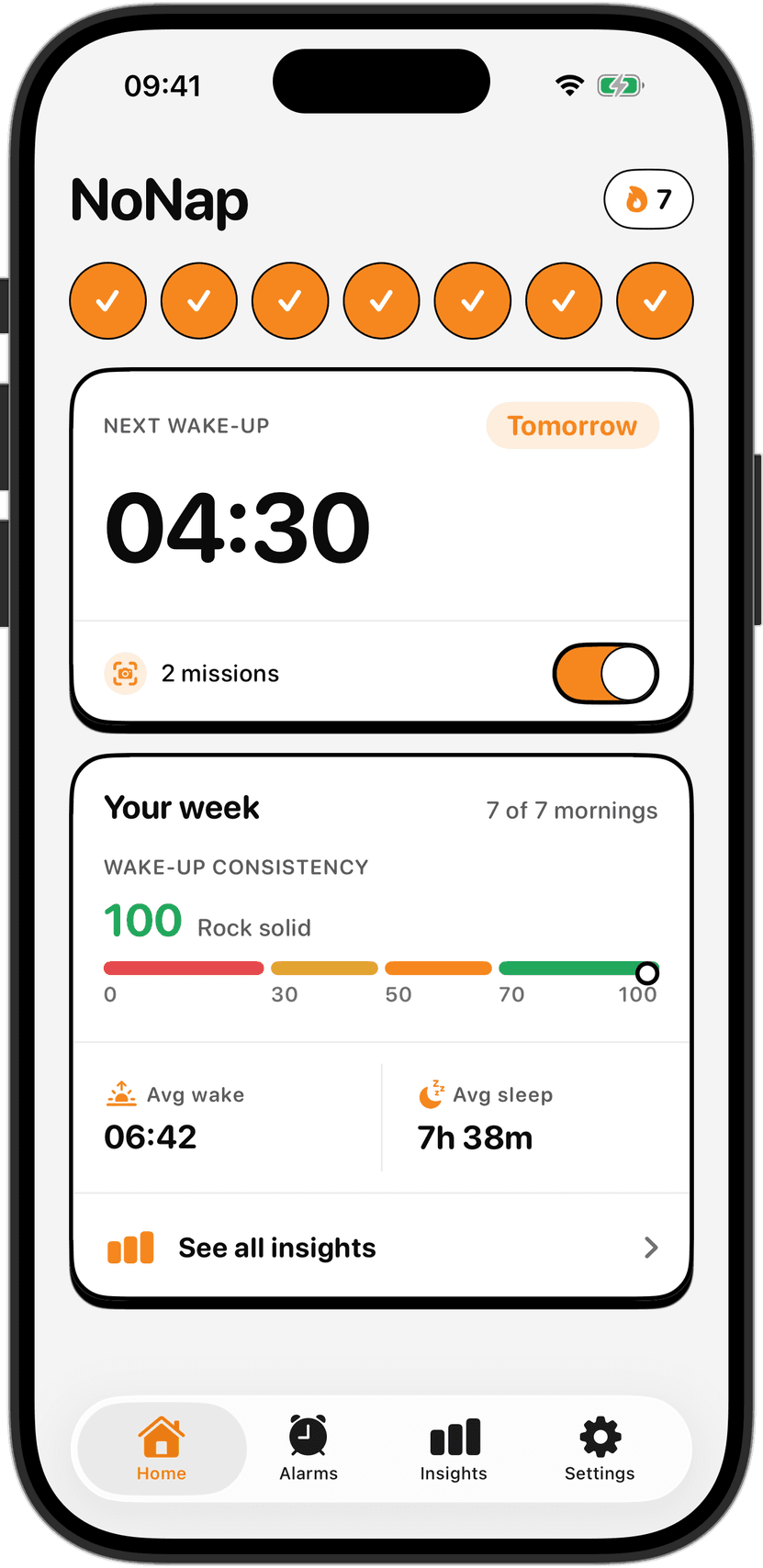
NoNap exists to help you get up when your alarm goes off, not to engineer perfect sleep that night. If you struggle with morning wakefulness, a nap in the afternoon is sometimes the right move for your afternoon energy, even if it costs you some sleep pressure. But if morning wakefulness is not your problem, if you are already sleeping through the night, a late or long nap is an trade you do not need. Your morning alarm is working. Your sleep at night is solid. Keep the nap short, keep it early, and keep your wake time consistent.
Sources
Hilditch CJ, McHill AW. "Sleep inertia: current insights." Nature and Science of Sleep, 2019. PMID: 31798352.
Sleep Foundation. "Does Napping Impact Your Sleep at Night?" https://www.sleepfoundation.org/how-sleep-works/does-napping-impact-sleep-at-night
The Conversation. "Can a daily nap do more harm than good? A sleep researcher explains." https://theconversation.com/can-a-daily-nap-do-more-harm-than-good-a-sleep-researcher-explains-251630
Image credits
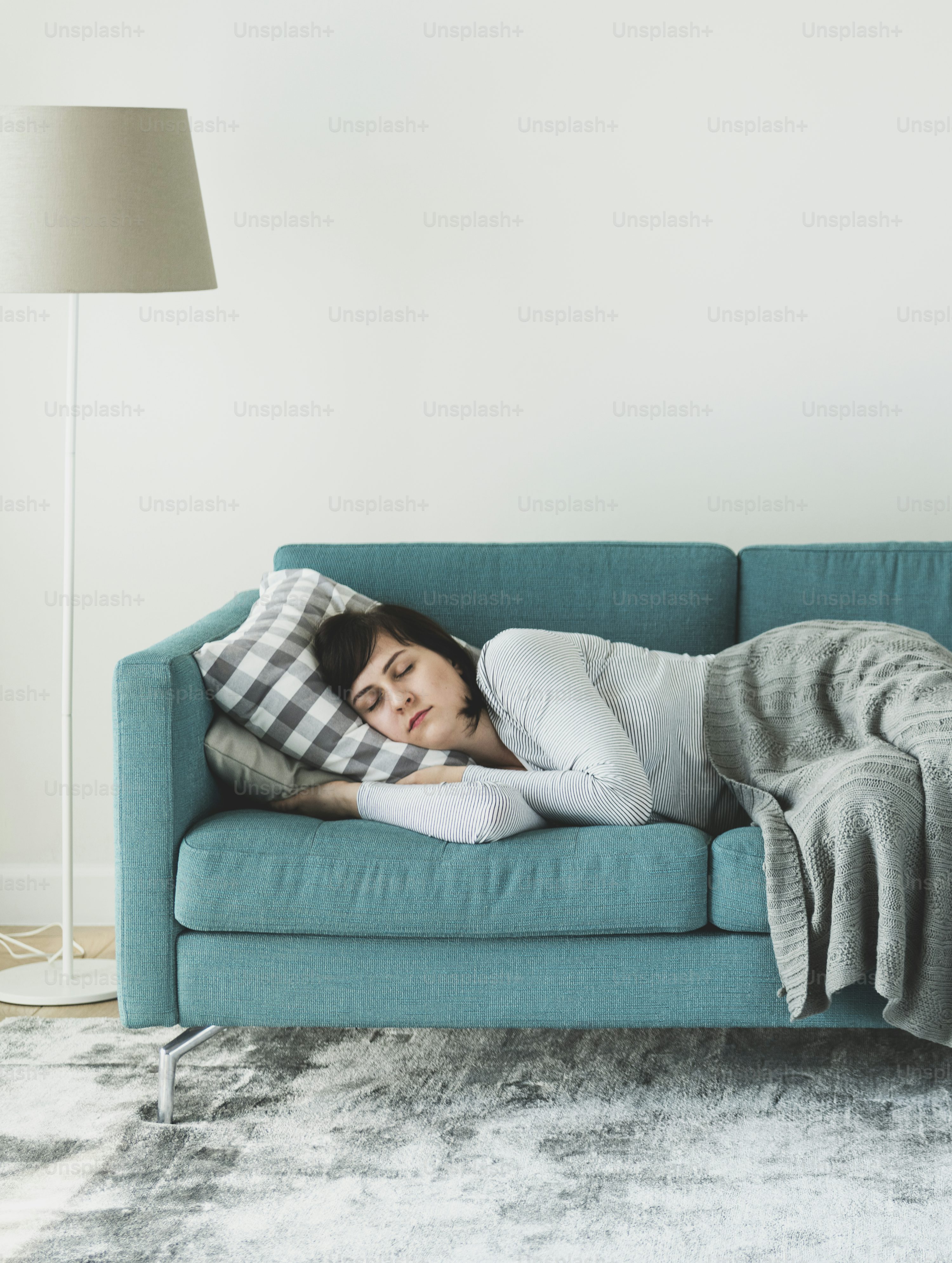
Woman sleeping on sofa. Photographer: Curated Lifestyle. From Unsplash. https://unsplash.com/photos/woman-sleeping-on-the-sofa-BHUUlR6brxk Unsplash License (free for commercial use, no attribution required).