Can a night owl become a morning person?
What genetics sets, what the evidence actually shows about shifting chronotype, and the realistic limits of changing when you wake.
Visana Studios
6 min read
The idea that night owls can turn into morning people shows up everywhere: productivity blogs, self-help books, motivational podcasts. Wake up at 5 a.m. for thirty days and you'll rewire your brain. But the brain is harder to rewire than most people think, and the reason is written into your DNA.
Chronotype is partly genetic
Your chronotype, the biological preference for sleeping and waking at certain times, is not purely a habit. A person's evening alertness peak and morning valley have measurable genetic roots. Twin studies, in which researchers compare sleep patterns between identical and fraternal twins, consistently find that chronotype clusters in families, more strongly than habits alone would predict. Understanding where your night owl or early bird preference comes from is essential before trying to change it.
Twin studies consistently show that genetics play a significant role in chronotype, with research indicating genetic factors account for roughly half of the variation between people in when they naturally sleep and wake. The other half depends on age, season, light exposure, work schedule, caffeine intake, and choices made on purpose.
That fifty-fifty split matters. It means your genes set a strong baseline but do not lock you into a schedule. A natural night owl born with a late chronotype will always have a harder time at 7 a.m. than a natural early riser, but morning is not impossible.
What happens when you try to shift
The clearest picture of what an intervention can do came from Elise Facer-Childs and colleagues at the University of Birmingham, published in the journal Sleep Medicine in 2019. They worked with self-identified night owls, people who naturally fell asleep late and woke late, and asked them to shift their schedule earlier by making two key changes: exposure to bright light immediately after waking, and exercise timed in the first hour of the morning.
The night owls who stuck with both interventions shifted their sleep and wake time earlier than their baseline. That shift required consistency, though, doing two things every morning without fail: sitting in bright light and exercising. And even with that consistency, the shift was not permanent without ongoing effort.
When the interventions stopped, the night owls in that study drifted back toward their natural rhythm. The morning wake times crept later again over the following weeks. No one woke up one day and discovered they had become a 5 a.m. person who would stay that way forever.
The limits set by biology
Here is what makes sustained change so difficult: your circadian clock, the internal 24-hour biological rhythm that orchestrates sleep, temperature, cortisol, and dozens of other processes, is deeply stubborn. Light exposure can nudge it earlier or later, but only by so much. Studies on circadian phase shifting show that bright light exposure can shift your internal clock by 1 to 2 hours at most, depending on how much light and when you get it. Shift it faster than that, and you pay a price in sleep quality and daytime alertness until the brain catches up.
The shift is also not the same for everyone. People who carry genetic variants tied to a later chronotype show smaller shifts in response to the same light exposure that would move an early riser's clock noticeably. Your genes do not just set a starting point; they also determine how responsive your clock is to outside pressure.
Age plays a role too. Teenagers show a genetic shift toward later sleep and later waking during puberty. This is not laziness or poor sleep hygiene. It is a well-documented change in circadian timing that peaks in the late teens and gradually reverses as people move into their twenties. Older adults often shift toward earlier wake times naturally, which is why the 5 a.m. wake-up gets easier the older you are.
Why the five-a-m-trend misses the point
Productivity culture has built a mythology around early waking: 5 a.m. starts, cold showers, quiet hours before the world wakes, hustle. The appeal is understandable. Quiet mornings are genuinely useful, and consistency beats sleeping until noon. But the best morning routine is one you will actually keep, and that depends far more on what fits your biology than on what some author claims changed their life.
A night owl who shifts to 5 a.m. through sheer willpower is running on debt. The body still wants to sleep later. The circadian system is still tuned to a later schedule. The person is up and moving, but they are doing it in a state of circadian misalignment, fighting their own biology. That unsustainability is why most people who make dramatic wake-time changes revert within weeks.
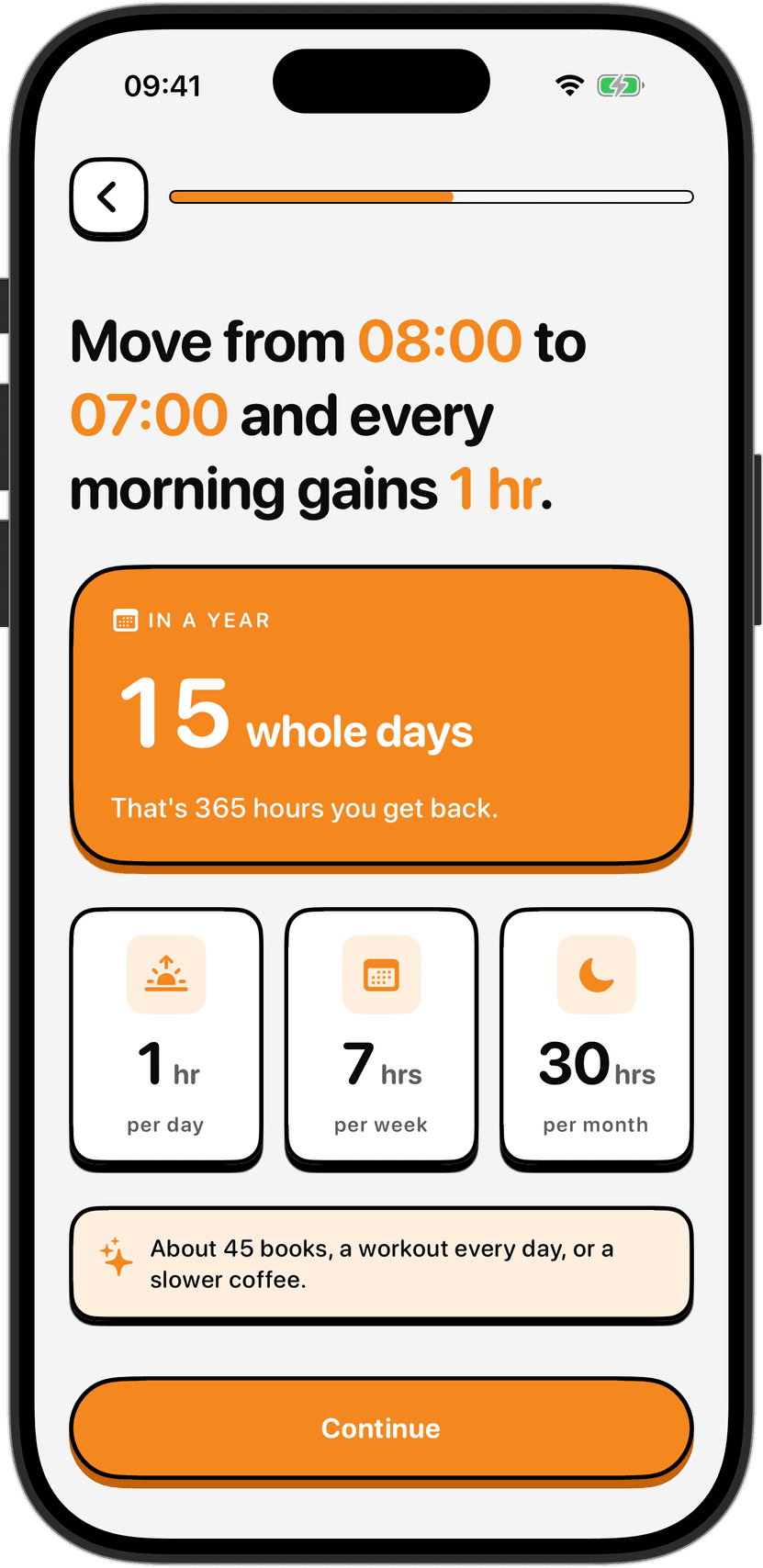
A more sustainable approach is finding a morning time that is genuinely earlier than your natural preference but not so early that it requires daily chemical or behavioral heroics to maintain. If you are naturally waking at 8 a.m., shifting to 6:30 a.m. is plausible. Shifting to 5 a.m. is fighting harder than the evidence supports.
What actually works
The interventions backed by research are mechanical and unglamorous. Morning light exposure, whether from a walk outside or from a light therapy lamp, is the most reliable single tool. Exposure to bright light soon after waking can help shift your internal clock earlier.
A fixed schedule, the same wake time every day, is another lever. Consistency trains the circadian system more reliably than any single intervention. Sleeping until noon on weekends, or sleeping two extra hours after a late night, undoes progress made during the week.
Exercise timing also matters, particularly exercise done in the morning. Morning movement can help shift your sleep schedule earlier than evening exercise would.
The honest summary: you can move your wake time earlier, but the change is slower and smaller than motivational culture suggests, and it requires doing things that feel good for reasons beyond just "becoming a morning person." If you do not enjoy morning light exposure or morning exercise as ends in themselves, the willpower will not last.
You don't have to become a morning person
One more reality: if your work and life allow it, staying a night owl is a valid option. Some jobs require morning presence. Most do not. If you are self-employed, freelance, or work a schedule that lets you start at 8 or 9 a.m., there is no biological imperative to fight your chronotype. You will be more alert, less prone to mistakes, and better rested by working with your natural rhythm rather than against it.
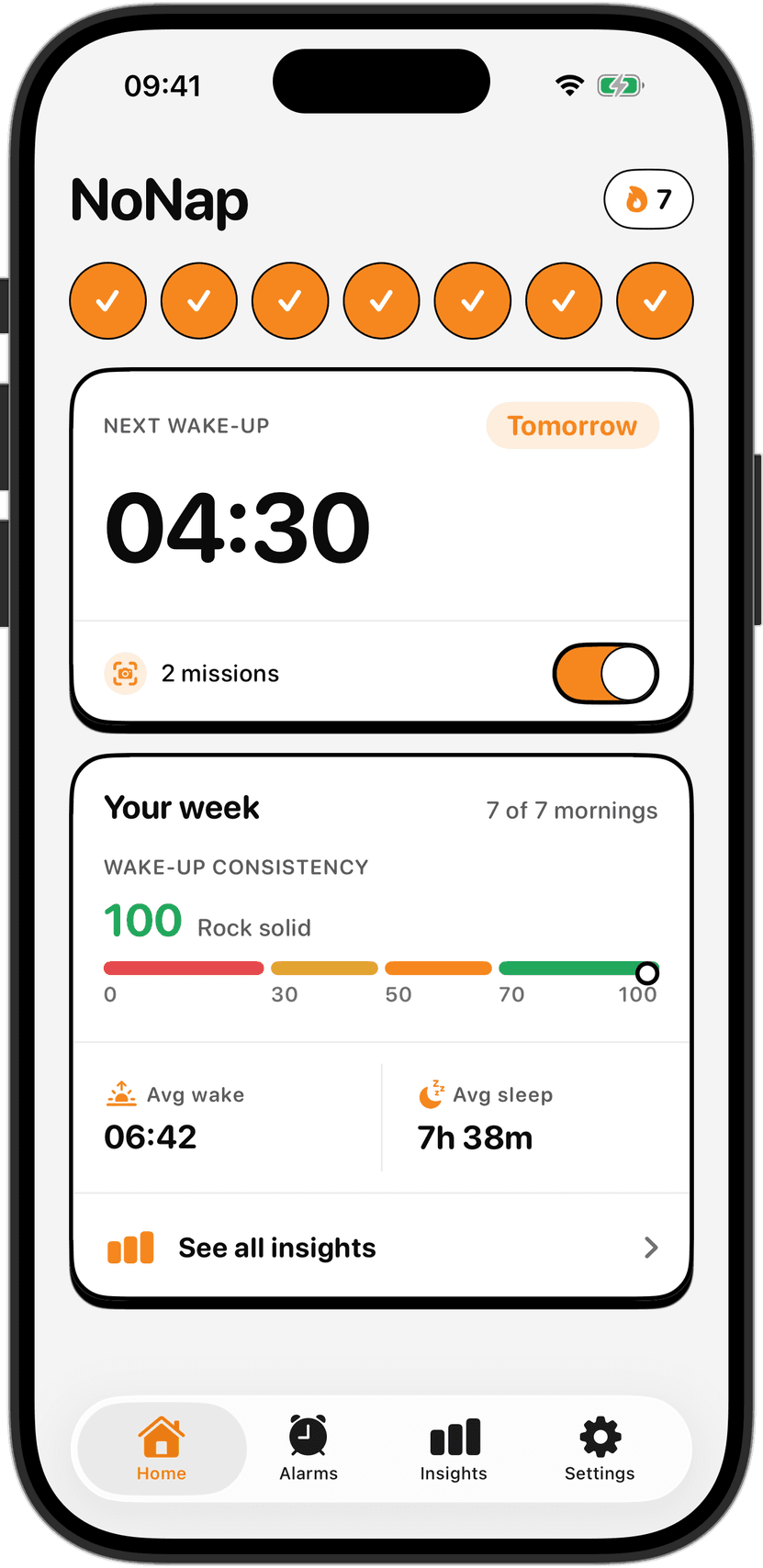
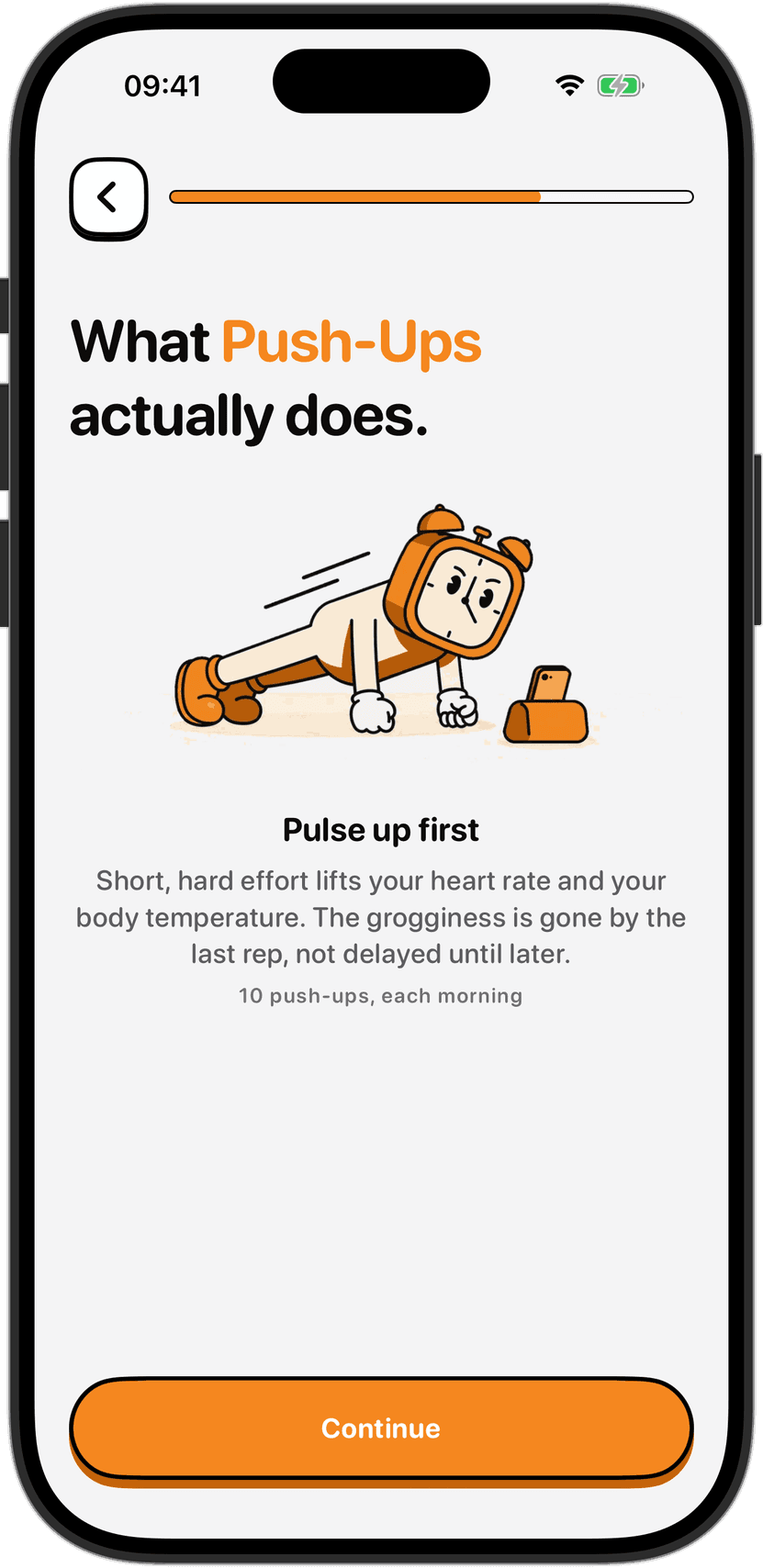
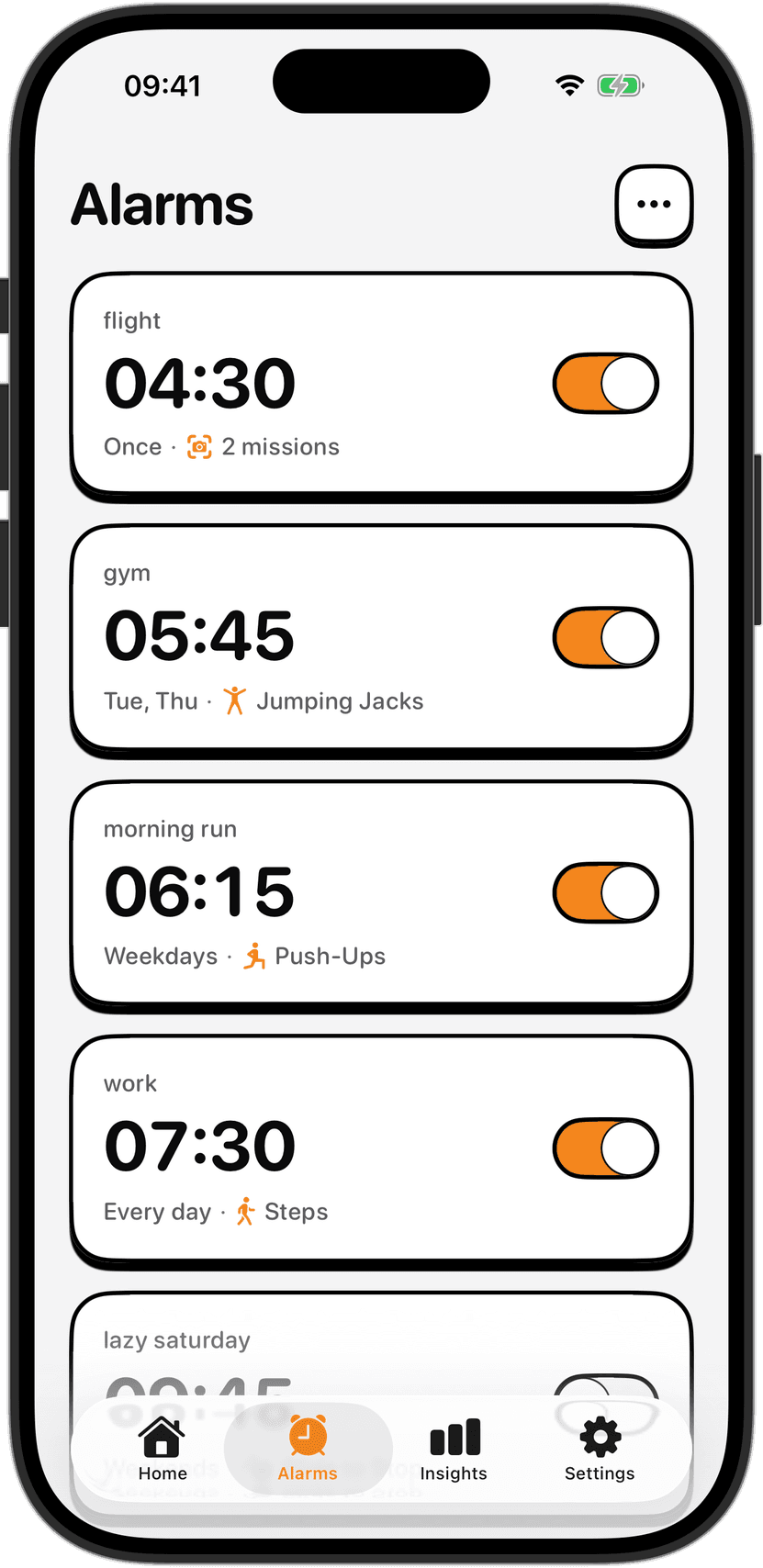
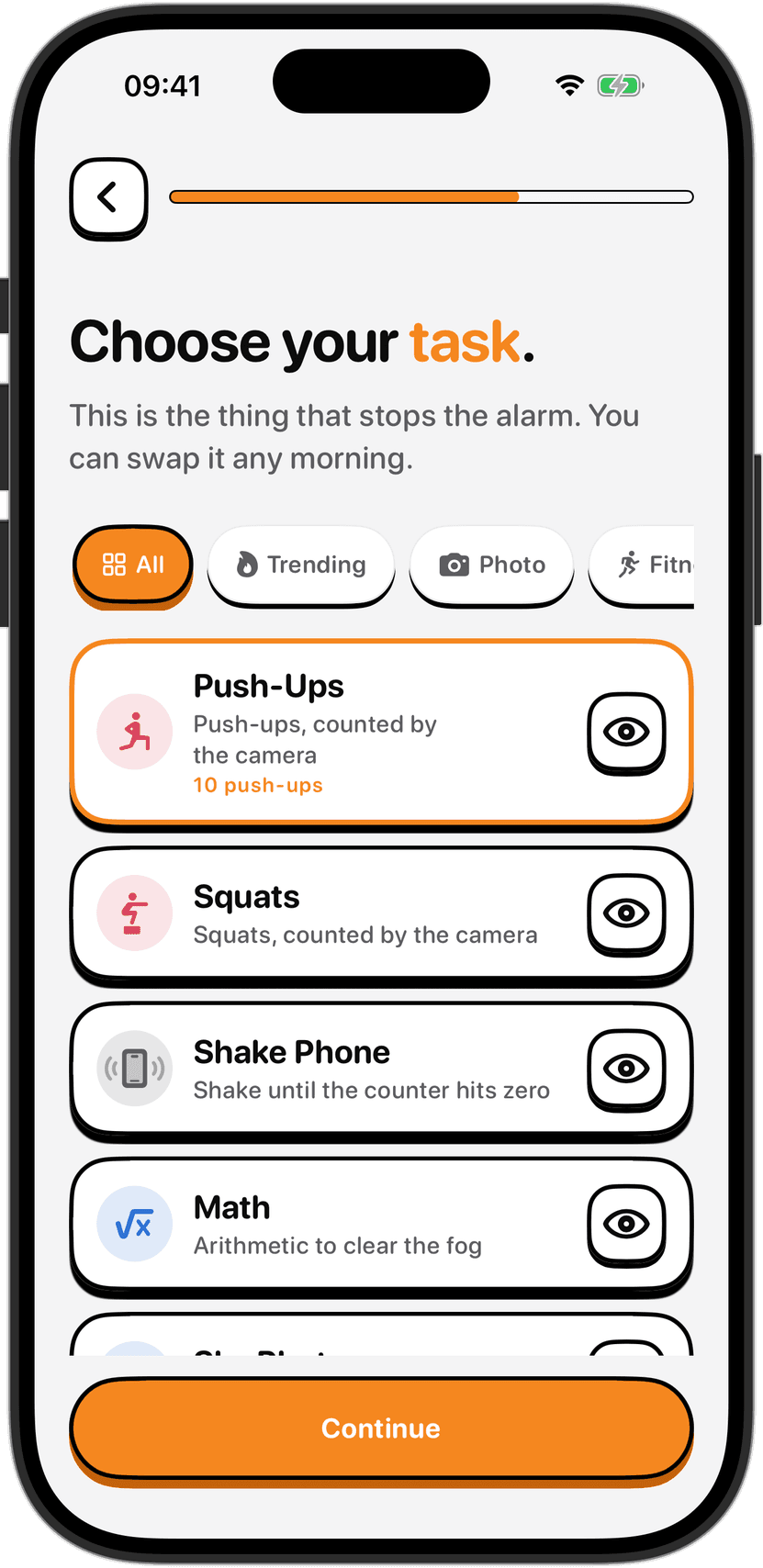
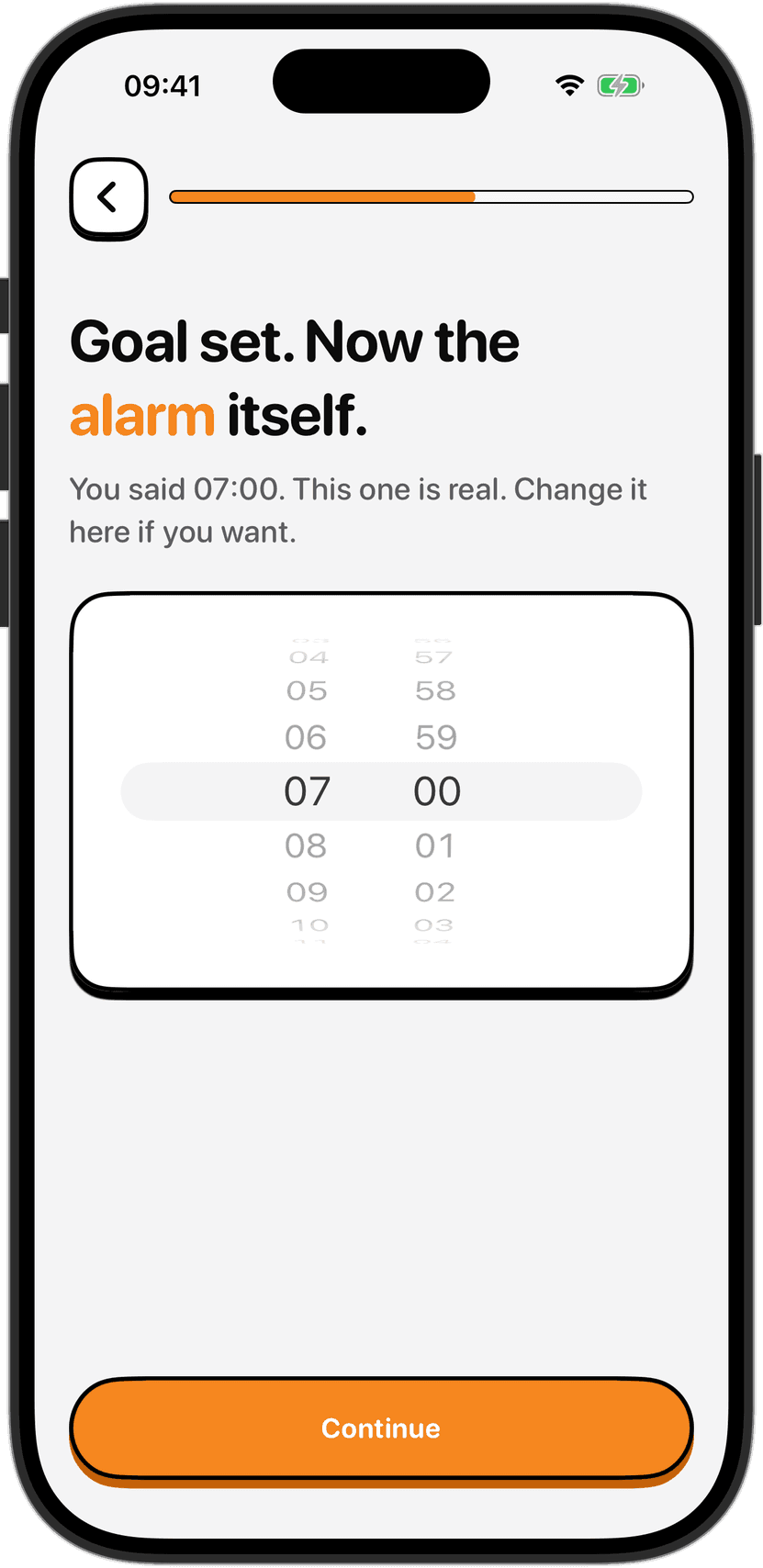
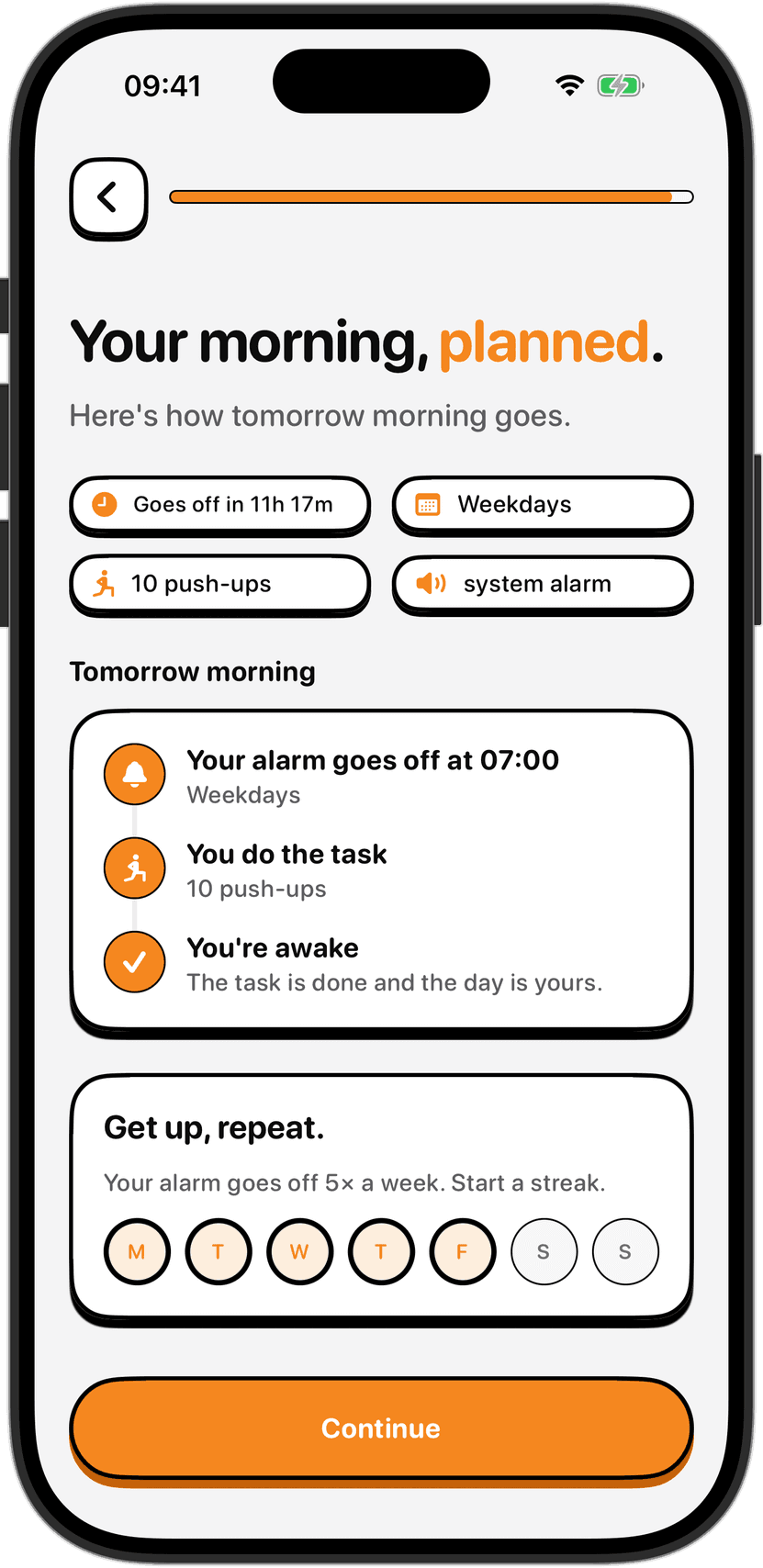
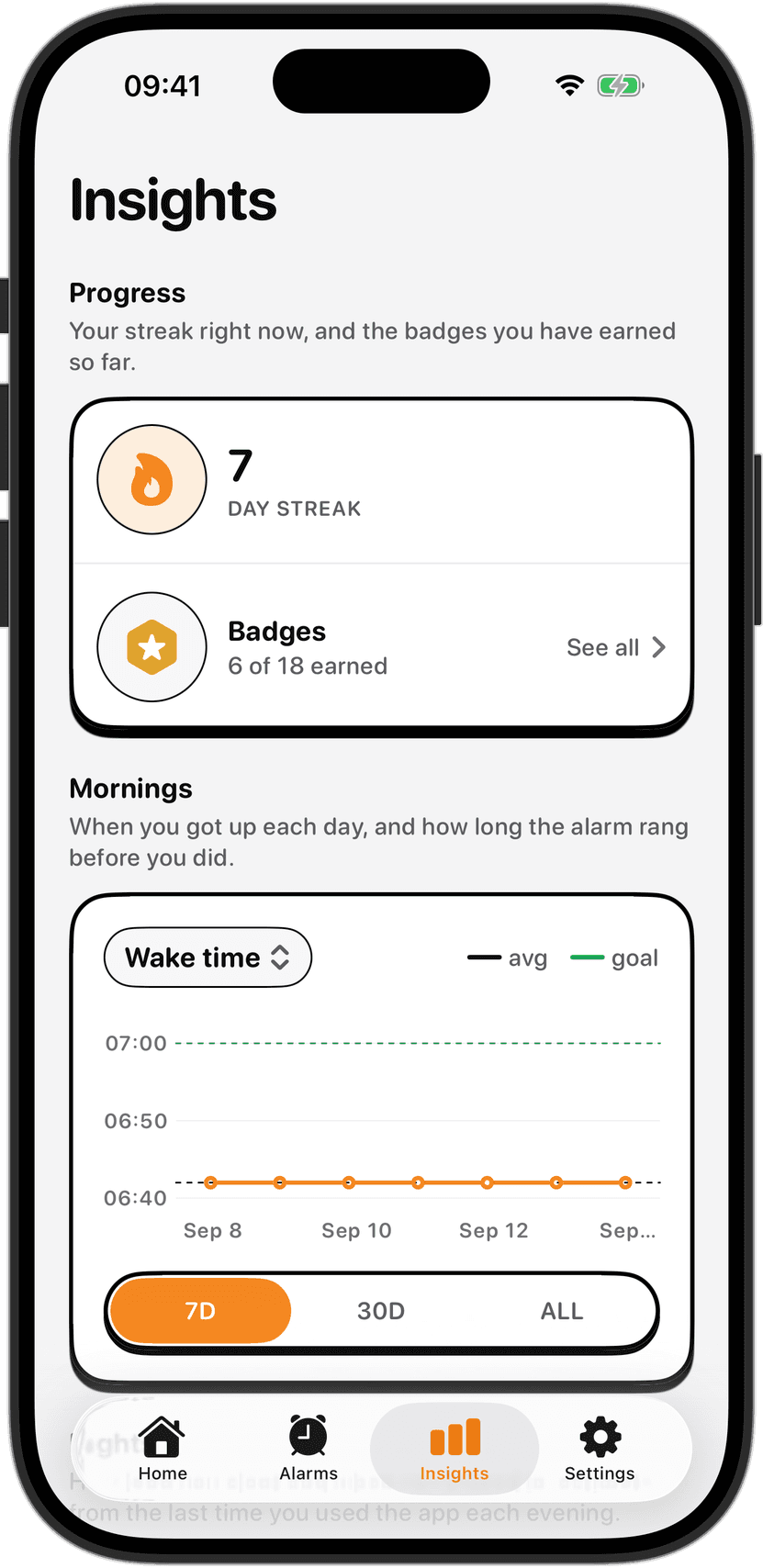
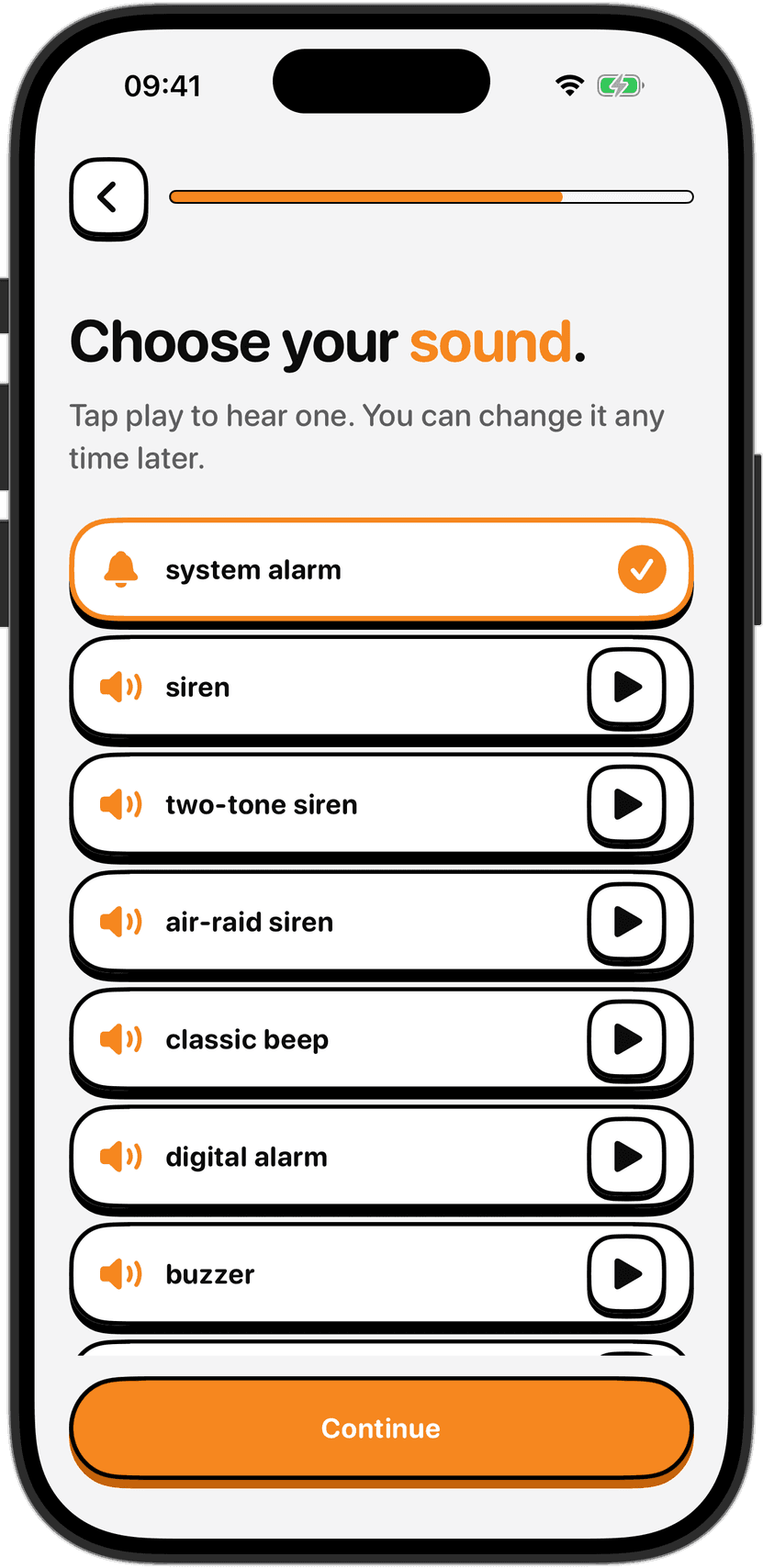
For people who do need to wake earlier, the goal should be shifting by what is realistic: maybe an hour, maybe 90 minutes. Building the systems to stick with it is where tools like NoNap come in. One alarm at a consistent time, no snooze button, and a wake task that forces you upright and engaged in those first foggy minutes all work together. If sleep inertia is deepest in the first 10 to 15 minutes and you eliminate the ability to negotiate, you remove the biggest source of schedule drift. NoNap, an iPhone alarm app by Visana Studios, uses the system alarm so the Ring/Silent switch and Focus modes do not silence it, and it cannot be dismissed from the lock screen. You pick a task when setting it up: push-ups or squats if exercise works for your body, or math, shaking the phone, a photo, or just getting out of bed. Stopping the alarm means finishing the task. For the exercise options, pick math or Shake Phone if you have an injury or condition where exertion first thing is not safe.
The post-shift reality is this: you can become a somewhat earlier person than you were, with consistent effort and light exposure and exercise. You will never become indifferent to sleeping later if your genes wrote a strong preference for it. But you can build a wake time that is both earlier than your baseline and sustainable, because it sits at the edge of what your biology allows rather than at war with it.
Sources
Facer-Childs, E. R., Middleton, B., Skene, D. J., and Bagshaw, A. P. (2019). Resetting the late timing of 'night owls' has a positive impact on mental health and performance. Sleep Medicine, 58, 1-12. doi.org/10.1016/j.sleep.2019.05.001
Image credits
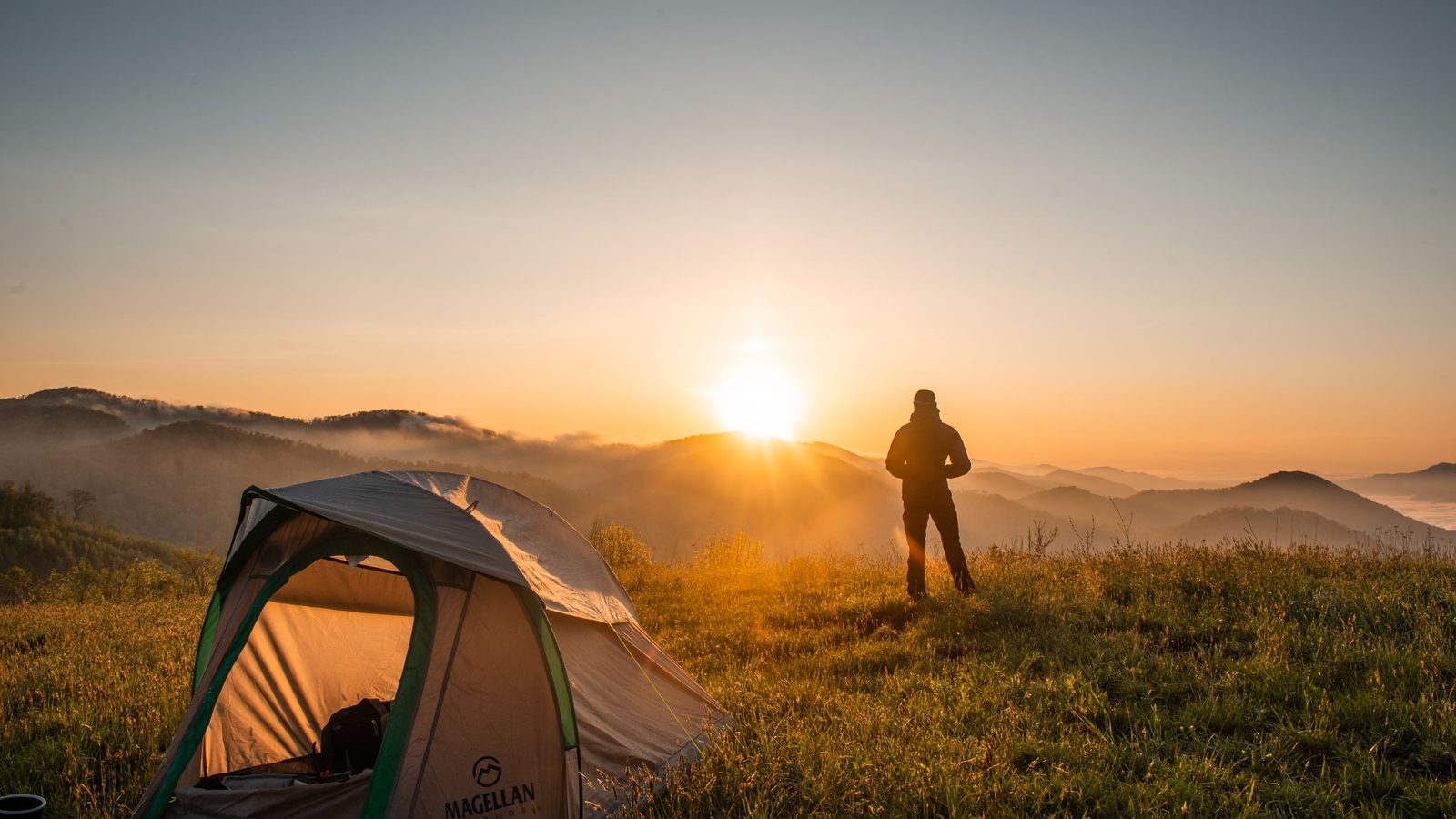
Cover photo showing a person standing at dawn watching a sunrise over misty mountains, with a tent in the foreground, from Pexels (pexels.com/photo/man-nature-person-sunrise-2398220), used under the Pexels License, which permits commercial use without payment.