Why you can't wake up even with an alarm set
Some people legitimately struggle to wake up. Here's why your body might not be waking, versus when it's a choice.
Visana Studios
6 min read
You set your alarm. The sound goes off. And then nothing. Five minutes later, you do not remember hearing it. Twenty minutes later, you are scrambling because you are late again. By evening, you are frustrated with yourself, convinced you have some kind of defect that prevents you from waking up.
The thing is, you might actually have a reason. Sometimes the problem is not willpower or laziness. Sometimes your body genuinely struggles to cross the threshold from asleep to awake, and the answer is not to yell at yourself more in the morning.
The difference between can't and won't
There are two different "I can't wake up" situations, and they need different solutions.
The first is behavioral. You hear the alarm. You become aware of the sound. And then you make a choice, in a state of fuzziness where bad decisions feel fine. You hit snooze, or you turn it off completely, or you silence your phone. The alarm did its job. You heard it. You just decided, in that moment, that sleep was more appealing than being awake, and you acted on it. With enough practice, this happens automatically, before you are even properly conscious.
The second is neurological. The alarm rings. And you do not hear it, or you hear it as part of a dream, or you wake for three seconds and fall back under so completely that your next conscious moment is twenty minutes later and you have no memory of any alarm. Here the problem is not your choices. It is how your nervous system transitions between sleep states.
The behavior-based version is a habit. The neurological version is sleep inertia combined with how deep your sleep is, how much you are sleeping overall, and a handful of other factors that have nothing to do with determination.
Both feel the same from the outside. Both result in being late. But they need different fixes.
How to know which one you are
Here is the distinction that matters: can you remember, later, that the alarm went off?
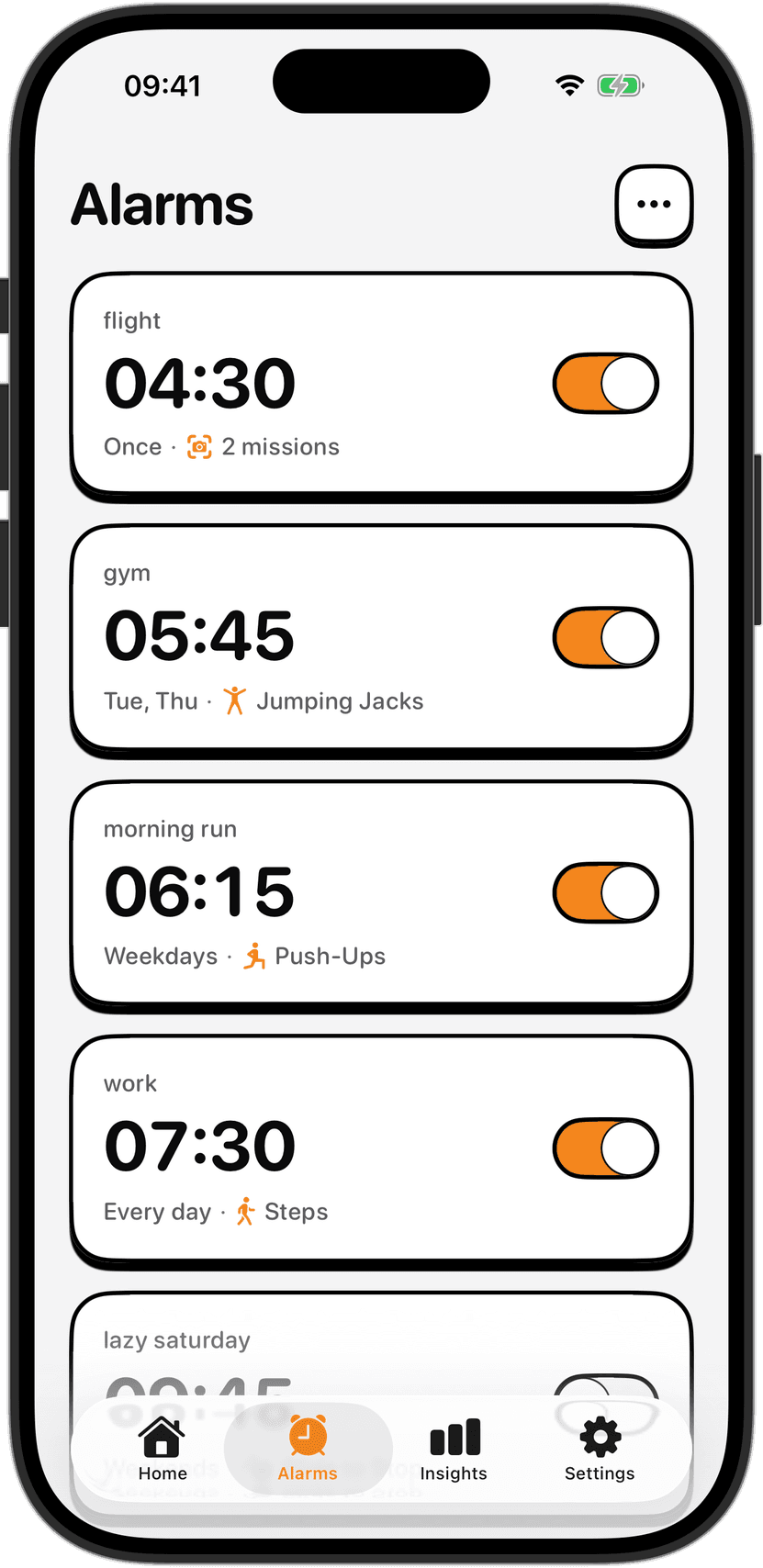
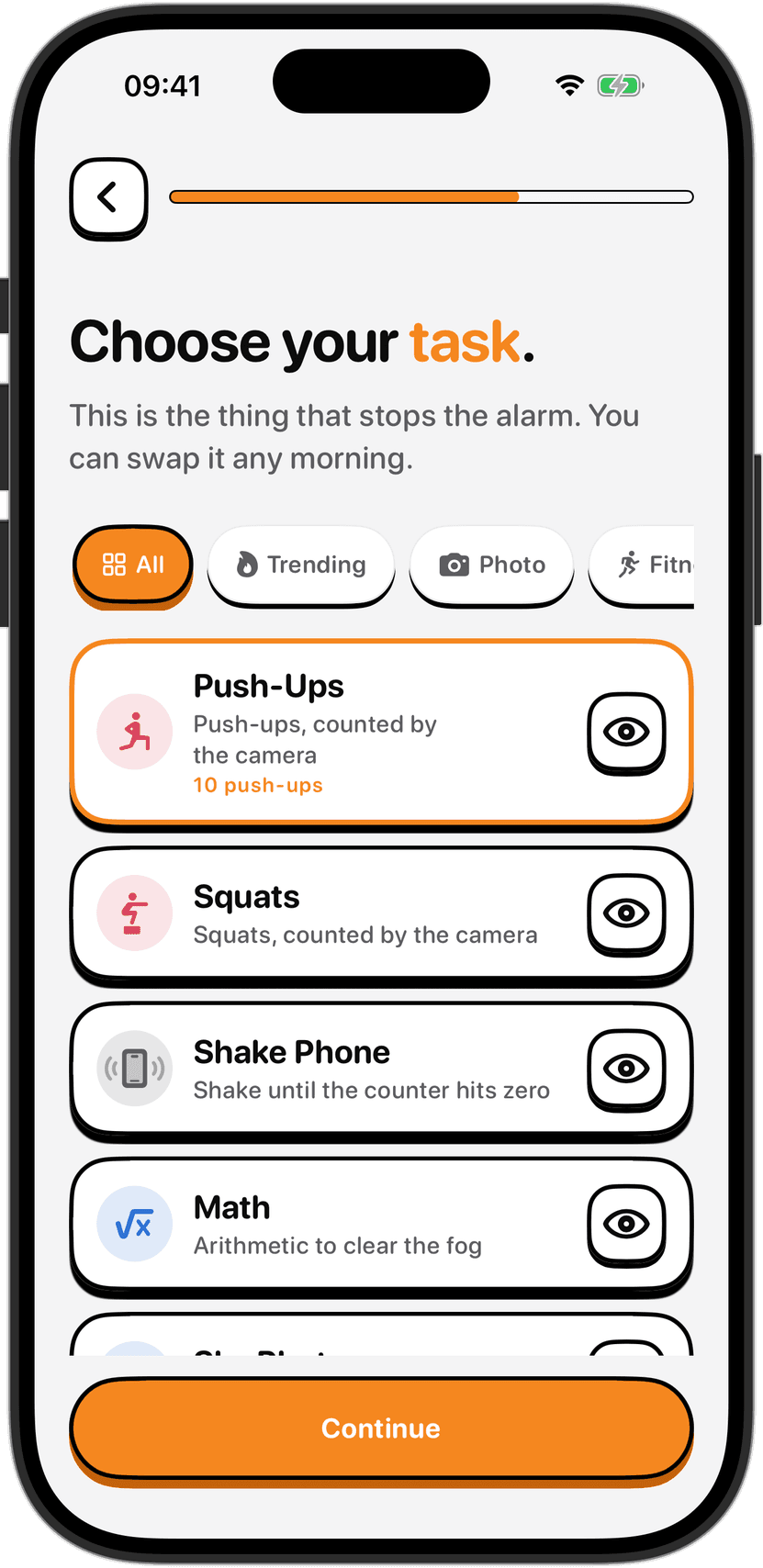
If you remember the alarm, remember the decision to snooze or silence it, and remember going back to sleep, that is behavioral. You were conscious enough to make a decision. The solution is something that removes the decision. An alarm you cannot snooze. A task you have to physically complete while still half-asleep, so autopilot cannot close it.
If you remember nothing. If the morning is a black hole. If someone tells you your alarm went off and you believe them, but you have no recollection of hearing it, that is neurological sleep inertia or sleep depth. You did not wake up enough to become aware that an alarm was even happening. Your nervous system stayed asleep despite a loud noise. That is a different problem.
Why your nervous system might not be waking up
Sleep has stages. Light sleep, deep sleep (slow wave), and REM. If an alarm catches you during deep sleep, your brain is actively tuned out from the world. It takes more to wake you, and once you do wake, you are heavily groggy. That grogginess is sleep inertia. It passes in about thirty minutes, but in the first five minutes after an alarm, your brain is moving slowly and does not want to cooperate with anything.
Deep sleep is protective and necessary. It is when your brain consolidates memories, your body repairs itself, and your immune system does its job. Spending enough time in deep sleep matters for functioning the next day. But it also means that if your alarm catches you during that stage, waking up is genuinely hard.
Your alarm is also more likely to fail to wake you if you are sleep deprived overall. Your body catches deep sleep whenever it can. If you have been short on sleep for several nights, you will fall deeply asleep faster and stay there longer. The deep sleep is your brain prioritizing repair. An alarm in that state might barely register.
Sleeping in a dark room with no other stimulation can make it worse, too. If there is nothing else in your environment to register, a single alarm sound has less to compete with other brain activity, and you can sleep through it. The same alarm will wake you more easily if there is already some light, some movement, some activity to build on.
Some people also just have genuinely deep sleep. That is partly genetic. It is not a flaw. It is how their nervous system works.
When it is not the alarm's fault
If you try an alarm and still do not wake up, your first instinct is usually to get a louder alarm. A louder alarm might help. But it might not, if the problem is that your brain is not registering any alarm at all, loud or quiet.
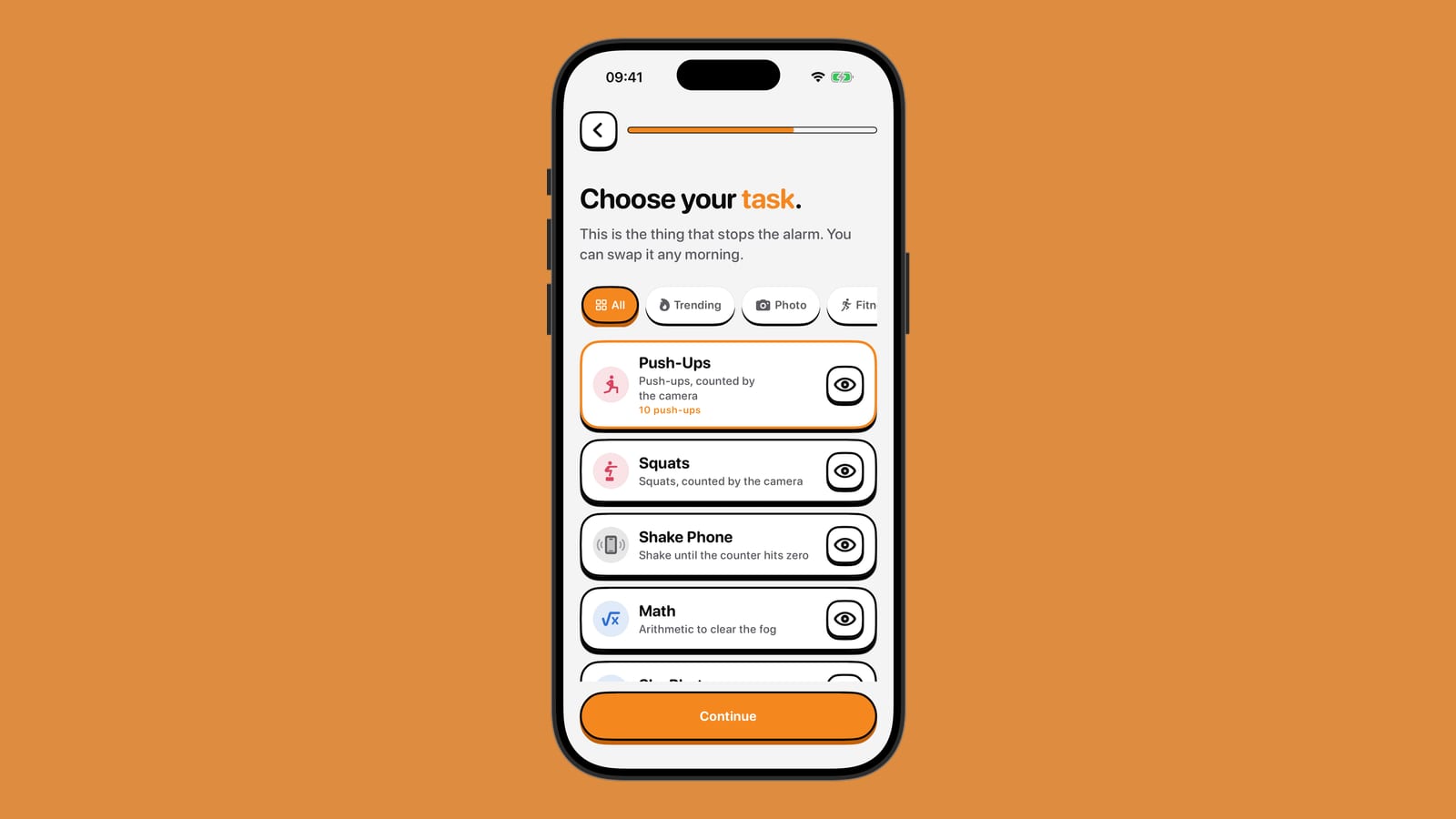
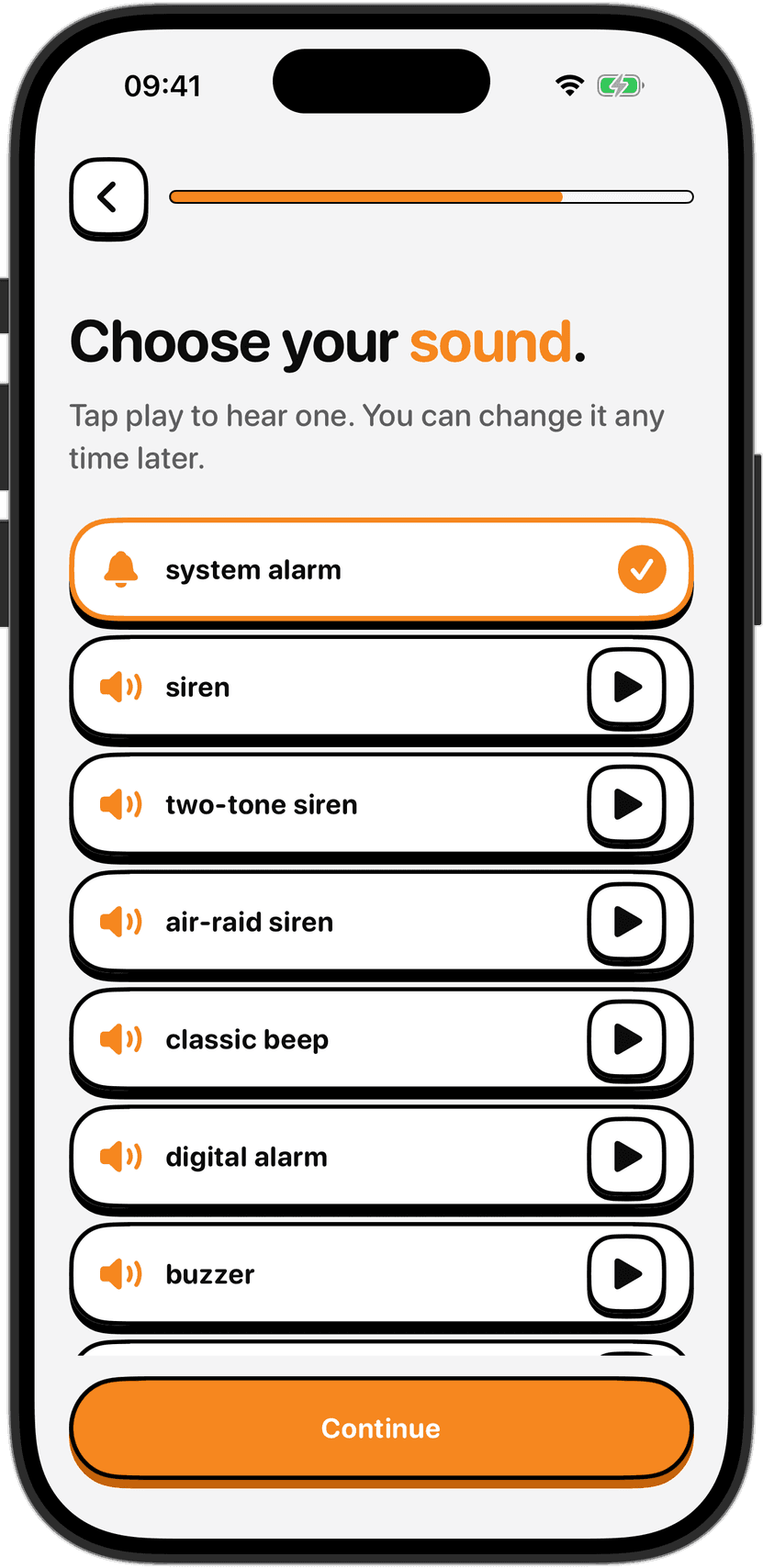
What actually helps is something that engages more of your nervous system. An alarm that is loud and then vibrates. An alarm that is loud and then flashes. An alarm that requires you to physically move or solve a problem to turn it off, so your motor cortex and prefrontal cortex are forced to wake up, not just your hearing.
Some of it is also about timing. If you know your alarm catches you during deep sleep every morning, waking at a slightly different time might move it to a lighter sleep stage. That is imprecise, though. You cannot reliably predict which stage you are in without tracking your sleep, and even then, sleep stages shift from night to night.
What works much more reliably is ensuring your overall sleep is sufficient, so you are not desperately storing up deep sleep. And then making the alarm something you cannot sleep through, because the moment you wake, you have a physical task that requires your full brain.
What sleep inertia actually is
Even if your alarm does wake you, the first five to ten minutes are going to feel awful. That is sleep inertia, and it is universal. Your temperature is low. Your heart rate is low. Your prefrontal cortex (the part that handles decision-making and motivation) is the last thing to come online after you wake. So you are cold, your heart is slow, and you have no impulse to actually move yet.
This is worse if you were in the middle of REM sleep, which happens more often later in the night. If you wake during REM, you feel that disorientation intensely.
Sleep inertia is also worse if you did not get enough sleep the night before. Your brain is going to fight harder to stay asleep. It is trying to get back the rest it needs.
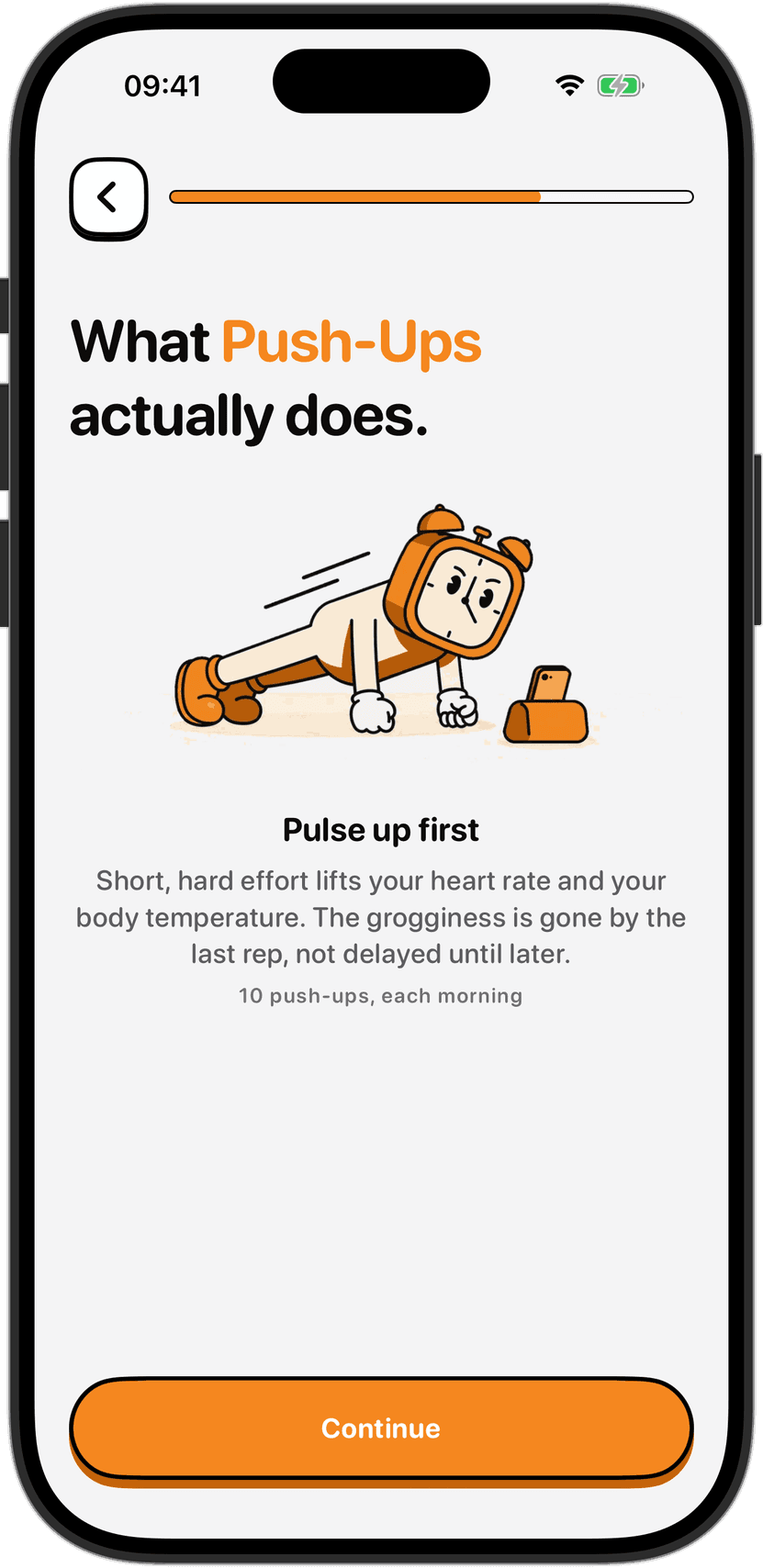
The solution is not more coffee immediately. The solution is movement. Even five minutes of light activity, like a short walk or a few stretches, can raise your temperature and heart rate and speed up how fast your prefrontal cortex engages. A cold shower does it faster.
That sounds terrible, which is why so many people avoid it. But the alternative is spending your entire morning in a fog, trying to force yourself to function while your body is still half-asleep.
What you can actually control
Some of this (how deep your sleep is, when your deep sleep happens, whether your alarm wakes you) is partially genetic and partially about how much you are sleeping overall. If you are chronically short on sleep, no alarm hack is going to overcome the fact that your body needs the rest.
Get enough sleep first. That is the foundation.
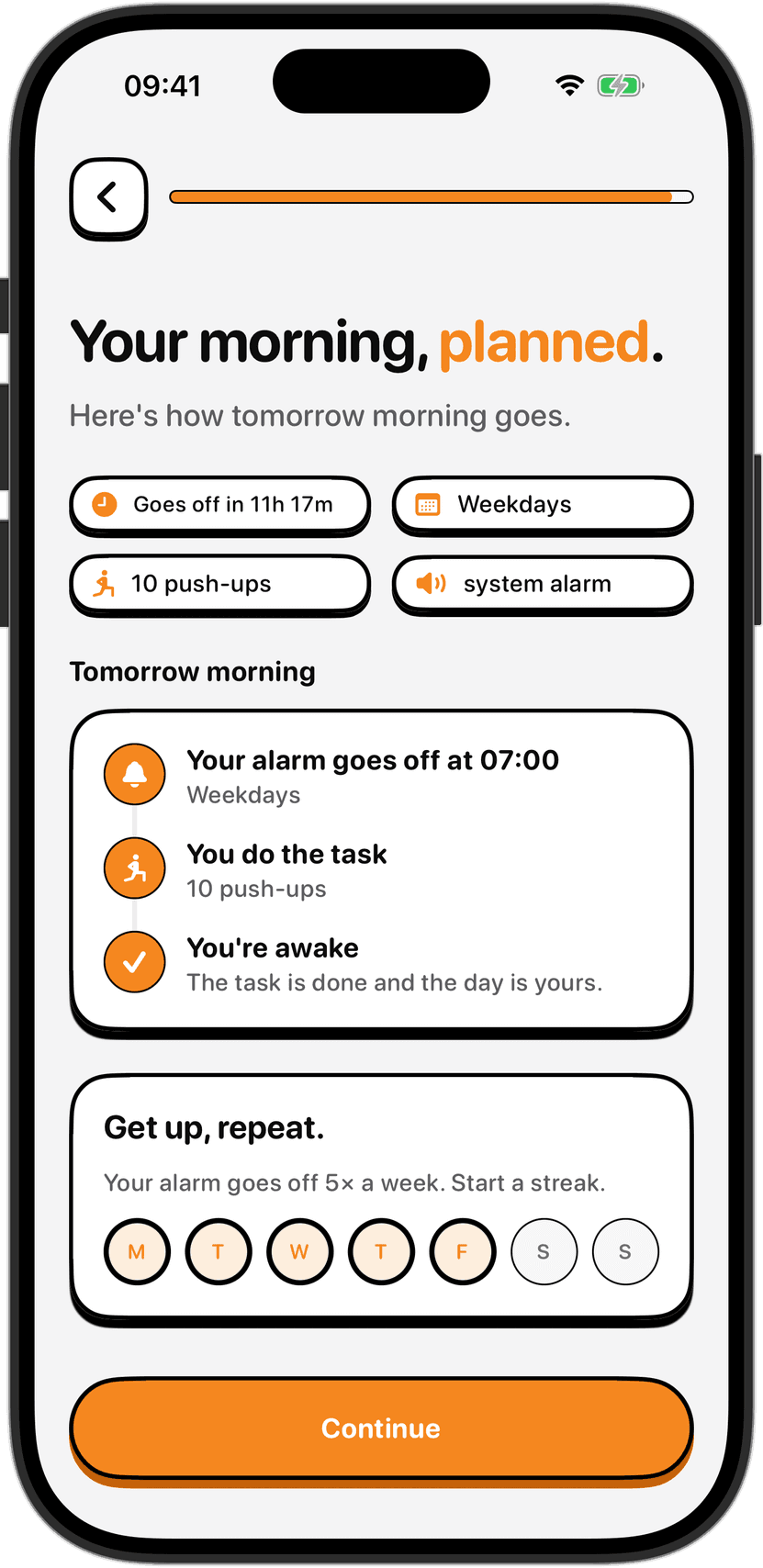
Then, make sure your alarm is not something your brain can sleep through or ignore. That means something with multiple signals (loud plus vibration). It means something in your room that cannot be silenced from across the apartment. It means something that requires you to be awake enough to complete a task. And it means something you cannot snooze, because snoozing is where the choice to stay in bed happens. One alarm, one task, one time you actually have to get up or the alarm keeps going.
Those changes do not fix everyone's waking problems immediately, but they remove most of the behavioral component. What is left is genuine sleep inertia and how fast your nervous system can cross from asleep to awake. Those are real constraints. But they are constraints that pass. Most people are fully conscious and capable within twenty minutes of waking, and fully alert within thirty.