Does eating late at night affect your sleep?
What two lab trials and two reviews found about late dinners, blood sugar, cortisol and sleep, and why the answer depends on your habits and portion size.
Visana Studios
5 min read
Late dinner gets blamed for a lot, and the research behind the blame is smaller than the advice suggests. Most controlled studies are short, run in a laboratory and use young, healthy adults. A few of them are close to a clean test, because they served the same meal at two different times and kept the sleep window the same.
Two trials, one dinner time
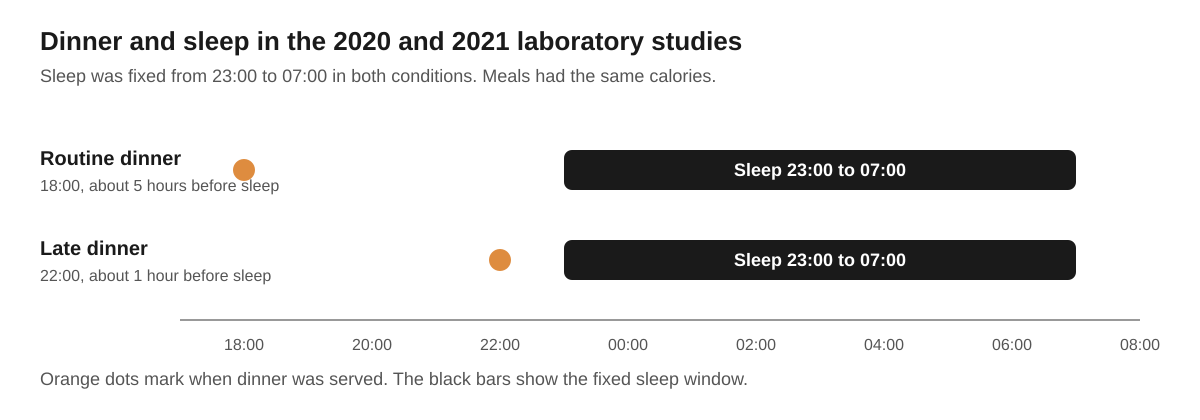
In a 2020 randomized crossover trial in the Journal of Clinical Endocrinology and Metabolism, Gu and colleagues had 20 healthy volunteers, 10 men and 10 women, eat the same dinner on two visits. On one visit it was served at 18:00. On the other it came at 22:00, about an hour before a sleep window fixed at 23:00 to 07:00. Both meals had the same calories and the same mix of nutrients, so the clock was the only real difference.
Duan and colleagues went back to recordings from a similar design in 2021. Their post hoc analysis of 20 healthy adults aged 18 to 30 looked at how sleep stages and brain-wave power changed across the night.
Blood sugar, cortisol and sleep
The metabolic results were the clearest. Blood glucose stayed higher for the four hours after the late dinner, with an area under the curve of 522 against 443, and the peak reading was 150 mg/dL against 127. The 20-hour average was also higher, at 105.8 mg/dL against 99.8. Insulin over the same 20 hours did not differ significantly, so the authors stopped short of a firm claim about how the body handled the meal.
Cortisol moved in the same direction. The lowest overnight reading was higher after the late dinner, and the 20-hour average was slightly higher too. The study cannot say whether any of this changes a person's morning.
The sleep results were quieter. Total sleep time was 413 minutes after the early dinner and 421 after the late one, a difference that was not significant. Sleep efficiency and time to fall asleep did not differ significantly either. The 2020 abstract puts it plainly: "LD did not affect sleep architecture, but increased plasma cortisol."
Duan's analysis found some detail that the earlier study missed. Across the whole night, the share of time in each sleep stage was not significantly different between conditions. In the second quarter of the night, though, light sleep (stage 2) took up 49.0% of the time after the late dinner, against 36.5% after the early one. REM sleep in the third quarter was 28.1% against 21.9%. The abstract describes the late dinner as associated with deeper sleep early in the night, and arousals did not differ between the two conditions.
Taken together, these nights point to a small, short-lived shift in how sleep was distributed, not a loss of sleep. The authors also warn that 20 people sleeping one night in a lab may not reflect sleep at home.
What the wider reviews say
A single lab night cannot tell you much about a habit that repeats for years, so the reviews matter. Kinsey and Ormsbee's 2015 review in Nutrients argued that the old rule against eating at night depends on what you eat. In their reading of the evidence, a small snack of around 150 kilocalories, whether a single nutrient or a mixed food, did not appear harmful. Large meals eaten late showed up in observational studies alongside weight gain and metabolic problems. The authors also called the trial evidence small, short and preliminary, and the trials they reviewed did not measure sleep as an outcome.
Saidi and colleagues published a systematic scoping review in Sleep Medicine Reviews in 2024. They identified 16 studies on late eating, 11 of them observational and 5 experimental. Most studies that measured sleep duration found no link to late eating. Most observational studies that looked at sleep quality, using self-report or polysomnography, linked eating close to bedtime to poorer sleep. The experimental studies gave conflicting results. The authors concluded that "additional research is needed to inform chrono-nutrition guidelines to improve sleep health in the general population."
That conclusion is the honest summary. People who eat late can also differ in other evening habits, such as screen use, drinking or irregular bedtimes, and most of these studies did not control for the meal's content or the gap between the last bite and bed. An observational link to poor sleep can therefore come from the food, the routine around it, or both.
What to do with this
A late dinner has not been shown to wreck sleep, and it is not neutral either. In healthy young adults, one late meal raised blood glucose and cortisol without shortening the night in the lab. Observational data links habitual late eating with worse sleep quality, but it cannot separate the food from everything else happening in the evening.
If you eat late, a few things are worth watching. The size and makeup of the meal may matter as much as the clock, since Kinsey and Ormsbee argue that a large meal and a small snack do not carry the same risk. The 2020 authors also noted that people who usually fall asleep early were more affected by a late dinner. Your own sleep is the best test, so two or three weeks of noticing how nights after a late dinner feel will tell you more than a general rule. If you regularly wake to eat, or you have reflux or diabetes, see a doctor rather than changing your dinner time on your own.
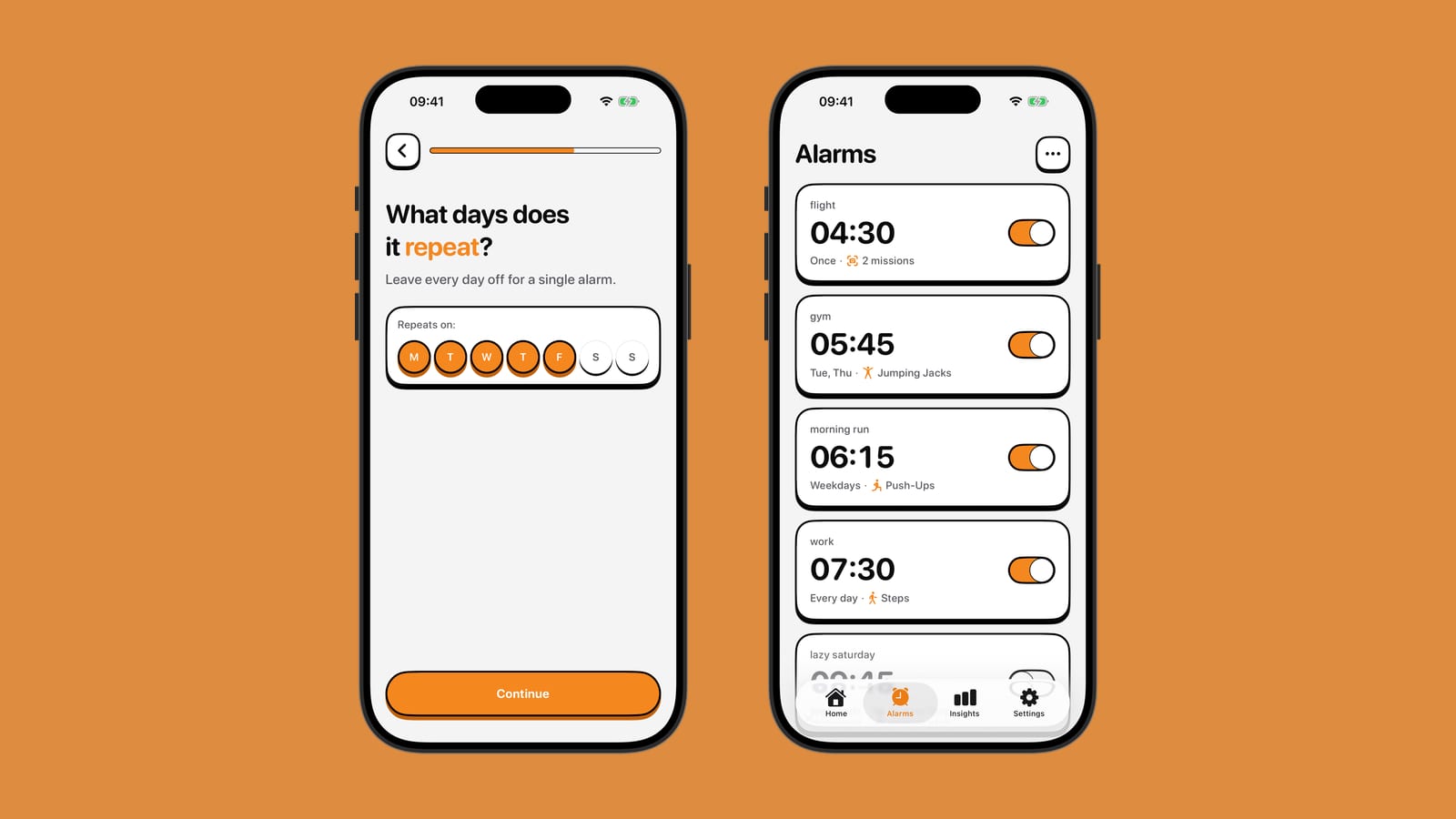
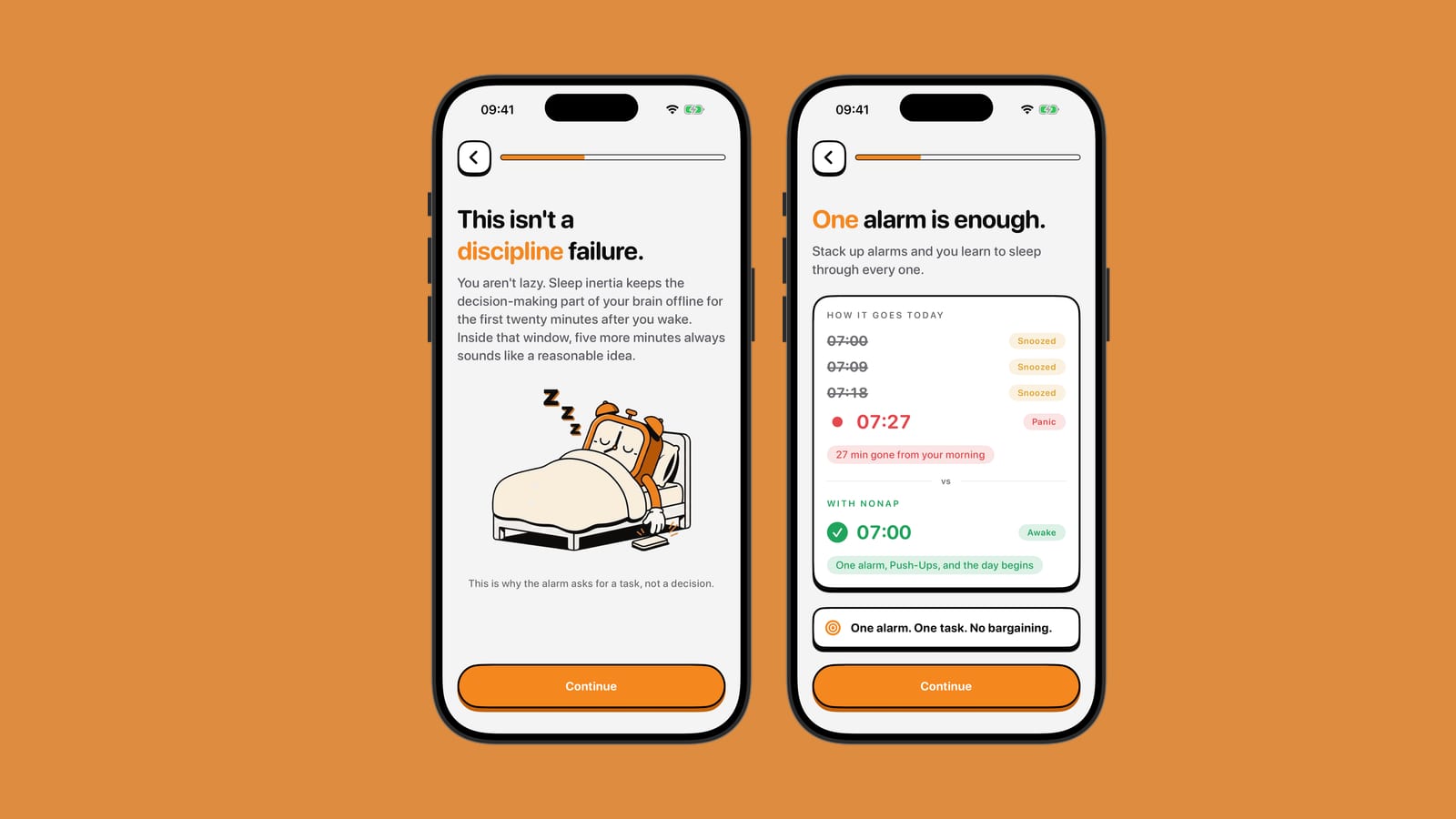
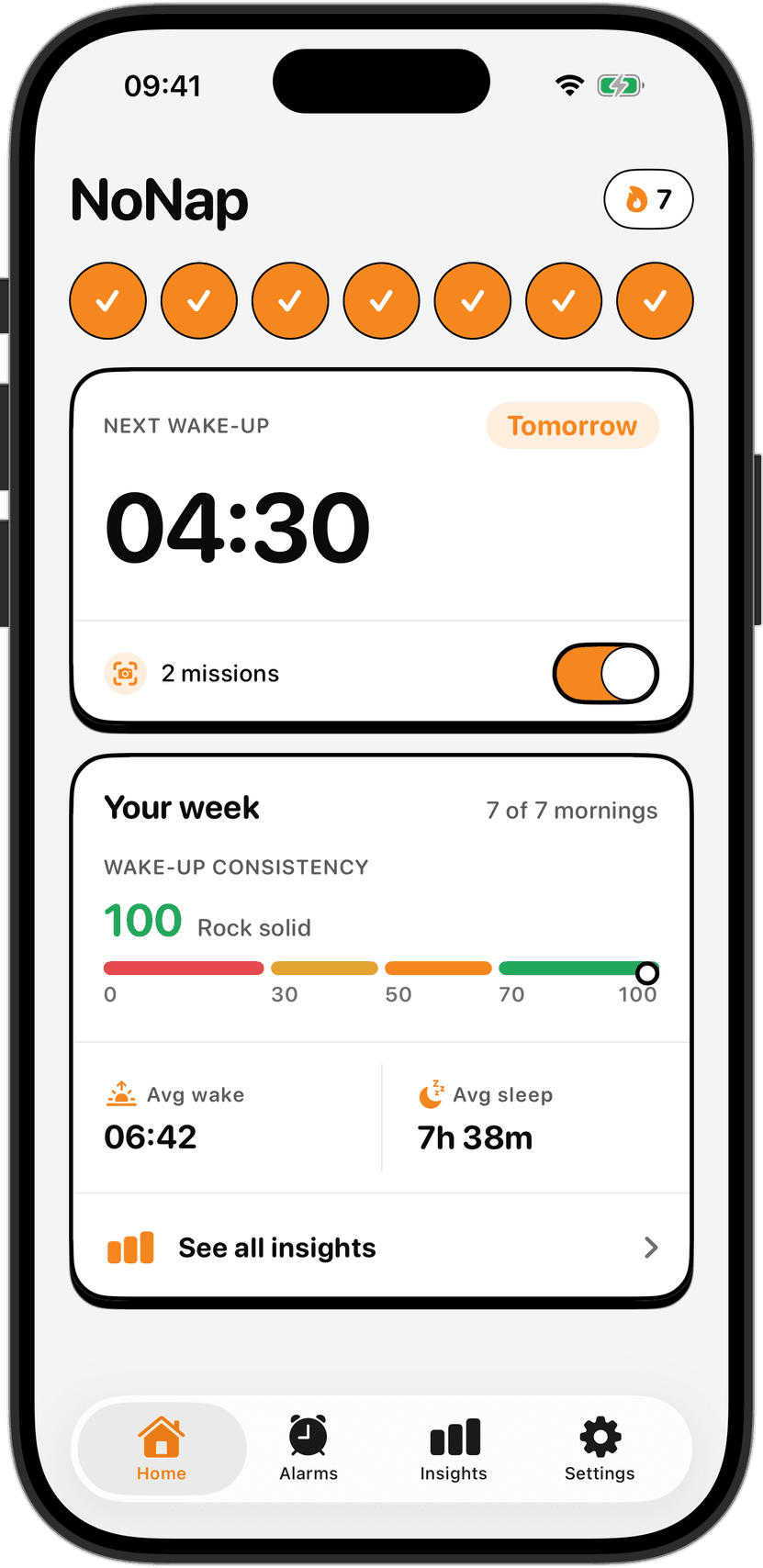
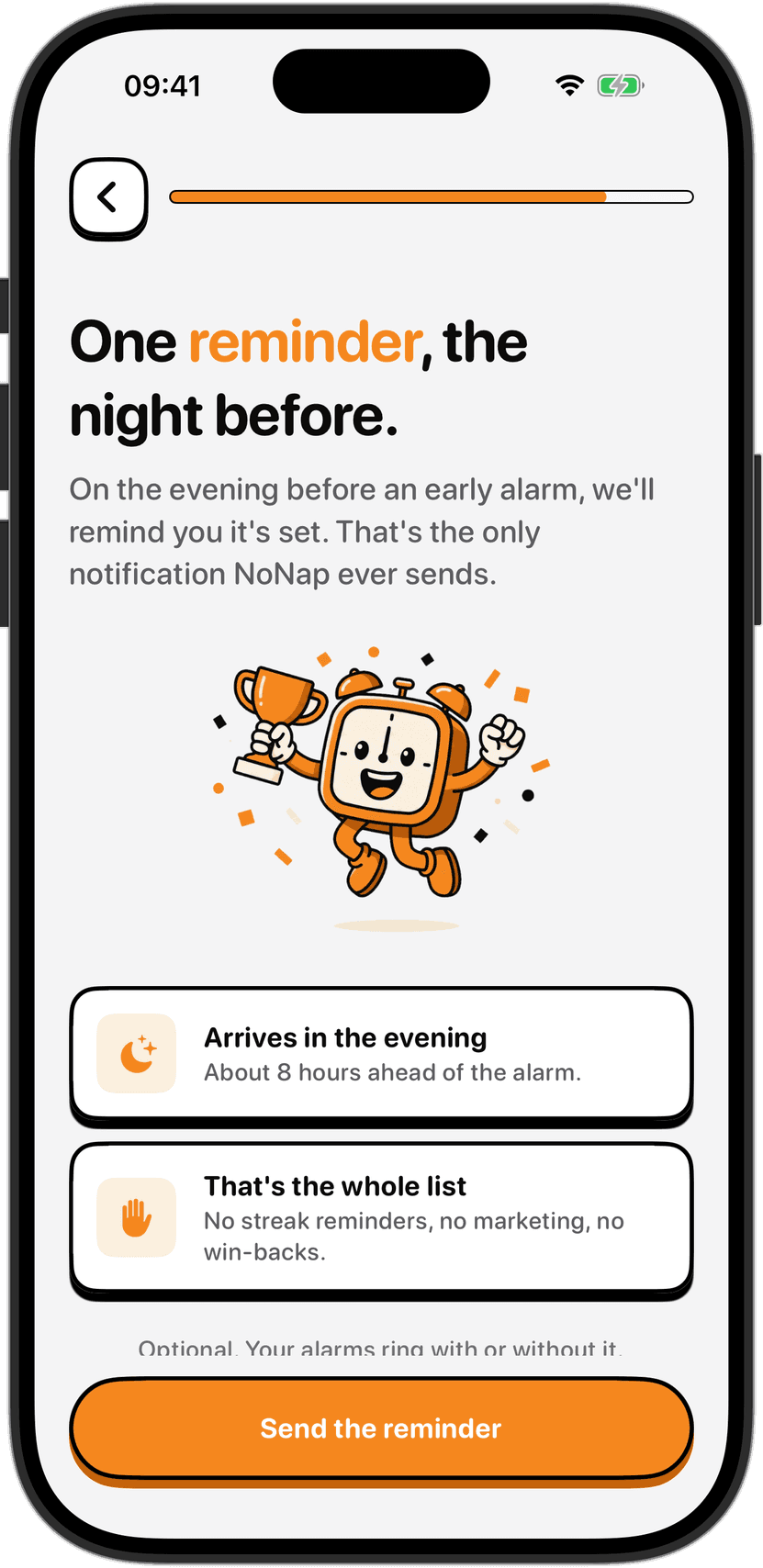
NoNap does not track sleep, so it cannot show how a late dinner affected a particular night. It does handle the evening side of the plan. The night-before reminder arrives about 8 hours ahead of the alarm, and the alarm rings with or without it. If the evening question is really about caffeine, how late is too late for coffee covers that timing in more depth.
Sources
Gu C, Brereton N, Schweitzer A, Cotter M, Duan D, Børsheim E, Wolfe RR, Pham LV, Polotsky VY, Jun JC. Metabolic Effects of Late Dinner in Healthy Volunteers: A Randomized Crossover Clinical Trial. J Clin Endocrinol Metab. 2020;105(8):2789 to 2802. https://doi.org/10.1210/clinem/dgaa354
Duan D, Gu C, Polotsky VY, Jun JC, Pham LV. Effects of Dinner Timing on Sleep Stage Distribution and EEG Power Spectrum in Healthy Volunteers. Nat Sci Sleep. 2021;13:601 to 612. https://doi.org/10.2147/NSS.S301113
Kinsey AW, Ormsbee MJ. The Health Impact of Nighttime Eating: Old and New Perspectives. Nutrients. 2015;7(4):2648 to 2662. https://doi.org/10.3390/nu7042648
Saidi O, Rochette E, Dambel L, St-Onge MP, Duché P. Chrono-nutrition and sleep: lessons from the temporal feature of eating patterns in human studies, a systematic scoping review. Sleep Med Rev. 2024. https://doi.org/10.1016/j.smrv.2024.101953