How to fix a sleep schedule in a week
Your sleep schedule drifts after travel, a late night binge, or seasonal change. Here's how to reset your body clock in about seven days.
Visana Studios
5 min read

Your schedule is shot. You fell asleep at midnight and woke at eight, then midnight became 1 a.m., then 2. Now you're falling asleep when the sun's up and lying awake at night. It feels permanent. It isn't. A drifted sleep schedule takes about a week to fix if you know what to do, and the method is simpler than you think.
The anchor is your wake time. Everything else follows from it.
Set one wake time and keep it
Your body clock runs on a roughly 24-hour cycle called a circadian rhythm. Light is the dominant signal that keeps it in sync with the sun. The strongest signal comes first thing in the morning.
Pick a target wake time, one you can live with. If you currently wake at eight and want to wake at six, that's your new six. Not "around six" or "by six" on weekdays and eight on weekends. Six every day.
Wake at that time whether you slept two hours or eight. Even if you woke at three in the morning and never went back to sleep. Especially then. Your brain needs the consistency to reset.
This is the hard part. It's also the part that works. A study that tracked circadian rhythm markers in people who maintained the same wake time for a week found those markers were stable and repeatable. When the wake time drifted from weekdays to weekends, the markers drifted too. Constancy is what signals your body clock.
You're not pushing through. You're signaling.
Get bright light after you wake
Morning light is the second-strongest tool you have. It tells your body clock that now is morning, which pulls earlier bedtimes and earlier wake times forward.
Open the curtains as soon as you wake. Take a walk outside, even ten minutes in daylight helps, and it's stronger than indoor light. The sun is brighter than any lamp.
If you wake before dawn, or it's overcast, or you work indoors, use a light therapy lamp. The standard is 10,000 lux, the same brightness as commercial dawn-simulation alarm clocks. Sit about 16 to 24 inches from it for 30 minutes while you have coffee or breakfast. Start this within an hour of waking.
Light in the evening does the opposite. It suppresses melatonin, the hormone that makes you drowsy, and it pushes later wake times even later. Dim the lights in your house an hour before bed. Close the curtains. Put your phone down or use a blue-light filter. The goal is dark.
Shift gradually if your target is far away
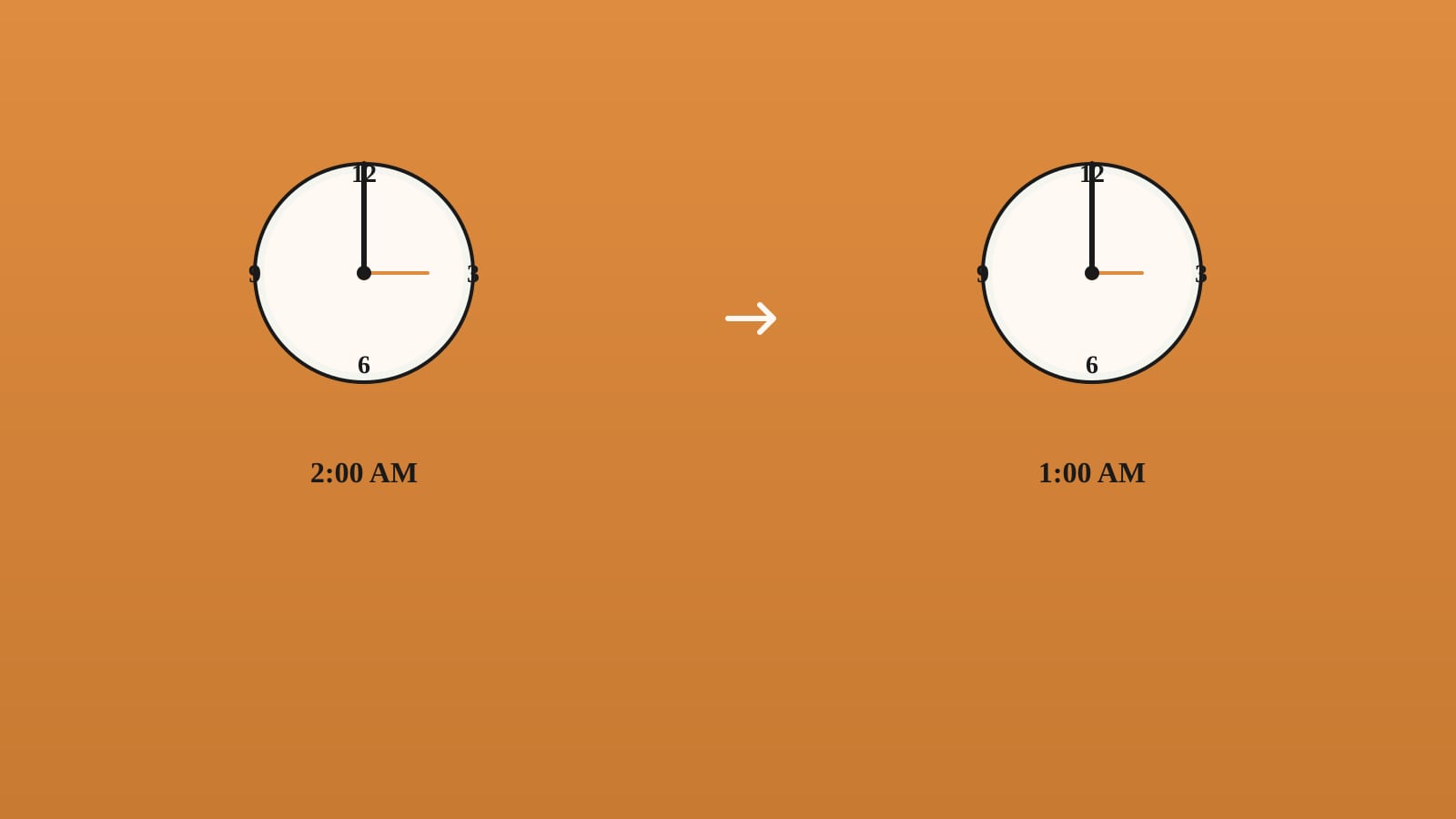
If you're going from waking at eight to waking at six, that's a two-hour shift. You can do it in increments of 15 to 30 minutes every two or three days rather than all at once. It's gentler on your body. Wake at 7:45 on day one, 7:30 on day three, 7:15 on day five, then 7:00 and hold it.
If your shift is smaller, an hour or less, you can probably do it in one go. Your body clock can move that far in a few days with consistent wake times and morning light.
Keep naps under 20 minutes
Napping resets the circadian signal. A 90-minute nap, even at three in the afternoon, tells your body it's having a sleep cycle. That delays your next bedtime and pulls your wake time later.
If you're exhausted in the first few days, nap if you must, but set a timer for 15 or 20 minutes. When it goes off, get up. Anything longer blurs the signal you're sending with your consistent wake time.
Time your meals, exercise, and caffeine
Your body clock responds to more than light. Food, exercise and activity also synchronise it, though light is stronger.
Eat breakfast soon after waking, within an hour if you can. Eat dinner a few hours before bed, not right before. Exercise in the morning if possible. Caffeine has a half-life of five to six hours, so your last coffee or tea should be before mid-afternoon. Alcohol might make you drowsy, but it fragments sleep and suppresses melatonin, so skip it near bedtime.
These are all smaller levers than light and wake time, but they all point the same direction.
Have a wind-down routine
Thirty minutes before bed, finish your work. Don't start something new. Plan tomorrow if you must, then put the phone down and pick something that relaxes you. Read, stretch, do breathwork, take a warm bath. Make it the same every night.
The routine itself becomes a signal. Your body learns that when you do this, sleep is coming.
When to expect improvement
A study of nurses adapting to night shifts found that circadian temperature rhythms adapted gradually, with substantial adjustment by day six of a consistent new schedule. The full-time studies of healthy young adults shifting their wake time show measurable phase movement within a few days when light exposure and wake time are both consistent, with noticeable changes in alertness and sleepiness within a week.
You might feel confused on day two or three, or fall asleep at five in the afternoon. That's your old rhythm colliding with your new one. It passes. By day five, your body clock begins to track the new time. By day seven, most people report falling asleep closer to their new bedtime and waking closer to the target without an alarm pushing them.
This assumes you hit all the levers: a fixed wake time, morning light, darkness at night, no long naps, and consistency on weekends too. Missing one makes it slower. Missing all of them keeps you stuck.
When to see a doctor
If you've held a fixed wake time and morning light for two weeks and your schedule still hasn't shifted, or you fall asleep and wake at the same broken times no matter what you do, see a sleep specialist. Some people have delayed sleep phase disorder or other circadian disorders that need professional help. Others have insomnia on top of the schedule shift. A doctor can tell the difference.
The same goes if you're trying to reset a schedule for a medical appointment or a critical job start that you can't delay. A sleep specialist can sometimes speed the process with additional tools like melatonin timing.
Sources
Revell, V. L., Eastman, C. I., & Sack, R. L. (2005). Circadian Phase Determined from Melatonin Profiles Is Reproducible After 1 Wk in Subjects Who Sleep Later on Weekends. Sleep, 28(2), 195–198. https://stacks.cdc.gov/view/cdc/189996
Healthline. How to Fix Your Sleep Schedule: 12 Tips to Get Back on Track. https://www.healthline.com/health/healthy-sleep/how-to-fix-sleep-schedule
Medical News Today. How to Fix Your Sleep Schedule. https://www.medicalnewstoday.com/articles/how-to-fix-sleep-schedule
Sleep Foundation. Can You Change Your Circadian Rhythm? https://www.sleepfoundation.org/articles/can-you-change-your-circadian-rhythm