Heart rate variability and morning readiness, explained
What heart rate variability measures, why wearables read it most reliably during sleep, and why one morning's readiness score says less than a trend.
Visana Studios
4 min read
Many fitness wearables hand you a readiness score every morning, and a large share of that number comes from heart rate variability, usually shortened to HRV. The score looks precise. Whether it tells you anything useful about getting out of bed is a separate question, and the research answers it more cautiously than the app does.
What HRV actually measures
Your heart does not beat like a metronome. The gap between one beat and the next changes from moment to moment, and HRV is a summary of that variation. Shaffer and Ginsberg's 2017 review in Frontiers in Public Health lays out the main ways researchers measure it. Time-domain measures describe the spread of those beat-to-beat gaps, with common examples being SDNN and RMSSD. Frequency-domain and non-linear measures look for structure in the same series of gaps.
Recording length changes the number, and that surprises many people. The authors say 24-hour, short-term (about 5 minutes) and ultra-short-term values "are not interchangeable," because longer recordings capture slower processes such as circadian rhythms. Longer recordings also tend to produce higher HRV. A reading from a short window cannot be set beside a reading from a full day and treated as the same kind of measurement. Age and sex move typical values as well, which is why reference ranges only make sense alongside the conditions they were measured under.
Higher is not always better. Shaffer and Ginsberg note that pathological conditions can produce HRV, and that certain cardiac conduction abnormalities can push the numbers up. They point out that examining the ECG waveform is how clinicians tell whether an unusually high value reflects a real rhythm problem. A wearable can flag an irregular heartbeat or an odd pattern that worries you. If it does, speak to a doctor. Do not treat it as a fitness score to chase.
Why the morning reading leans on sleep
Most of the reliable wearable data comes from the night, and the reason is measurable. Dudarev and colleagues, in a 2023 tutorial in Sensors, tested six wrist-worn devices across different states. Between-person reliability for heart rate and HRV was higher during calm states than during movement. Walking gave a between-person reliability of 0.37, while rest gave 0.54. Typing and walking were the least consistent of the activities they tested.
The second study in that paper is the more useful one for a morning score. Eight participants wore a single wristband both during sleep and while awake. For HRV, between-person reliability was 0.84 during sleep and 0.39 during wakefulness. Reliability here is an intraclass correlation, a figure that shows how much of the variation in readings comes from real differences between people rather than from measurement noise. A higher number means the device is better at telling people apart. By that measure, sleep readings were far more dependable than daytime ones. The within-person measure for waking HRV was not statistically significant, meaning the device did not show a dependable pattern for one person across waking periods either.
Both findings come from small studies, and the second one had only eight people, one of them male. The numbers describe how a method behaves, not what most people's bodies do. The authors also found that devices differed from one another, with between-person reliability ranging from 0.37 to 0.65 across the six devices in the first study. A readiness score built on one brand's overnight sensor is therefore not interchangeable with another brand's.
Read the trend, not the number
Taken together, the evidence points toward a sensible way to use HRV. A single morning reading carries a wide margin of error, so one low value after a short night may or may not mean much. Comparing your own readings over weeks smooths that noise and shows whether something has shifted. A sustained drop alongside feeling worse is more informative than a single dip.
Even then, the score is a prompt to look at your sleep, not a verdict on it. The studies above measured how reliable a sensor is. None of them shows that a particular score predicts how alert you will feel at 07:00, and a readiness number cannot tell you when your body clock is out of step with your schedule. Those questions still need a look at how much you slept, when you went to bed and when you got up.
Where a wake-up app fits in
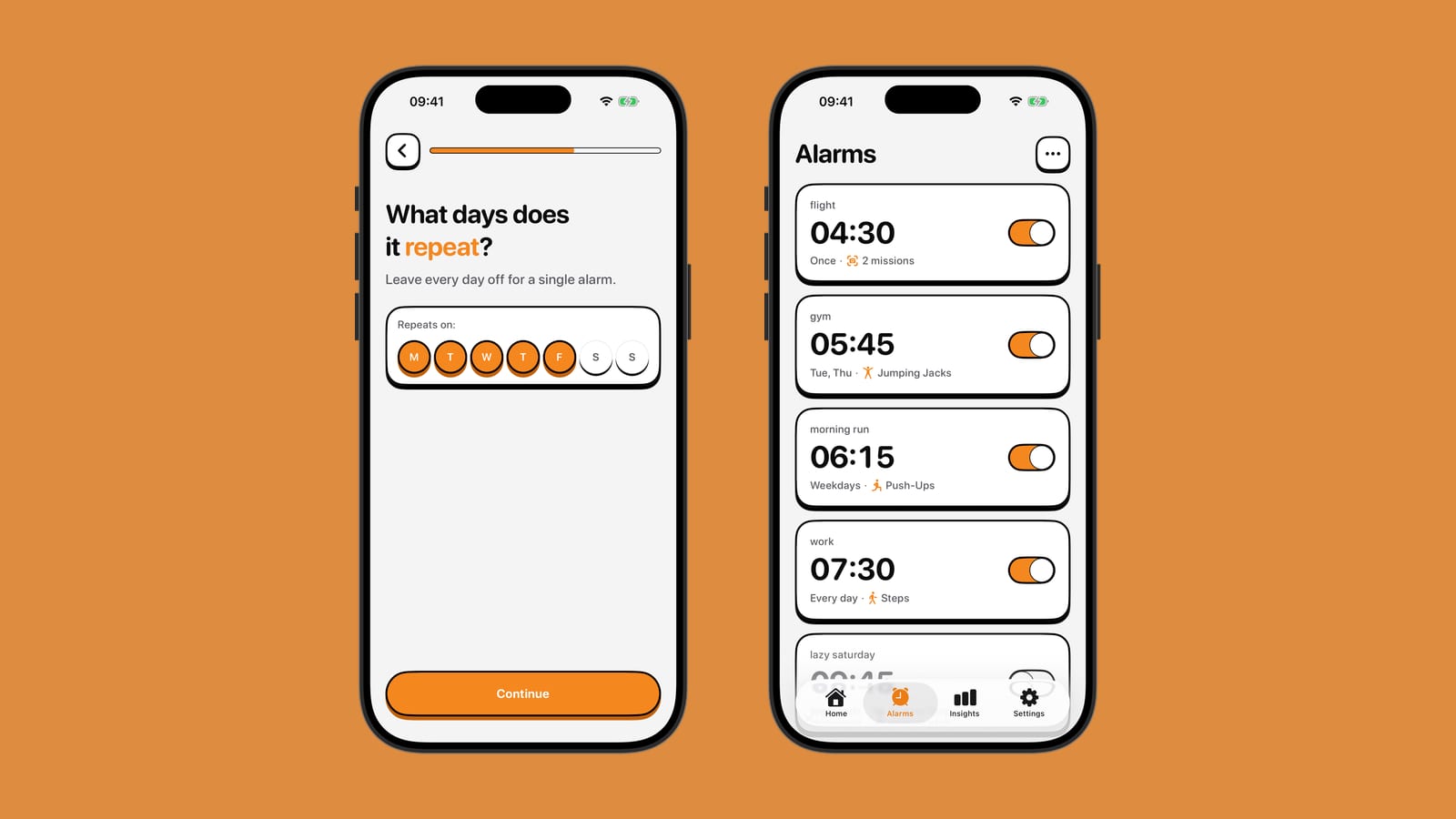
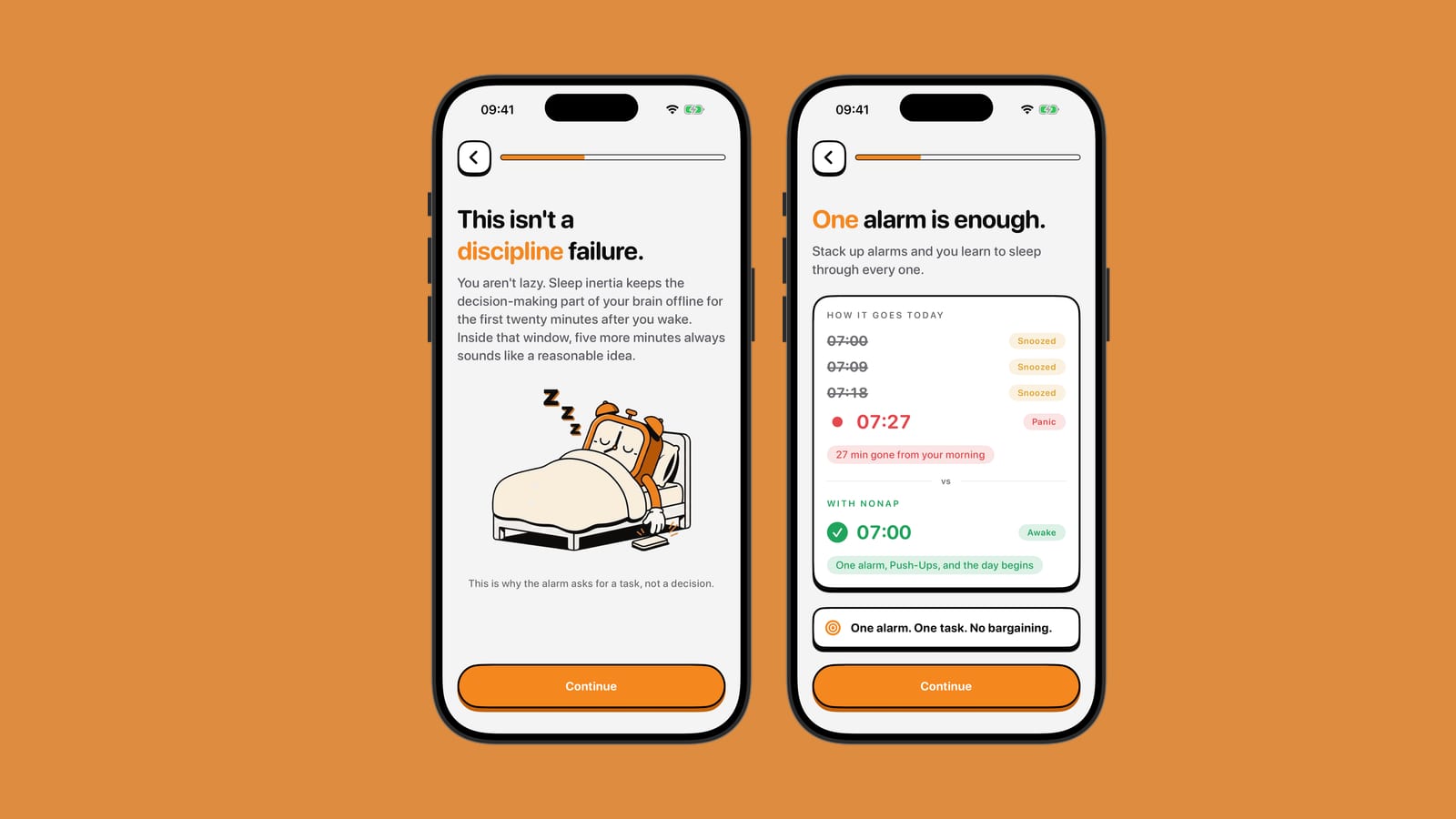
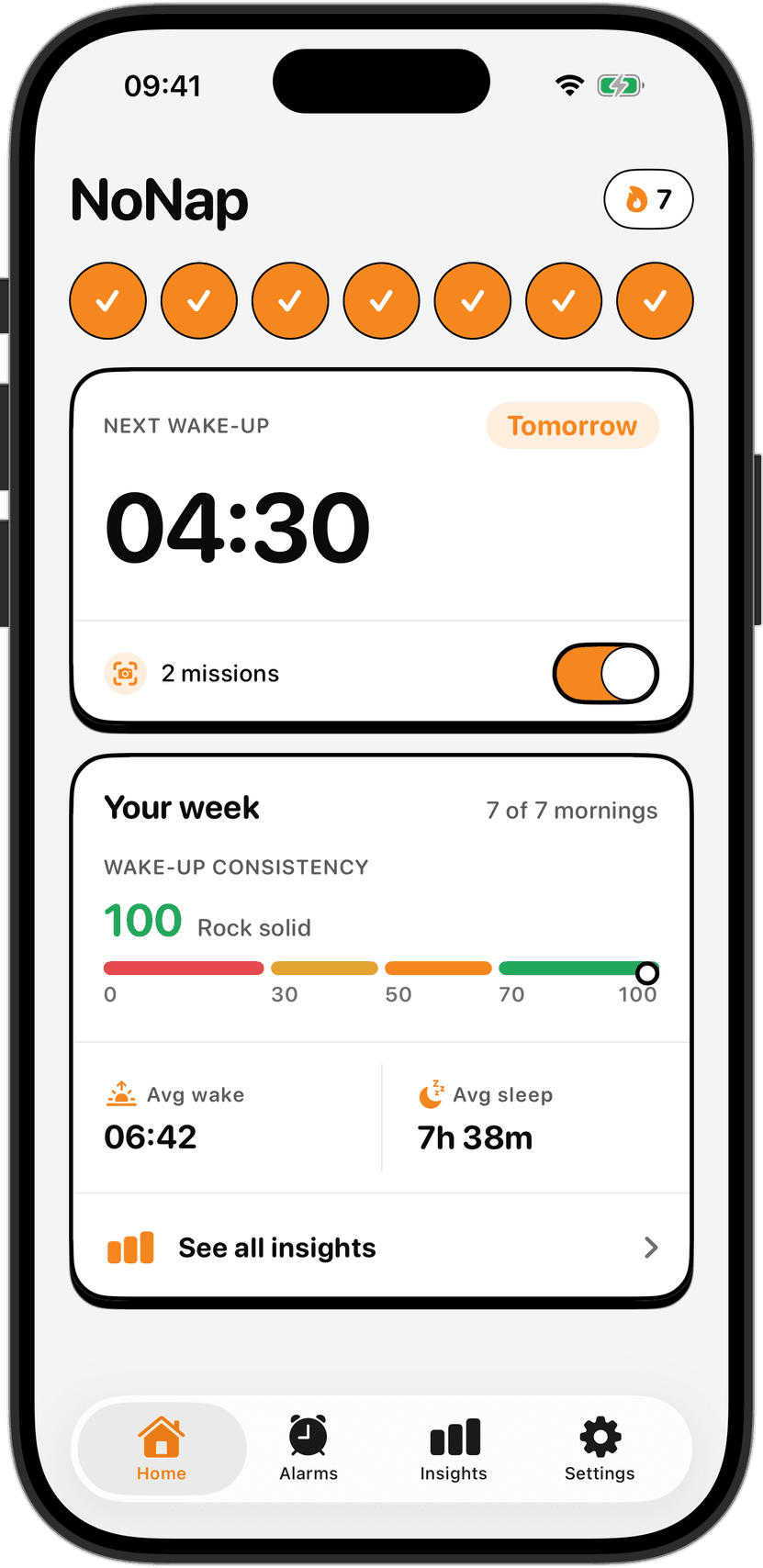
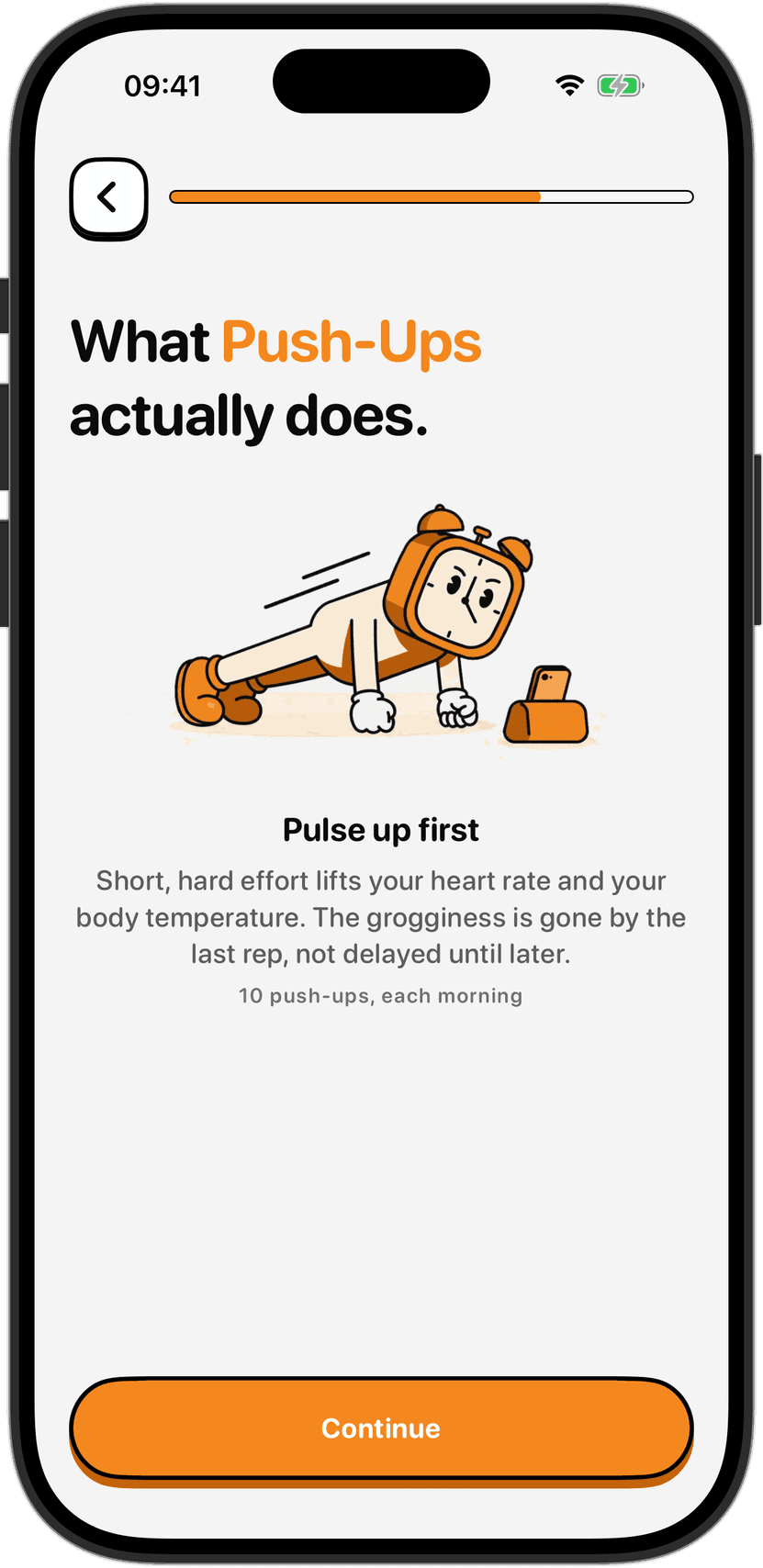
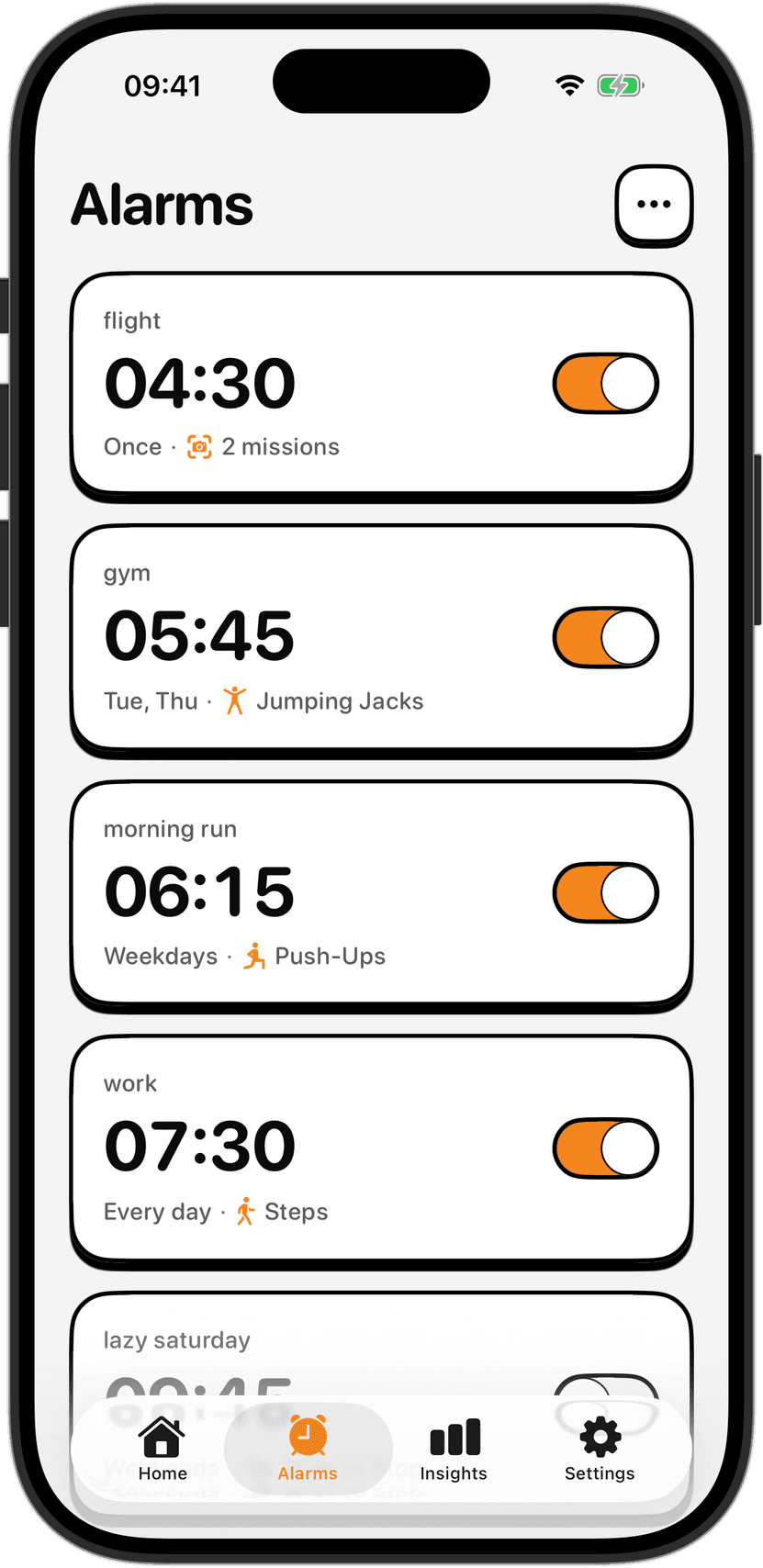
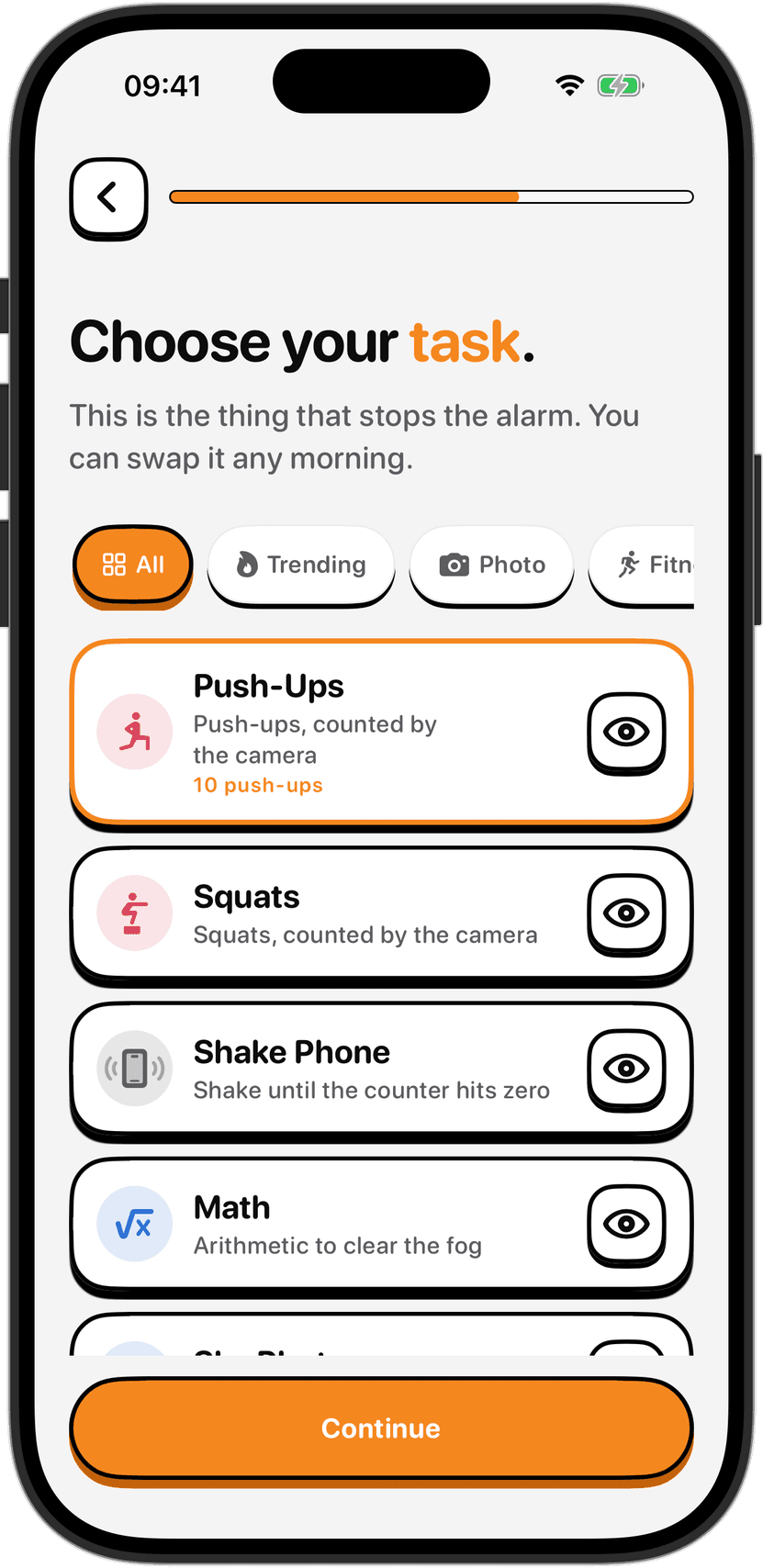
NoNap does not track your sleep. It does not read Apple Health, does not monitor you overnight and does not record audio or video while you sleep. The app's job is the alarm, and the decision to get up is made by completing a wake task you chose in advance, such as push-ups counted by the camera, a math problem or a photo of a made bed. A readiness score can say you slept badly. It cannot get you out of bed, and the wake task is there because the first minutes after waking are a poor time to make that call.
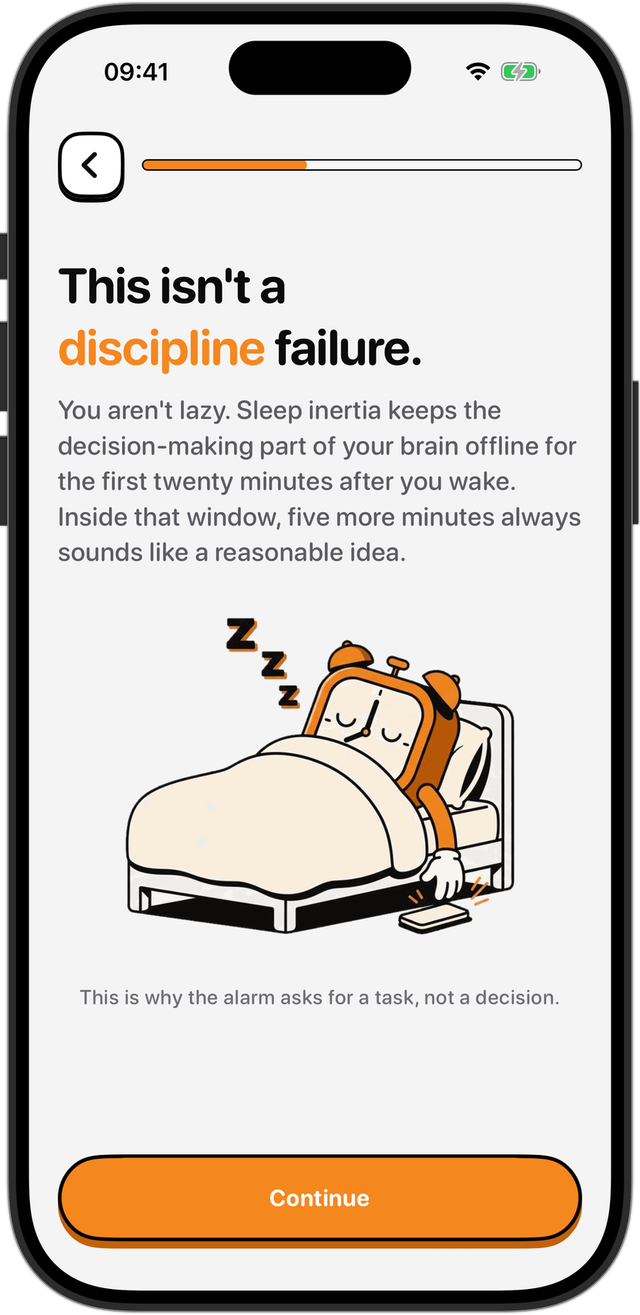
If you are weighing a wearable against an alarm, the difference is simple. A wearable estimates how your body is doing. An alarm with a task makes sure you are up before the day starts. For more on the accuracy of consumer sleep trackers, read how accurate your sleep tracker is, and for the broader question of how the app works, see the FAQ.
Sources
Dudarev, V., Barral, O., Zhang, C., Davis, G., and Enns, J. T. (2023). On the reliability of wearable technology: a tutorial on measuring heart rate and heart rate variability in the wild. Sensors, 23(13), 5863. https://pmc.ncbi.nlm.nih.gov/articles/PMC10346338/
Shaffer, F., and Ginsberg, J. P. (2017). An overview of heart rate variability metrics and norms. Frontiers in Public Health, 5, 258. https://doi.org/10.3389/fpubh.2017.00258
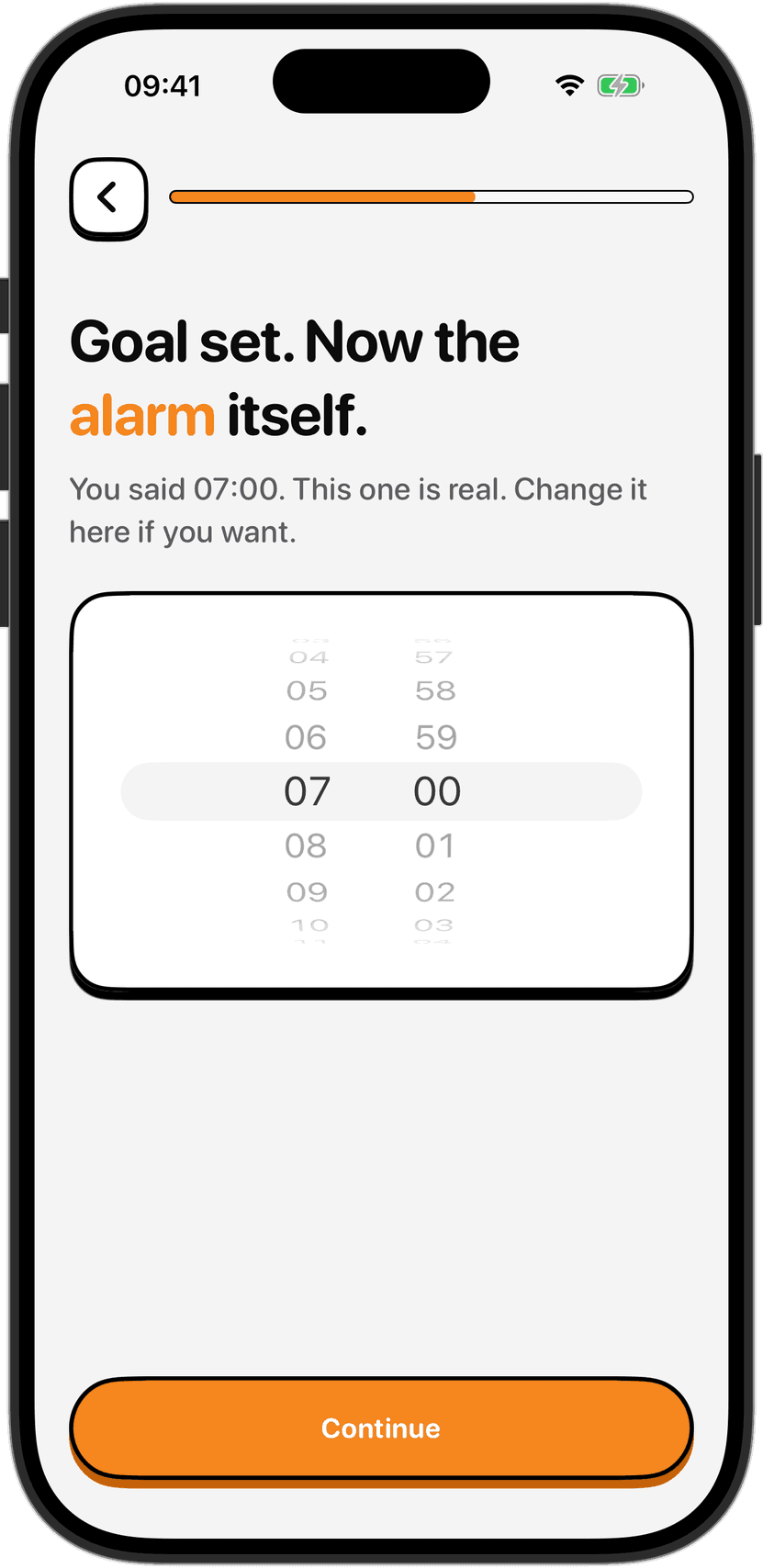
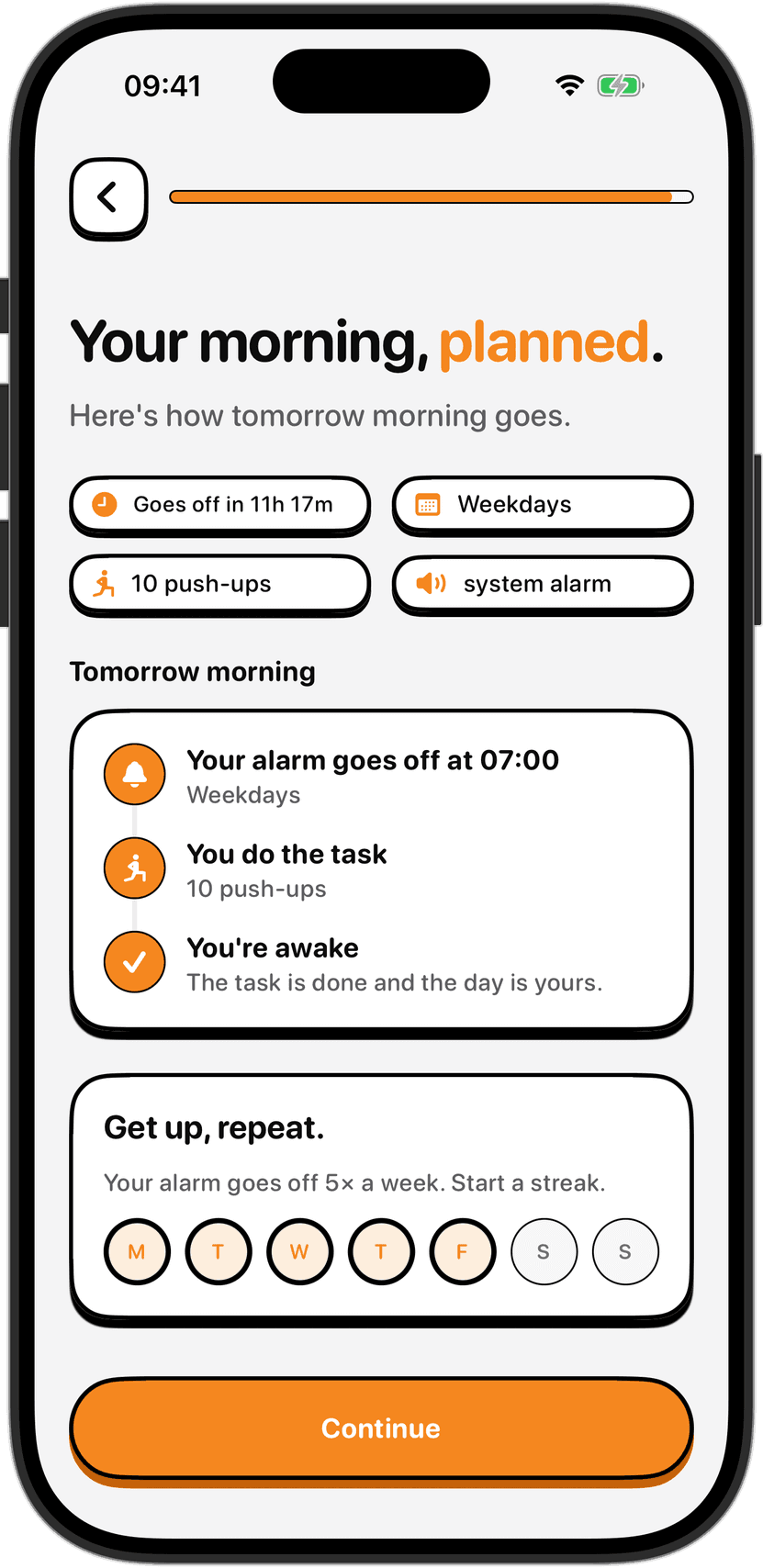
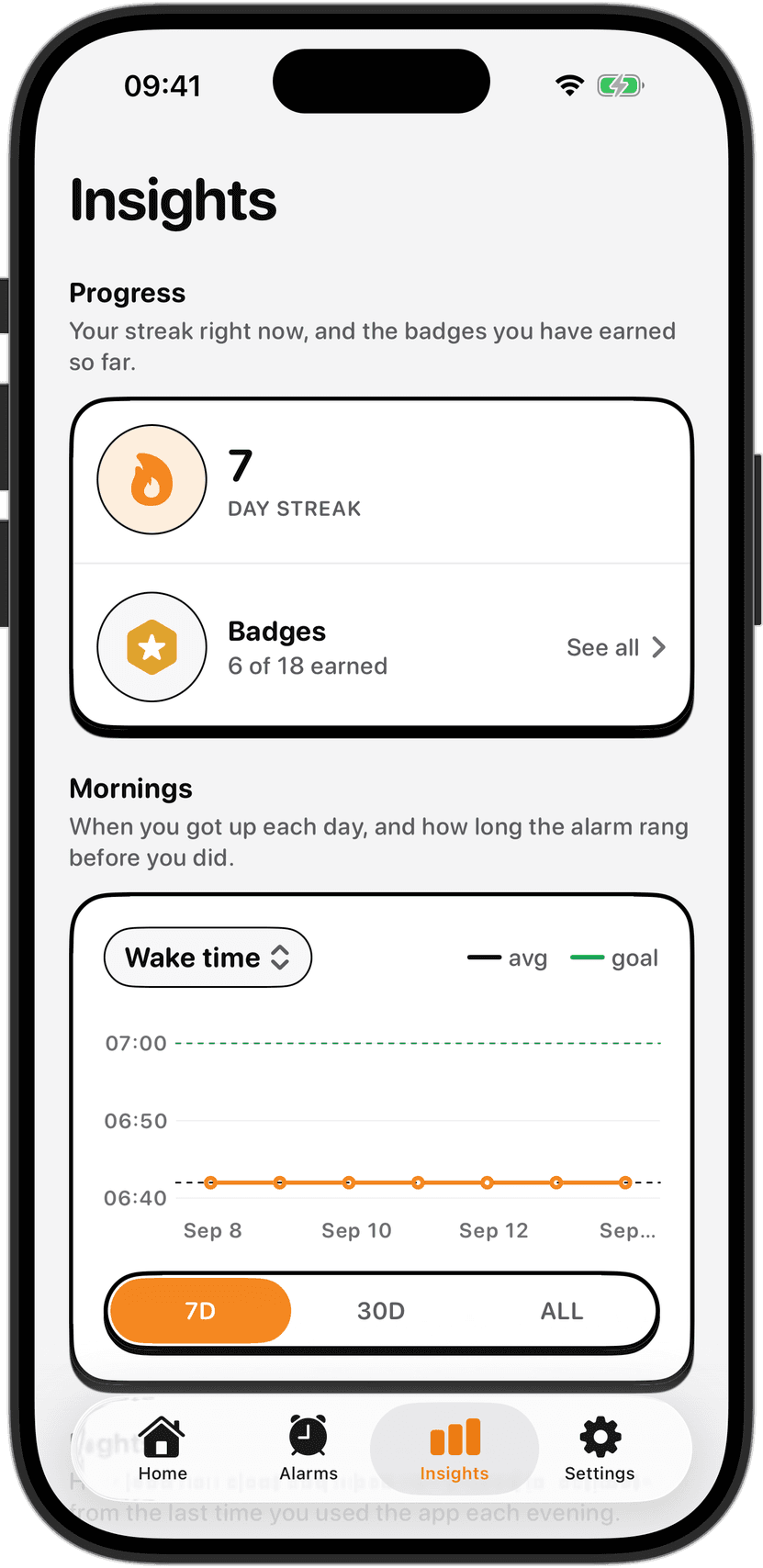
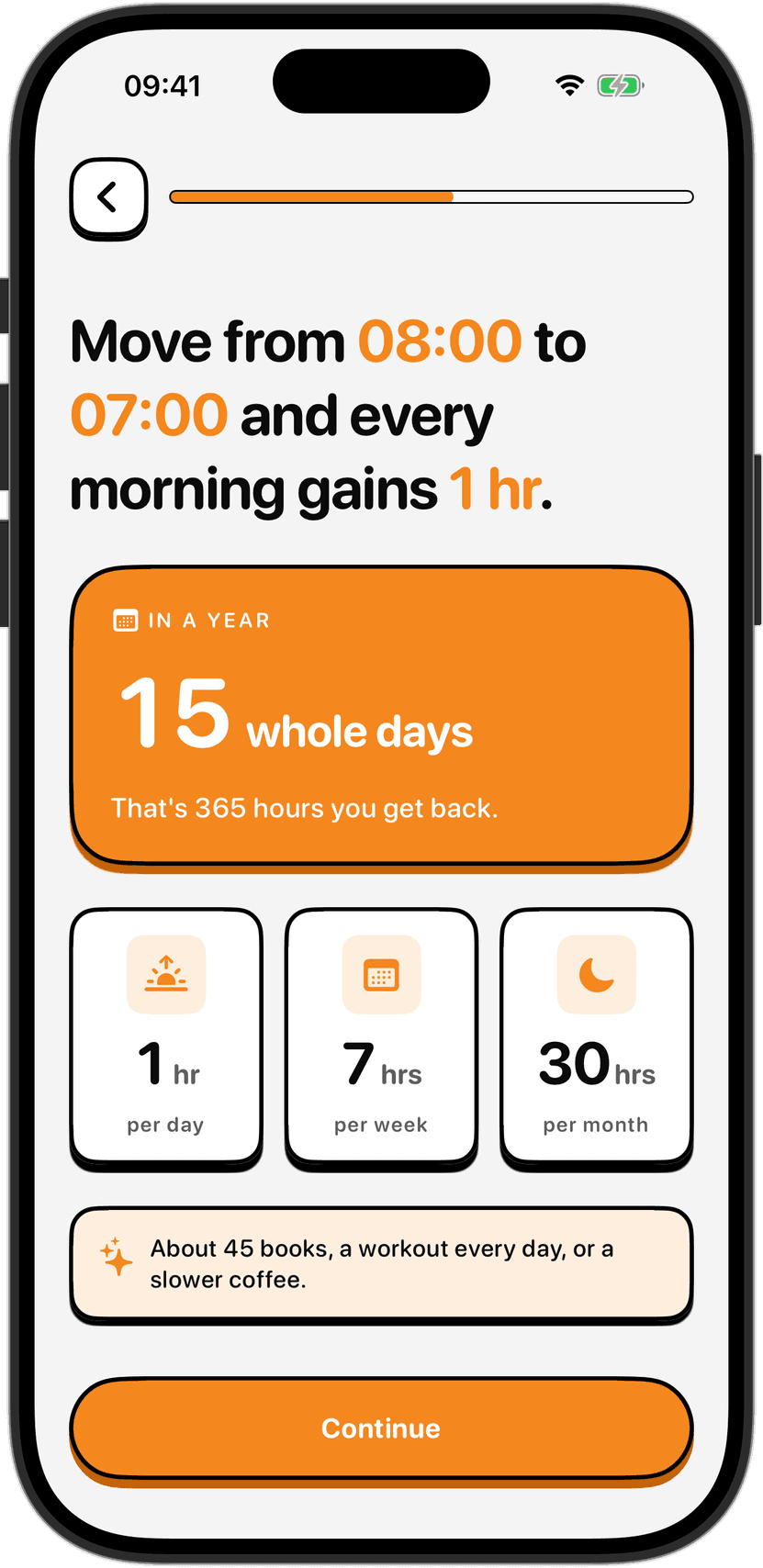
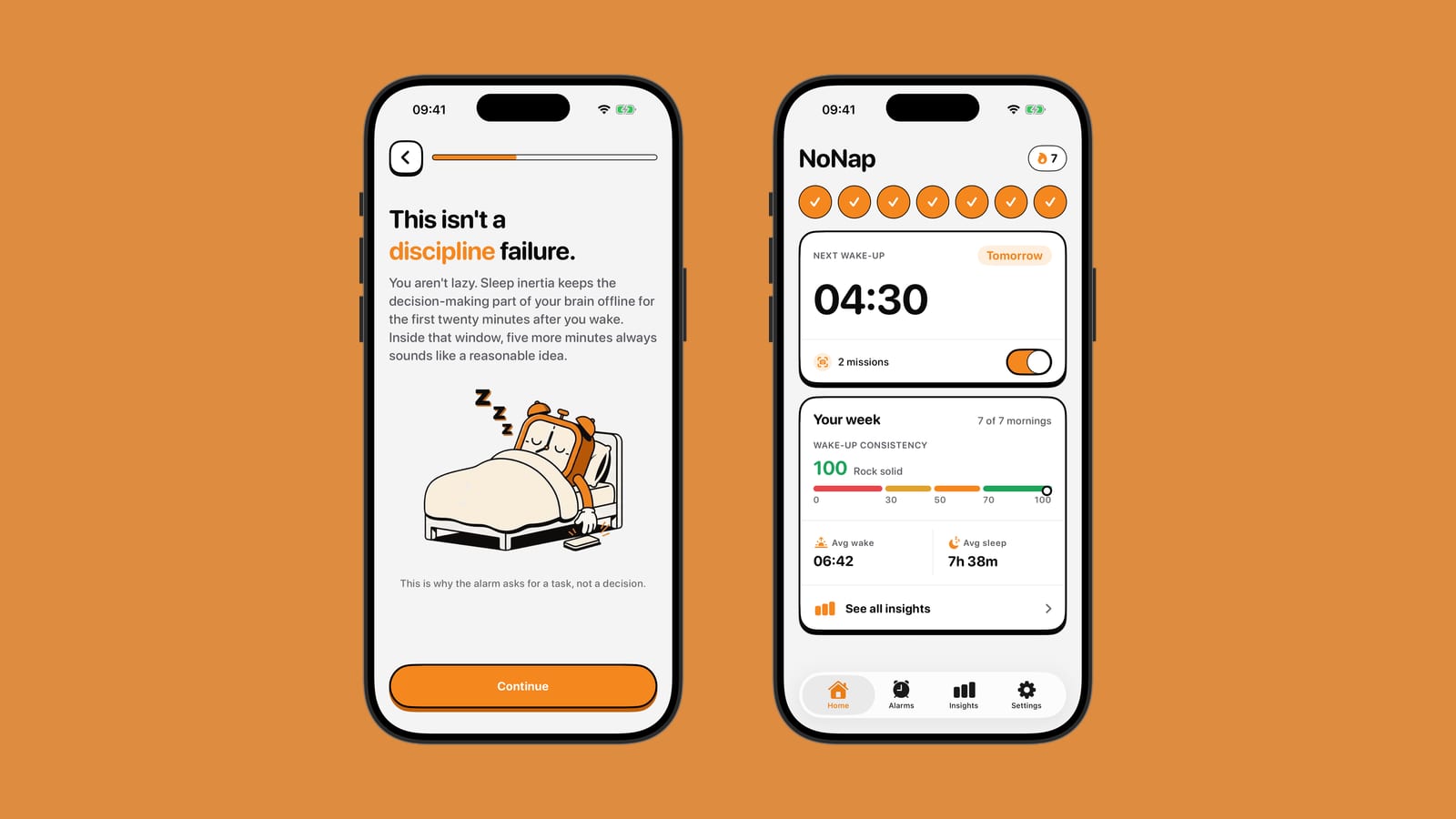
Image credits: both images are NoNap app screenshots made for this post.