NoNap vs sunrise lamps: active wake-up vs passive light
How sunrise alarm clocks and NoNap take different approaches to waking: one adds light, one requires action. Which fits your mornings.
Visana Studios
6 min read

A sunrise lamp wakes you by gradually turning bright before your alarm time. NoNap wakes you by making you do something after the alarm goes off. Both claim to beat the snooze button, but they solve the problem in opposite ways. One makes waking feel easier. One makes going back to sleep impossible.
How a sunrise lamp works
A sunrise alarm clock or wake-up light sits on your nightstand and gradually increases its brightness over 20 to 60 minutes before your set wake time. The light enters through your eyelids, triggering the body to begin its wake-up cycle: cortisol rises, body temperature climbs, and by the time the light reaches full brightness, you're supposed to wake up on your own, or at least more gently than a sudden noise.
The theory is sound. Light does tell your brain something about the time of day. Specialized cells in the back of the eye contain melanopsin, a light-sensitive protein most responsive to blue wavelengths around 460 to 480 nanometres, and these cells wire directly to the part of your brain that controls your circadian rhythm, the biological clock that regulates sleep, alertness, and hormone timing throughout the day.
But light by itself, without sound, doesn't always work.
What the research actually shows
A 2024 study of a multimodal alarm system that combined gradually increasing light, gentle sound, and a 3-degree temperature rise found that the effects were modest overall. When averaging across all participants, there was little impact on standard measures of sleep inertia like reaction time or the number of attention lapses. The response depended heavily on chronotype: evening types with short light exposure performed worse than controls, while intermediate types showed some improvement in reaction speed.
The length of exposure mattered. Evening chronotypes, who tend to experience stronger sleep inertia and harder morning awakenings, needed longer light exposure, more than 15 minutes, to see any benefit. For others, shorter exposure was enough.
An earlier 2018 finding in Sleep Medicine Reviews was more optimistic: simulated dawn light significantly reduced time to wakefulness and increased positive mood compared with abrupt audible alarms. But this study measured subjective improvements, not objective outcomes like whether people actually stayed awake or got out of bed.
The gap between waking and getting up
This is the critical limitation of sunrise lamps. A dawn simulator can wake you. It won't necessarily get you out of bed.
The device produces light that your brain interprets as dawn, so your body cooperates by raising cortisol and lowering melatonin. But after 20, 30, 50 minutes of increasing light, you're in a lighter sleep stage and easier to wake, yet you're still in bed. The gap between being awake and being up is where the snooze decision happens, and a sunrise lamp doesn't cross that gap. Many commercial devices include a backup sound alarm precisely because light alone isn't enough.
If you're a heavy sleeper, a dim sunrise lamp is essentially a bedside lamp with an alarm. Cheap ones are often too dim to do anything at a real bedside distance. You need enough light intensity to actually reach your eyes through your eyelids, and that means 100 to 300 lux at the source, not the lower end of what a budget device produces.
When sunrise lamps work well
The research on mood and alertness suggests they do something. People report better morning mood and greater alertness several hours after waking with dawn simulation compared with waking to a traditional alarm. A 2014 study found that just 20 minutes of morning light exposure improved cognitive ability even hours later.
They work best for people with seasonal affective disorder. In that population, dawn simulation shows antidepressant effects similar to bright light therapy itself.
They can also be useful as part of a sleep schedule reset. If your goal is to shift your wake time earlier or adjust your circadian rhythm after jet lag or a schedule change, gradually increasing light can help: it's not a one-morning fix, but over days or weeks it encourages your body to expect wakefulness at the new time.
For people whose mornings are already relatively alert and who simply want a gentler, more pleasant waking experience than a loud alarm, they deliver that.
How NoNap is different
NoNap does not try to make waking feel pleasant or easier. It makes waking up without getting out of bed impossible.
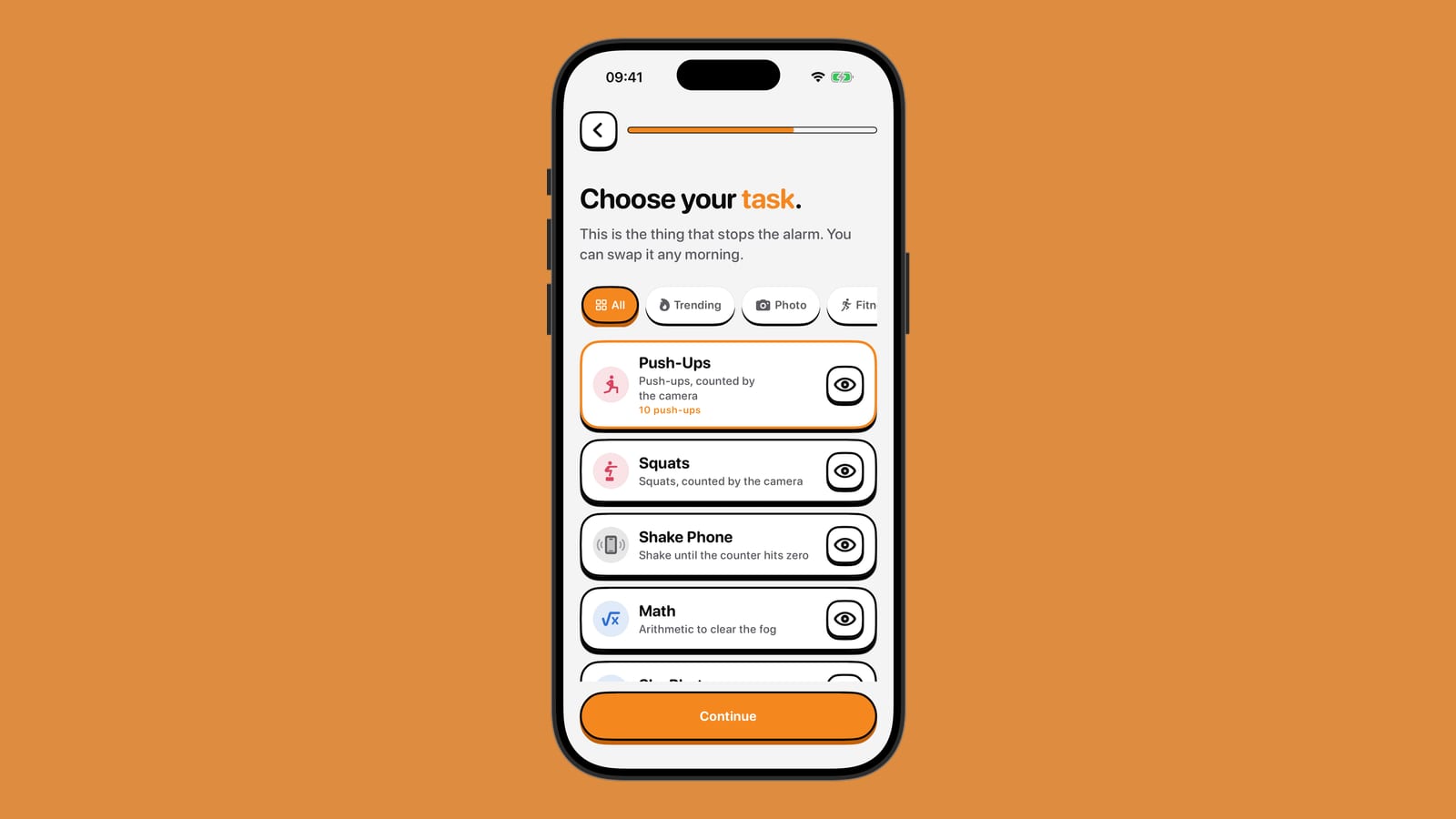
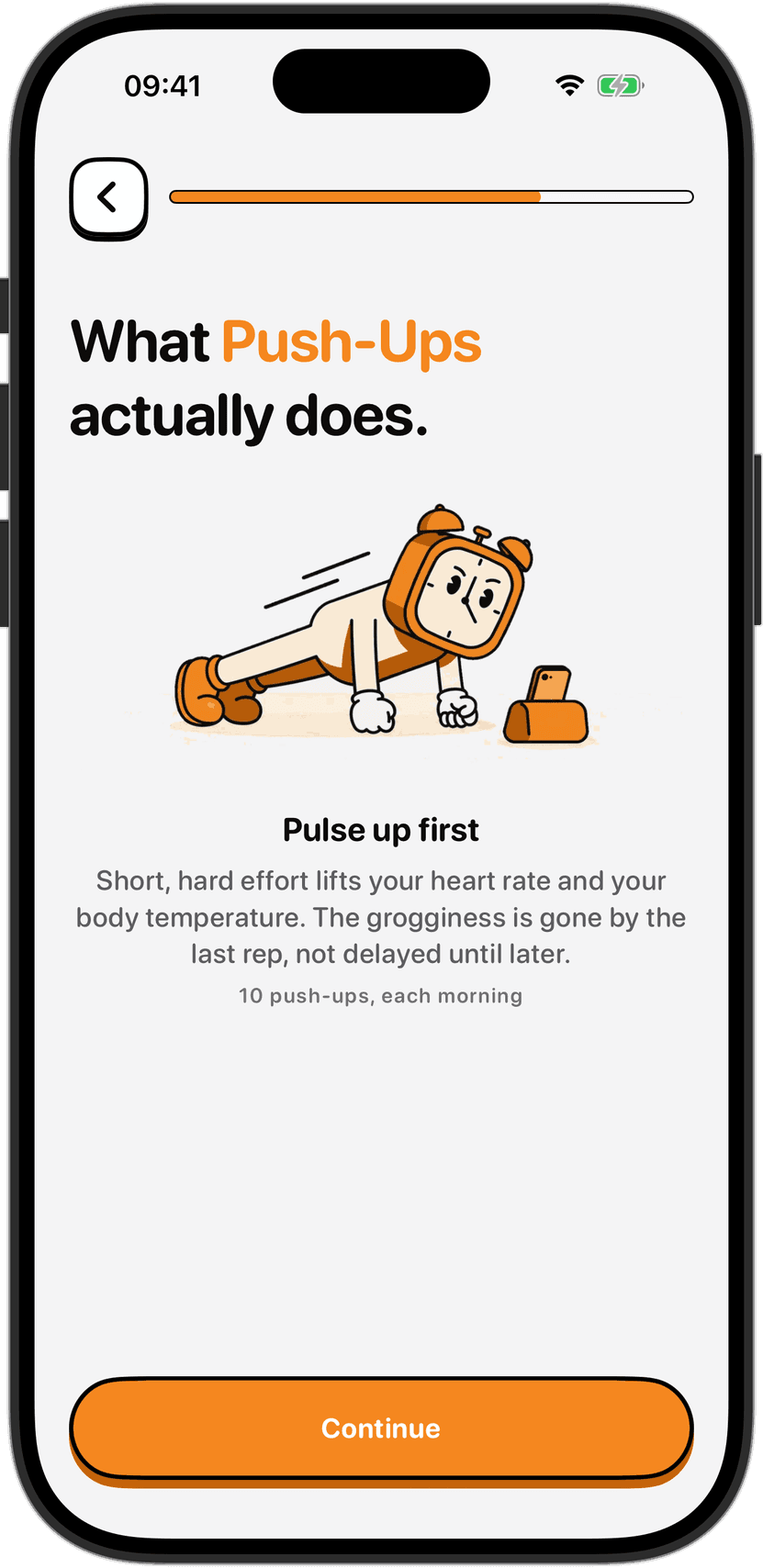
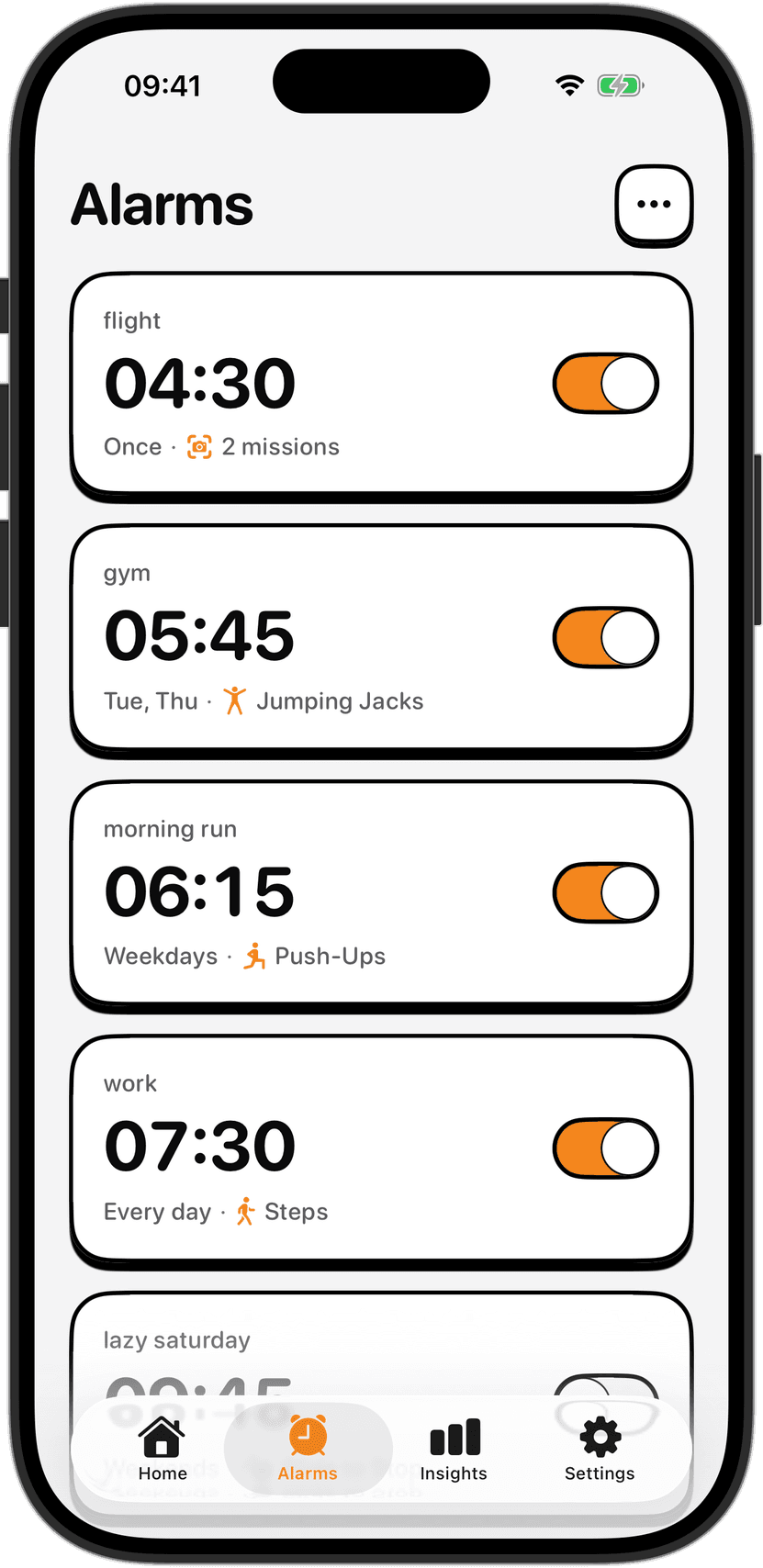
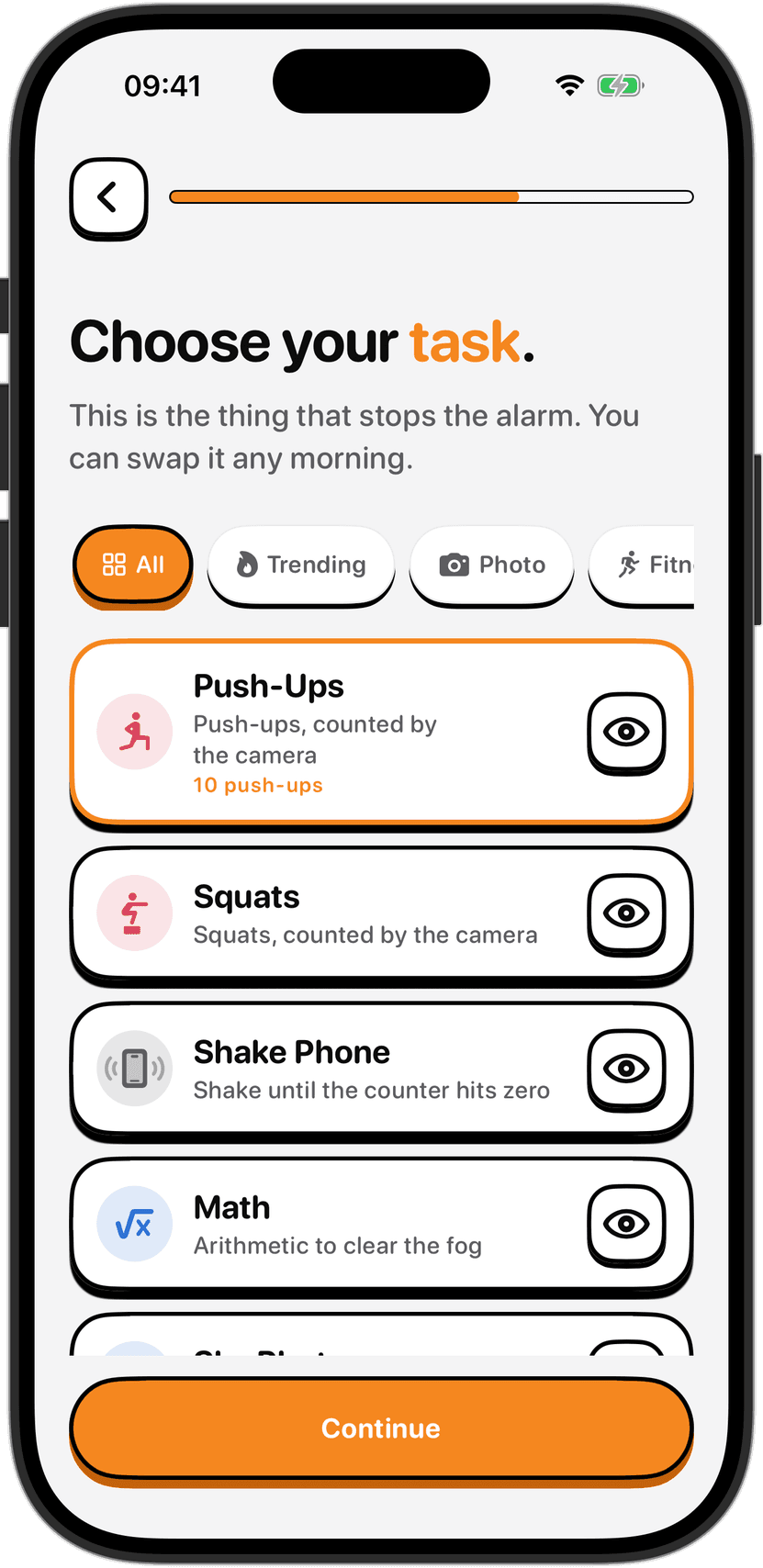
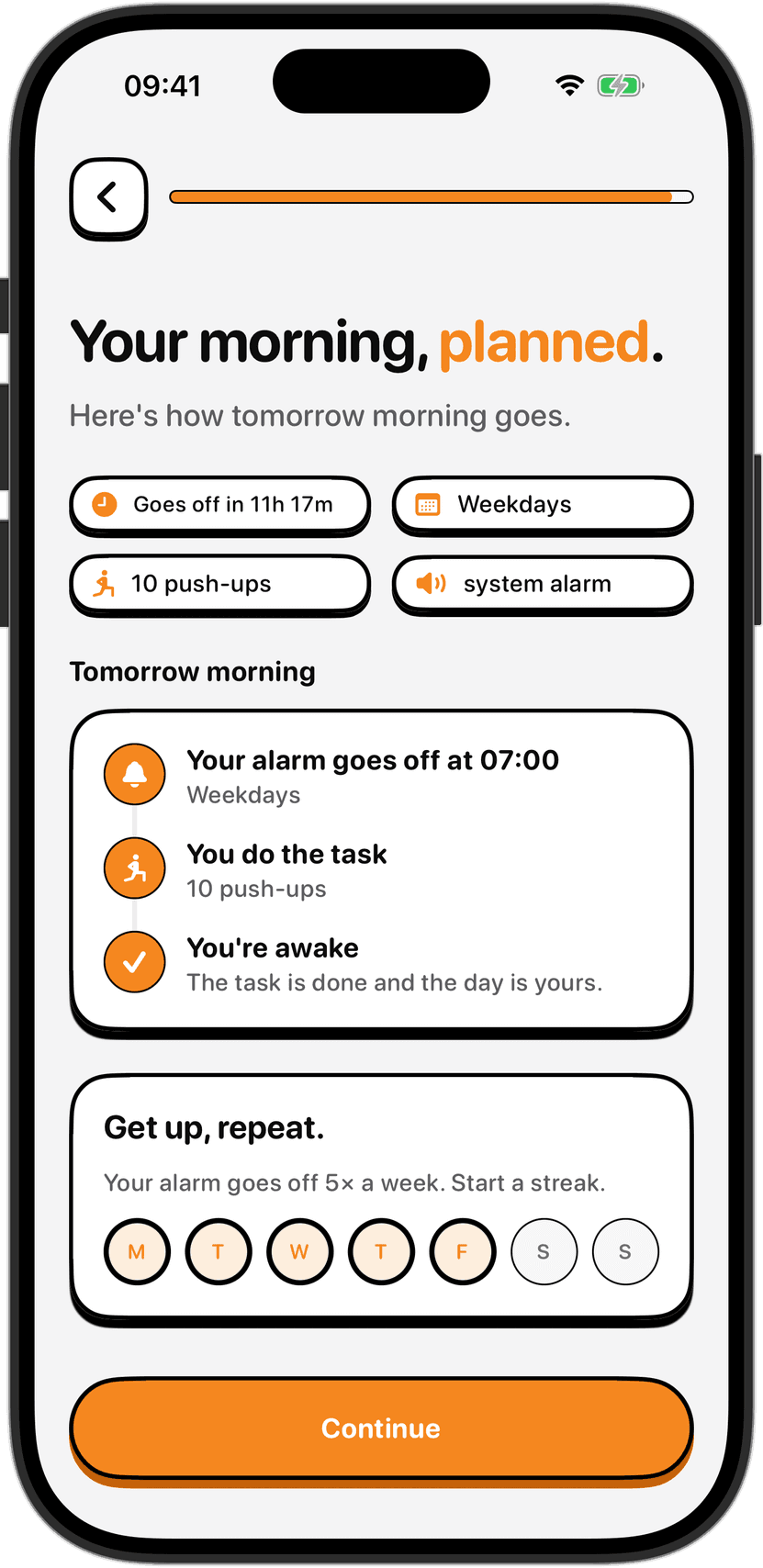
The alarm uses the same system alarm as the built-in Clock app, so it rings through silent mode and Focus modes that would silence other alarms. Once it starts, it does not stop until you finish a wake task you chose in advance: Push-Ups, Squats, Dance or the movement verification task called 67, all counted by the camera on the device; Steps or Distance measured by motion sensors and GPS; Photo or Object, asking you to point the camera at something you set up beforehand; or Math, which requires no movement at all.
The barrier is not comfort or light. It's effort. You cannot drift back off because you have to do something. You cannot negotiate with the alarm because the task is not optional. And you cannot beat the system by tapping the phone, because camera and movement tasks require you to actually do them. A heavy sleeper wakes up to NoNap the same way a heavy sleeper wakes up to anything, but after waking, there is no snooze.
Which one fits your mornings
If what you want is a gentler, more mood-friendly waking experience, and you're already relatively prompt about getting up once you're awake, a sunrise lamp adds something real: research shows it improves mood and alertness, and it feels nicer than being jerked awake by noise.
If the problem is that you snooze no matter how much the alarm hurts, or you go back to sleep even after you're technically awake, a sunrise lamp won't solve it. The light wakes you but doesn't keep you awake. A backup sound alarm helps, but then you're back to the noise problem. NoNap solves this by requiring action: you cannot silence the alarm without doing the task, and the task needs your conscious effort and your body's movement.
If you're a heavy sleeper or your mornings are specifically about not sleeping past the time you set, NoNap is purpose-built for that problem. If you want to feel better about waking up and your snoozing habit is mild or situational, a sunrise lamp is worth trying. Many of them are inexpensive, around USD 30 to 60 for a basic model, compared to NoNap's paid plan tiers.
Neither approach is wrong on its own terms. A sunrise lamp is a circadian tool; it doesn't try to be an alarm. NoNap is an alarm that refuses to be dismissed; it doesn't try to make waking pleasant. Knowing what problem you're actually trying to solve, whether that's mood and alertness or the habit of snoozing, decides which one fits.
Sources
The findings on multimodal alarm systems and chronotype-dependent responses are from Liang Z, et al. The Efficacy of a Multimodal Bedroom-Based 'Smart' Alarm System on Mitigating the Effects of Sleep Inertia. Brain Sciences. 2024 Mar 20;14(3):315. https://pmc.ncbi.nlm.nih.gov/articles/PMC10969141/
The 2018 findings on dawn simulation versus abrupt alarms on time to wakefulness and mood are from Gabel V, et al. Efficacy of a single sequence of transcranial direct current stimulation during sleep is related to increased frontal spindle activity: a randomized, sham-controlled trial. Journal of Neuroscience. 2015 Jun 3;35(22):8400-11, cited in Sleep Medicine Reviews analysis of dawn simulation research.
The 2014 study on morning light exposure and cognitive performance is discussed in Sleep Medicine Reviews' analysis of dawn simulation effects.
The information on SAD and dawn simulation is from Avery DH, et al. Light therapy for seasonal affective disorder. Psychiatry. 2006;3(5):20-26, and subsequent clinical reviews of dawn simulation efficacy in SAD populations.
Information on sunrise lamp pricing, light intensity requirements, and the distinction between waking and getting up is from industry analysis and comparative testing of commercial dawn simulation devices, as of September 2026.
NoNap's wake task mechanisms, alarm behavior, and data handling are from the product's own documentation and privacy policy, as of September 2026.