Sleep inertia and the snooze button
Why the first minutes after an alarm feel so hard, what the research on snoozing actually found, and why one alarm with a task beats a stack of six.
Visana Studios
4 min read
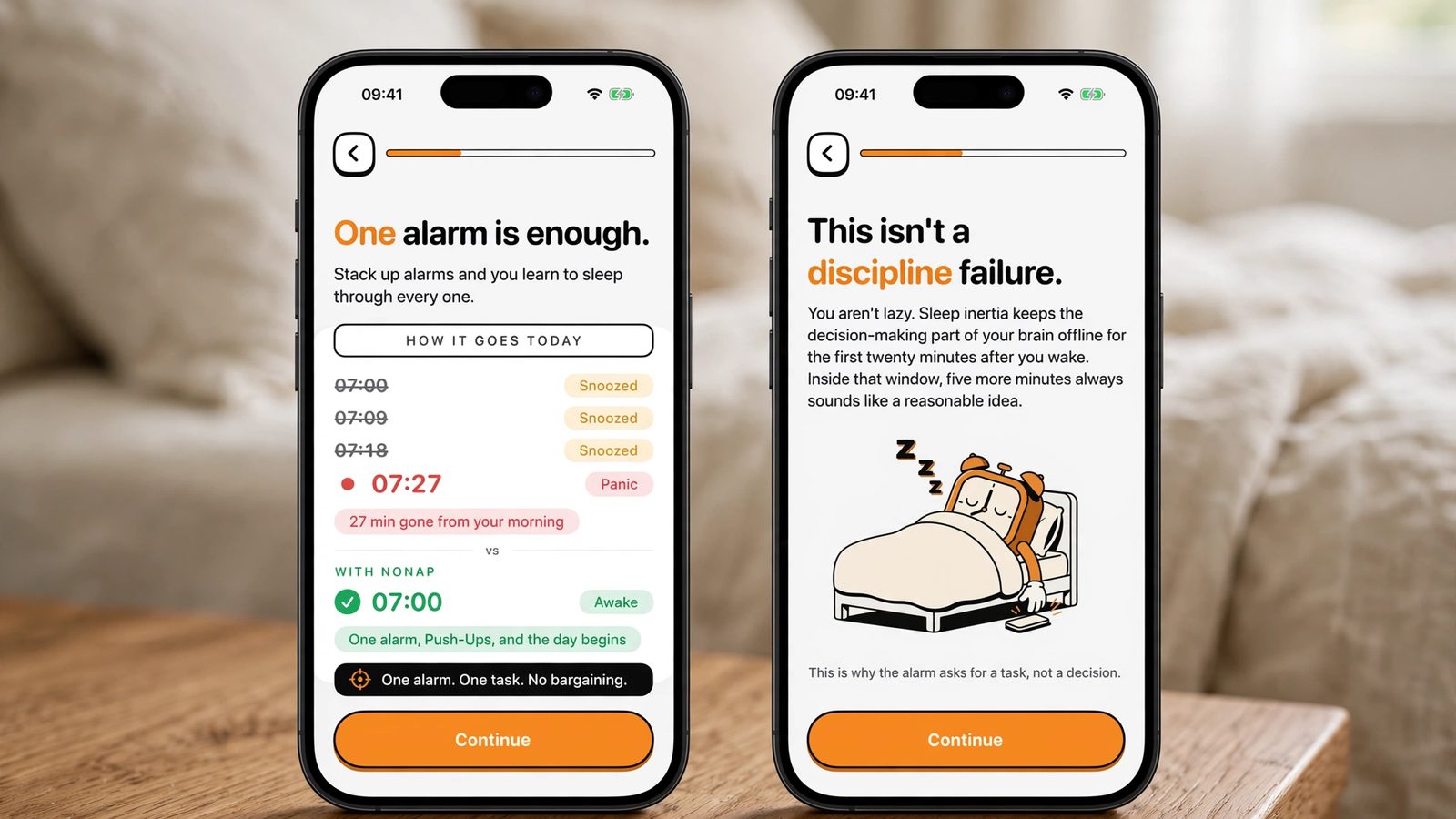
The alarm goes off at 07:00, and for a few minutes you are not quite the person who set it. That person had a plan. The one holding the phone has a single, very persuasive argument for nine more minutes. Sleep researchers have a name for the gap between the two: sleep inertia.
What sleep inertia is
Sleep inertia is the stretch of low alertness and impaired performance that follows waking. Reaction times slow. Working memory slips, and the pull back toward sleep is at its strongest. A 2019 review by Hilditch and McHill in Nature and Science of Sleep reports that it usually fades within 15 to 60 minutes, although some effects remain measurable for several hours.
How bad it gets depends on the night behind it. Waking out of slow-wave sleep, the deepest stage, produces heavier inertia than waking from lighter sleep. A short or broken night makes it worse, and so does waking during your biological night, when the body clock still expects you to be asleep.
None of this is a character flaw. Balkin and colleagues used PET imaging in 2002 to track blood flow in the brain during the first minutes of waking. Regions that control basic arousal came back quickly, while the prefrontal cortex, which handles planning and weighing consequences, lagged behind. Whether to get up is exactly the sort of decision that region exists for, and at 07:01 it has barely clocked in.
What snoozing does, and what it doesn't
You have probably read that snoozing ruins your day. The evidence is messier than that. In 2023, Sundelin, Landry and Axelsson published two studies in the Journal of Sleep Research. Of 1,732 people surveyed, 69 percent said they used the snooze button or set several alarms at least some of the time, and the people who snoozed spent an average of 22 minutes doing it each morning. The second study brought 31 habitual snoozers into a sleep lab. Half an hour of snoozing cost them about six minutes of sleep and did not measurably worsen mood, sleepiness or the morning rise in cortisol. On some cognitive tests they did slightly better after snoozing, possibly because the extra alarms made it less likely they would be pulled straight out of deep sleep.
One morning of snoozing, then, is not a disaster. The cost shows up in other places.
Start with time. Twenty-two minutes a day is more than two and a half hours a week spent neither asleep nor up. The dozing between alarms comes in nine-minute pieces, which is hard to count as rest.
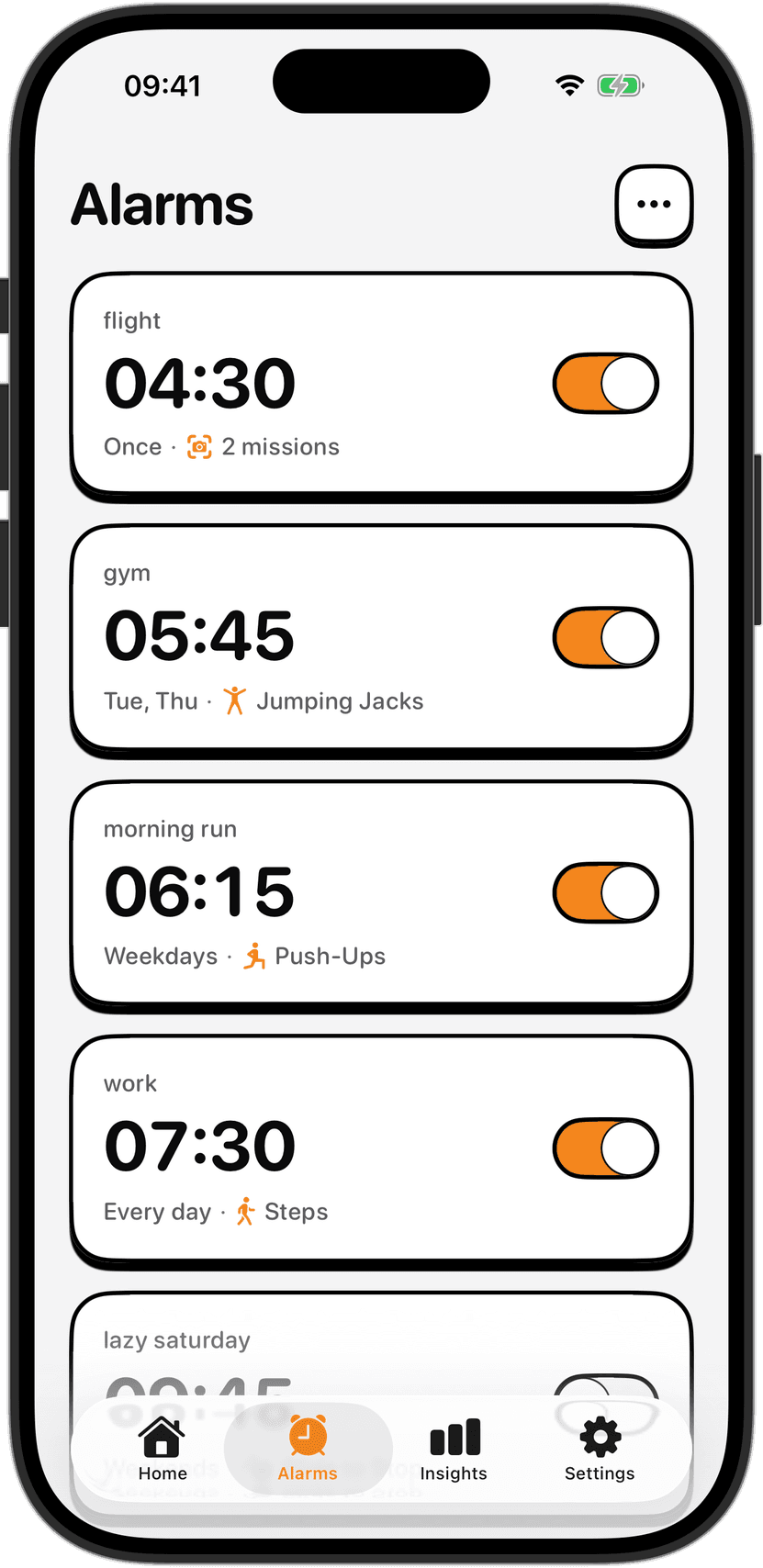
Habit is the bigger problem. An alarm you can silence without consequence teaches you, morning after morning, that the first alarm is a suggestion. A second alarm gets added to back it up, and then a third. Six alarms rarely start as six. Each one arrives after the one before it stopped working.
Taking the decision out of the morning
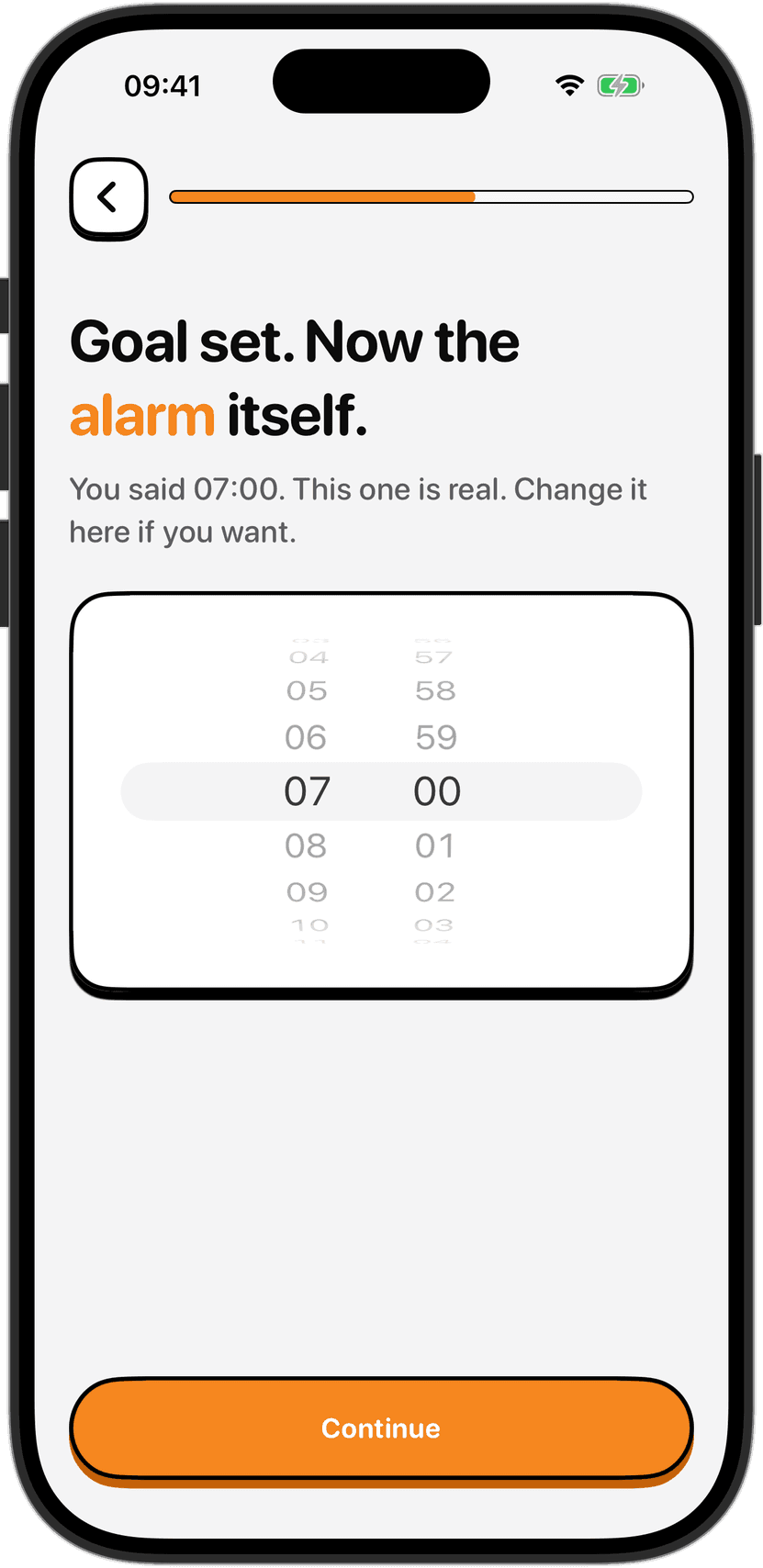
If sleep inertia turns the half-awake brain into a poor negotiator, the practical fix is to stop negotiating. Set one alarm, at the time you actually mean to get up, so there is nothing left to bargain over. Then give the waking brain a task in place of a choice.
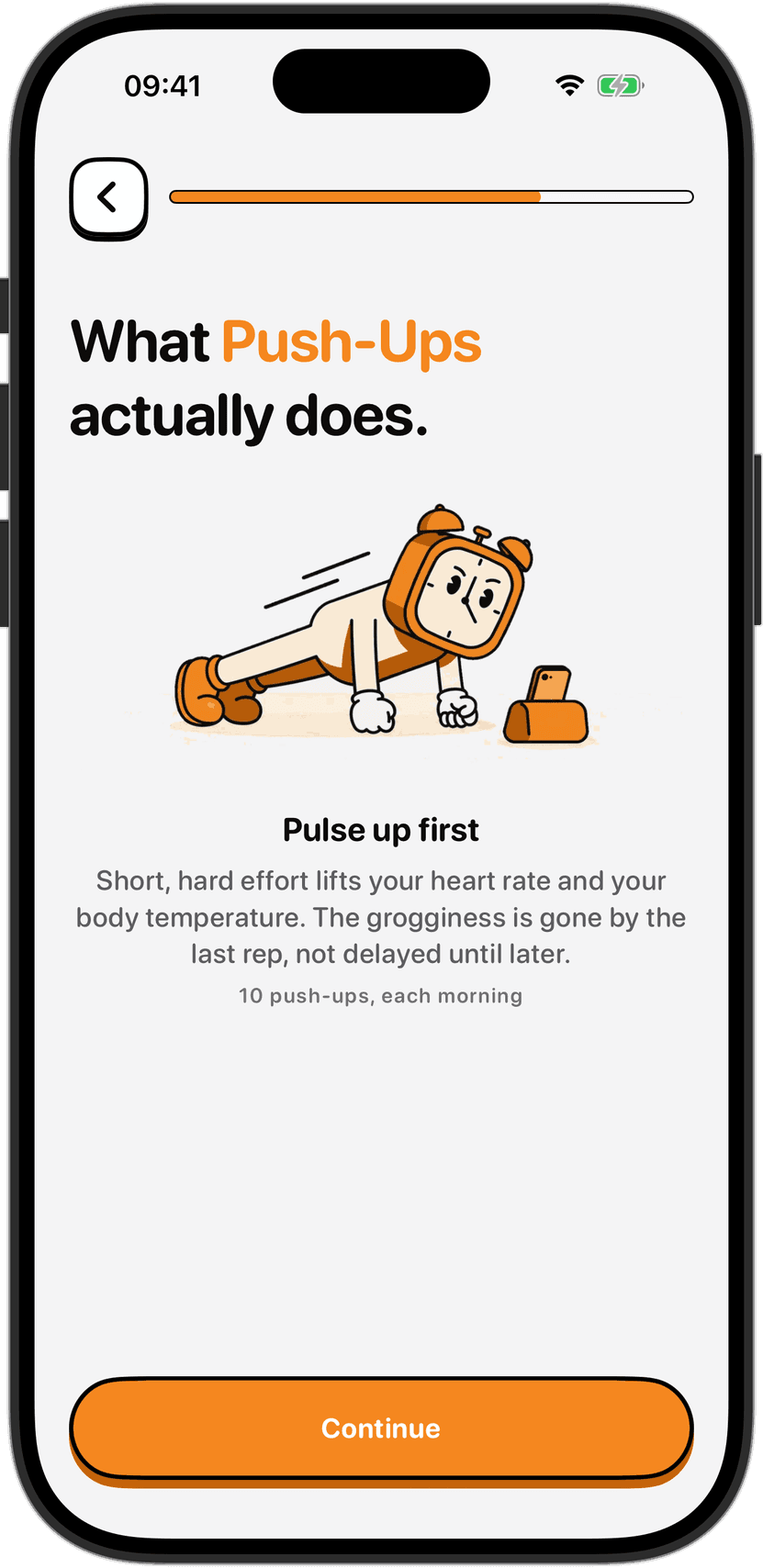
Physical effort makes a good task. A short set of push-ups or squats raises heart rate and core body temperature, and across a normal day both climb in step with alertness. Bright light pushes in the same direction, which is why opening the curtains helps. A math problem does less for the body, but it still means being upright and thinking before the alarm will stop.
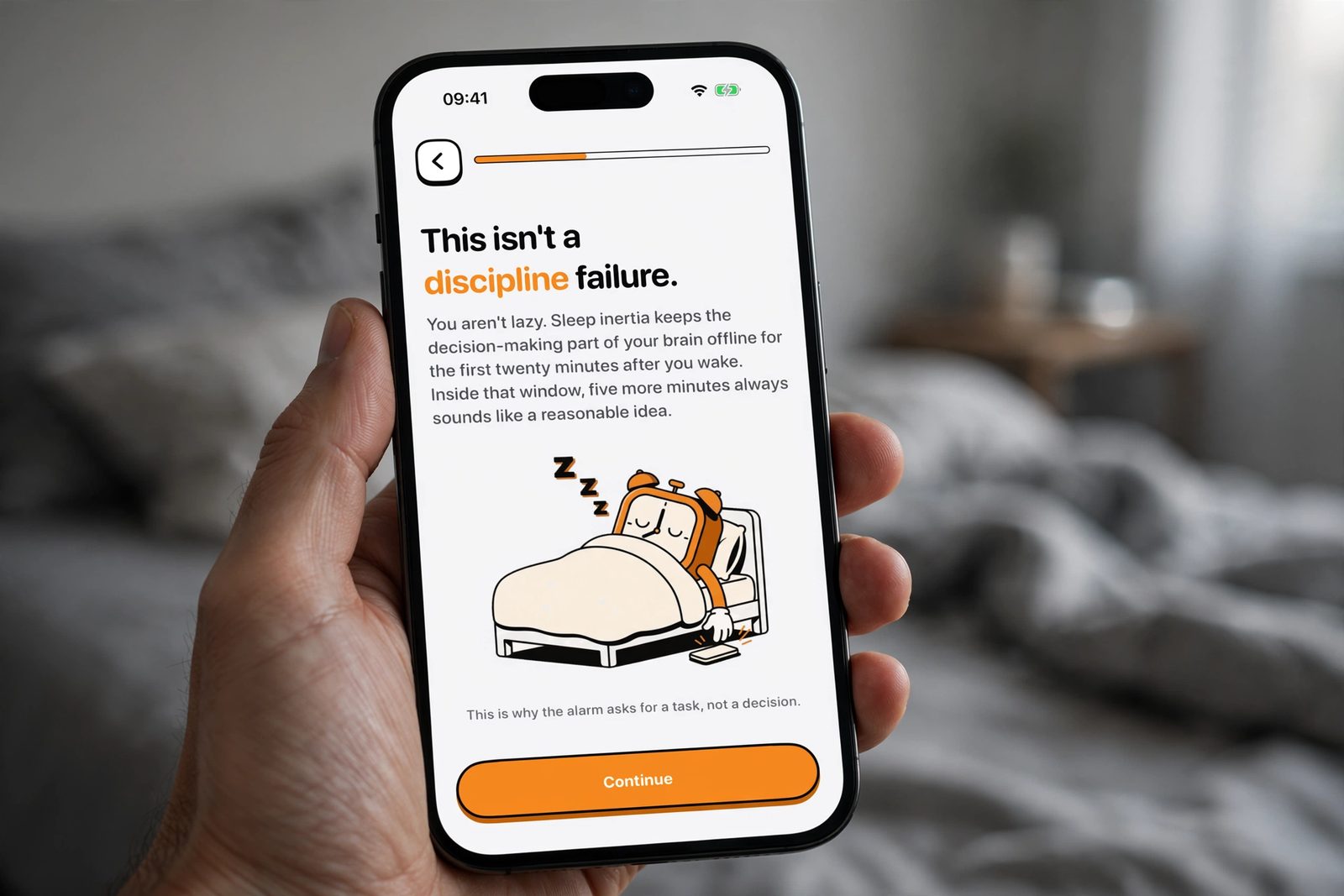
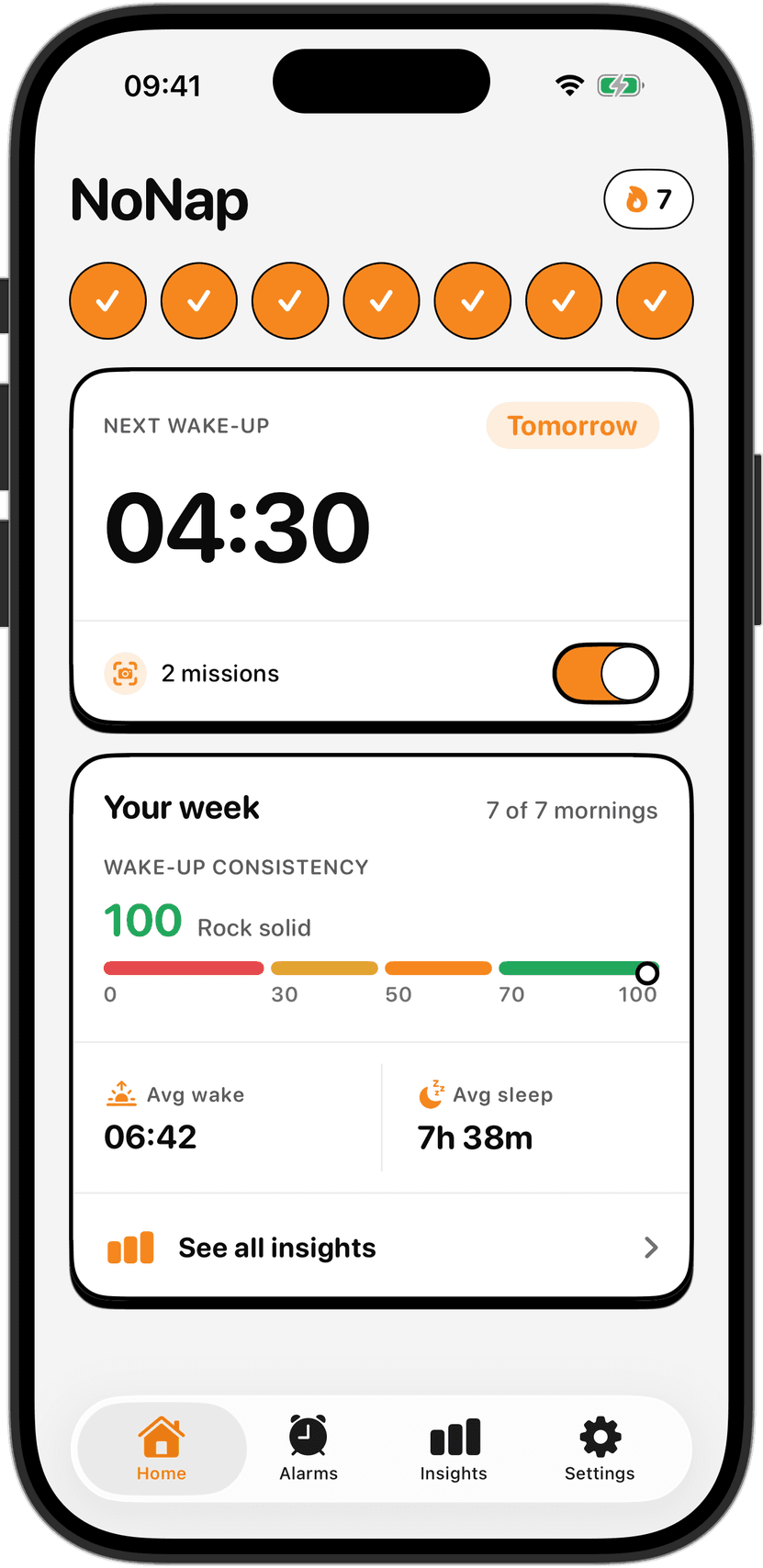
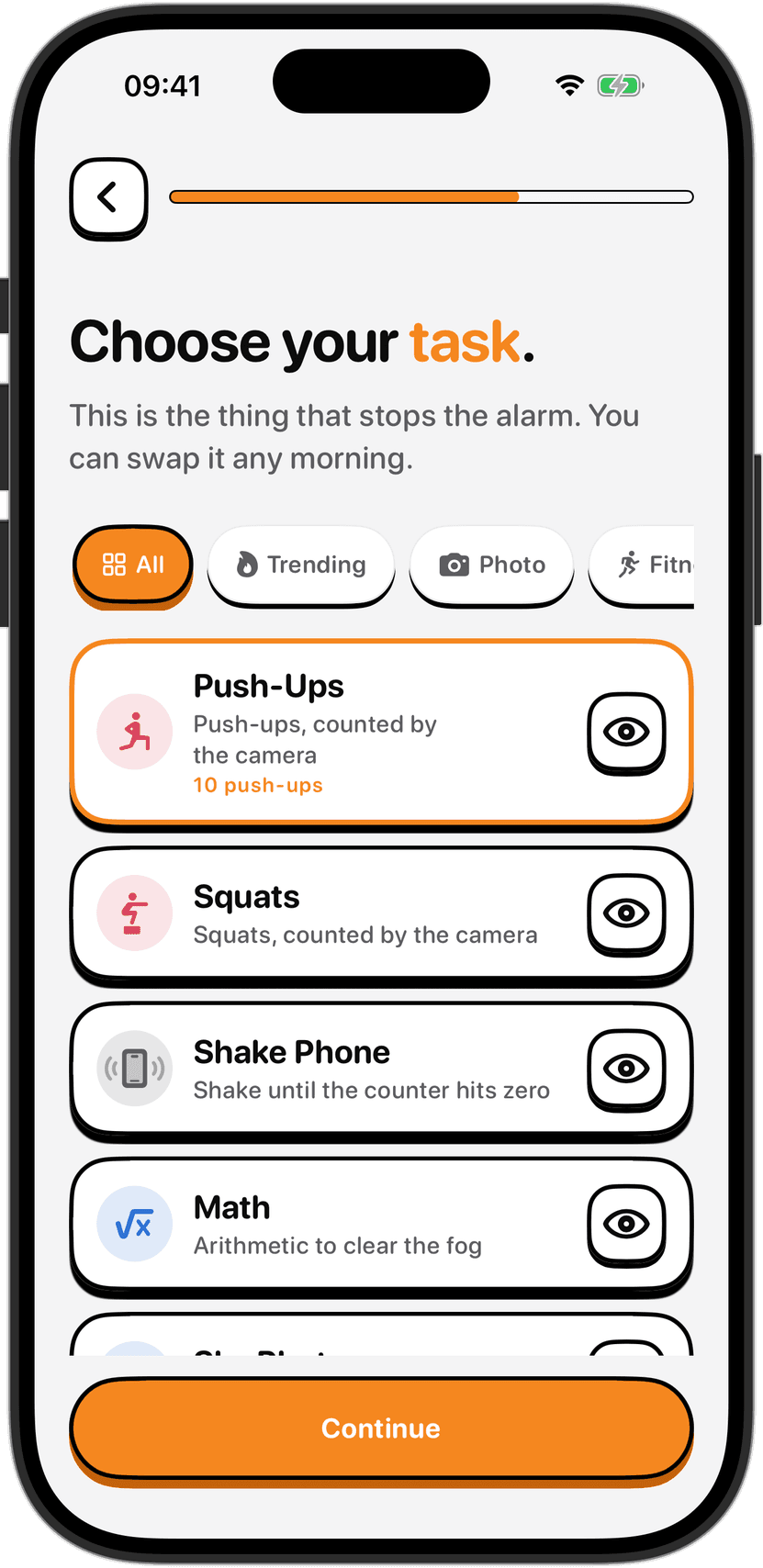
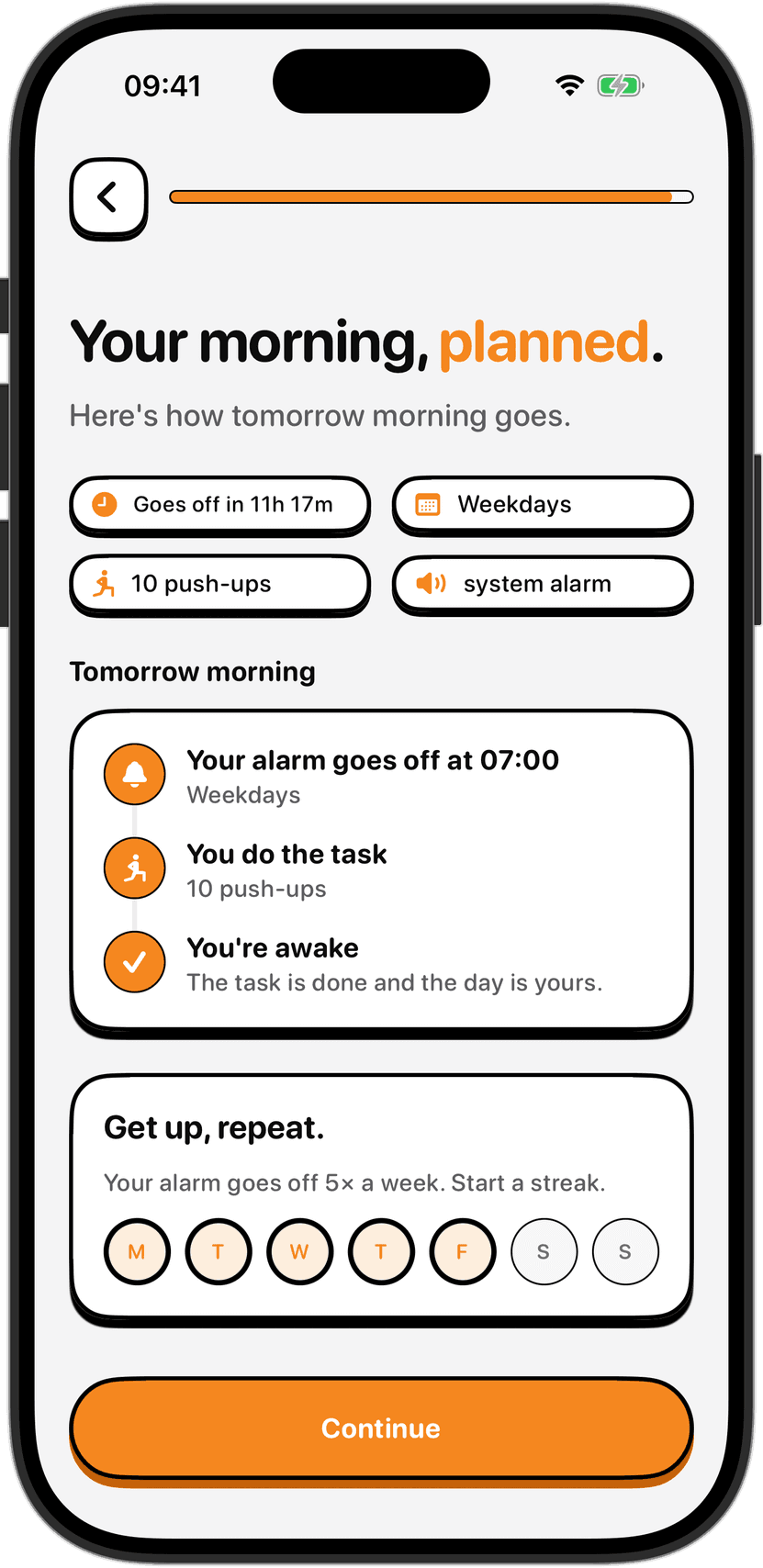
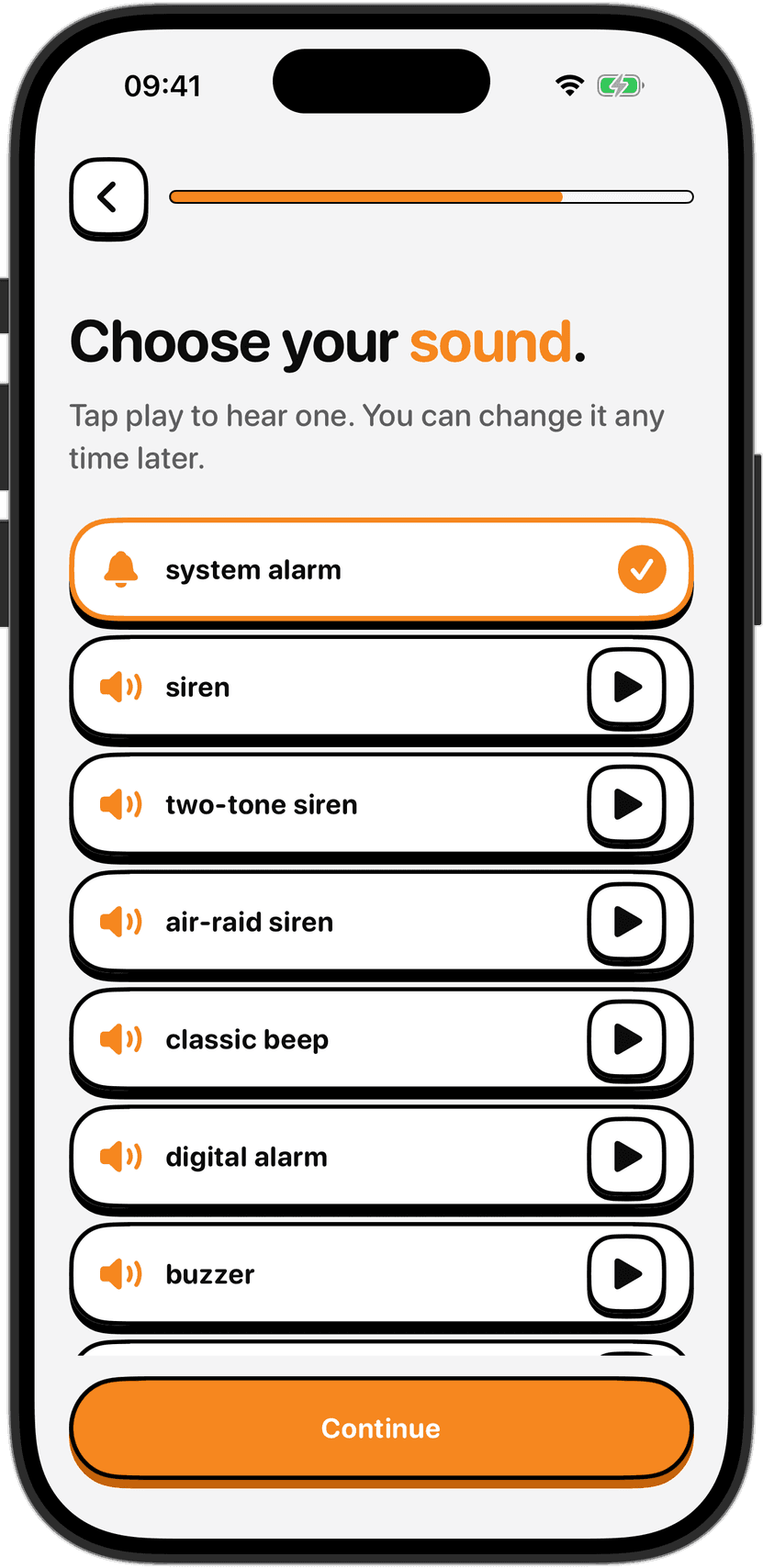
NoNap is built around that idea. There is one alarm and no snooze button. It uses the system alarm on iPhone, the same one the Clock app uses, so the ringer switch and Focus modes don't silence it, and it can't be dismissed from the lock screen. The only way to stop it is to finish the wake task you chose: push-ups or squats counted by the camera, shaking the phone, a math problem, or a photo.
A wake task won't remove sleep inertia. Only enough sleep and a steady schedule do that. What a task changes is who decides whether you stay in bed, and it hands that decision back to the person who set the alarm with a clear head the night before.
Sources
Balkin, T. J., Braun, A. R., Wesensten, N. J., et al. (2002). The process of awakening: a PET study of regional brain activity patterns mediating the re-establishment of alertness and consciousness. Brain, 125(10), 2308-2319.
Hilditch, C. J., and McHill, A. W. (2019). Sleep inertia: current insights. Nature and Science of Sleep, 11, 155-165.
Sundelin, T., Landry, S., and Axelsson, J. (2023). Is snoozing losing? Why intermittent morning alarms are used and how they affect sleep, cognition, stress, mood, and alertness. Journal of Sleep Research, 32(5), e13920.