Sleep myths that sound right and aren't
Five common myths about sleep, debunked by research. What sleep scientists actually know about 5-hour nights, snoring, alcohol, and how your body adapts.
Visana Studios
7 min read
Sleep myths are everywhere. Some float through wellness culture, some hide in the choices you make every morning, and some come from a grain of truth stretched too far. A 2019 study led by Raphael Robbins at NYU surveyed sleep researchers and public health experts to identify which false beliefs about sleep had the deepest roots and the most harmful consequences.
Five hours of sleep is enough
The belief that five or fewer hours per night can sustain an adult is perhaps the most damaging myth on the list. Not because people who actually sleep five hours are in danger in isolation, but because the myth enables a pattern where people believe they can run on chronic short sleep without real cost. The evidence points the other way.
Research consistently shows that insufficient sleep (five hours or less nightly) correlates with problems across cardiovascular, metabolic, mental health, and immune systems. The relationship is not subtle. Decades of sleep lab studies and population surveys show that most adults need around seven hours for the full range of physiological and cognitive functions to work normally. Some people genuinely need less, and others need more. Five hours is rarely enough for anyone, and feeling fine on five hours usually signals something else: either an undiagnosed sleep disorder, mounting sleep debt that is accumulating in the background, or both.
The myth persists partly because humans adapt quickly to low alertness through sheer habit. You stop noticing the fog. Your brain stops complaining as loudly. But performance declines in measurable ways. Reaction time slows. Decision-making suffers, especially in complicated situations that require weighing tradeoffs. Sleep deprivation impairs driving ability at levels comparable to alcohol impairment, which is why truck drivers operating on chronic short sleep show higher accident rates than well-rested peers. Most people cannot feel this impairment in themselves, which is the whole problem.
Snoring is mostly harmless
Snoring sounds like something between an inconvenience and a quirk. Loud, yes, but harmless. This belief puts the person snoring and anyone alarmed by it in a bind, because the research tells a different story.
Snoring is the sound of air struggling through a partially obstructed airway. That obstruction is not harmless. Loud snoring, especially when paired with pauses in breathing during sleep, is a strong sign of obstructive sleep apnea, a condition where the airway closes partly or fully dozens of times per night. Each closure drops blood oxygen. The body works harder to clear the obstruction. Heart rate climbs. Blood pressure rises. Repeat this 60 times a night and the chronic strain on the cardiovascular system is substantial.
Research on sleep apnea shows increased risk for heart attack, stroke, high blood pressure, and sudden cardiac death. People with untreated sleep apnea are more likely to have car accidents, probably because the fragmented sleep and low oxygen combine to reduce alertness during the day. Not everyone who snores has sleep apnea, but snoring that is frequent, loud, or punctuated by pauses when breath stops deserves an evaluation from a sleep specialist. The link between morning alertness and sleep quality cannot be fixed if the underlying cause is repeated oxygen dips at night.
Alcohol before bed improves sleep
This myth is built on a real observation. Alcohol does help you fall asleep faster. It acts as a sedative, and many people drink it for exactly that reason. The catch is in the second half of the night.
When alcohol is metabolized, it disrupts the structure of sleep. REM sleep, the stage where most vivid dreaming happens and where emotional and procedural memory consolidation occurs, gets delayed and curtailed. Slow-wave sleep, the deepest stage, is also shortened. The net effect is that a night drinking alcohol feels lighter and more fragmented. You may wake more often, and you may wake early in the morning unable to fall back asleep, even though the alcohol is technically long gone. This is not obvious at the time, partly because the sedating effect at the beginning of the night masks the damage.
Someone who drinks most nights experiences chronic disruption to the architecture of sleep. The cumulative effect is degraded daytime function from sleep that, on paper, looks like a full eight hours. This is why people who have used alcohol as a sleep aid often report feeling worse, not better, when they cut back and go through a few nights of lighter, undrugged sleep before their brain resets. The alternative is real: cooler rooms and consistency in wake time solve the original problem that alcohol was borrowed to fix.
Lying in bed with eyes closed until you fall asleep
This myth comes from a sensible-sounding idea: rest is rest, and staying in bed with your eyes closed is at least moving in the direction of sleep. Actually, your brain knows the difference.
The brain during wakefulness, even quiet wakefulness with eyes closed, shows a different pattern of electrical activity than during actual sleep. Hormones behave differently. Body temperature continues to hover at the daytime set point rather than dropping. You are resting, but you are not sleeping.
Where this myth does real harm is when someone lies in bed for an hour unable to fall asleep and does not get up. The longer you stay in bed awake, the more your brain learns to associate bed with wakefulness and frustration. Sleep researchers call this stimulus control, and the evidence for it is straightforward: people who get out of bed when sleep does not come within 15 or 20 minutes, do something calm and not too engaging, and return only when drowsy recover their sleep much more reliably than people who lie there trying harder.
Trying harder is the wrong tool. Your brain does not fall asleep on command any more than your heart speeds up because you decide it should. What you can control is whether you stay in the environment where sleep is supposed to happen while you are actively frustrated. The mythology around staying put comes from nowhere in the actual science of sleep.
Your body adapts to functioning on less sleep
The adaptation myth is perhaps the most personally consequential one, because it is so widely believed among people who are genuinely struggling with early mornings or packed schedules. The logic sounds airtight: humans are adaptable. Your body will adjust. You will eventually stop feeling tired.
And here is the uncomfortable part of what sleep research shows: you do eventually stop feeling as tired. Your subjective experience does shift. But your performance does not adapt. Studies that track the same person over weeks of short sleep show that people rate their fatigue as stable or even improving while their reaction times, error rates, and more subtle measures of cognitive function continue to decline. The person no longer notices they are worse, but they actually are worse.
The adaptation is real but it is incomplete. It is an illusion driven by the baseline of exhaustion rising so gradually that you stop noticing. For night shift workers, the adaptation is particularly incomplete. Despite years on night shifts, circadian misalignment persists. These workers show higher rates of depression, diabetes, breast cancer, and other conditions, suggesting that the body's fundamental circadian rhythm never truly adjusts to being awake when it is dark and asleep when it is light.
What actually improves sleep
The myths tend to cluster around the idea that sleep is simply the absence of wakefulness, that anything resembling rest counts, and that your brain and body are more flexible than they actually are. The evidence points toward something stricter: your brain evolved to be awake during the day in temperate light and asleep at night in darkness. Caffeine, alcohol, light, timing, and consistency all matter because they matter to this deep rhythm. [A fixed wake time is one of the most reliable levers](/blogs/insomnia-cbt-i-fixed-wake-time), partly because morning light is the strongest signal your body clock receives.
The sleep myths persist because they offer psychological comfort. Five hours sounds possible. Snoring is just noise. Alcohol is pleasant. Trying harder feels like control. The adaptation myth gives permission to the exhaustion. But the research is clear and consistent: none of these shortcuts work.
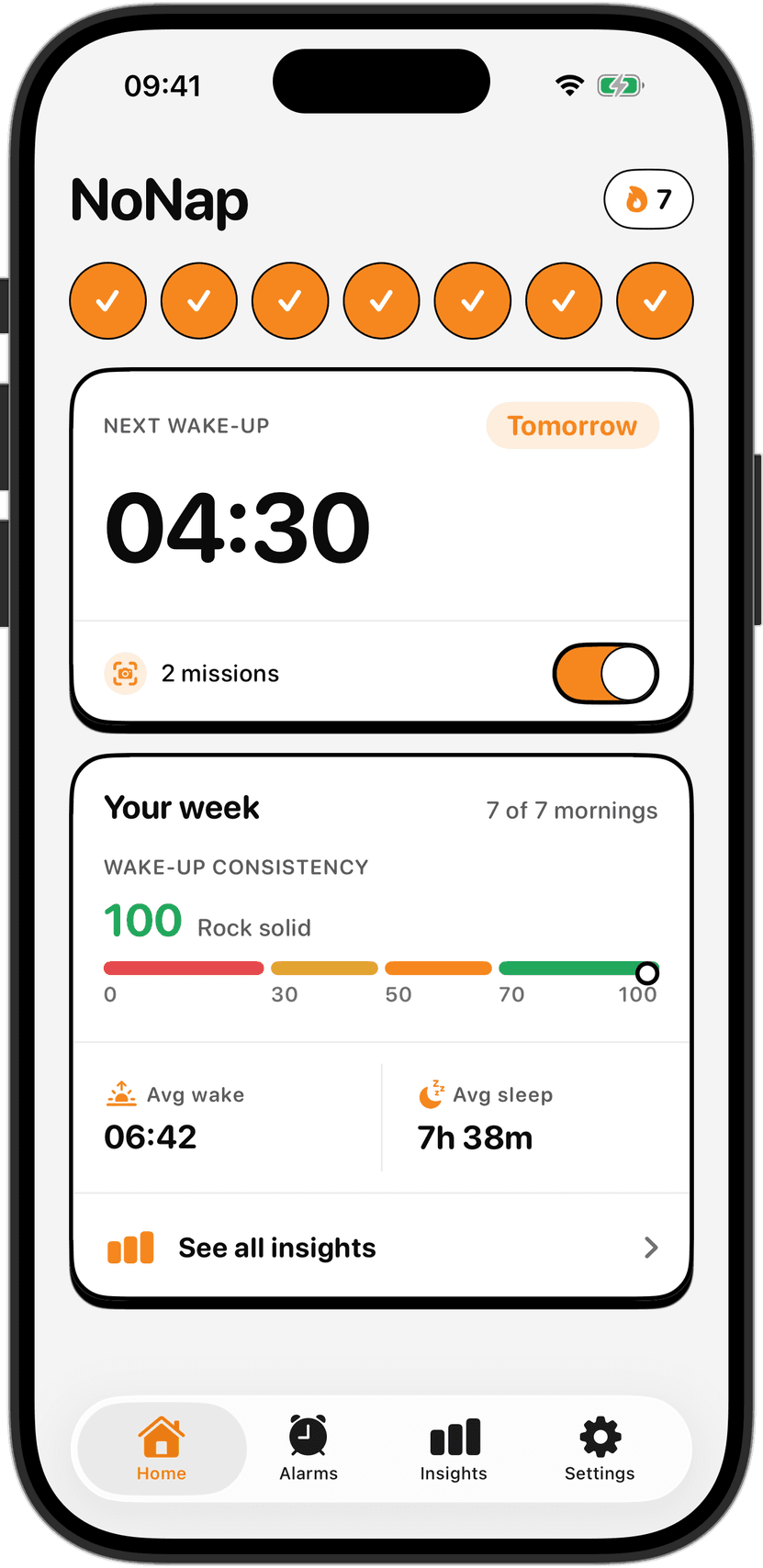
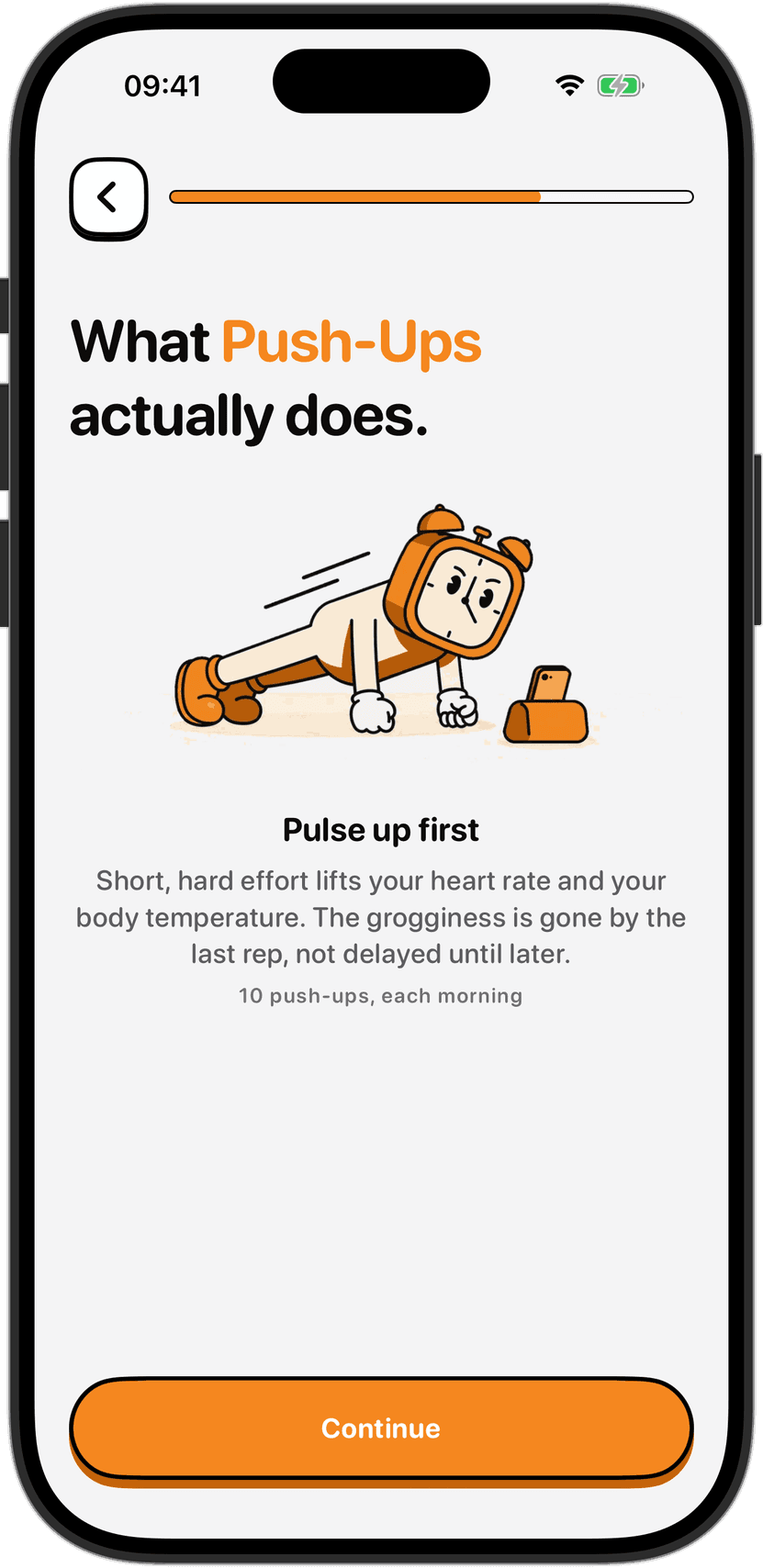
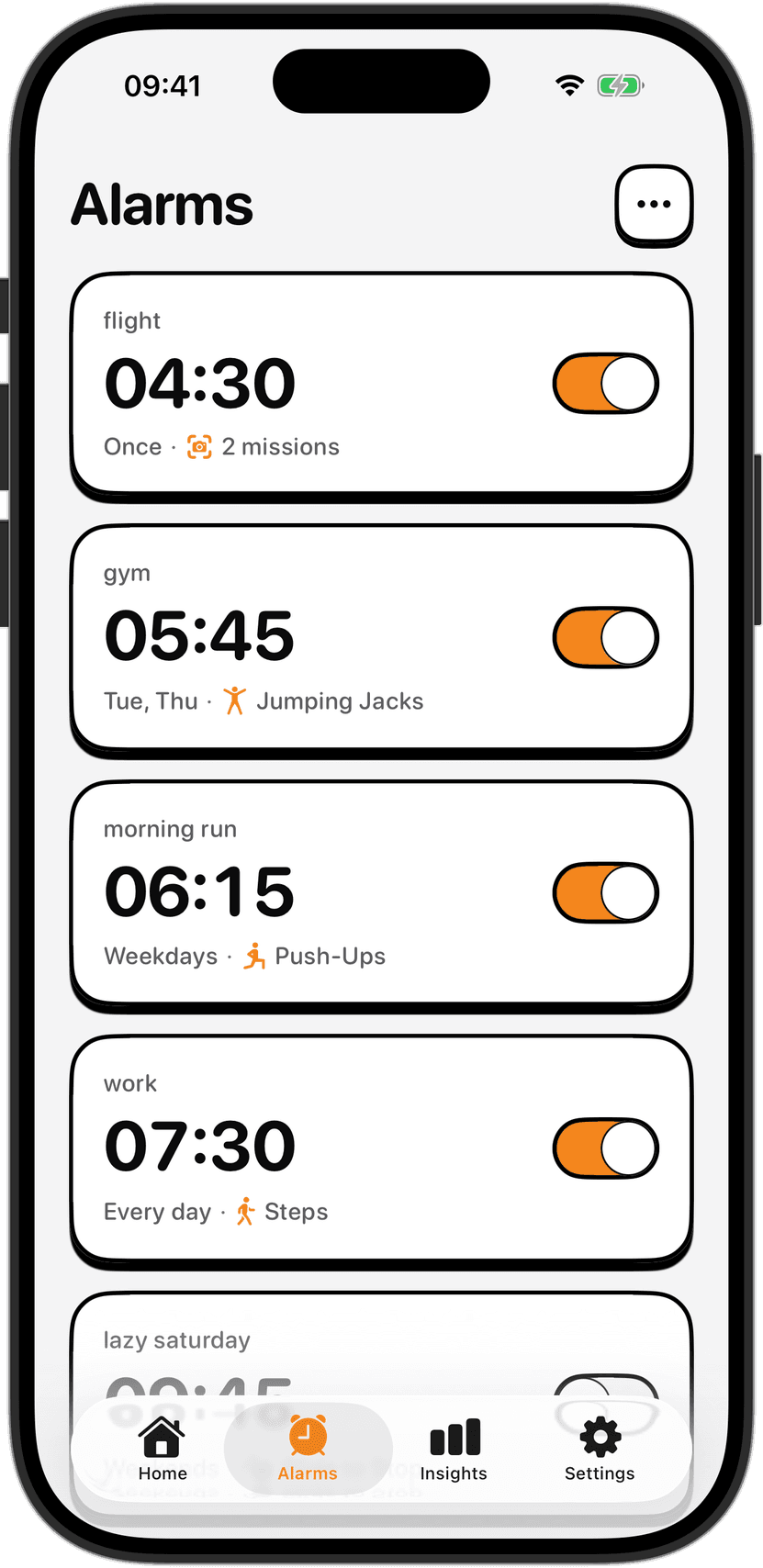
One reliable alarm with no snooze button and a single wake task can anchor a morning. The task can be physical, like push-ups, or mental, like a math problem, or simply getting out of bed. What matters is a decision made with full alertness the night before, kept without negotiation in the morning, and consistent from one day to the next.
Sources
Robbins R, Grandner MA, Buxton OM, Hale L, Buysse DJ, Knutson KL, Patel SR, Troxel WM, Youngstedt SD, Czeisler CA, Jean-Louis G. Sleep myths: an expert-led study to identify false beliefs about sleep that impinge upon population sleep health practices. Sleep Health. 2019;5(4):409-417. https://doi.org/10.1016/j.sleh.2019.02.002
Image credits
Cover photo by Priscilla Du Preez on Unsplash (unsplash.com/photos/white-pillows-LpZMZXXpRcM), used under the Unsplash License, which permits commercial use without payment.