Sleep regularity: steady timing may matter more than hours
A 2023 study tied sleep regularity to death risk more closely than sleep length. Here is what the score measures and what the evidence can and cannot prove.
Visana Studios
5 min read
A 2023 study of nearly 61,000 adults found that how regular their sleep was fit the death records better than how long they slept. The participants came from the UK Biobank, a large research cohort, and wore wrist accelerometers for seven days between 2013 and 2016. Over the follow-up, 1,859 of them died. People in the most regular fifth of the group had about 30 percent lower all-cause mortality risk than people in the least regular fifth.
That is a striking result, and it deserves a careful reading before anyone rearranges their week around it.
What the regularity score measures
Sleep regularity is about timing, not length. The question is whether you are asleep or awake at the same clock times from one day to the next. The Sleep Regularity Index, usually called the SRI, puts a number on that. It estimates the chance that a person is in the same state, asleep or awake, at two moments 24 hours apart, averaged over the whole recording. Identical timing every day scores 100. Random timing scores 0.
Andrew Phillips and colleagues introduced the index in 2017. Unlike some earlier measures, it does not need a single main sleep period to be identified, which makes it usable for people who nap, work nights or occasionally stay up all night.
What the mortality study can and cannot say
This is observational research. It shows an association, and it cannot show that changing your sleep timing would change how long you live. The editorial in the journal Sleep that discussed the study lists the main limits. The cohort is not diverse, so the findings need testing in other populations. No trial has yet tested whether making sleep more regular changes health outcomes. The closest evidence is an exploratory analysis of a small trial in women, which is not enough to settle the question.
The measure itself is demanding. The SRI needs detailed sleep and activity data over several days. Simpler measures, such as the standard deviation of sleep onset times, may be easier to use outside a research lab.
Why timing can matter: the body clock
The most direct evidence about mechanism comes from a much smaller study. In 2017, Phillips and colleagues followed 61 undergraduates for about 30 days, using sleep diaries. On day 15 they picked the 12 most regular sleepers and the 12 least regular, and measured their light exposure and the time their melatonin began to rise in saliva. That timing, called dim-light melatonin onset, is a standard marker of where the body clock sits.
The two groups slept for about the same length of time. The irregular group's body clock ran later. Their melatonin onset came at 00:08 on average, compared with 21:32 in the regular group, and their daily light rhythm was weaker. Across all participants, the regularity score tracked melatonin timing closely (r = -0.66) but had no relationship with sleep duration (r = 0.05). Regularity and length turned out to be separate things.
The authors were clear about the limits. The results describe associations. Melatonin was sampled on only one day, the groups were tiny, and everyone was a student. They also noted that napping may have offset irregular nights for these students, a pattern that may not carry over to other people.
What to aim for
The American Academy of Sleep Medicine gives advice that is simple to act on. For adults, it recommends going to bed when you feel sleepy, aiming to wake at the same time each day including weekends, and sleeping seven or more hours a night on a regular basis. The fixed point in that advice is the wake time. Bedtime is left to follow from sleepiness.
For most people, that means choosing a wake time you can keep on most days, then keeping the weekend version close to it. A late weekend wake-up makes Monday's alarm feel like a sudden time change. The social jet lag post covers that gap in more detail, and why a fixed wake time anchors your schedule explains the logic behind it.
Consistency is the goal, not a perfect score. The studies above do not give individuals a target number. Persistent trouble falling or staying asleep, loud snoring with daytime sleepiness, or pauses in breathing that someone else notices are reasons to see a doctor, not to adjust your alarm.
Checking your own pattern
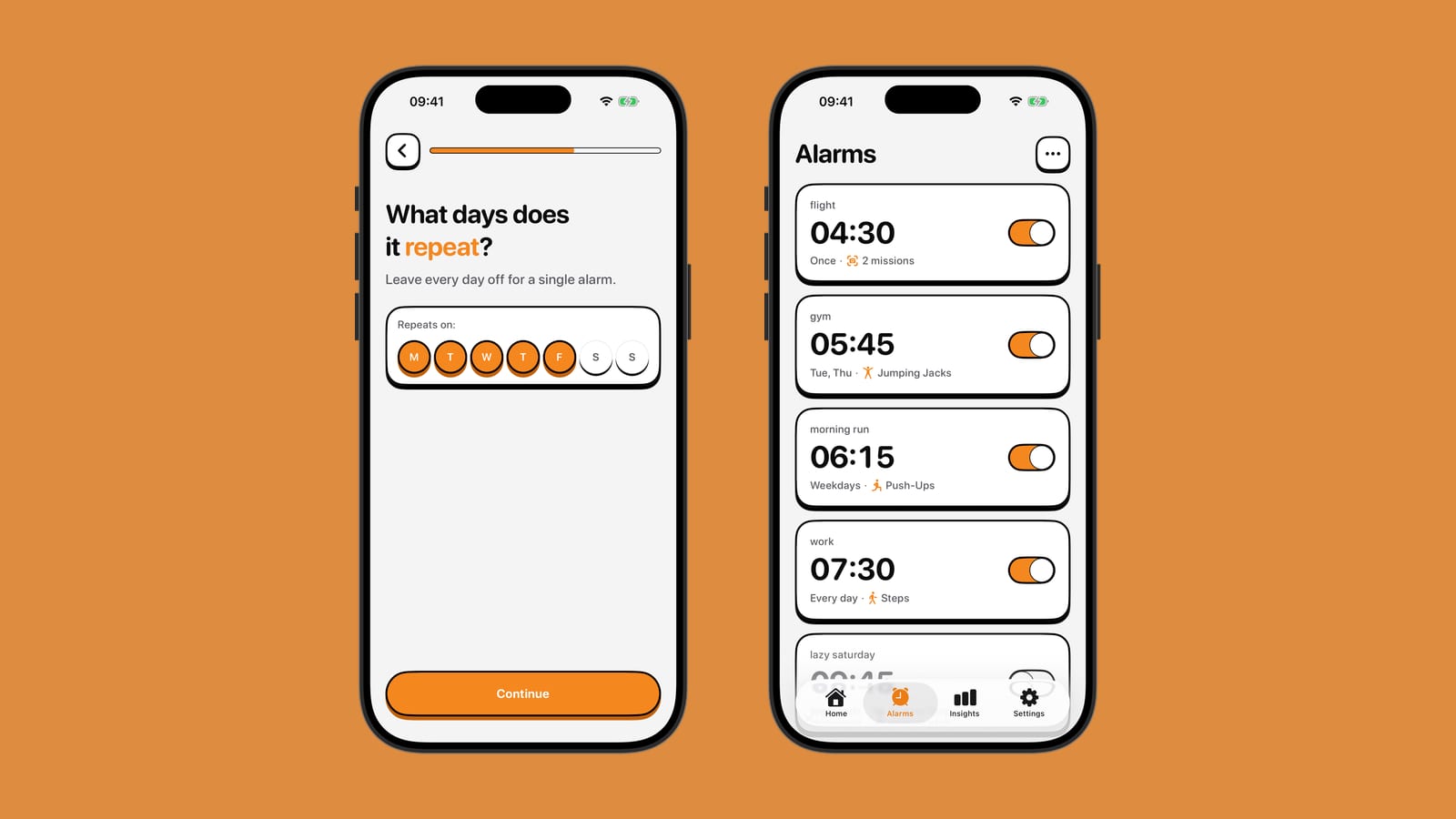
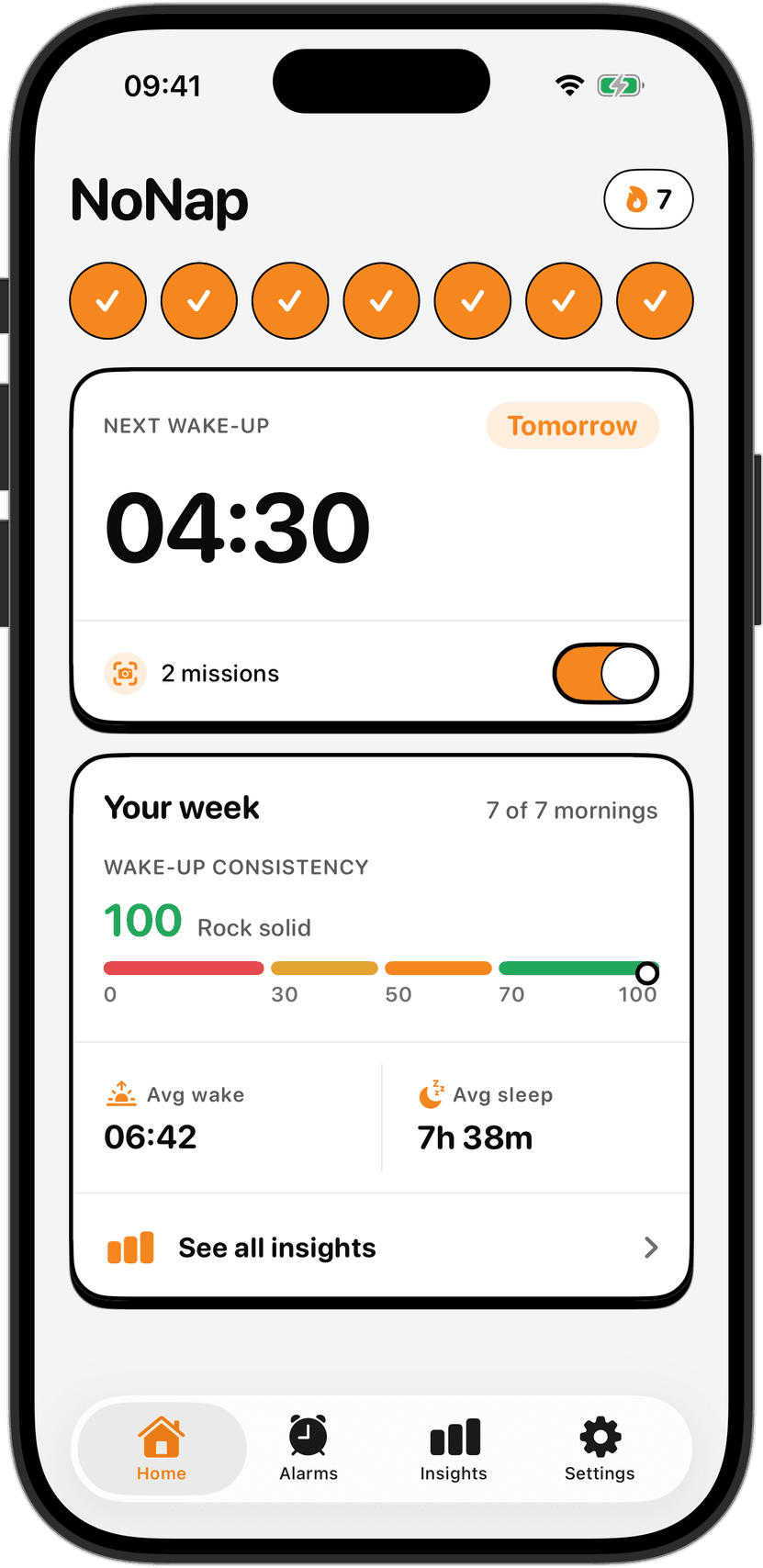
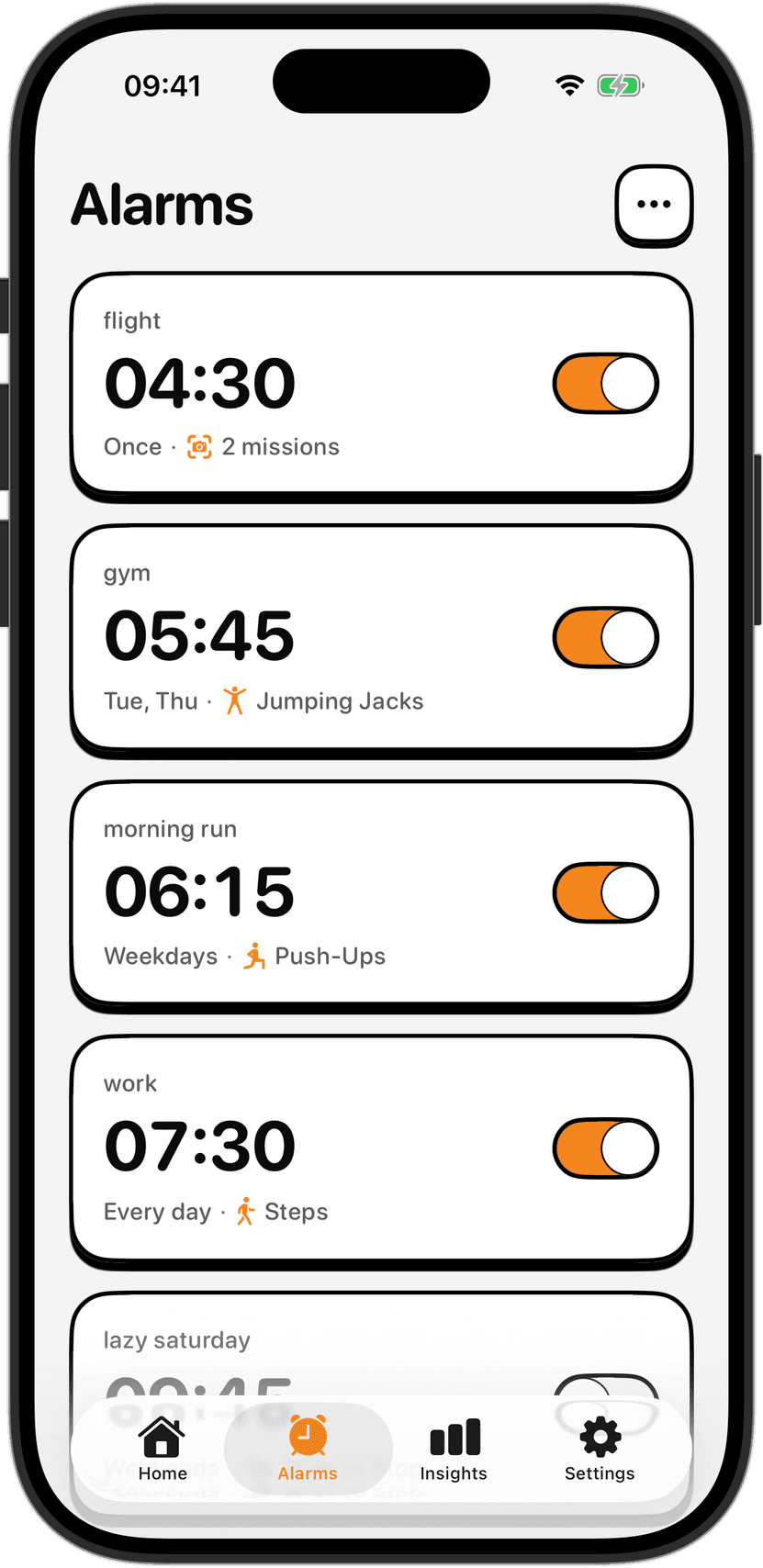
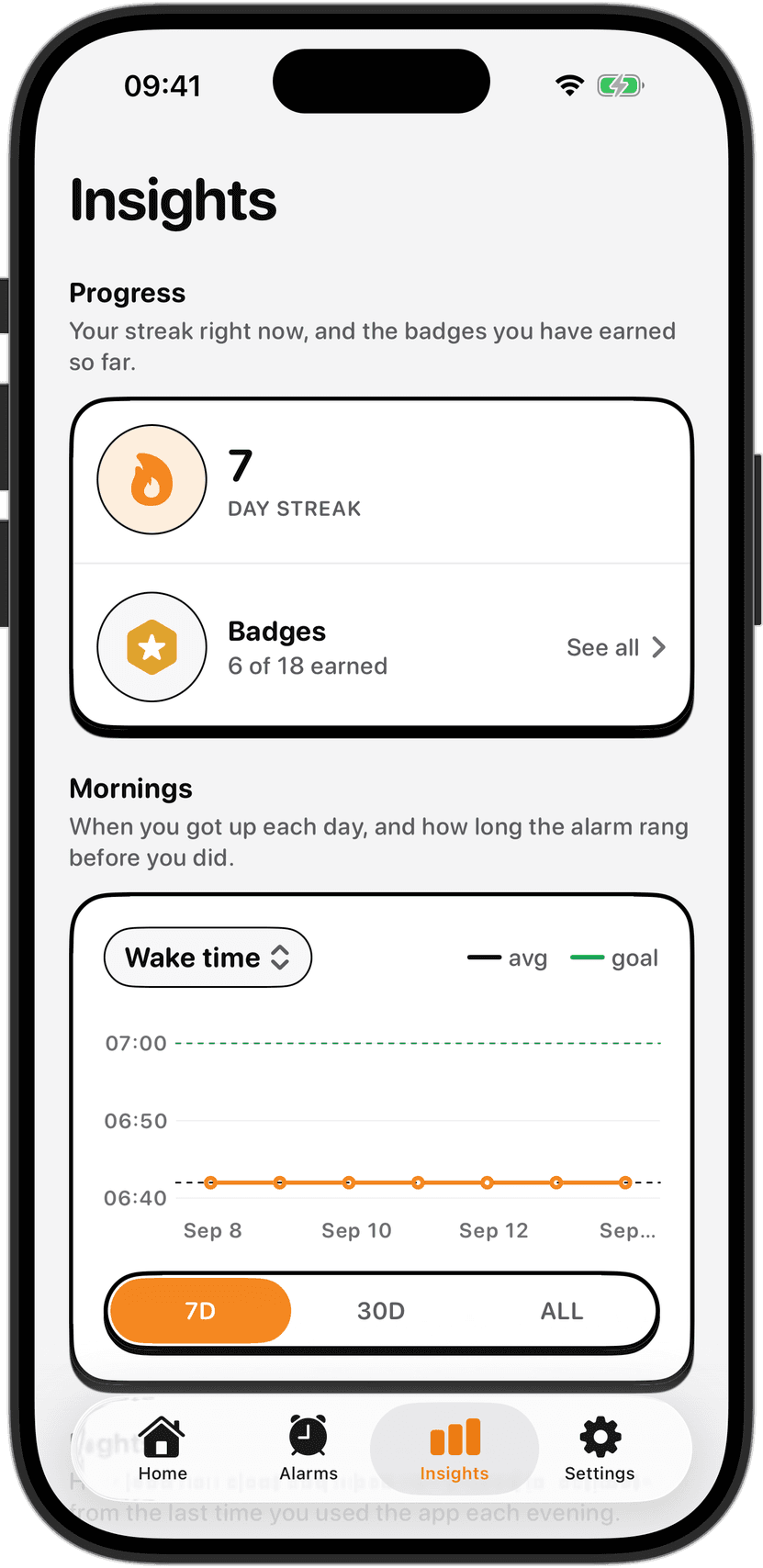
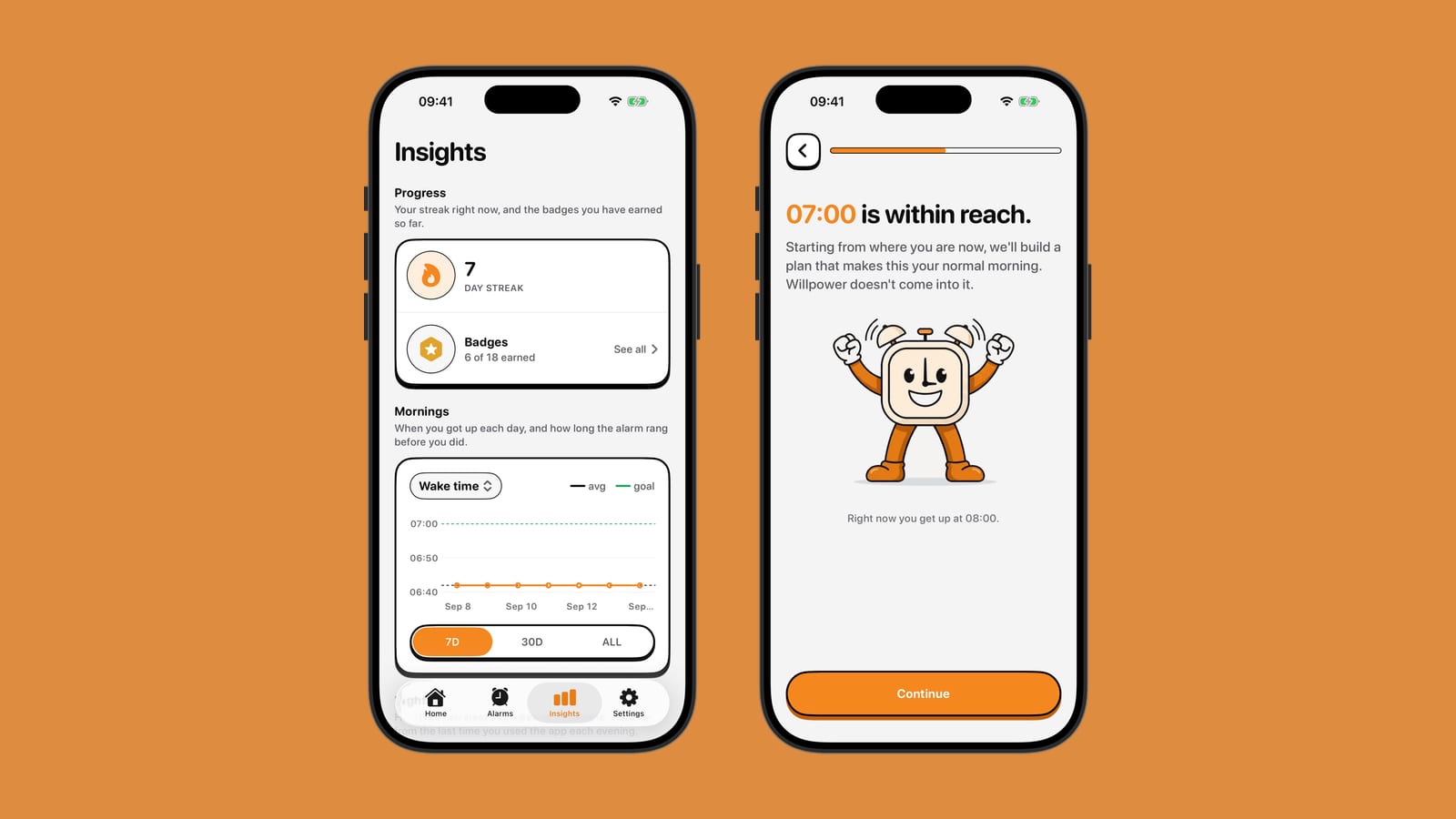
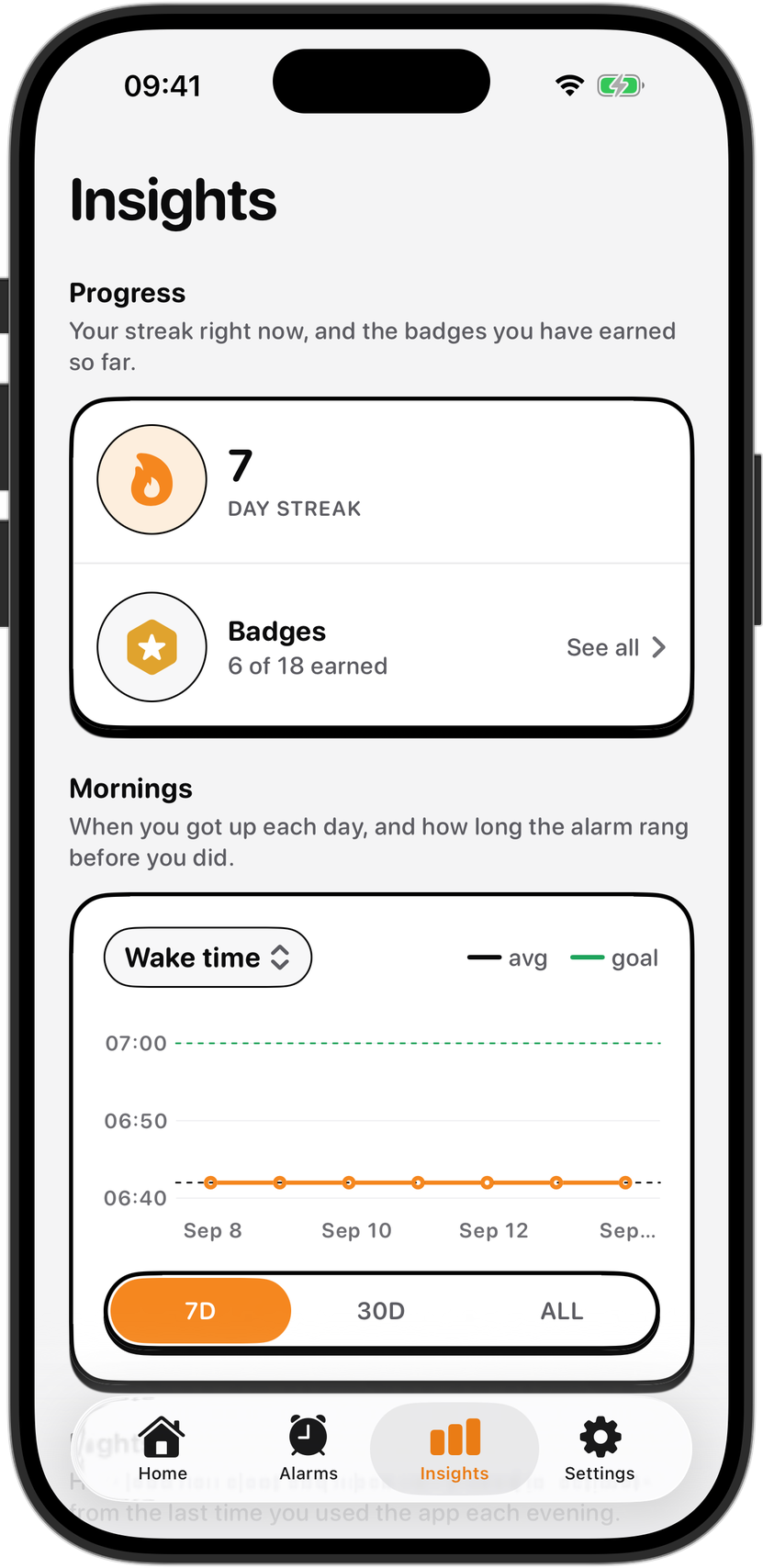
NoNap does not track sleep, so it cannot calculate an SRI or tell you when you fell asleep. It records the morning side of the picture: when each alarm was set to ring, and when you actually got up. The Insights tab shows your day streak and a chart of wake-up time against your goal, over seven days, thirty days or all time.
That chart will not reveal sleep stages or bedtimes. It does show whether your mornings are drifting, and drifting mornings are the part of the pattern an alarm can influence. The FAQ covers what stays on your phone.
Sources
Zuraikat FM, Aggarwal B, Jelic S, St-Onge MP. "Consistency is key: sleep regularity predicts all-cause mortality." Sleep, 2024, 47(1). An editorial on the UK Biobank study by Windred and colleagues, which reports the cohort, the deaths, the mortality comparison and the limits discussed above. https://pmc.ncbi.nlm.nih.gov/articles/PMC10782489/
Phillips AJK, Clerx WM, O'Brien CS, Sano A, Barger LK, Picard RW, Lockley SW, Klerman EB, Czeisler CA. "Irregular sleep/wake patterns are associated with poorer academic performance and delayed circadian and sleep/wake timing." Scientific Reports, 2017, 7:3216. The source of the Sleep Regularity Index definition, the 61-student sample, the melatonin onset times and correlations, and the authors' stated limitations. https://doi.org/10.1038/s41598-017-03171-4
American Academy of Sleep Medicine. "Family, work, and mental health among leading factors impacting sleep in adults." aasm.org, 27 July 2026. The advice on going to bed when sleepy, waking at the same time each day including weekends, and sleeping seven or more hours a night. https://aasm.org/?p=89155
Image credits
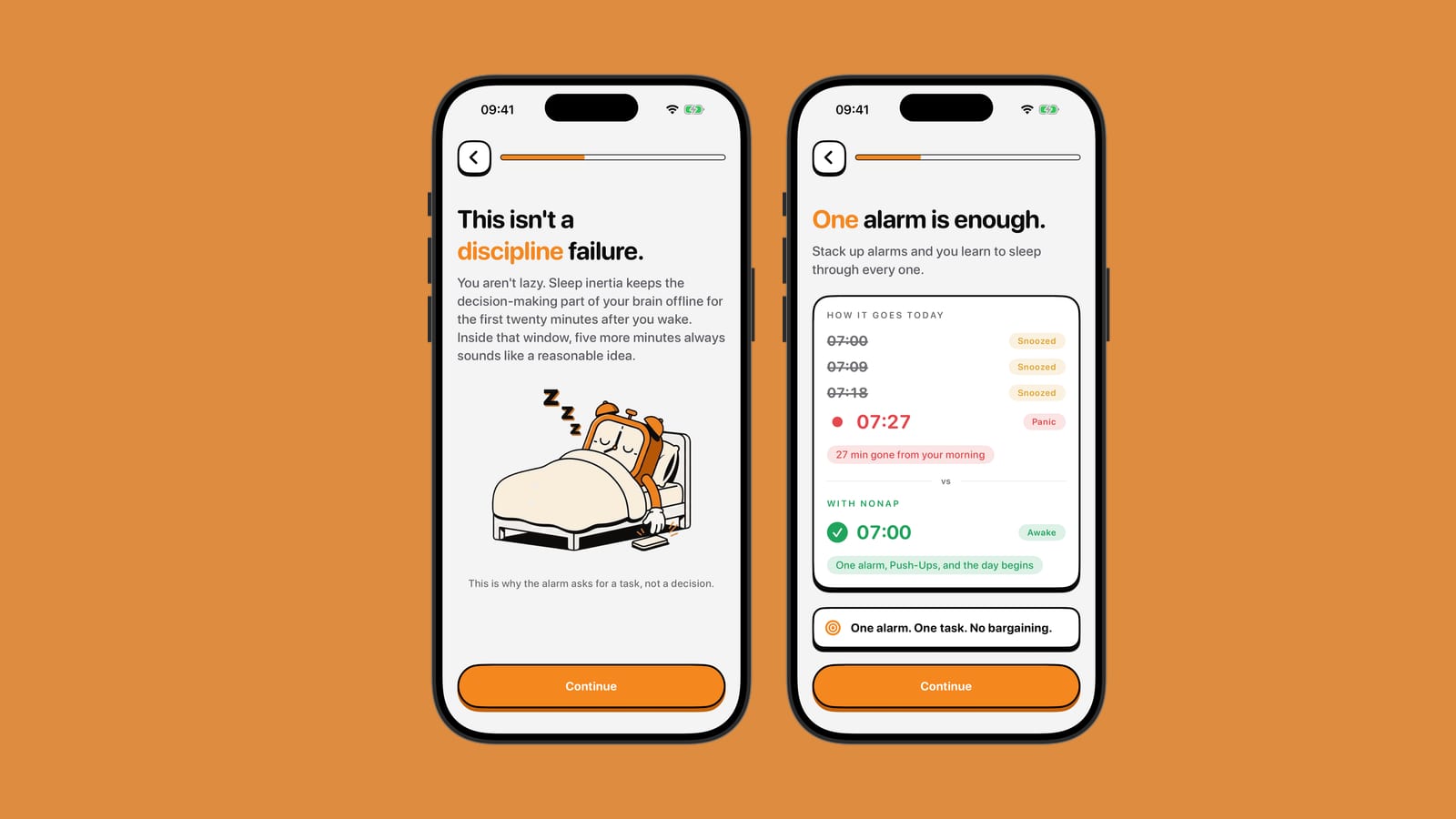
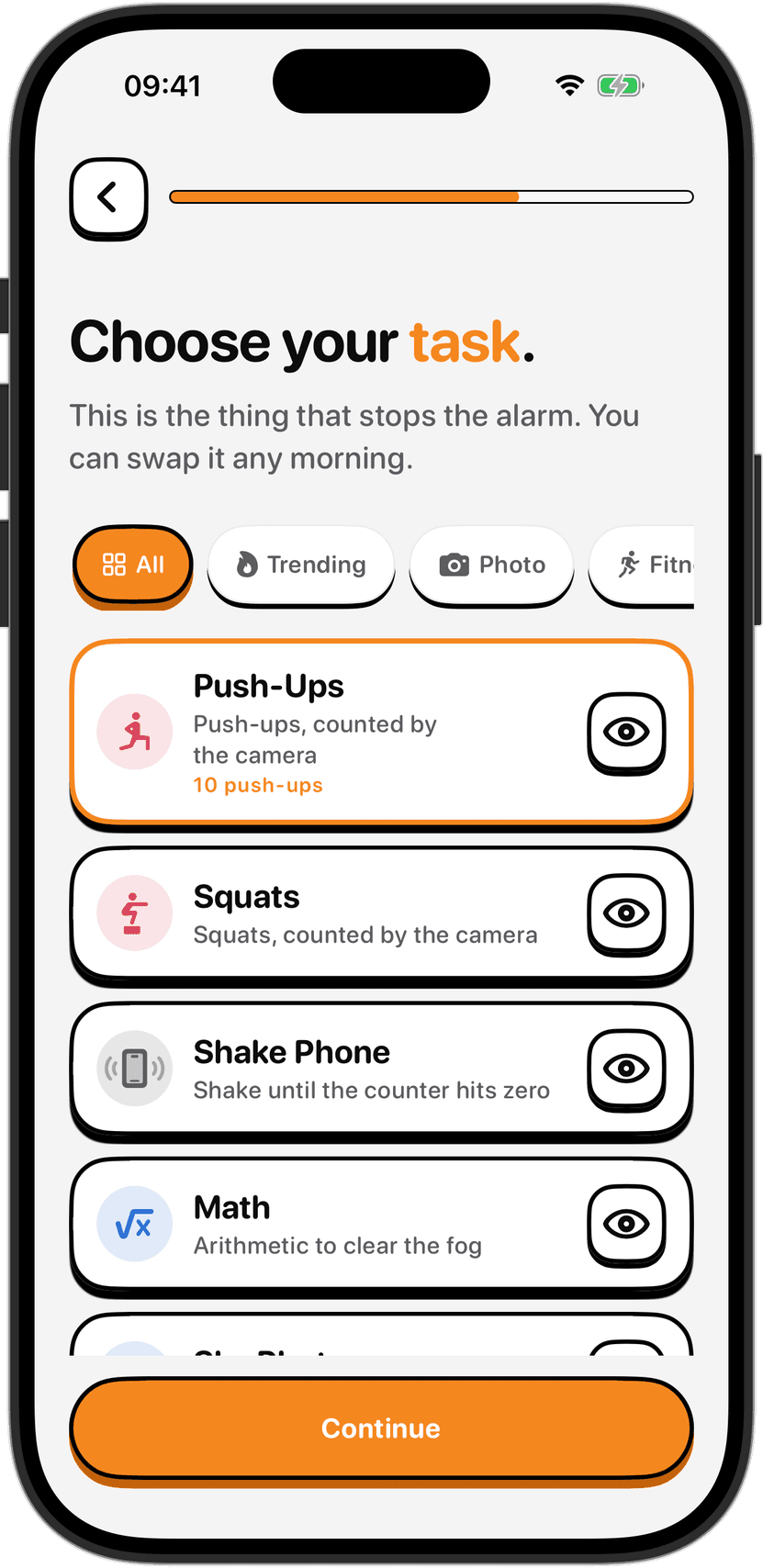
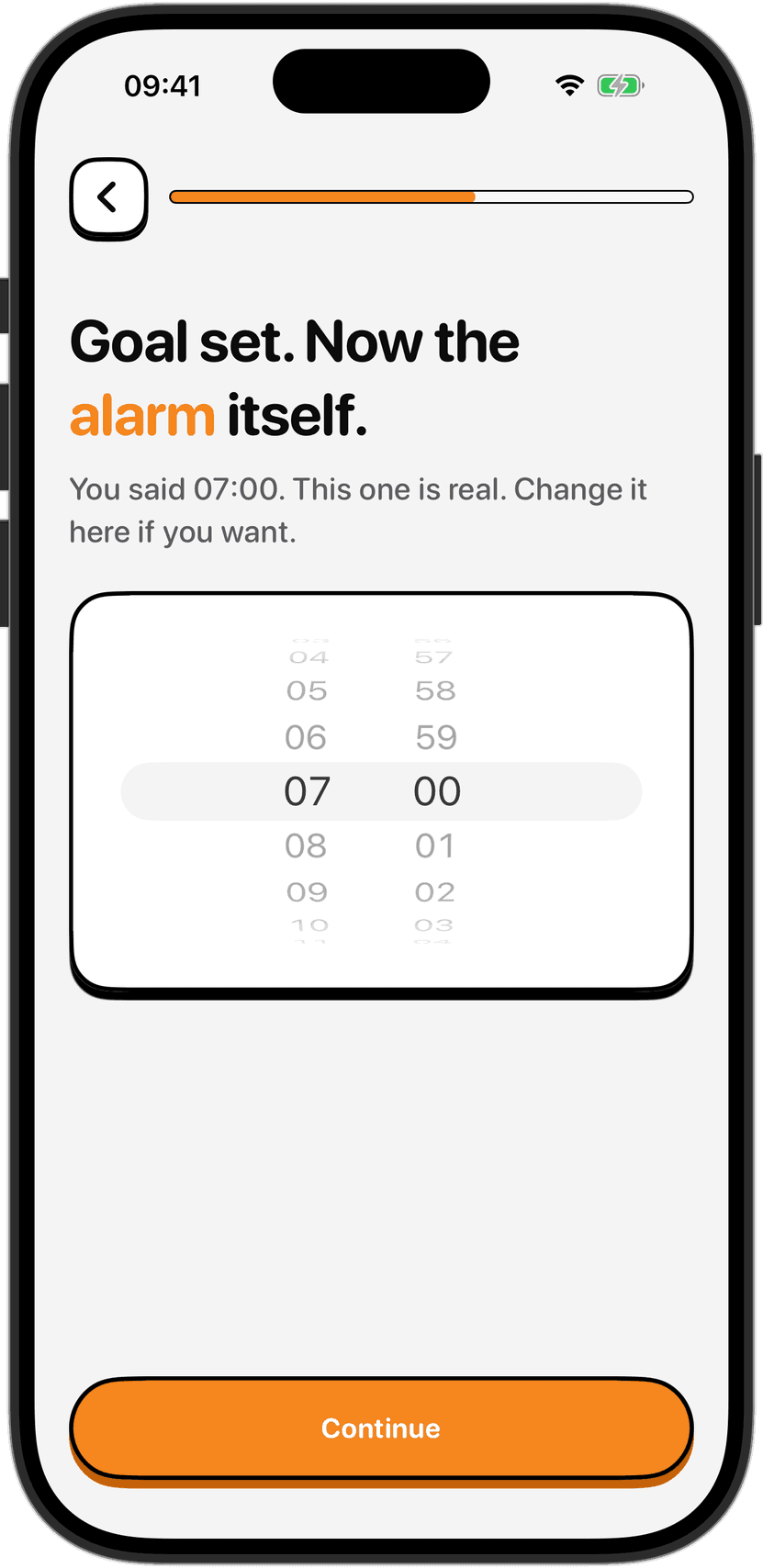
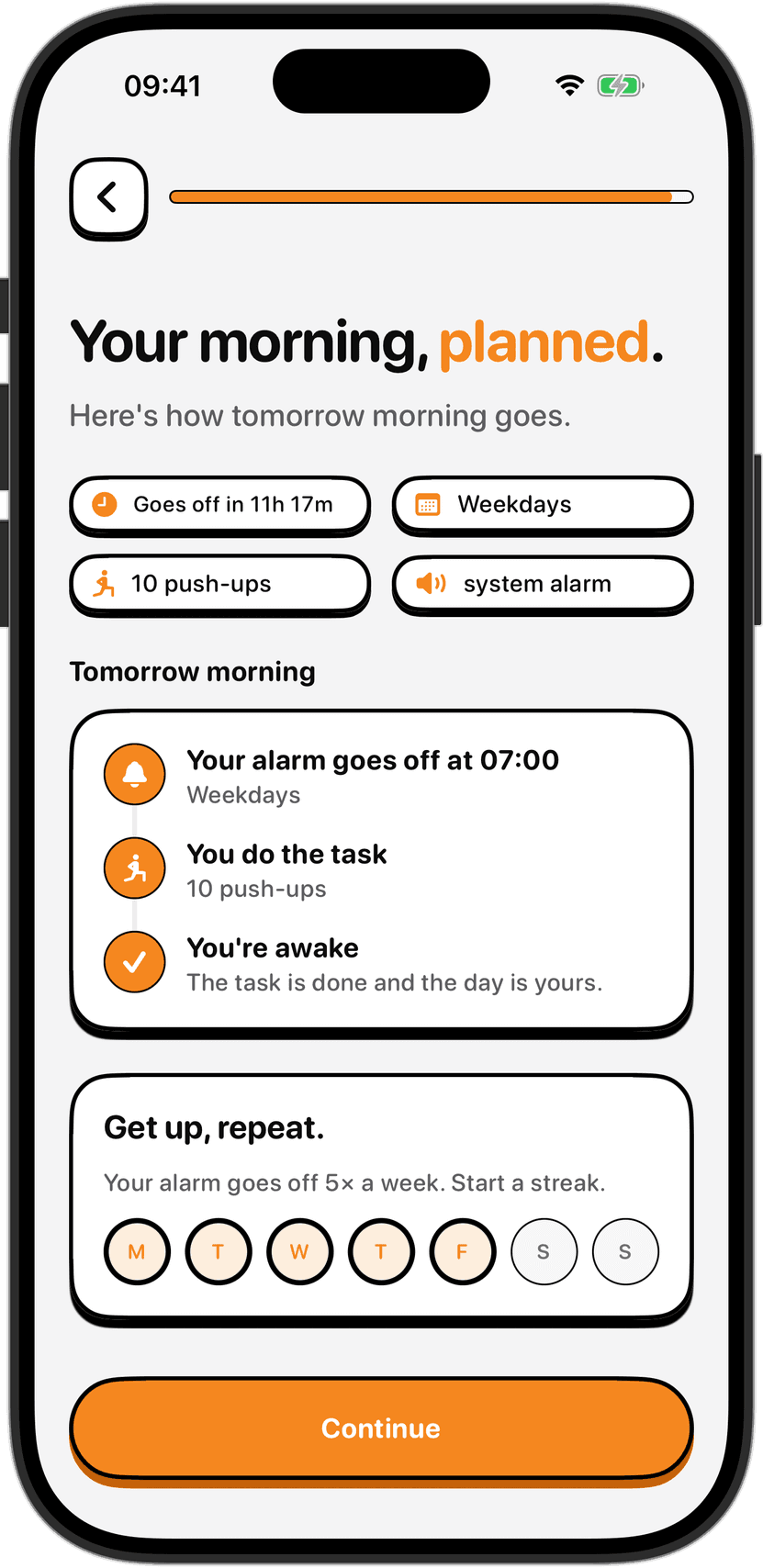
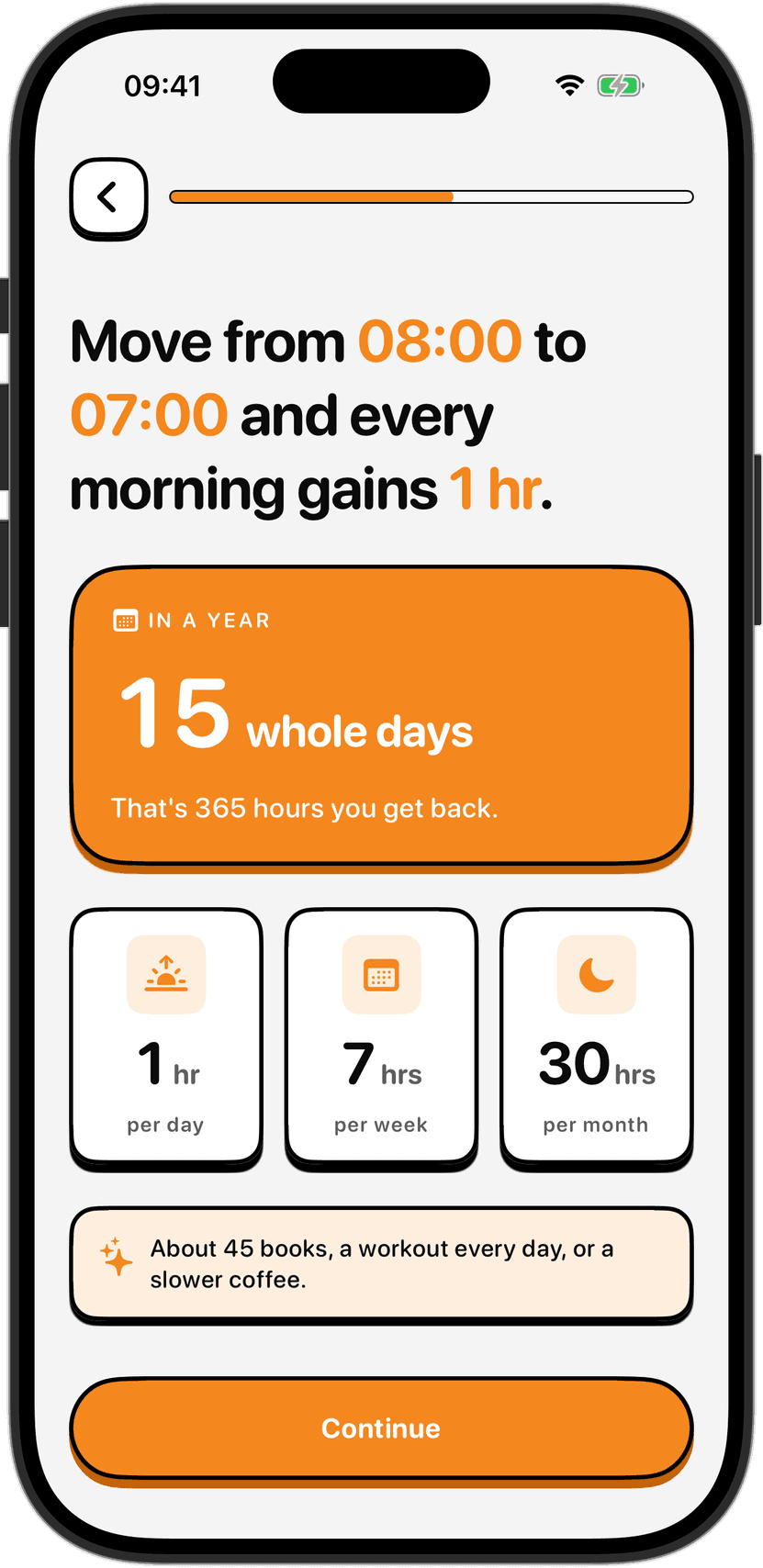
The cover and the inline image are made from NoNap's own app screens, the Insights screen and the goal screen, composited on a brand-orange background for this post.