Why you wake up at 3 a.m. and can't get back to sleep
Brief awakenings between sleep cycles are normal; here's what turns them into hours awake, the history of segmented sleep, and what CBT-I clinicians recommend.
Visana Studios
6 min read
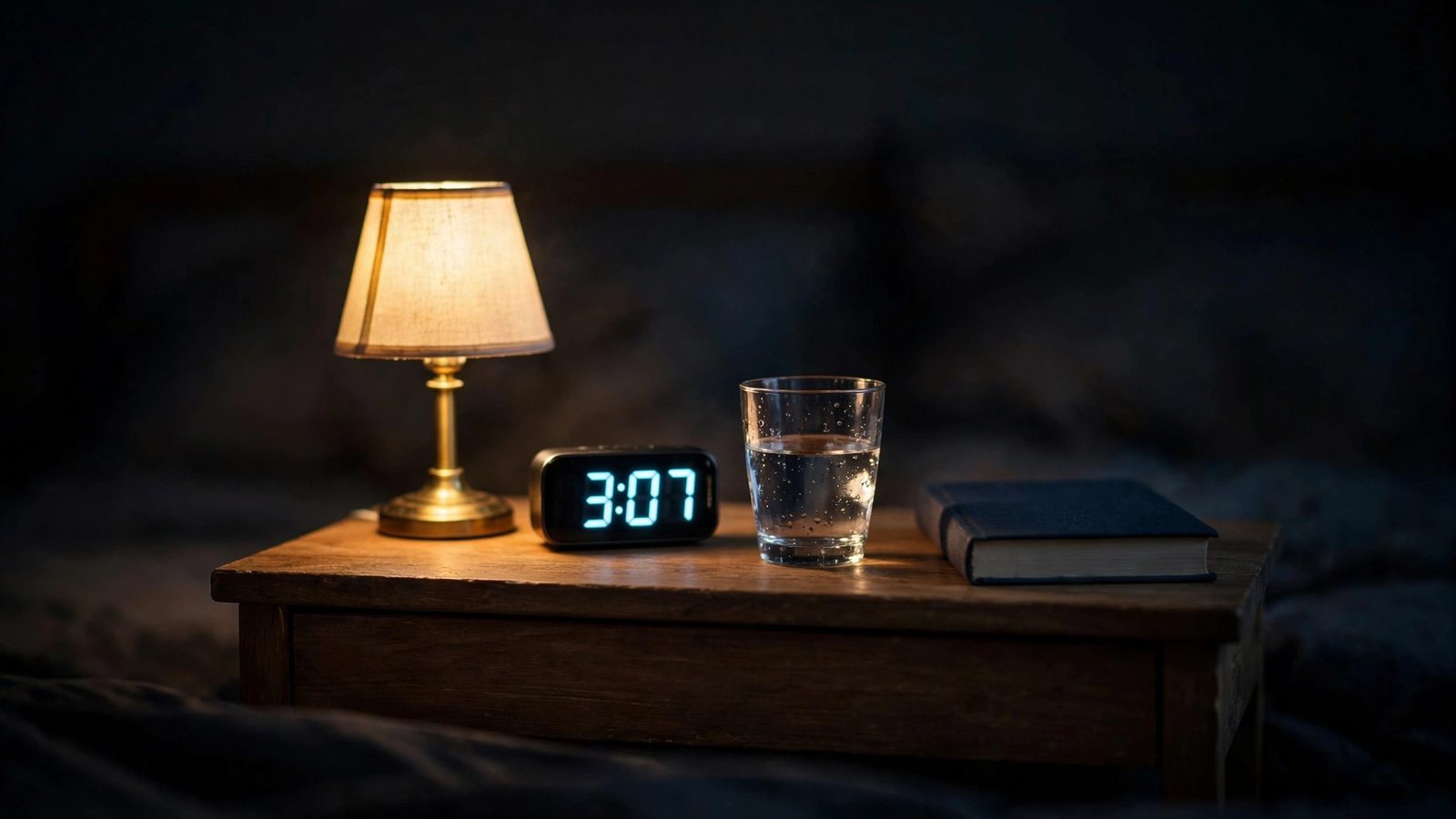
Three in the morning. Your eyes snap open. The room is dark. You check your phone even though you know better. Definitely three. Not four, not even three-thirty yet. The kind of time that makes sleep feel impossibly far away.
You are not broken. You are mid-cycle. A normal night of sleep includes 4 to 6 complete cycles, each lasting roughly 90 minutes and moving through distinct stages of sleep. The space between cycles is a natural seam in the night. Brief awakenings happen to everyone, and they are not insomnia until they become a pattern that leaves you exhausted.
The problem is not the 3 a.m. awakening itself. The problem is what happens next.
Why awakenings cluster around the cycle transitions
A typical sleep cycle follows a pattern: light sleep in stage N1, deeper sleep through N2, deepest sleep in N3 (also called slow-wave sleep), then back into lighter stages before reaching REM sleep, where most dreaming occurs. Then the cycle starts again. Sleep studies using polysomnography, which records brain waves and eye movement throughout the night, show that people are naturally awake for about 0 to 2 percent of the night on average. That wakefulness is not evenly distributed. It increases across successive sleep cycles, with most of it occurring right after REM sleep ends or sometimes during REM itself. The body is using these transition points as natural check-ins.
What separates a normal sleep cycle transition from insomnia is what your brain does with the awakening. A brief arousal followed by immediate return to sleep is part of healthy sleep architecture. Lie there for an hour trying to fall back asleep, and something else is happening.
The two-minute rule turns into two hours
Three factors commonly stretch a brief 3 a.m. awakening into a long, miserable stretch of wakefulness: stress and anxiety, alcohol consumption, and the act of clock watching itself.
Stress and anxiety are direct triggers. Life disruptions like financial problems, work pressures, bereavement, and emotional strain activate the nervous system. A person already managing stress will wake from a normal cycle transition in a state of heightened alertness that makes returning to sleep difficult. The body is already primed to stay vigilant. A 3 a.m. awakening in that state is not just a brief dip in consciousness. It is the awakening brain joining a worry that was waiting just below the surface of sleep.
Alcohol is a more insidious culprit. Alcohol suppresses REM sleep in the first half of the night while depressing the central nervous system, which is why a nightcap can make falling asleep easier. But as the body metabolizes alcohol over three to four hours, REM sleep rebounds. That rebound comes with frequent shifting between sleep stages and awakenings triggered by headaches, the urge to urinate, and dehydration. The 3 a.m. awakening is not a coincidence. It is the timing of the rebound.
Clock watching transforms a fleeting awareness into a problem. Looking at the time does two things. It activates the part of the brain that does math and worry (calculating how many hours of sleep remain if you fall asleep right now). And it makes the awakening feel longer than it is, because you are now tracking it. The clock has made an unconscious event conscious, and consciousness makes it harder to reverse.
Before electric light, this was two separate sleeps
Historian A. Roger Ekirch drew attention to historical sleep patterns in Western civilization by analyzing over 500 references from diaries, legal documents, and literature spanning several centuries. People routinely referred to a "first sleep" followed by wakefulness, then a "second sleep." That first sleep ended naturally around midnight or shortly after. The waking period, which could last thirty minutes to an hour, was used for prayer, reflection, housework, or visiting neighbors. Then came the second sleep until morning.
Ekirch's theory proposed that this segmented sleep was the natural human pattern, disrupted only when electric lighting made sustained wakefulness convenient. If true, it would reframe the 3 a.m. awakening as a biological relic, evidence that the body still knows the shape of the pre-industrial night.
The theory has critics. In 2015, a study of three non-industrial equatorial societies found that all three experienced monophasic sleep (one continuous period) rather than segmented sleep. Ekirch contested those conclusions, and the scholarly debate continues. What seems clear is that segmented sleep was common in some historical populations, but whether it was universal or innate to human sleep physiology remains unsettled. The data from non-industrial societies suggests that modern schedules and electric light alone do not fully explain why your eyes open at 3 a.m., and why your own circadian rhythm is wired to expect two chunks of sleep instead of one.
CBT-I and the principle of leaving the bed
Cognitive behavioral therapy for insomnia, or CBT-I, is the gold standard first-line treatment for sleep maintenance problems. It abandons the idea that sleep is something you can force through sheer willpower or by staying in bed longer. Instead, it includes behavioral techniques like stimulus control and sleep restriction, which work by rebuilding the association between your bed and sleep.
The stimulus control principle is simple: the bed is for sleep. If you are awake in bed for a sustained period, especially if you are becoming anxious about the awakefulness, that wakefulness is being conditioned into the bed itself. The clinical recommendation is to get out of bed. Read in another room. Do something that does not involve a screen if possible, and nothing stimulating. Return to bed only when you feel sleepy. The exact timing varies by clinician, but the principle is the same. Do not teach your brain that the bed is a place where you lie awake and worry.
This is harder than it sounds. The middle of the night is when the desire to stay in bed is strongest. You are already partially asleep. You are cold. Getting up means admitting defeat. But a 3 a.m. awakening that turns into an hour of growing frustration teaches the nervous system that 3 a.m. is now a waking hour. Do that night after night, and the pattern hardens into chronic insomnia.
When persistent waking means talking to a doctor
A single 3 a.m. awakening is not a problem. Most people have them. They are part of normal sleep. Recurring awakenings that prevent you from returning to sleep within 15 to 30 minutes, or awakenings that happen multiple nights per week for weeks, cross into a pattern worth discussing with a doctor. Persistent insomnia can mask underlying conditions like sleep apnea, thyroid problems, or depression. A doctor can help distinguish between a difficult patch and a pattern that needs treatment.
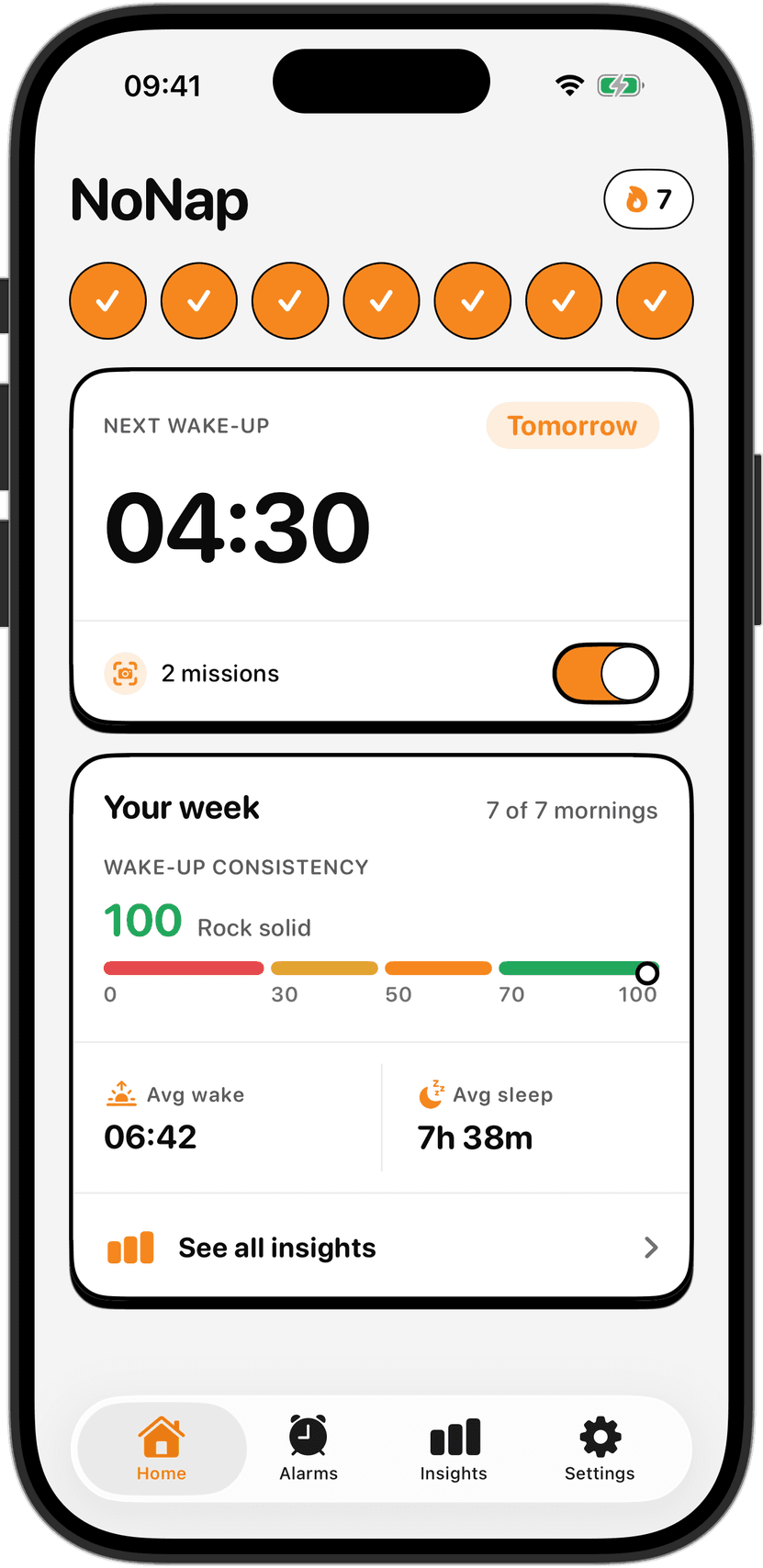
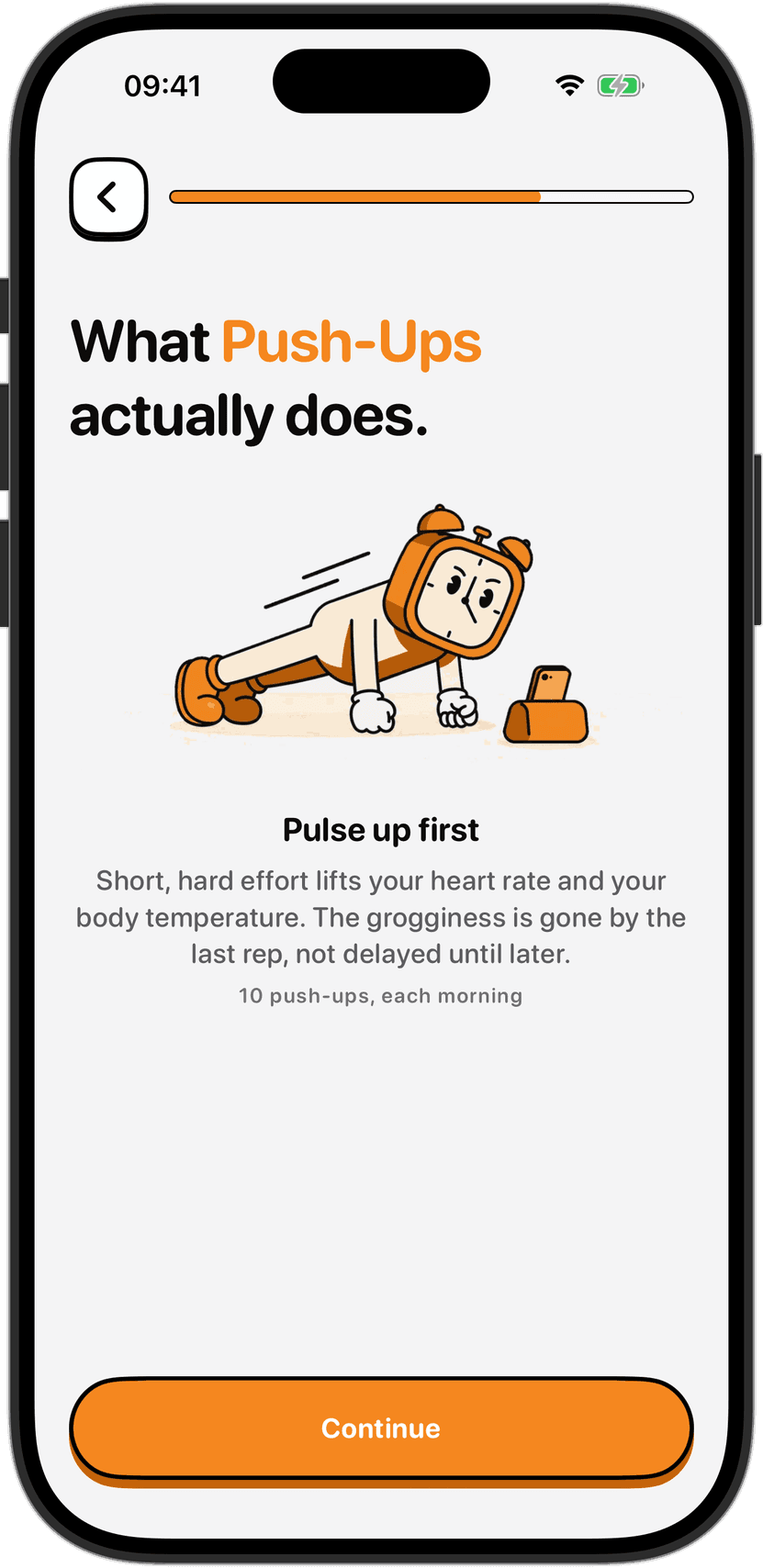
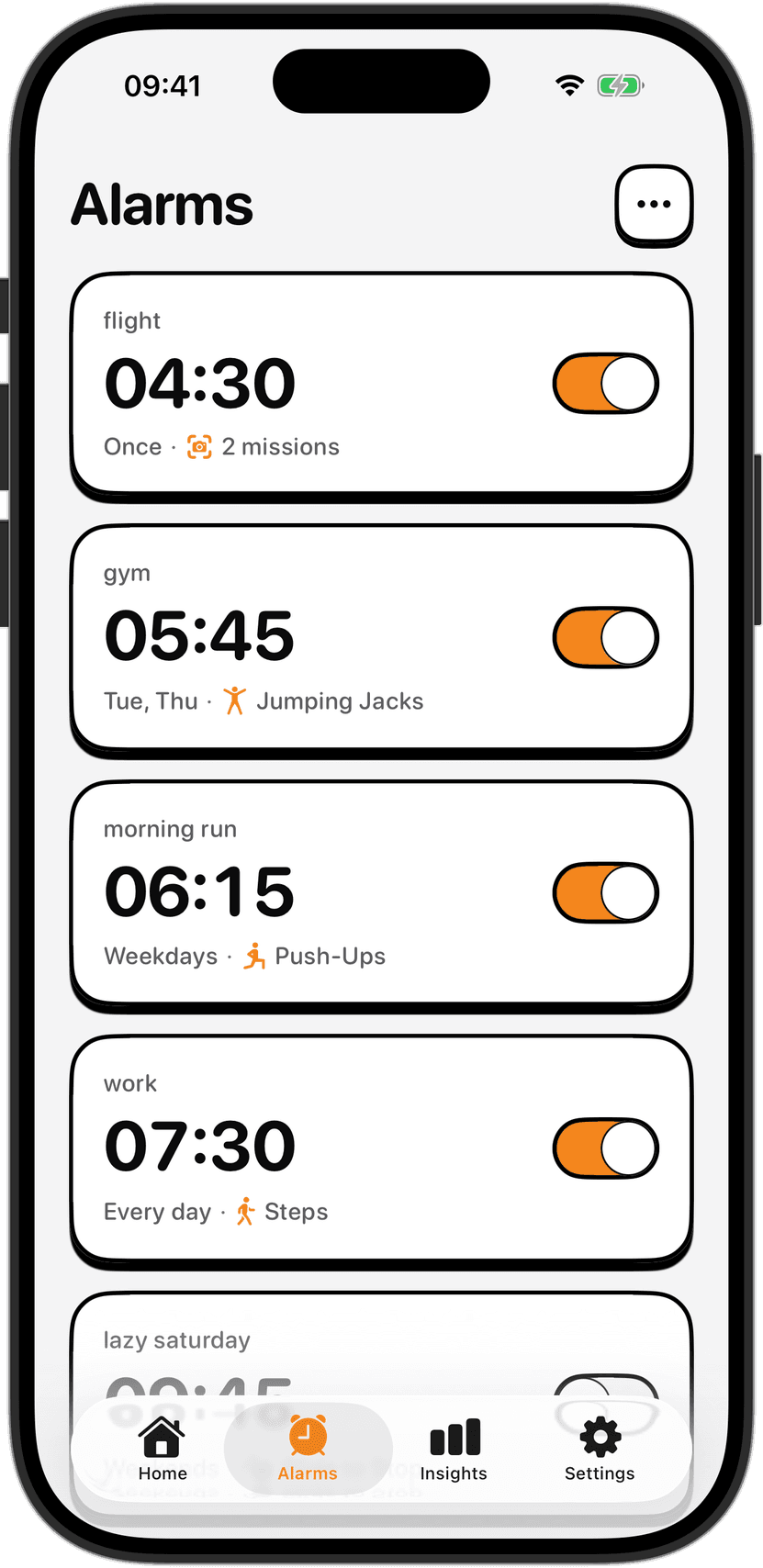
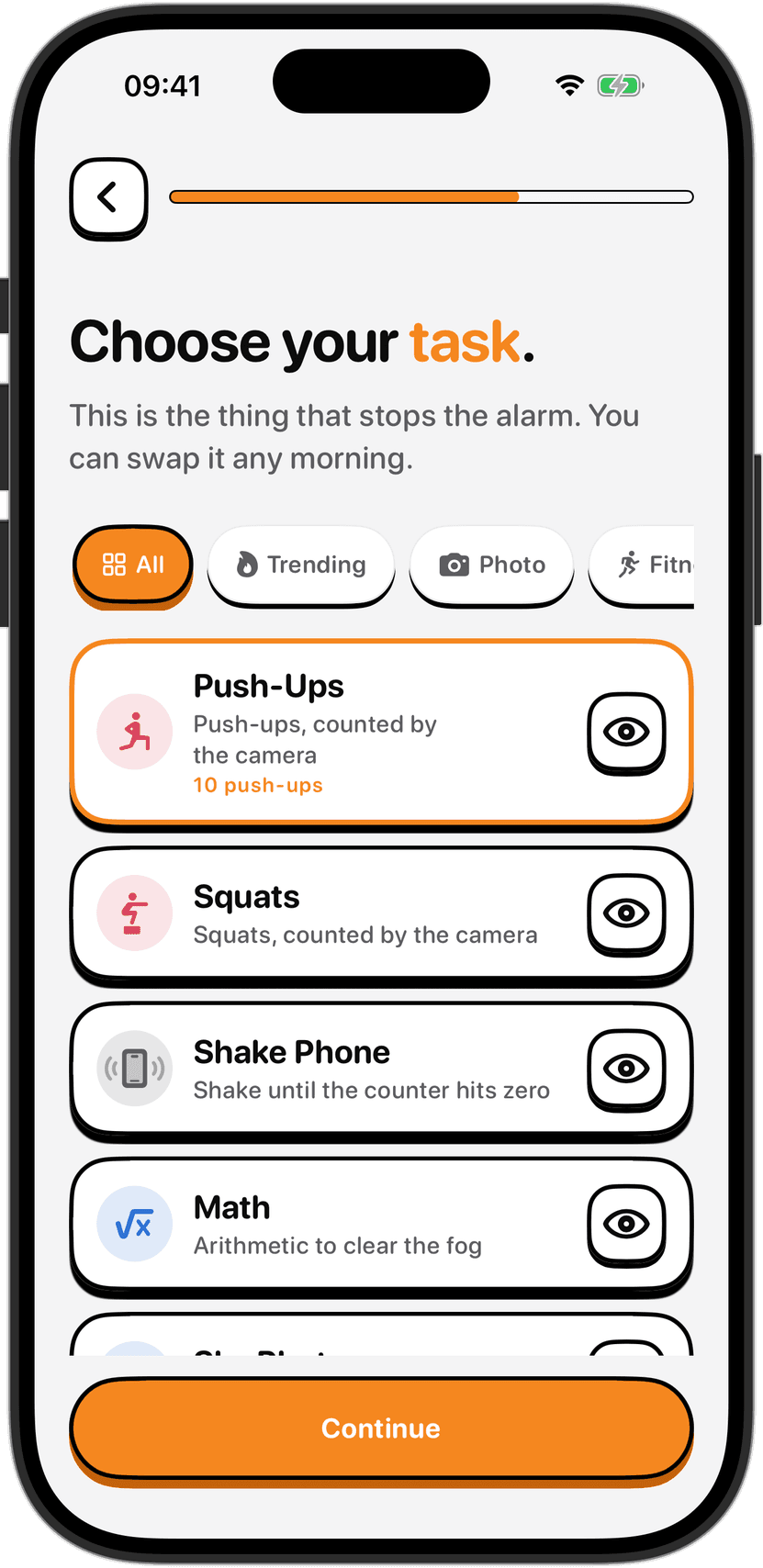
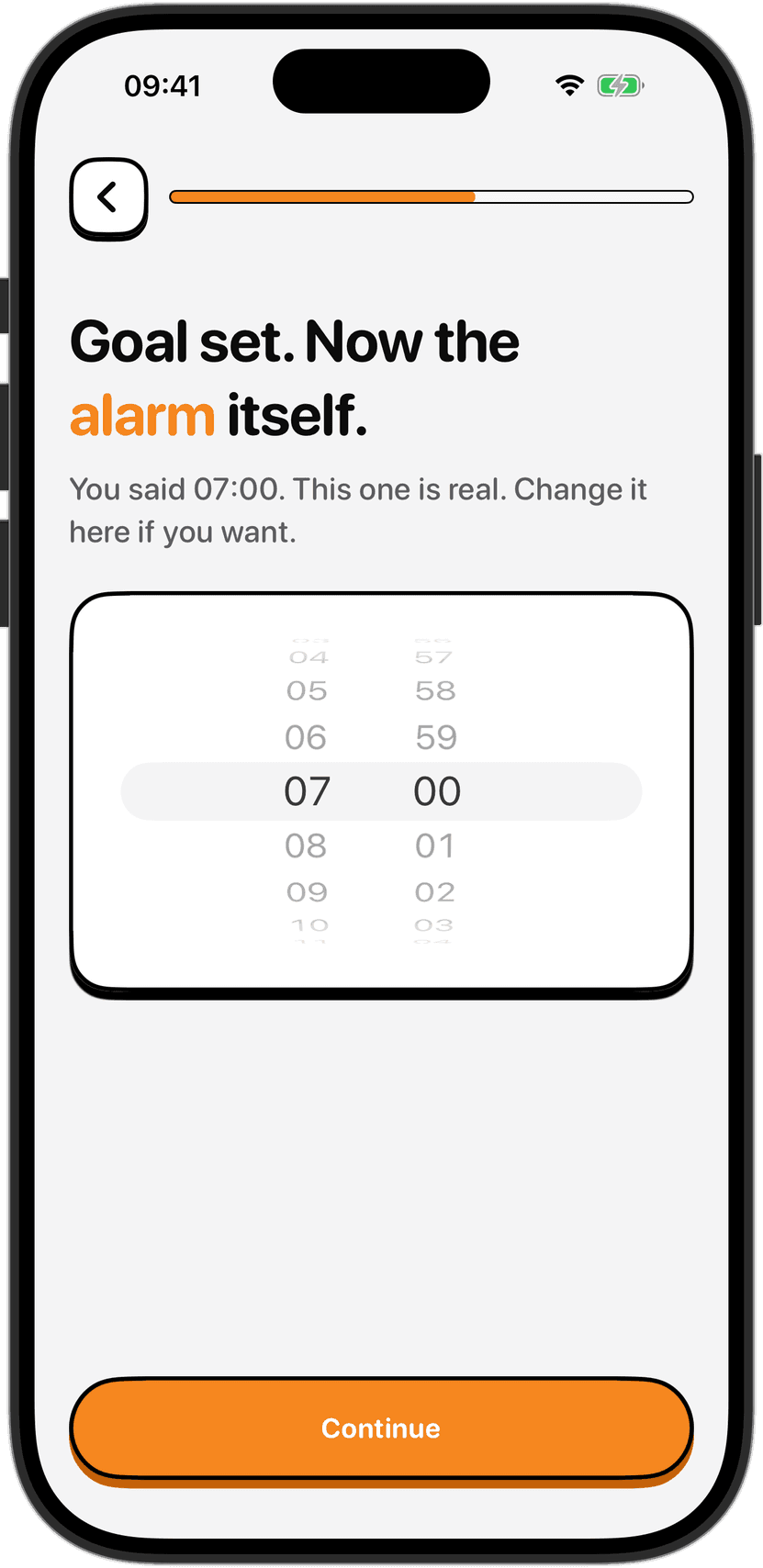
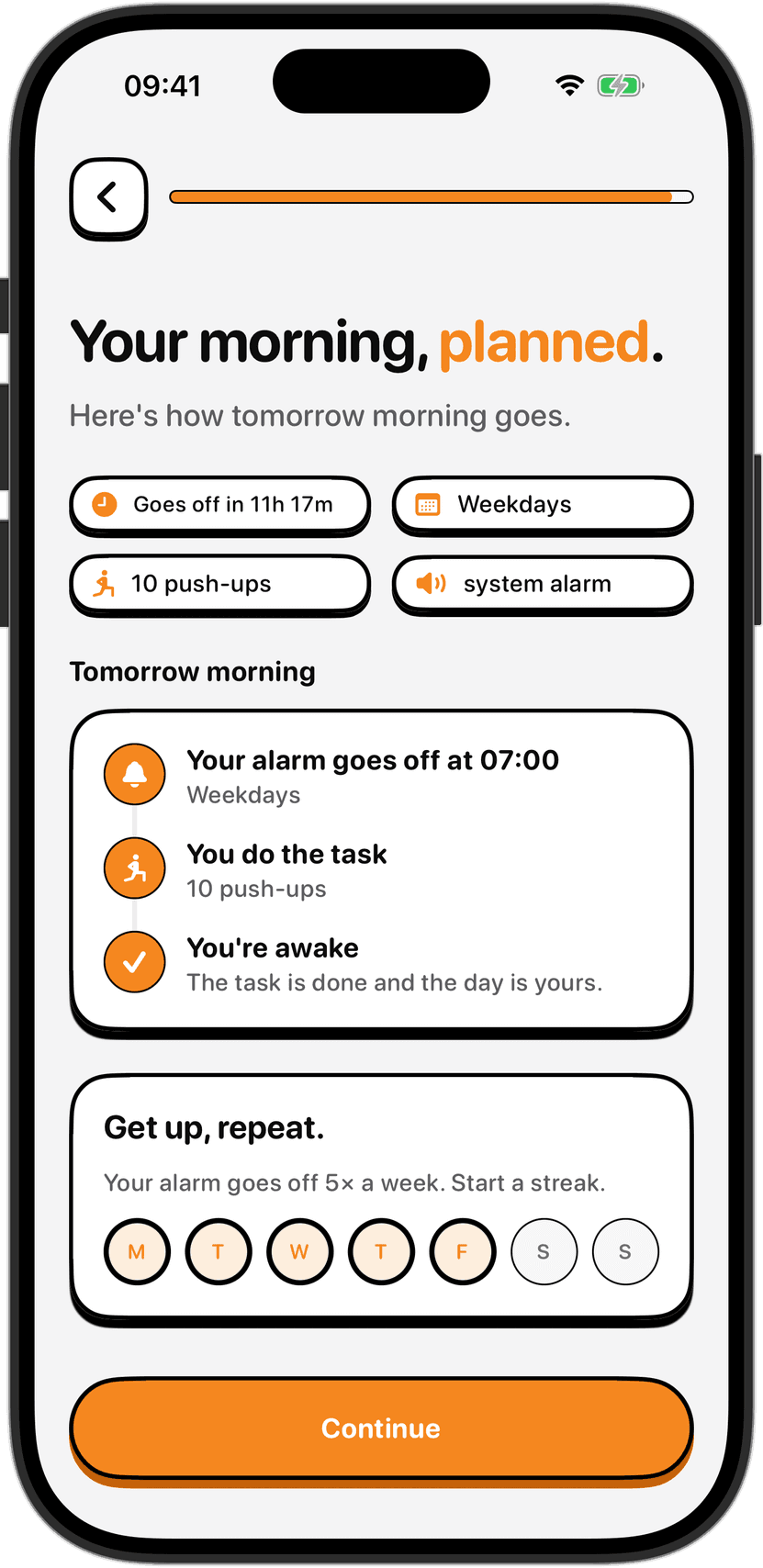
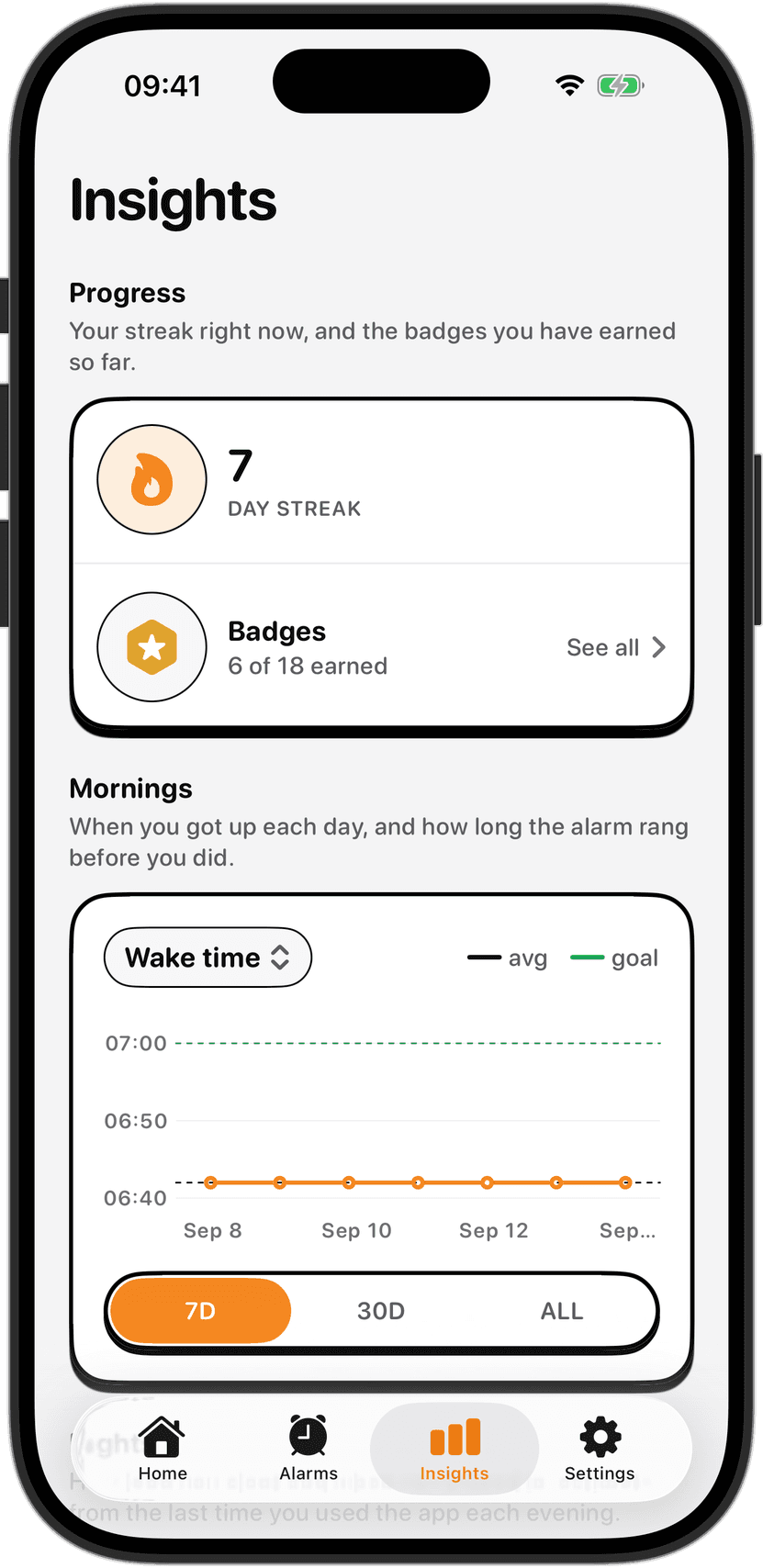
If you are working to rebuild your sleep rhythm and improve your consistency at waking, setting one alarm at a fixed time takes the negotiation out of the morning. NoNap is an iPhone alarm app built around that principle. One alarm. No snooze. It uses Apple's system alarm, so it rings even when your phone is in silent mode. Stopping the alarm requires finishing a brief wake task: push-ups or squats counted by the camera, a shake of the phone, a math problem, a photo of the made bed, or simply getting out of bed. Any morning, you can pick which task works for you. If exercise first thing in the morning is not safe for you, choose a different task. That fixed wake time gives the rest of your sleep pattern something to anchor to, and makes it easier to spot whether a 3 a.m. awakening is just a bad night or the start of a pattern.
Sources
Patel AK, Reddy V, Shumway KR, Araujo JF. (2024). Physiology, Sleep Stages. StatPearls. PMID: 30252388. ncbi.nlm.nih.gov/books/NBK526132/
Ekirch AR. (2016). Segmented Sleep in Preindustrial Societies. In: Kryger M, Roth T, Dement WC, eds. Principles and Practice of Sleep Medicine. 6th ed. PMID: 26888454.
Yetish G, Kaplan H, Gurven M, Wood B, Pontzer H, Manger PR, Wilson C, McGregor R, Siegel JM. (2015). Natural sleep and its seasonal variations in three pre-industrial societies. Current Biology. 25(21):2862-2868. PMID: 26480842.