Why NoNap Has No Login, No Account, No Server
NoNap has no sign-up screen, no password and no account database. Here's exactly what data stays on your phone, and what doesn't.
Visana Studios
5 min read
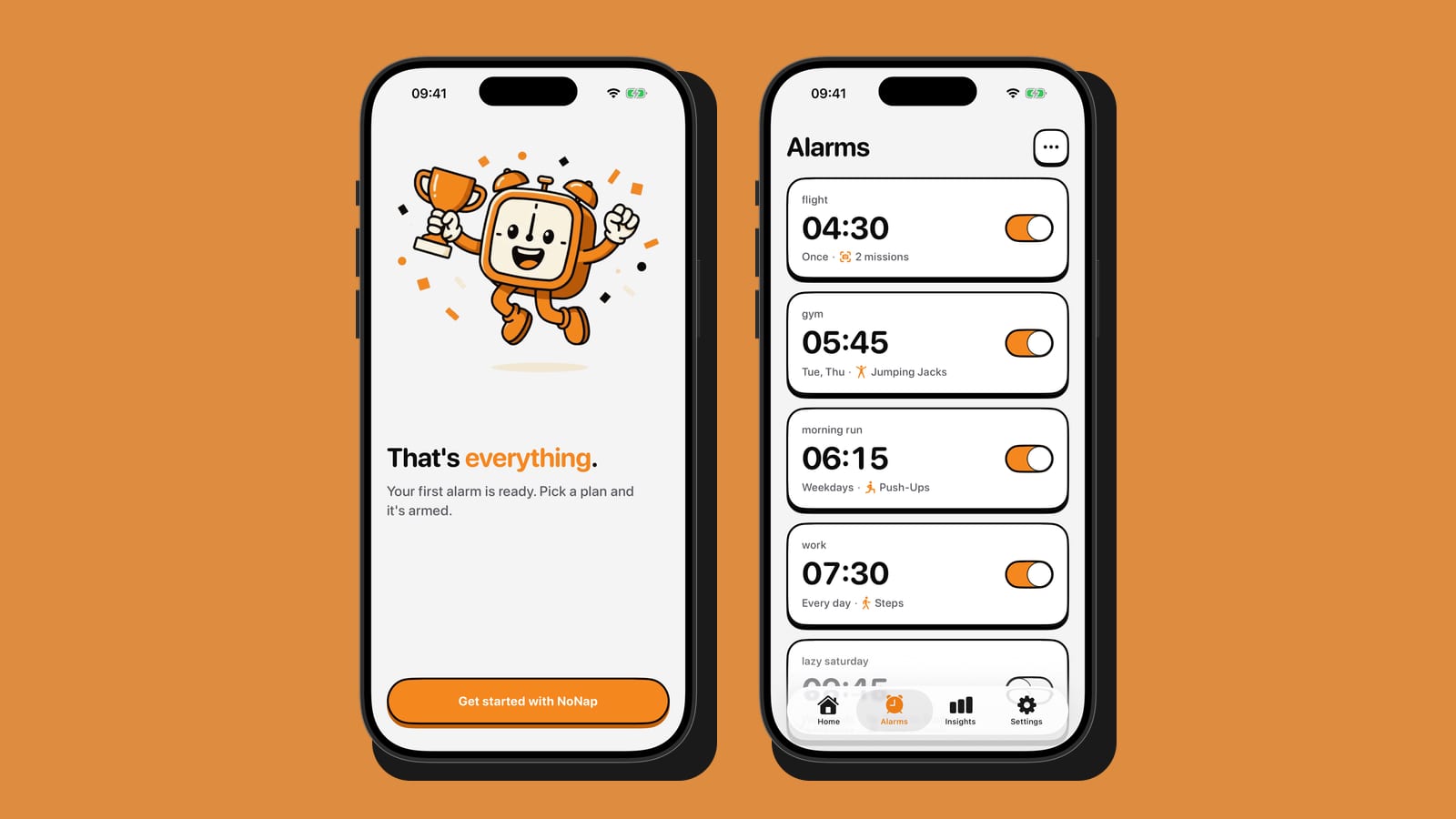
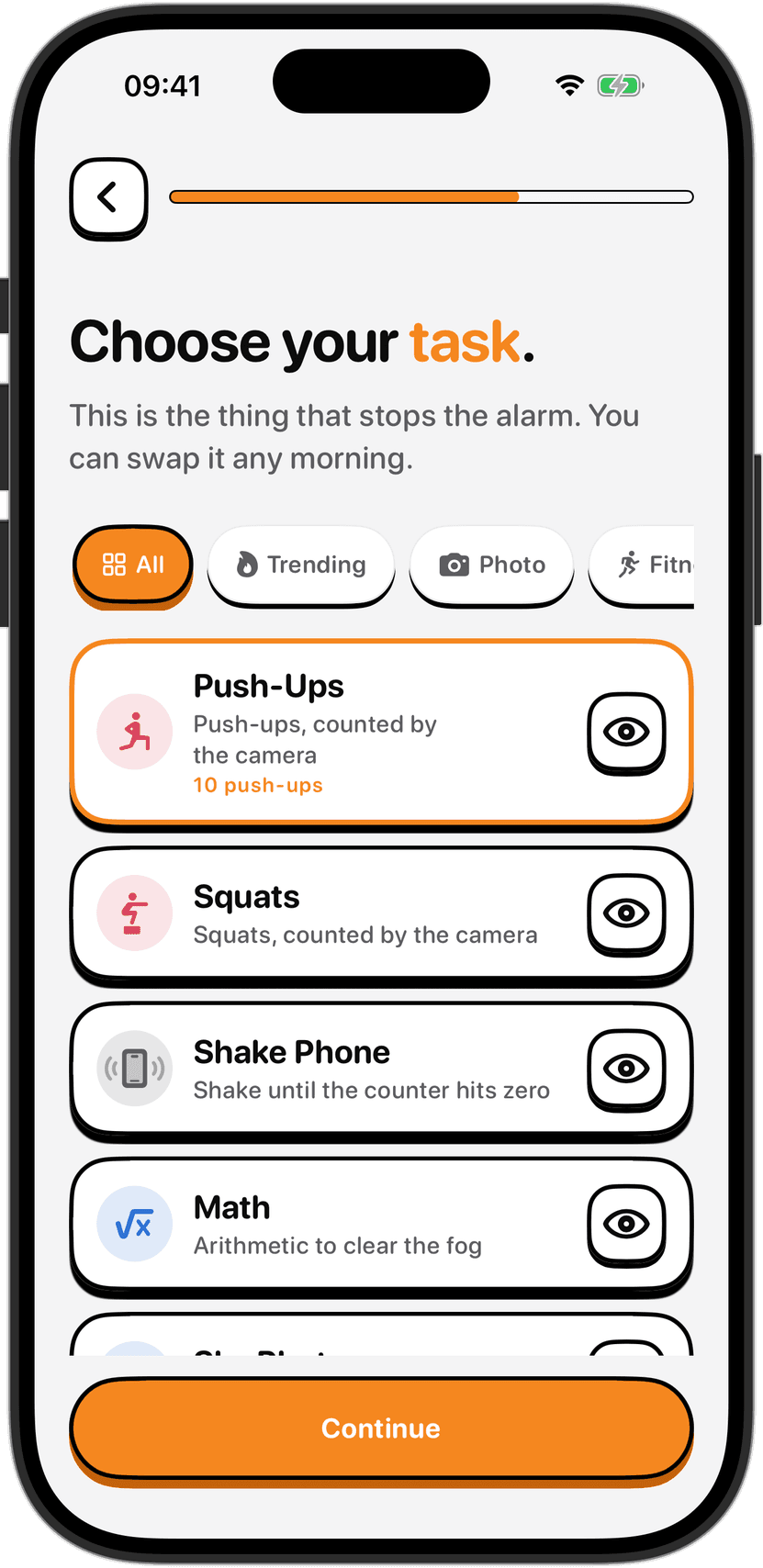
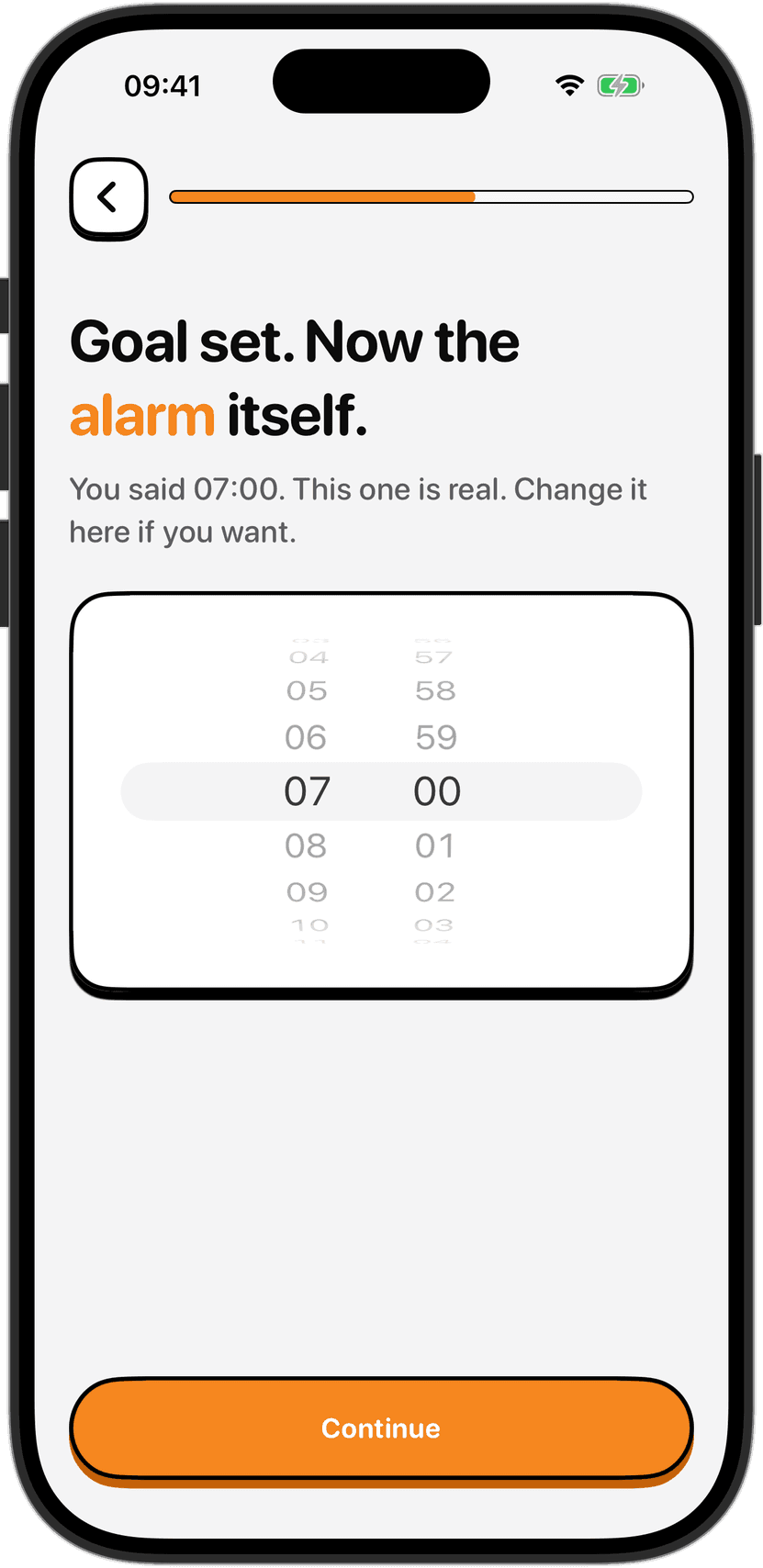
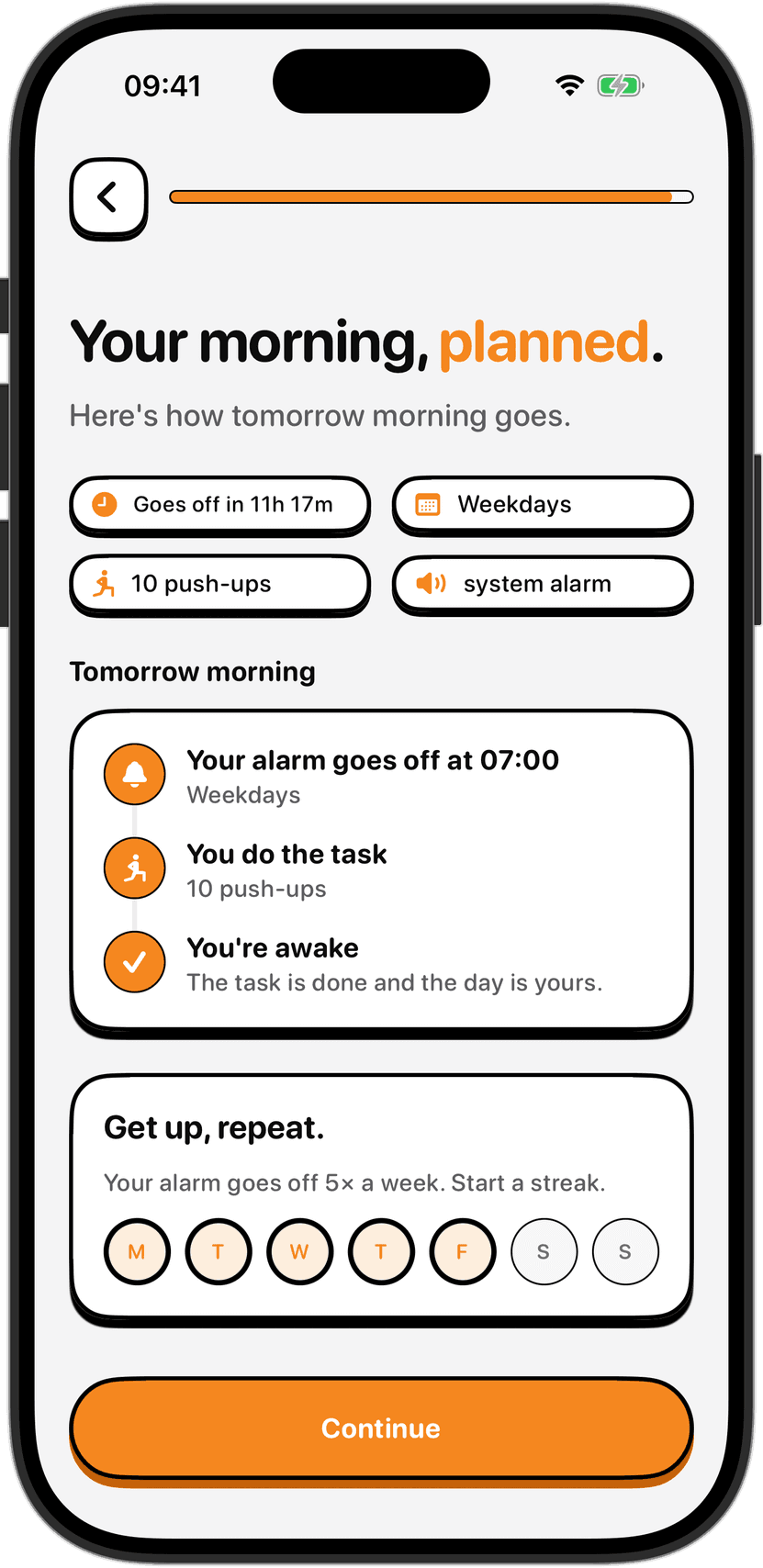
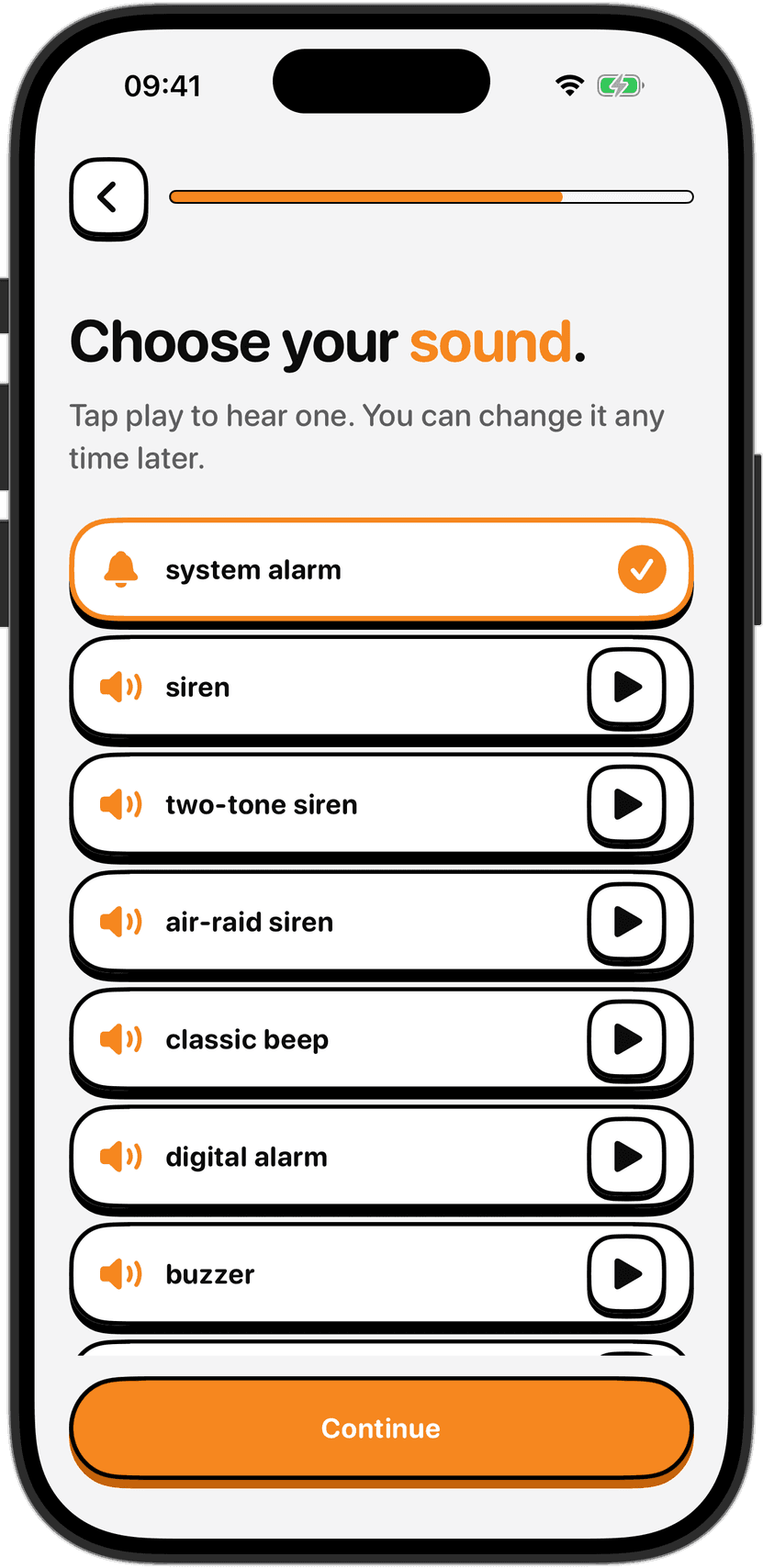
Open NoNap for the first time and there is no screen asking for an email address. No password field, no "create an account" button, no box to tick before you can continue. You set your first alarm, pick a wake task, and that is the whole setup. The gap where a sign-up flow usually sits is not something the app forgot to build. It is the actual design.
What "no account" means once you are using it
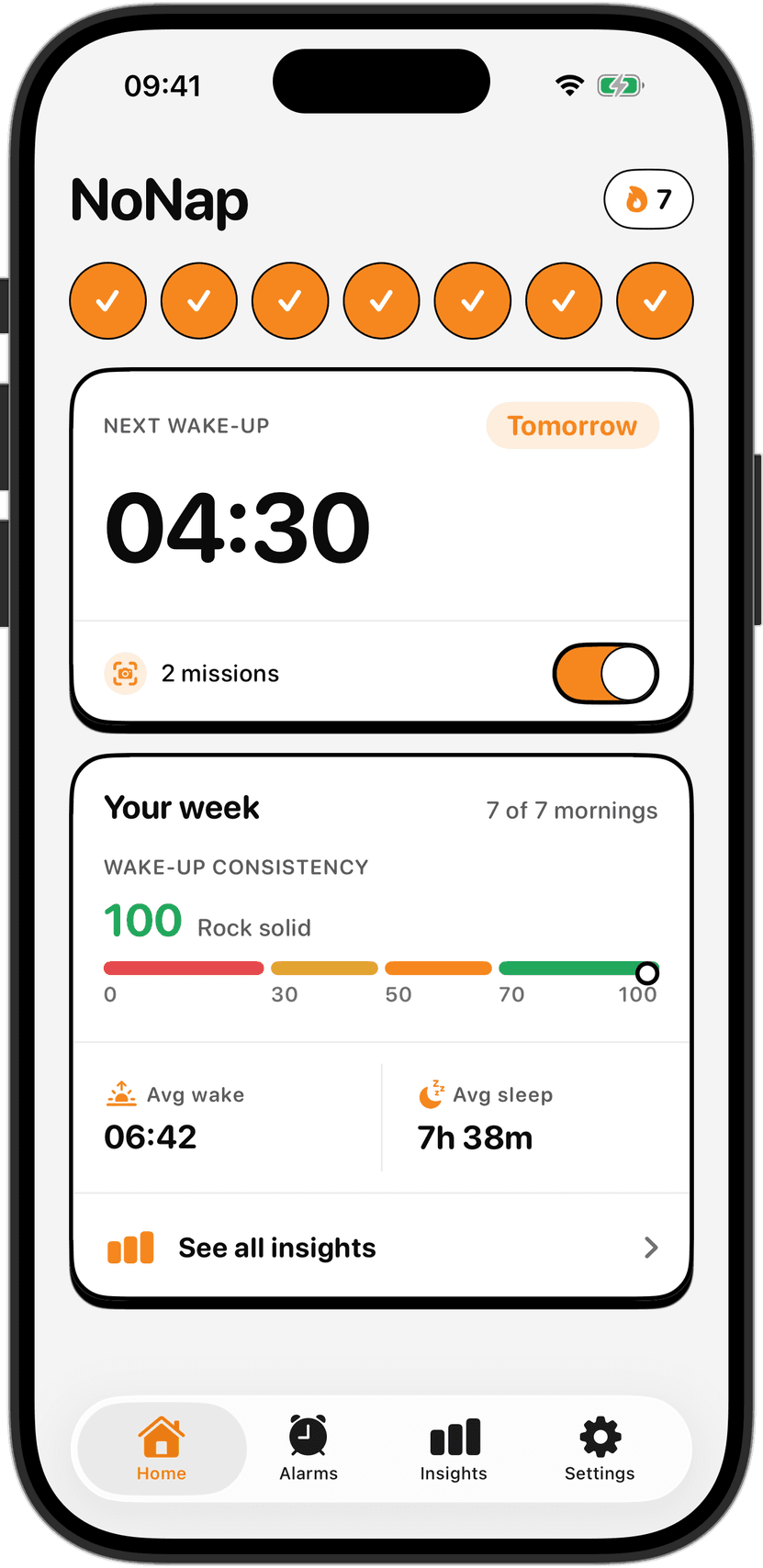
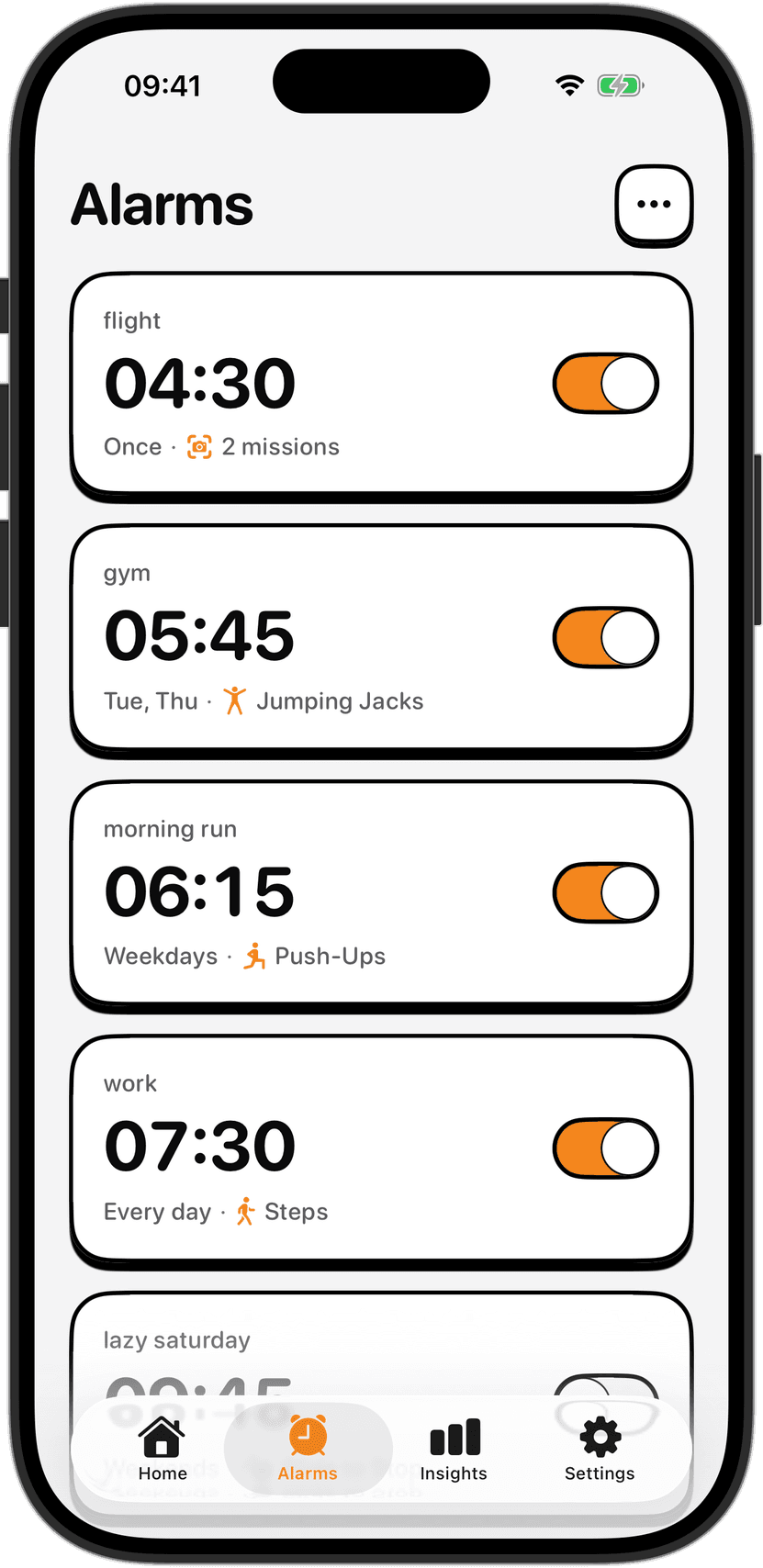
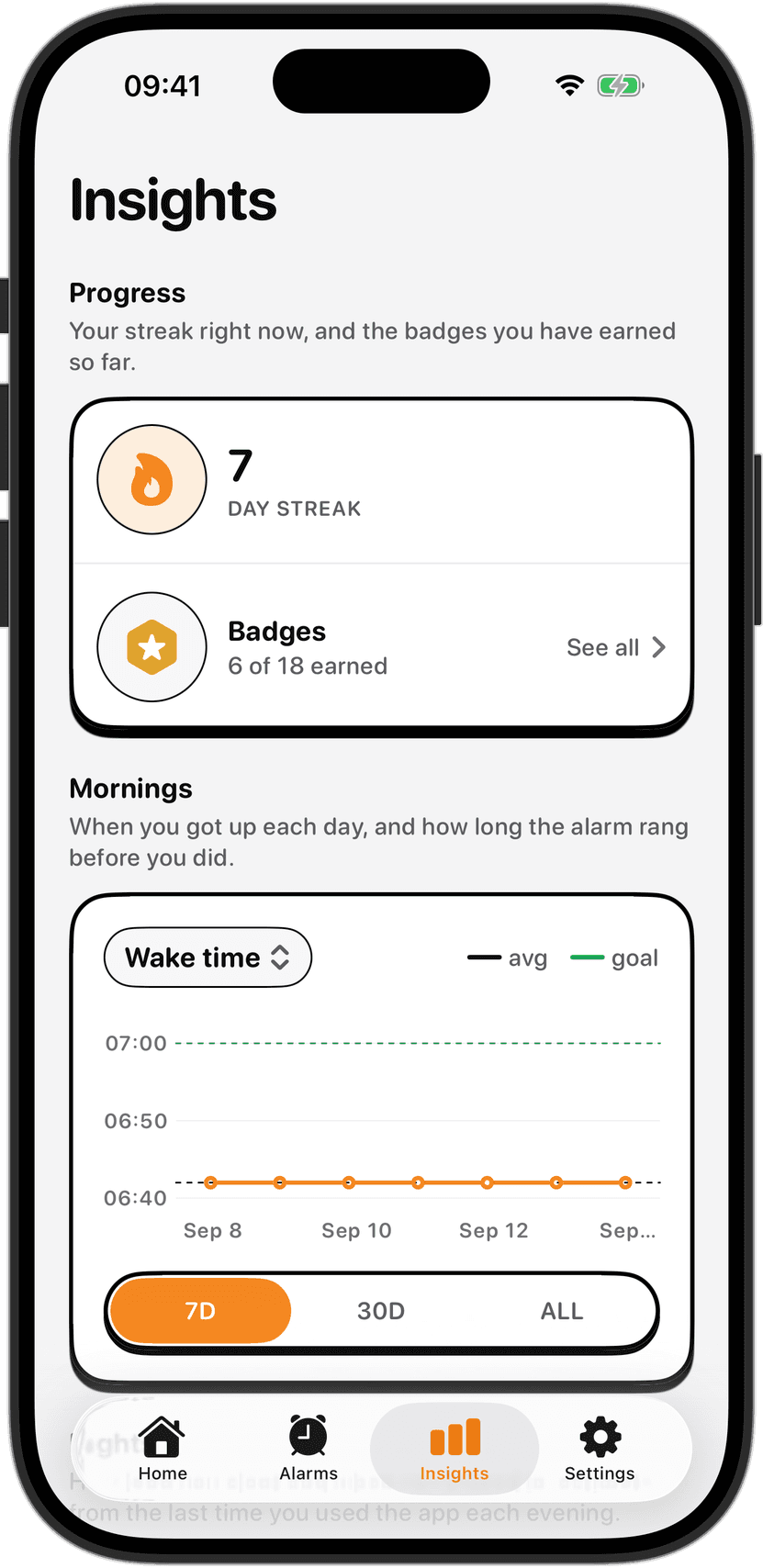
Everything NoNap needs to run lives in the app's own storage on your phone. The alarm and its time, the repeat days, the wake task you picked and its target, the streaks, the wake-up history charts. None of it is attached to a username, because there is no username. There is no profile sitting on a server somewhere with your name on it, and no password to forget, because you were never asked to set one in the first place.
That has a plain, unglamorous consequence. Deleting the app deletes the data, permanently, because the copy on your phone was the only copy that ever existed. There is no account to log back into from a new device and pull everything down again. If you switch phones, Restore Purchases brings your plan back through your Apple Account, since that part is tied to Apple's own system rather than to NoNap. Your streak and your wake-up history do not come along for the ride unless your normal iPhone backup already covers them. That is a real trade-off, not a footnote, and it is worth knowing before you assume otherwise.
Every account is one more thing that can leak
A login is not a neutral convenience. It is a username and password sitting in a database somewhere, a "forgot password" email flow that can be hijacked, and a target the moment enough people use it. Verizon's 2026 Data Breach Investigations Report found that software vulnerabilities have now overtaken stolen passwords as the single most common way attackers get into a system in the first place, which only really makes sense once you notice how many systems still run on stolen or guessed credentials underneath everything else. Separate DBIR research into credential stuffing found that among devices infected with infostealer malware, the typical person had only 49 percent of their passwords distinct across different services. Reuse a password on one forgettable app, and you have handed an attacker a working key to several others.
None of that requires NoNap specifically to be careless. It requires NoNap to exist as a login system at all, because a login system is the thing that gets targeted, reused against, and occasionally breached regardless of how carefully it was built. Not building one is a smaller promise than "we will never get hacked." It is closer to "there is no password database here to steal," which is a claim that holds up by construction rather than by good intentions.
The one exception, and why it looks different
NoNap is a paid app, not a free one, so it still has to answer one question without a server of its own: is your plan active right now? That check runs through RevenueCat, a purchase-verification service. What it receives is your App Store purchase history, an anonymous identifier the SDK generates on your device, and basic technical details like app version and country needed to process the receipt. What it does not receive is a name, an email address, or anything else that could tie the record back to you as a person.
Apple's own App Store privacy labels draw exactly this line for every app, splitting data into what is linked to your identity and what is not. NoNap's listing declares its purchase data as not linked to you and not used for tracking, which is the same category Apple uses to describe information collected without an identifier attached. It is a narrow exception to an otherwise simple rule, and it exists for one reason only: proving a subscription or lifetime purchase is real. The camera-verified wake tasks that check your push-ups or a made bed run entirely on the device and never touch this pipe at all, because counting a rep and verifying a receipt are different problems with different amounts of data actually required to solve them.
The other thing that leaves the phone is anonymous usage statistics and crash reports. They tell us which setup screens people reach, whether a purchase went through and what crashed, so the app can get better without anyone having to write in. They carry a random identifier instead of a name, no location and nothing you type, never your alarms or your history, and one switch in Settings turns them off.
The honest version of the trade-off
Skipping an account is not free of downsides, and pretending otherwise would be its own kind of dishonesty. There is no dashboard where you can check your streak from a browser. There is no syncing your history between an iPhone and an iPad, because the whole point is that the data stays put rather than travels. If what you actually want is a synced record you can inspect from more than one device, that is a real feature other apps offer and NoNap currently does not.
What you get instead is a smaller number of places where something can go wrong on someone else's end. There is no customer database to be part of, no breach notification you might one day receive, no password to reuse by accident. Your morning routine, and the wake tasks you rely on to get through it, stay a private matter between you and your phone. Whether that trade lands in your favor depends on how much you value seeing your data from more than one screen against how much you would rather it simply not exist anywhere else. For an alarm you rely on every single morning, quite a lot of people land on the second option once they actually think about it.
If you are weighing NoNap against your current setup, the FAQ covers pricing and how the plans work, and the privacy policy lists exactly what the purchase check and the usage statistics send.
Sources
Verizon, "2026 Data Breach Investigations Report," verizon.com/business/resources/reports/dbir, accessed September 2026, for the finding that 31 percent of breaches now start with software vulnerabilities, overtaking stolen passwords as the leading way attackers gain initial access.
Verizon, "Credential stuffing attacks: 2025 DBIR research," verizon.com/business/resources/articles/credential-stuffing-attacks-2025-dbir-research, accessed September 2026, for the finding that among devices infected with infostealer malware, the median user had only 49 percent of their passwords distinct across different services.
Apple, "About privacy information on the App Store and the choices you have to control your data," support.apple.com/en-us/102399, accessed September 2026, for how App Store privacy labels distinguish data linked to a user's identity from data that is not, and from data used for tracking.