Surviving 8 a.m. classes as a college student
Why early morning classes hurt attendance and grades, what your body clock is doing, and practical strategies for the semester ahead.
Visana Studios
5 min read
The 8 a.m. lecture hall sits half empty while the 10 a.m. section overflows. That's not laziness or poor planning on the part of students. It's biology running into a course schedule designed without it in mind.
What the data shows about early classes
A study by Sing Chen Yeo and colleagues at the National University of Singapore, published in Nature Human Behaviour in 2023, tracked actual attendance patterns across 23,391 students using institutional Wi-Fi data and combined it with grades from 33,818 students. The finding was stark. Students taking classes at 8:00 a.m. showed attendance about ten percentage points lower than those in later start times. Those with more early morning classes had measurably lower grade point averages.
The attendance drop wasn't subtle variations. It was a consistent, measurable decline tied directly to clock time. And the grade impact followed the same pattern. More morning classes meant lower overall academic performance, independent of the student's major or previous achievement level.
Why? Sleep.
Your body clock in your twenties
Between ages 15 and 25, human circadian rhythms shift later. The body's internal clock, which controls when you feel sleepy and when you wake alert, moves to a later schedule compared to childhood or age 30. This shift isn't individual habit or a character flaw. It's a documented developmental change in how the brain regulates the sleep-wake cycle. Morning light is the strongest signal your body clock gets, which matters when you're trying to shift your rhythm earlier for early classes.
That shift means a college student's biology isn't primed to wake at 6 a.m. and be ready for cognitive work by 8. The circadian rhythm is still oriented toward sleep at that hour. Waking then runs directly against what the body clock is signaling to do.
Sleep inertia compounds the problem. When you wake during a period your body expects sleep, the initial grogginess runs deeper and lasts longer than if you woke later in your natural cycle. The prefrontal cortex, which handles planning and decision-making, takes longer to come online. You're not lazy at 8 a.m. You're fighting your own neurobiology.
The sleep debt that accumulates without you noticing
College students report insufficient sleep at high rates. Many students get less sleep than recommended, and daytime sleepiness is common. That's not because college is uniquely busy. It's because class schedules, combined with the later natural rhythm, create a collision.
An 8 a.m. class requires waking at 6:30 or 7. For a student whose body wants to fall asleep around midnight or 1 a.m. and wake at 8 or 9, that's a daily sleep loss of an hour or two. Night after night, it accumulates. The damage to cognition and academic performance is proportional to that deficit.
Research on sleep and grades shows this in multiple studies. Students with poor sleep quality perform worse on exams, retain less material, and show lower overall GPA. The gap between a student sleeping seven hours and one sleeping five widens measurably over a semester.
The problem deepens on weekends. Many students try to recover by sleeping much later on Saturday and Sunday. That irregular schedule creates social jet lag, which trains the body clock to be less consistent and makes returning to early classes on Monday even harder. The irregular timing itself becomes part of the problem.
Practical shifts for the semester
When you're registering for courses, front-load afternoon and evening sections. Most universities allow you to see class time before committing. A 10 a.m. or later start makes a measurable difference in both attendance and performance. If early classes are unavoidable, treat the problem as a schedule design issue, not a motivation one.
A consistent sleep schedule anchors everything else. Pick a realistic wake time that works with your course schedule and keep it the same seven days a week, including weekends. That means no sleeping until noon on Saturday. The consistency trains your circadian rhythm to shift and adapt far better than erratic timing ever will.
Use your morning light. Open curtains or turn on bright lights within 30 minutes of waking. Light is the strongest signal your body clock responds to, and it shifts the circadian rhythm earlier when you need it. Get outside if you can, even for a few minutes.
Caffeine can mask fatigue without addressing the underlying sleep debt. A 7 a.m. coffee feels like a solution but compounds the problem if you're already running short on sleep. If early classes are unavoidable, prioritize sleep. The caffeine won't compensate for insufficient hours.
On the night before an early class, resist the urge to stay up late studying. Sleep loss hurts both memory consolidation and the ability to stay alert during that 8 a.m. lecture. Two hours of focused study after a full night of sleep benefits you more than four hours on half a night.
One alarm that doesn't negotiate
The snooze button is especially tempting with early classes. One alarm followed by six more keeps you in bed and fragments what little sleep remains. The decision about whether to get up happens in a fog of sleep inertia where the half-awake brain makes poor calls. Research on snoozing shows that a stack of alarms doesn't add rest. It adds time spent neither asleep nor truly up.
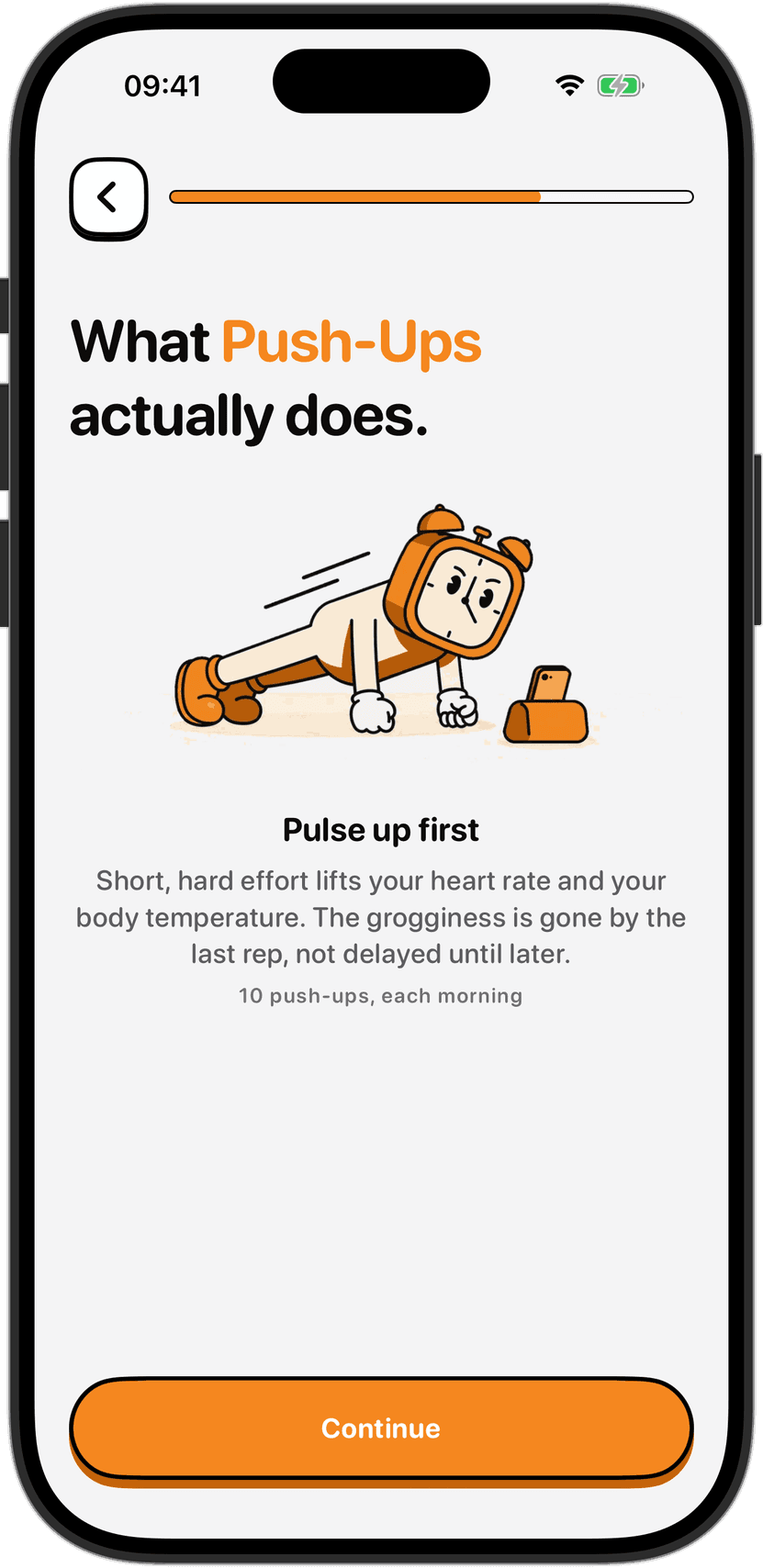
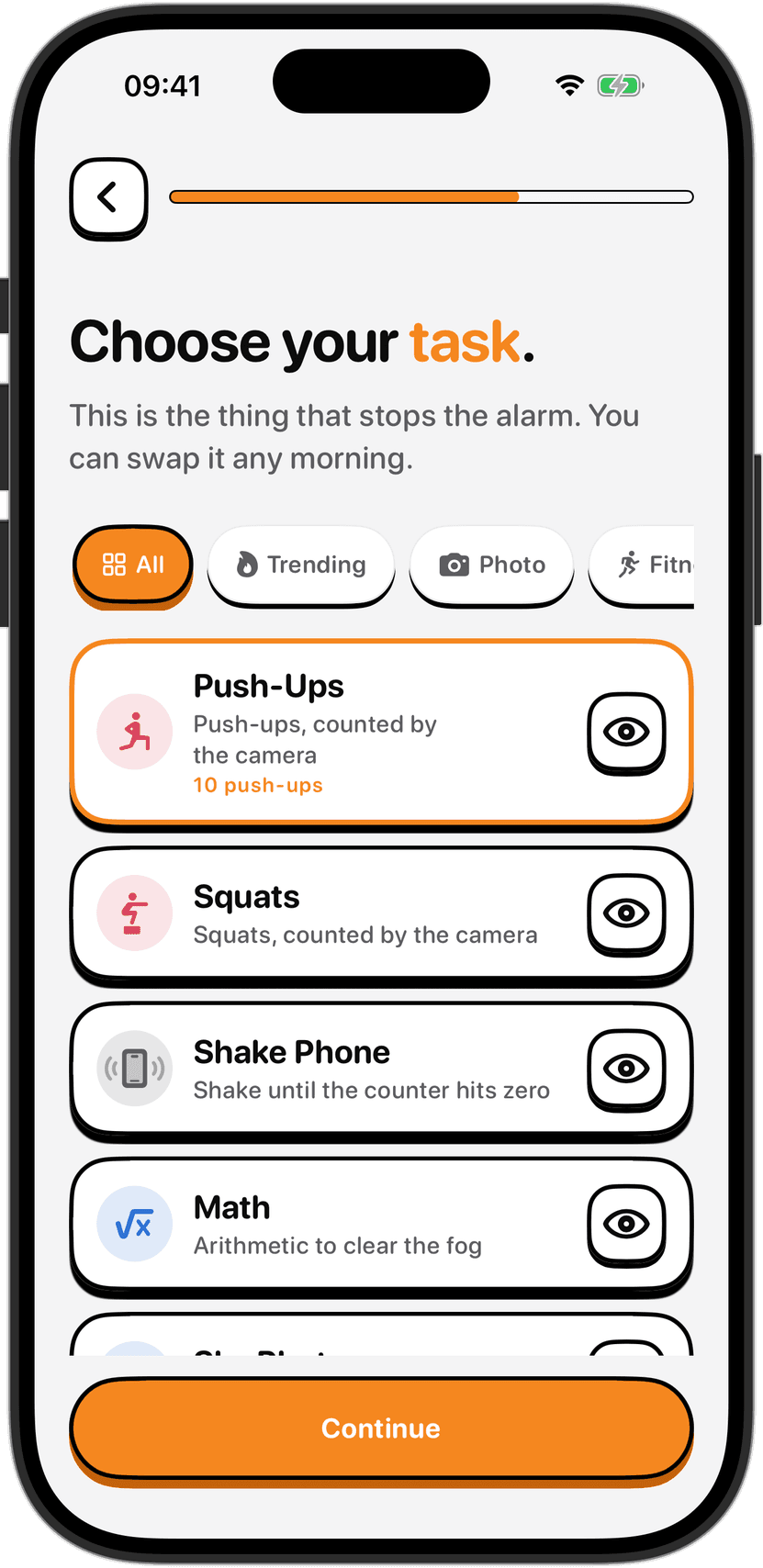
Setting one alarm at the time you actually mean to wake removes that negotiation. Pair it with a task that wakes the brain, not just the body. A few push-ups or squats raise heart rate and core temperature in step with alertness. Shaking your phone or solving a math problem requires thought while still lying in bed, and thought is the quickest way out of sleep inertia. If bodyweight exercise first thing isn't safe for you, pick a different task that gets you upright and thinking.
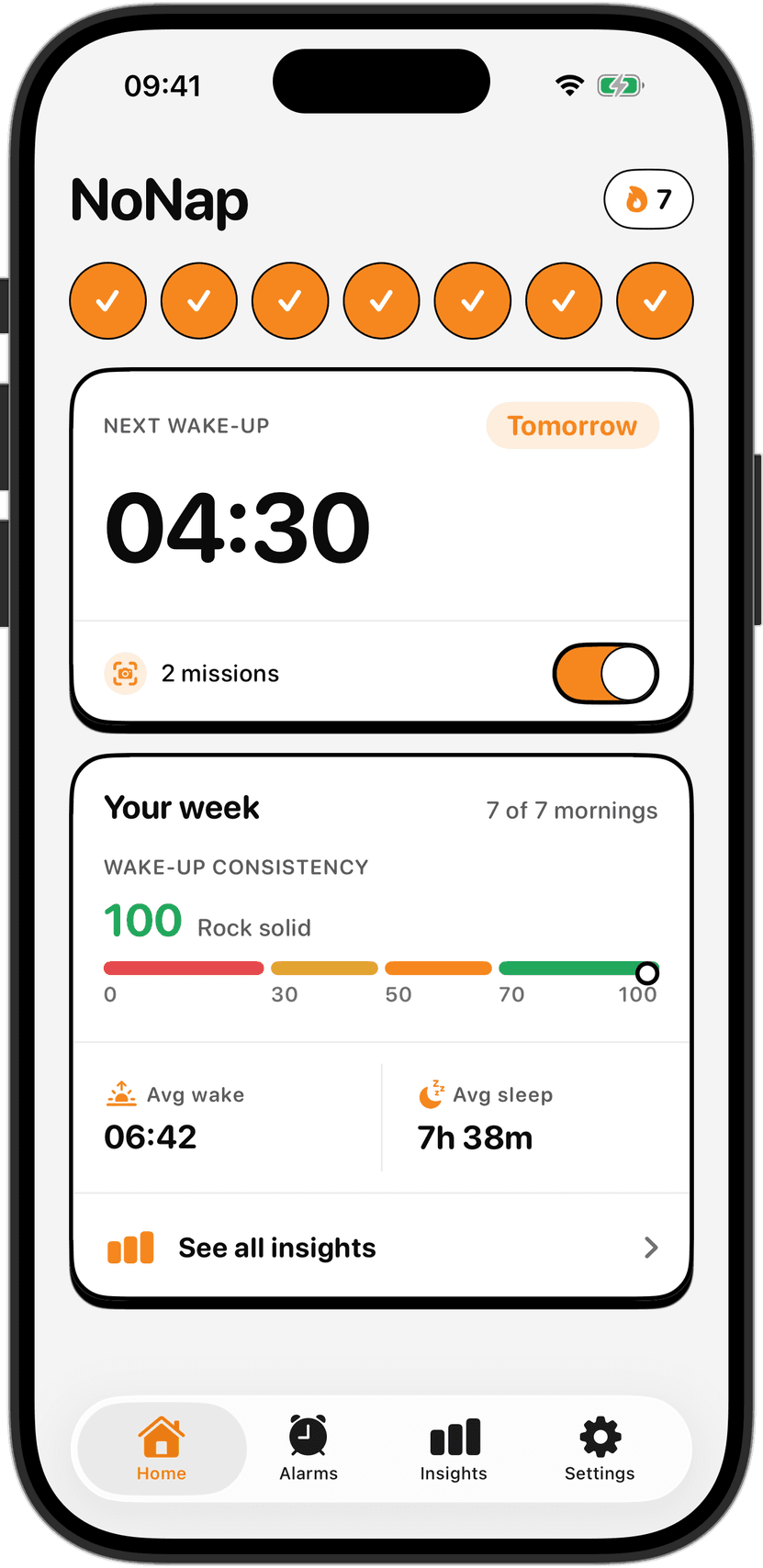
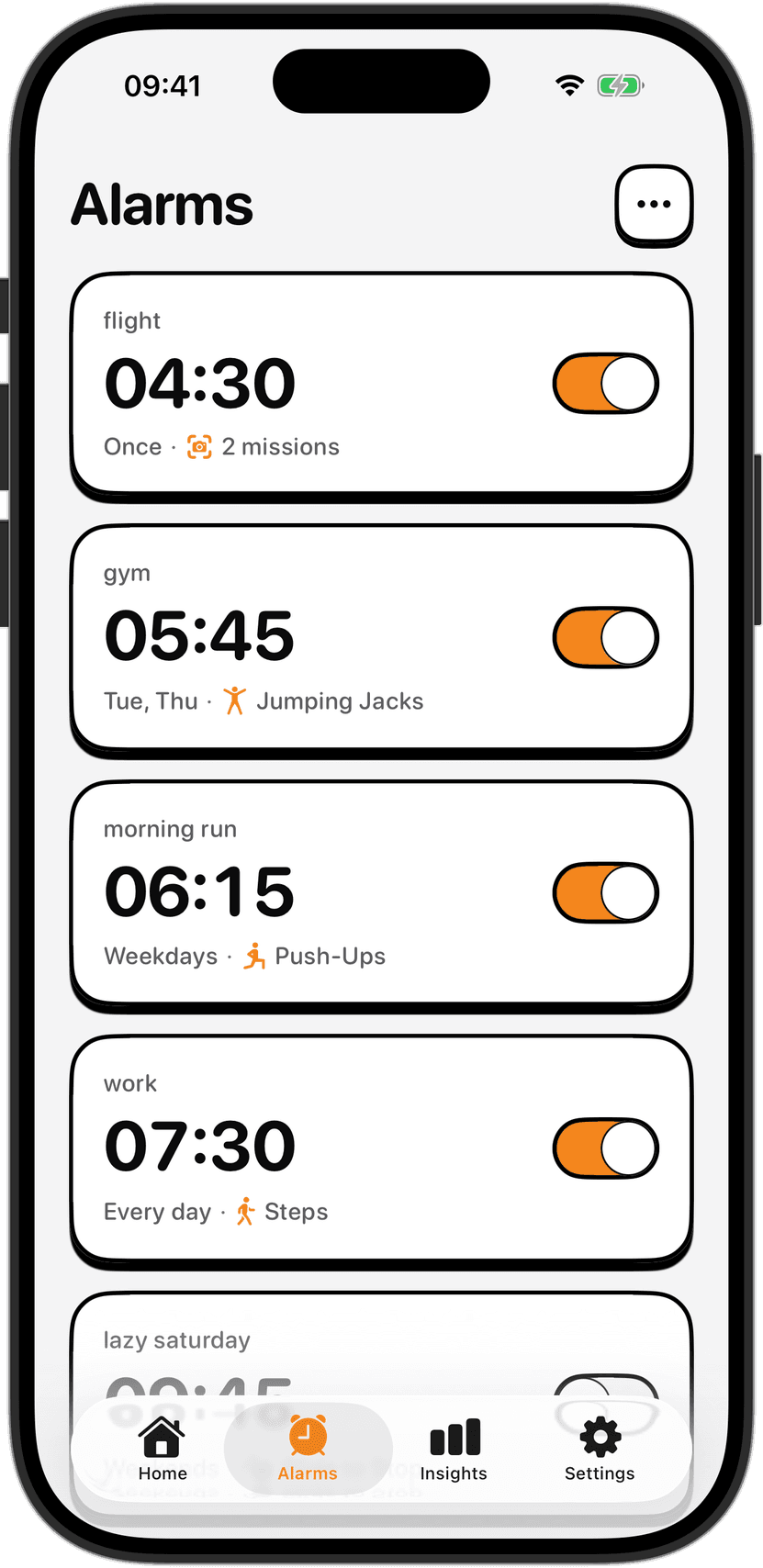
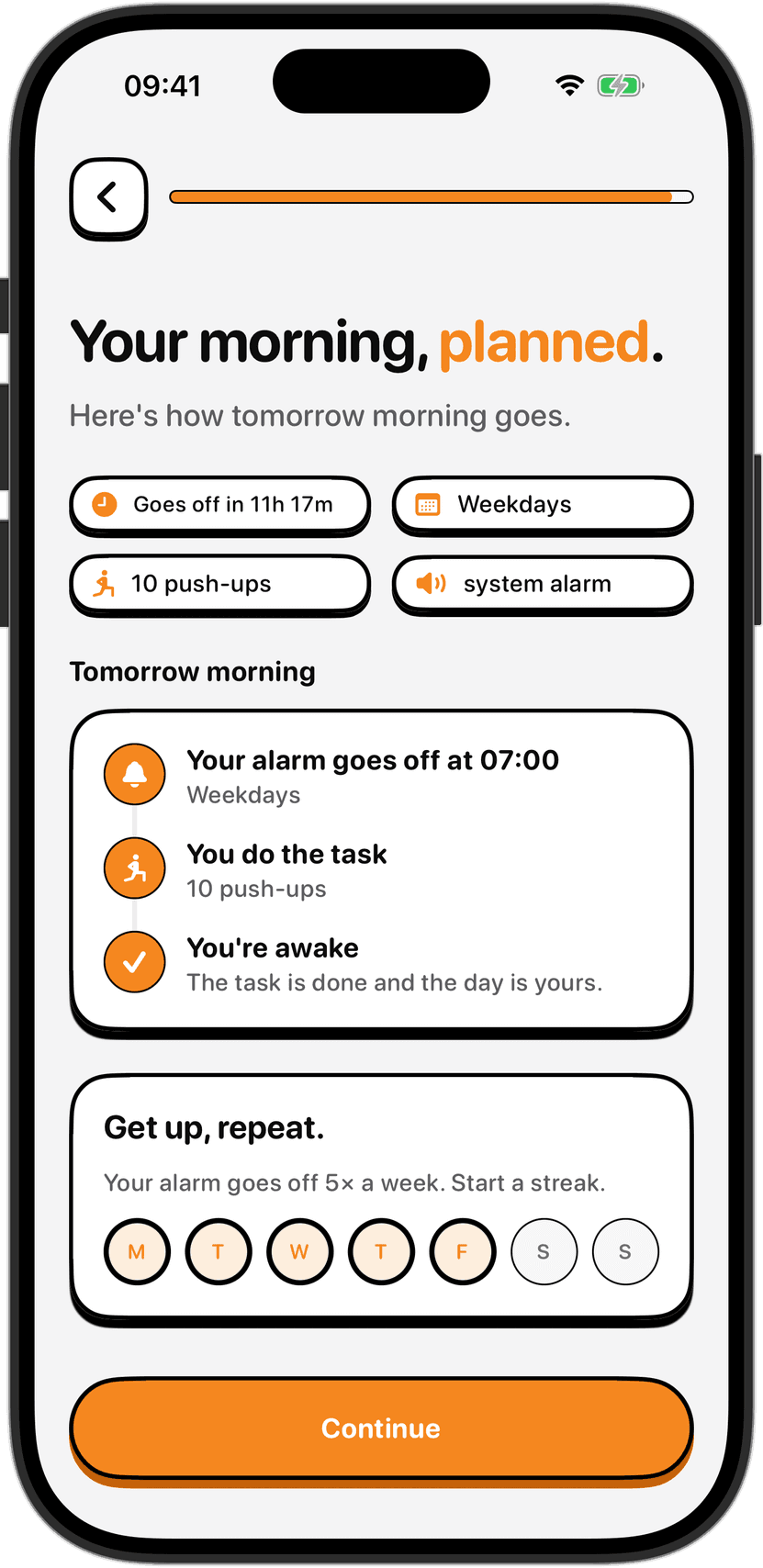
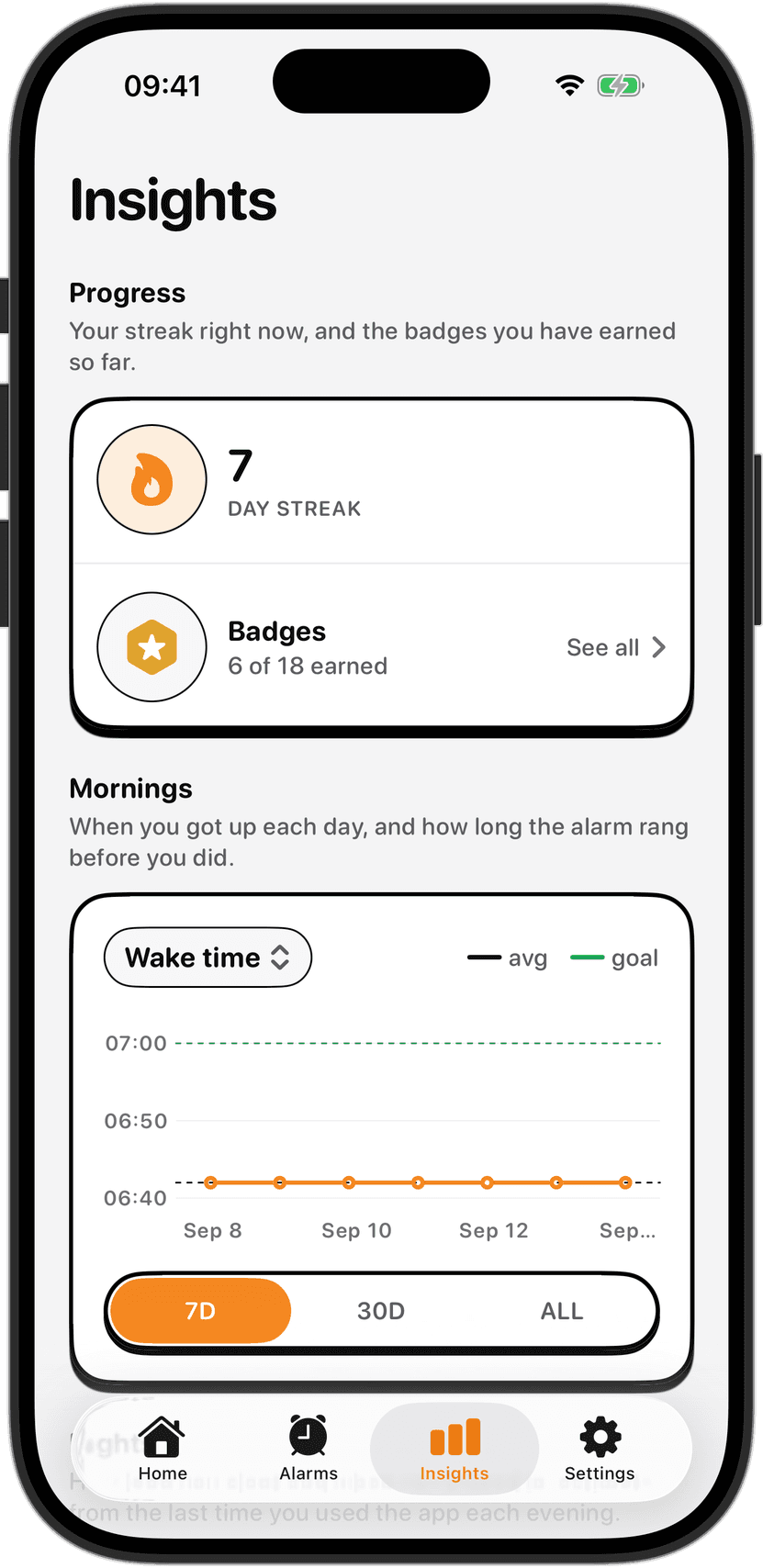
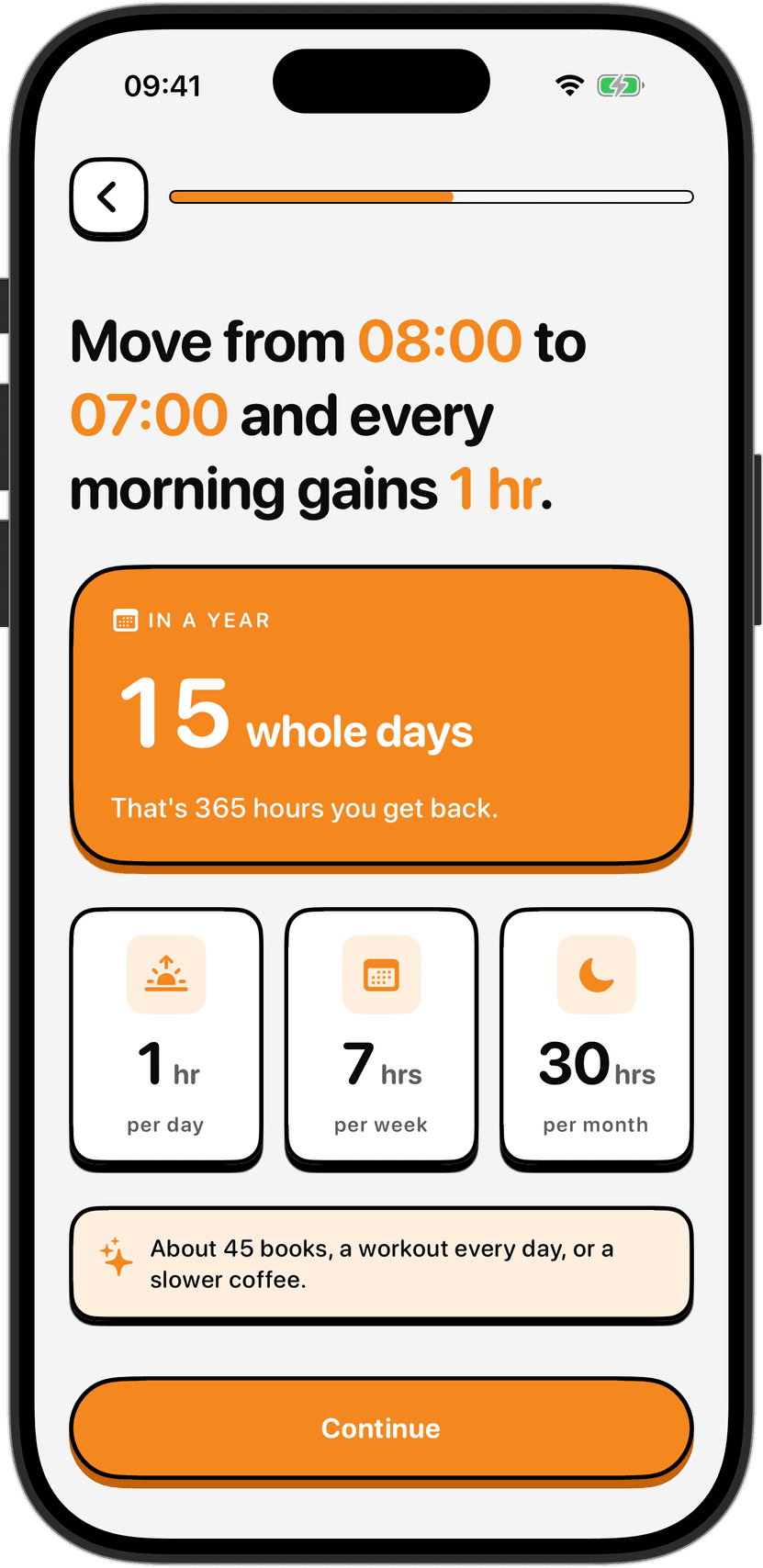
NoNap is built on this idea. It uses Apple's system alarm on iPhone, so your phone's silent switch and focus modes don't silence it. One alarm, no snooze, and stopping it means finishing a wake task you chose the night before. The task can be changed any morning if you need something gentler. The point is to take the decision-making out of a foggy moment and hand it back to the person with a clear head who set it the night before.
Early morning classes are a real challenge when your body clock hasn't adjusted. But they're not insurmountable. A consistent wake time, bright morning light, realistic sleep hours, and the right alarm setup make the difference between drowsing through lectures and actually being there.
Sources
Yeo, S. C., Lai, C. K. Y., Tan, J., Lim, S., Chandramoghan, Y., Tan, T. K., and Gooley, J. J. (2023). Early morning university classes are associated with impaired sleep and academic performance. Nature Human Behaviour, 7. doi:10.1038/s41562-023-01531-x
Image credits
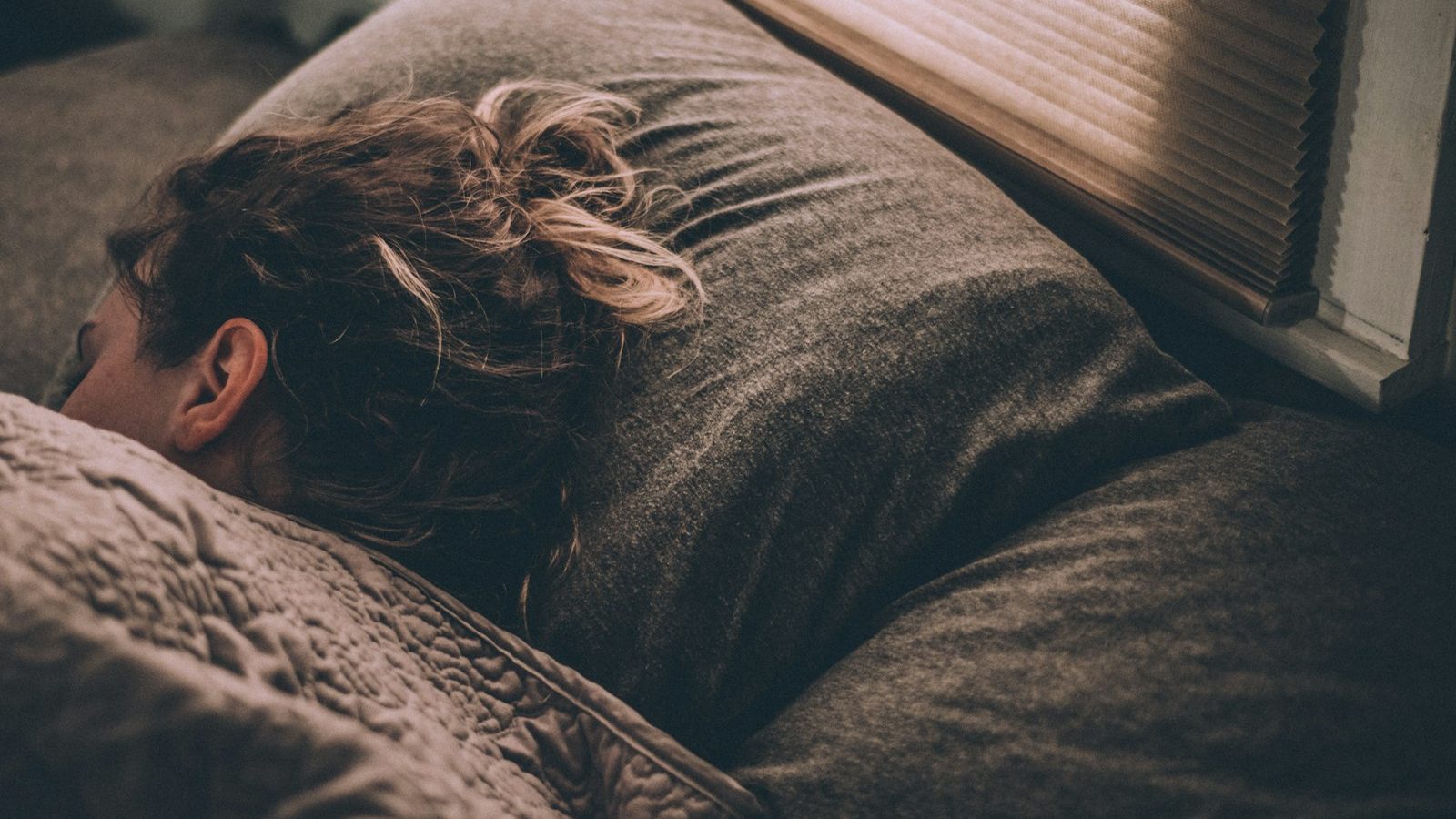
Cover photo shows a person sleeping in bed, from Unsplash (unsplash.com/photos/rUc9hVE-L-E) by Greg Pappas, used under the Unsplash License, which permits free commercial use without attribution.