Morning light is the strongest signal your body clock gets
How melanopsin cells in the eye read daylight, why an overcast morning still beats indoor lighting in lux, and why the first hour after waking matters most.
Visana Studios
8 min read
A gray, overcast sky still throws off somewhere around 1,000 lux. A living room with every lamp on rarely clears 150. An office under fluorescent light might reach 500 on a good day. Most people picture a lit room as bright and a cloudy morning as dim. To the cells in your eye that manage your internal clock, the comparison runs the other way. Even under cloud, outdoors is still the brighter place, by a wide margin.
The clock that drifts without daylight
Every organ in your body runs on a rhythm close to 24 hours, coordinated by a small cluster of cells in the hypothalamus called the suprachiasmatic nucleus, or SCN. The National Institute of General Medical Sciences describes the mechanism plainly: the SCN controls how much melatonin the brain makes based on the amount of light the eyes take in, and in the evening it tells the brain to make more of the hormone, which brings on sleepiness. Left alone, with no outside signal, that internal clock drifts. It doesn't land on exactly 24 hours, and how far it drifts differs from one person to the next. Something has to correct it every day, or sleep and wake times would slowly slide away from the actual day. That daily correction is called entrainment. Food timing, exercise, social schedules and room temperature all nudge the clock a little. Light runs the show. The National Heart, Lung, and Blood Institute puts it directly: light signals received through the eyes tell the brain it's daytime, and as daylight increases, the body releases cortisol, which helps it wake up. The same system runs in reverse after dark, which is why bright light in the evening pushes the whole schedule later.
Cells that don't help you see
The eye's main job, forming images, belongs to rods and cones. Entrainment runs through a separate system. In the early 2000s, researchers identified a third class of light-sensing cell in the retina, a small subset of ganglion cells that make their own light-sensitive pigment, melanopsin, instead of relying only on signals passed up from rods and cones. Berson, Dunn and Takao published the key finding in Science in 2002, showing these ganglion cells respond to light on their own and send that signal directly to the SCN. A companion paper by Hattar and colleagues, published the same year, mapped where the cells project. Neither rods nor cones turn out to be required for the clock to entrain; these intrinsically photosensitive retinal ganglion cells, ipRGCs for short, can do it largely on their own.
ipRGCs aren't built for detail. They respond slowly, pool input across large patches of the visual field, and track overall brightness rather than edges or color. Their pigment is most sensitive to light near 480 nanometers, the blue end of the visible spectrum, close to the color of open sky. The light that moves your clock most efficiently doesn't look like a warm lamp. It looks like daylight.
Why a cloudy sky still beats your kitchen
In 2013, a team led by Kenneth Wright at the University of Colorado Boulder put this to a direct test. Eight adults wore wrist monitors that logged light exposure and melatonin timing, first during an ordinary week of city living, then during a week of camping with no phones, flashlights or artificial light at all. During the ordinary week, participants took in an average of 979 lux during their waking hours. Camping for a week, exposure jumped to an average of 4,487 lux, more than four times higher, even though the study ran across a mix of sunny and overcast days in July. The gap isn't limited to peak afternoon sun. Broader illuminance figures back up the pattern: an overcast sky typically measures somewhere around 1,000 lux, a well-lit home interior rarely reaches 150, and a bright office tops out near 500. A cloudy sky, in other words, is still doing more work than your kitchen light.
The study's other finding was the more striking one. After a week outdoors, every measured marker of the participants' internal clock, tracked through melatonin timing, had shifted about two hours earlier. Individual differences narrowed too: night owls and early risers converged toward the same schedule, set by sunrise and sunset instead of habit.
Why the first hour matters more than the rest of the day
Light doesn't affect the clock the same way at every hour. Researchers plot this as a phase response curve: light early in your biological day nudges the clock earlier, light late in the biological day or through the night pushes it later, and light in the middle of the day barely moves it at all. A 2009 review by Jeanne Duffy and Charles Czeisler in Sleep Medicine Clinics lays out the shape of that curve. Sensitivity is low below roughly 100 lux and saturates above roughly 1,000, a range that lines up neatly with the gap between a lit room and an overcast sky.
The Wright camping study captured this window directly. During the first two hours after waking, campers took in an average of 3,074 lux of natural light, against 934 lux during the same two hours of their ordinary indoor routine, more than three times as much at exactly the point in the day when light does the most to set the clock earlier. Duffy and Czeisler's review adds a second, practical detail: a full dose of light isn't required to get most of the benefit. In one dataset, cutting the light exposure down to about a third of its original duration, broken into pulses instead of one continuous stretch, still produced about 70 percent of the phase-shifting effect of the full continuous dose. A short burst of real daylight, soon after you're up, outperforms a long stretch of dim light spread across the whole morning.
What actually counts as morning light
Getting the benefit doesn't require a hike or a sunny forecast. It requires being outside, eyes open toward the sky rather than the ground, ideally within the first hour after you're up. Overcast counts. Drizzle counts too, if you don't mind a few damp minutes. Sitting by a sunny window beats sitting in the middle of a dark room, but it's a poor substitute for actually stepping outside. Once light has to pass through glass, and loses most of the wide sky it would otherwise carry, what reaches your eyes drops well below what's available two steps further, past the door.
What counts, in practice: coffee on the porch instead of at the counter, walking the dog around the block instead of letting it into the yard for thirty seconds, parking at the far end of the lot, breakfast outside when the season allows it. What doesn't do much: a phone screen, most indoor lighting even in a bright kitchen, a car commute with the windows up. On mornings when actually going outside genuinely isn't possible, a dark winter commute, a night shift, an early flight, dawn simulating alarm clocks try to recreate part of the effect indoors, with evidence that's mixed at best.
If you're pairing this with any movement, a short walk, some stretching on the lawn, keep it simple while you're still waking up. Save anything that needs sharp coordination, stairs, uneven ground, crossing traffic, for a few minutes in, once you're properly alert. And if bright light reliably triggers migraines, if a medication you take increases light sensitivity, or if low mood and low energy hang on no matter how consistent your mornings get, that's a conversation for a doctor rather than something to fix with a longer walk.
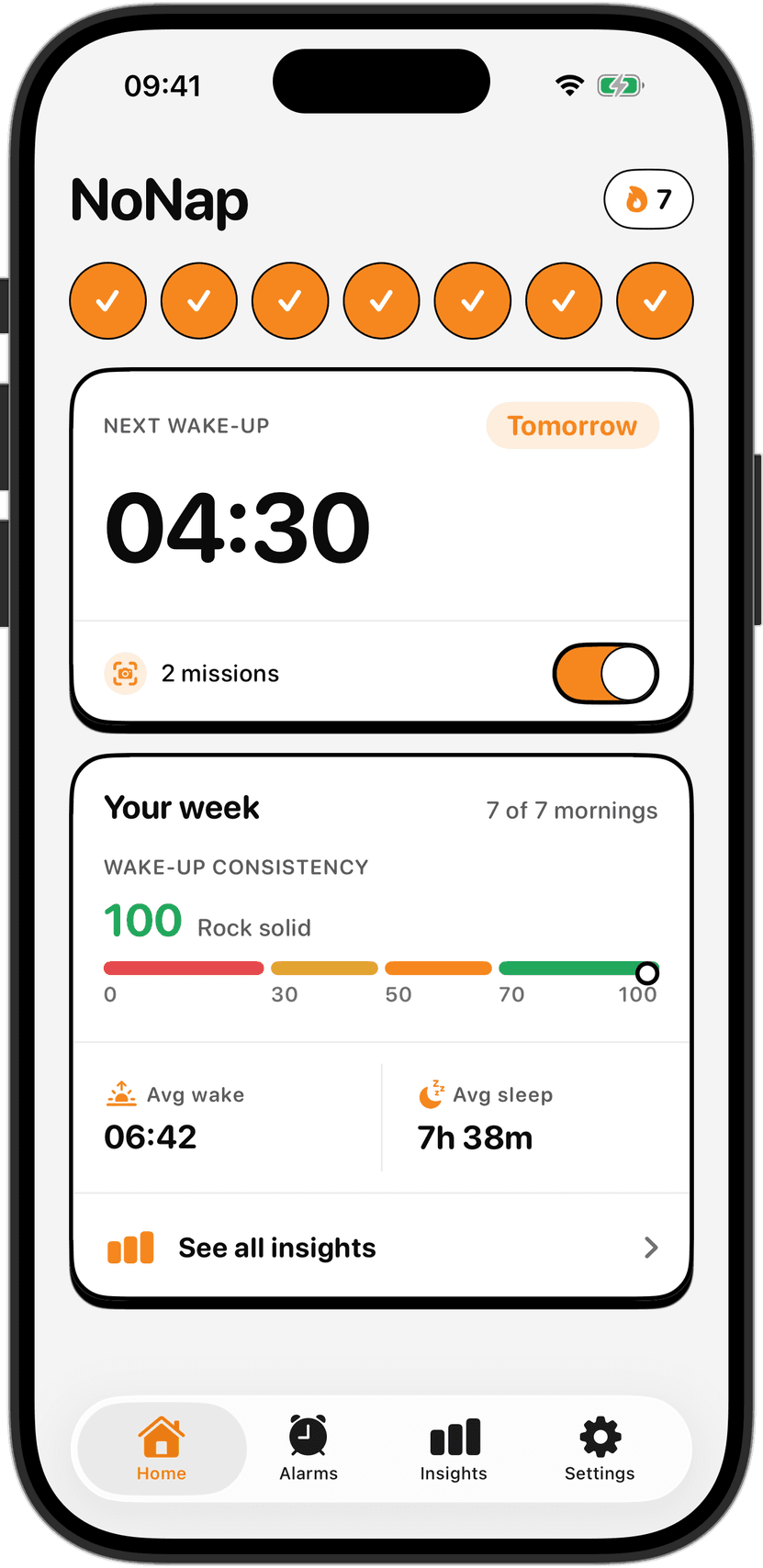
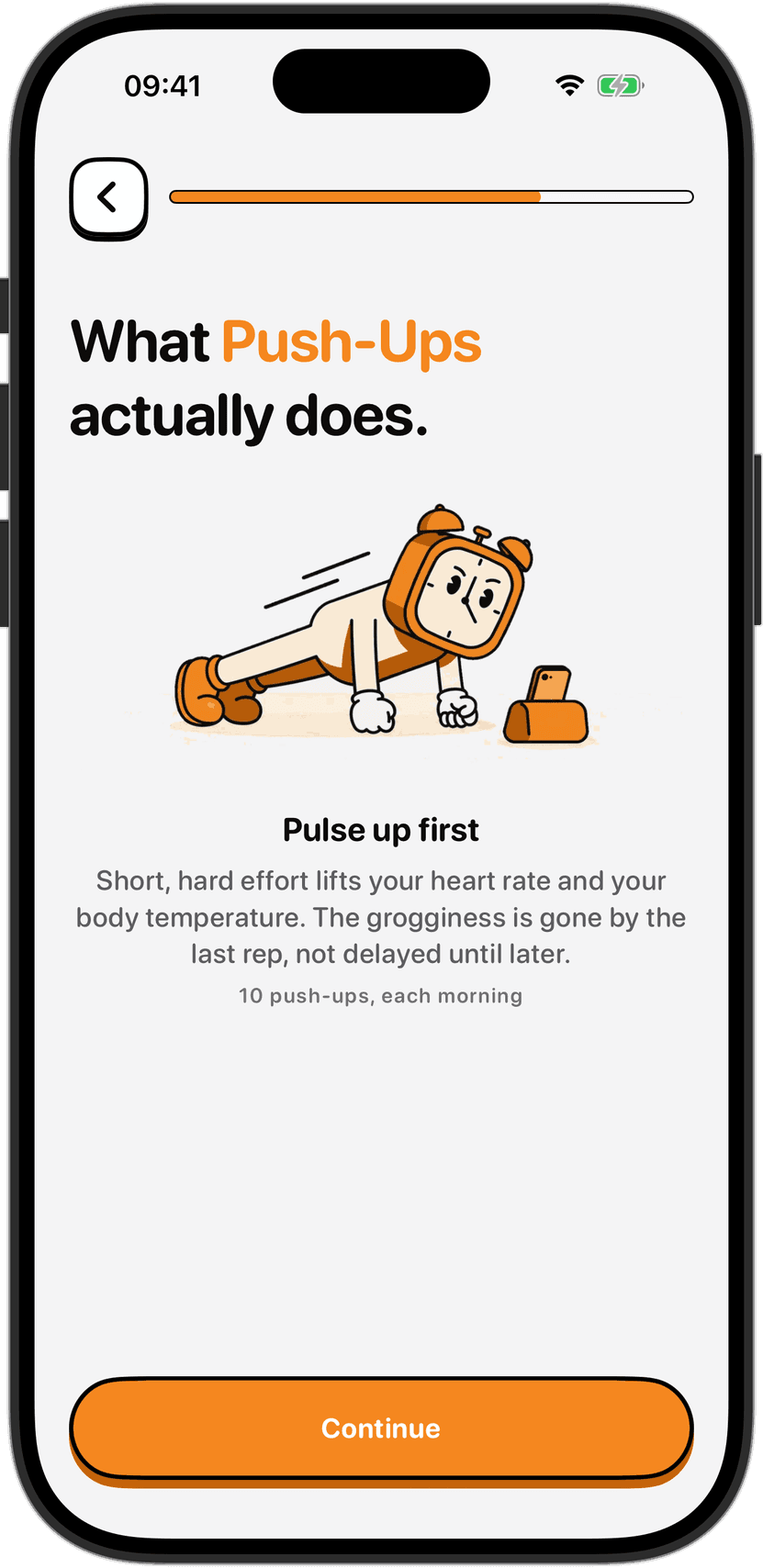
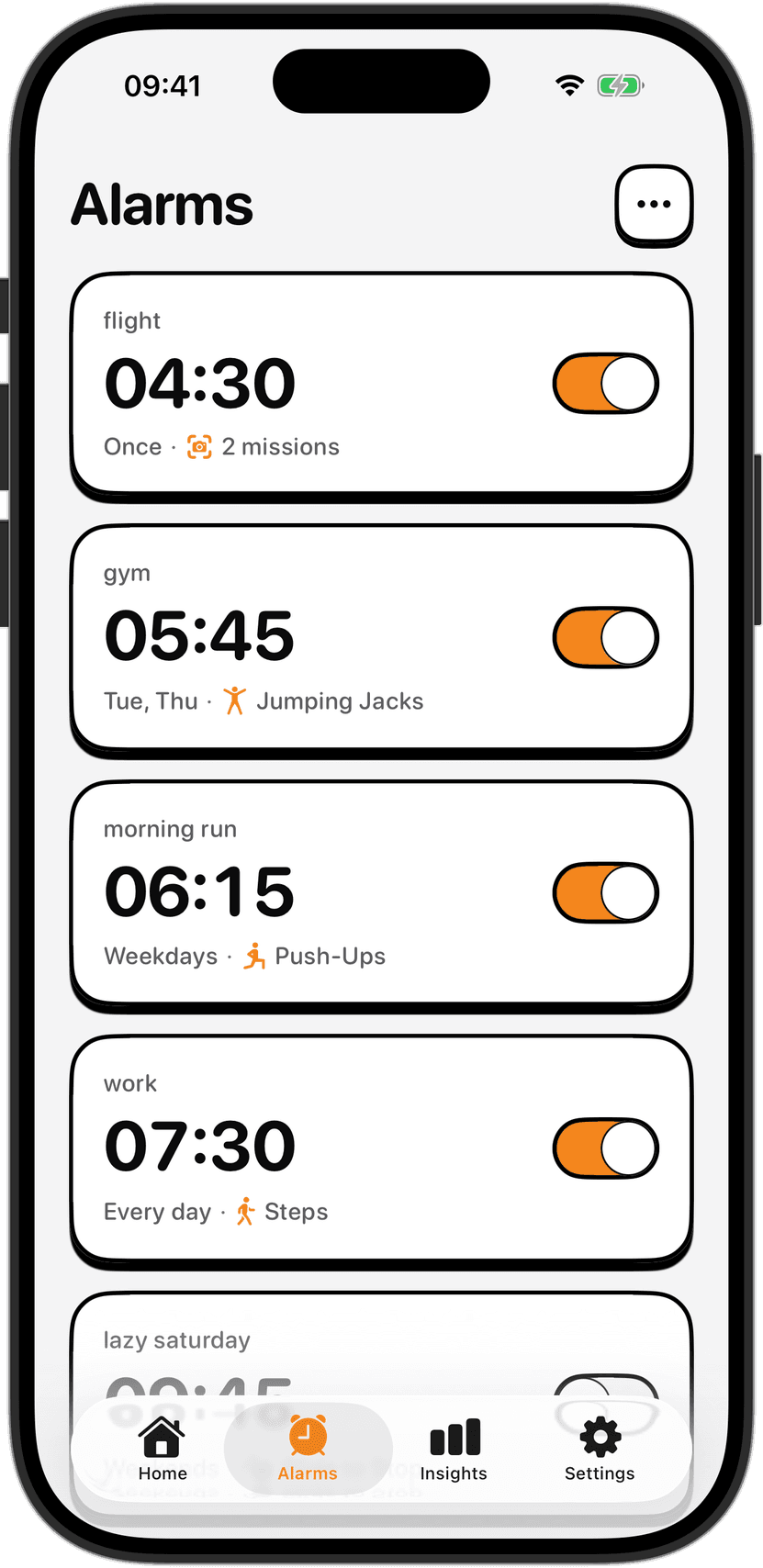
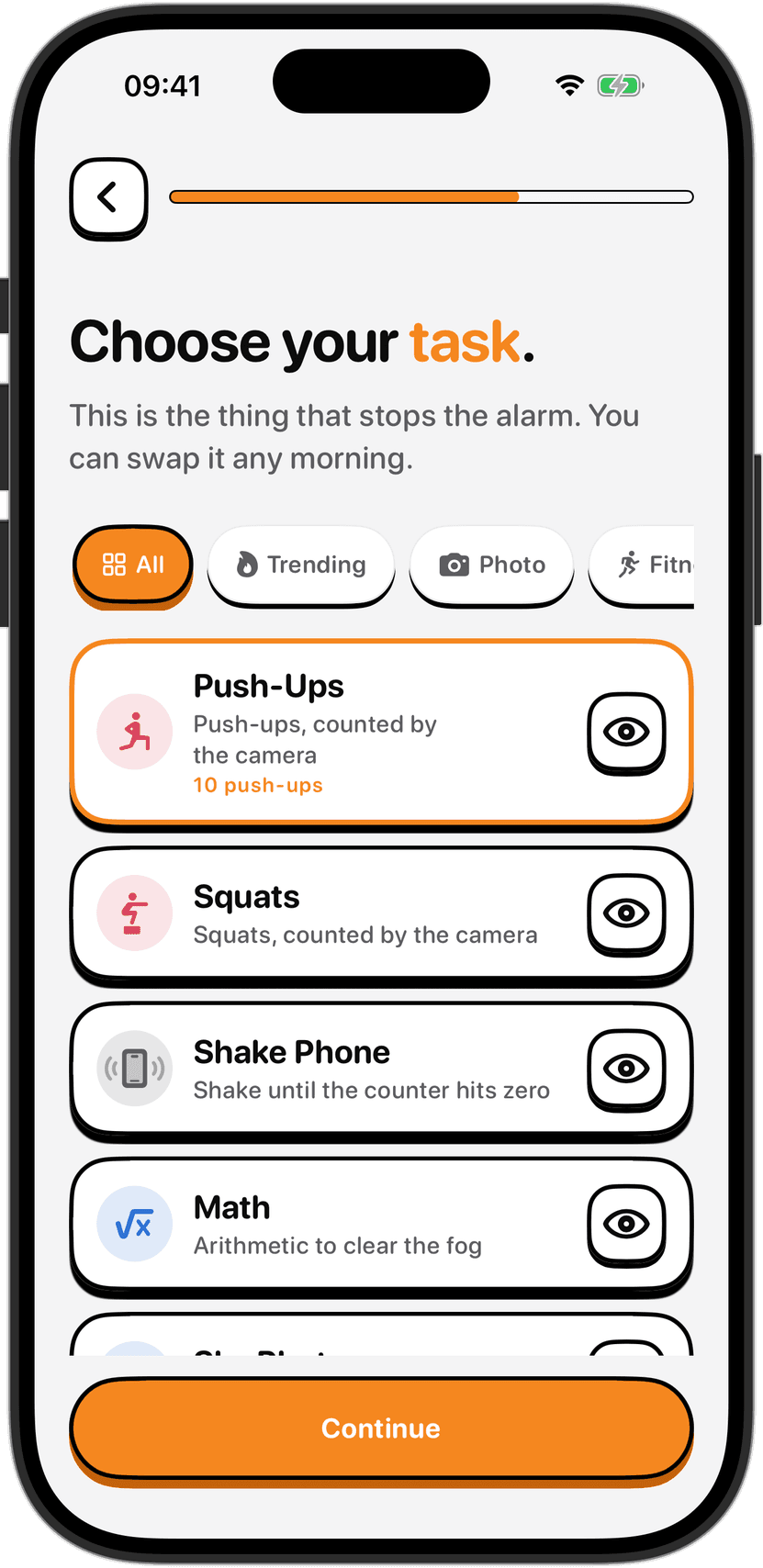
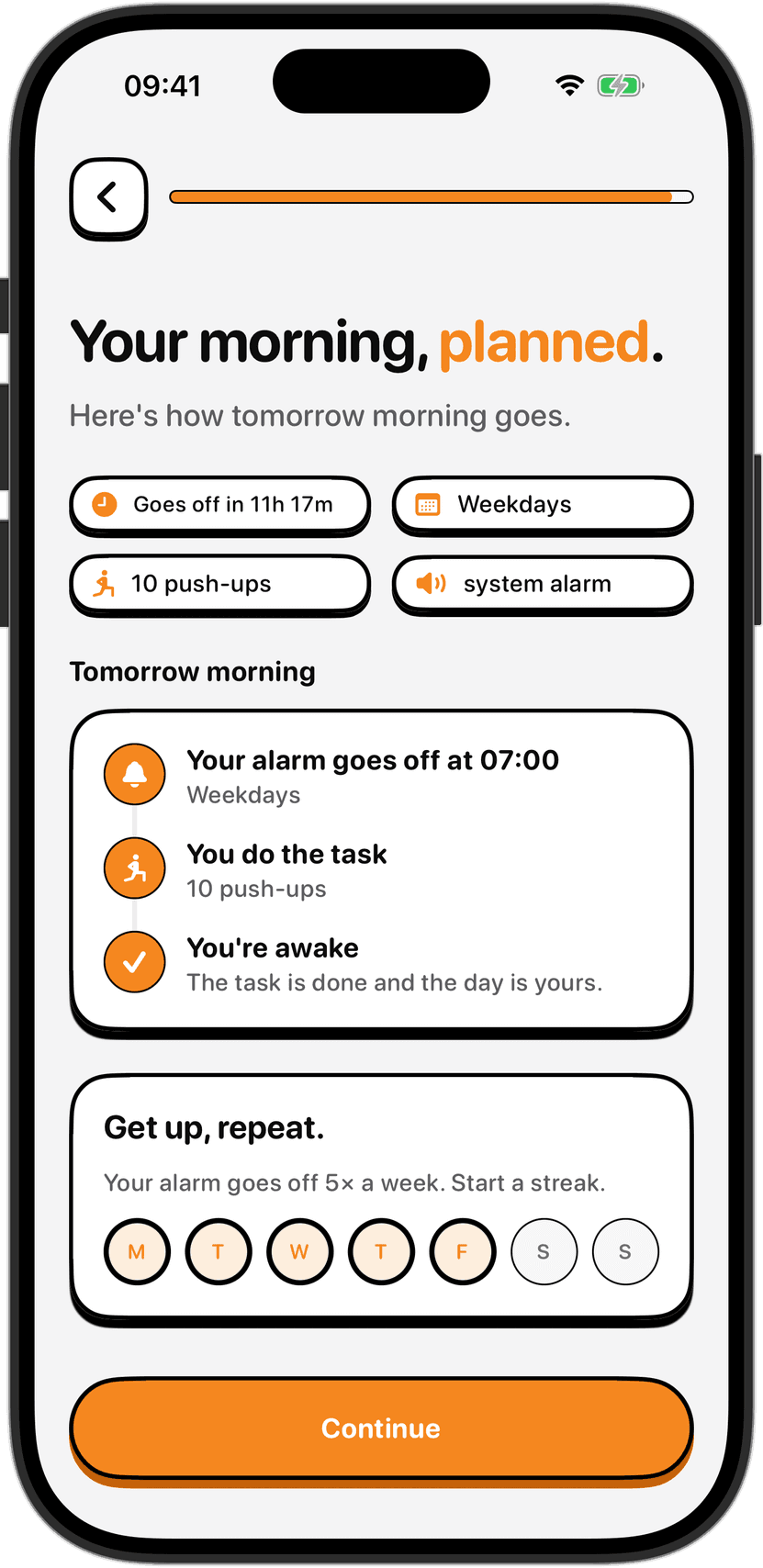
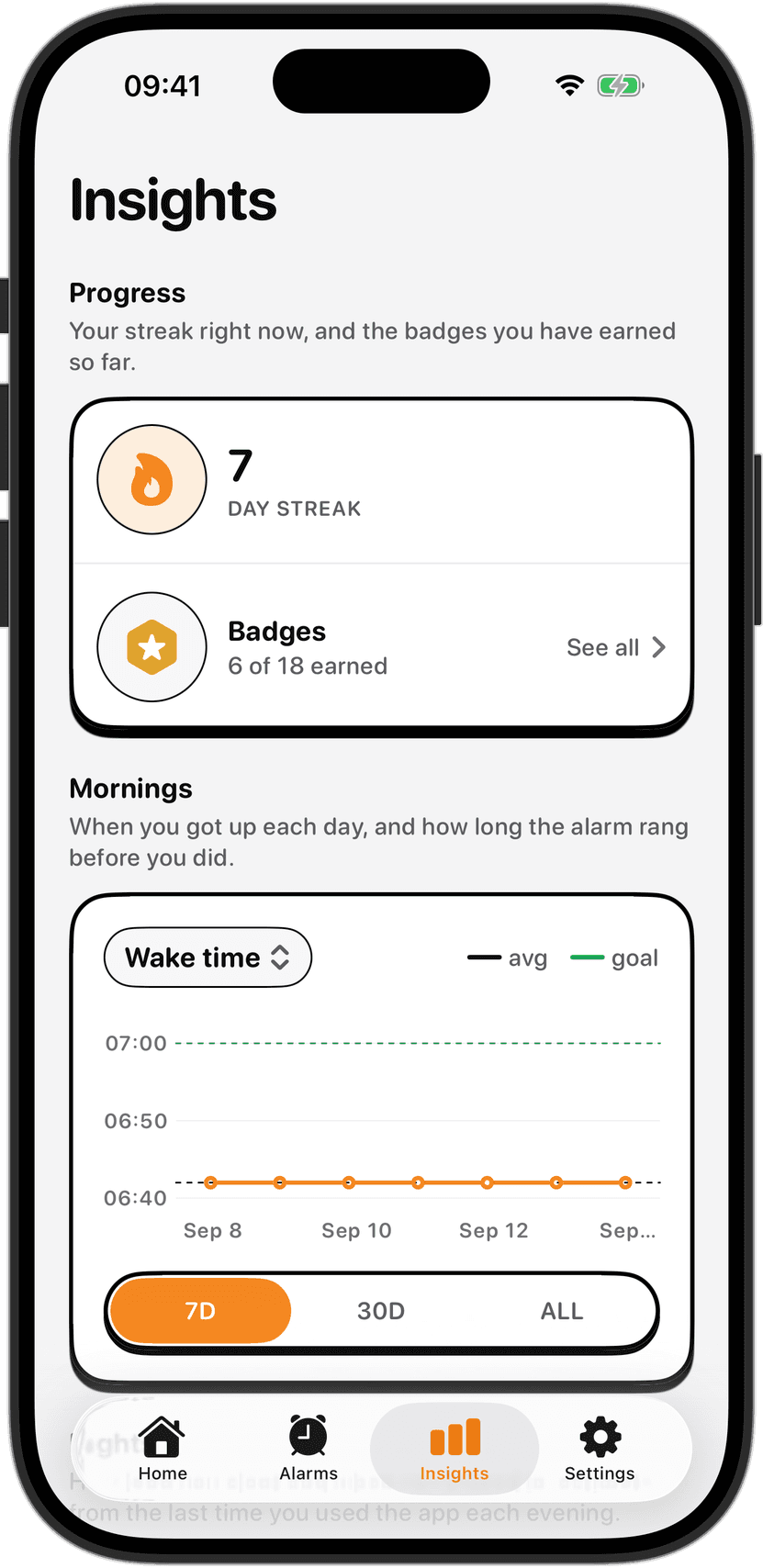
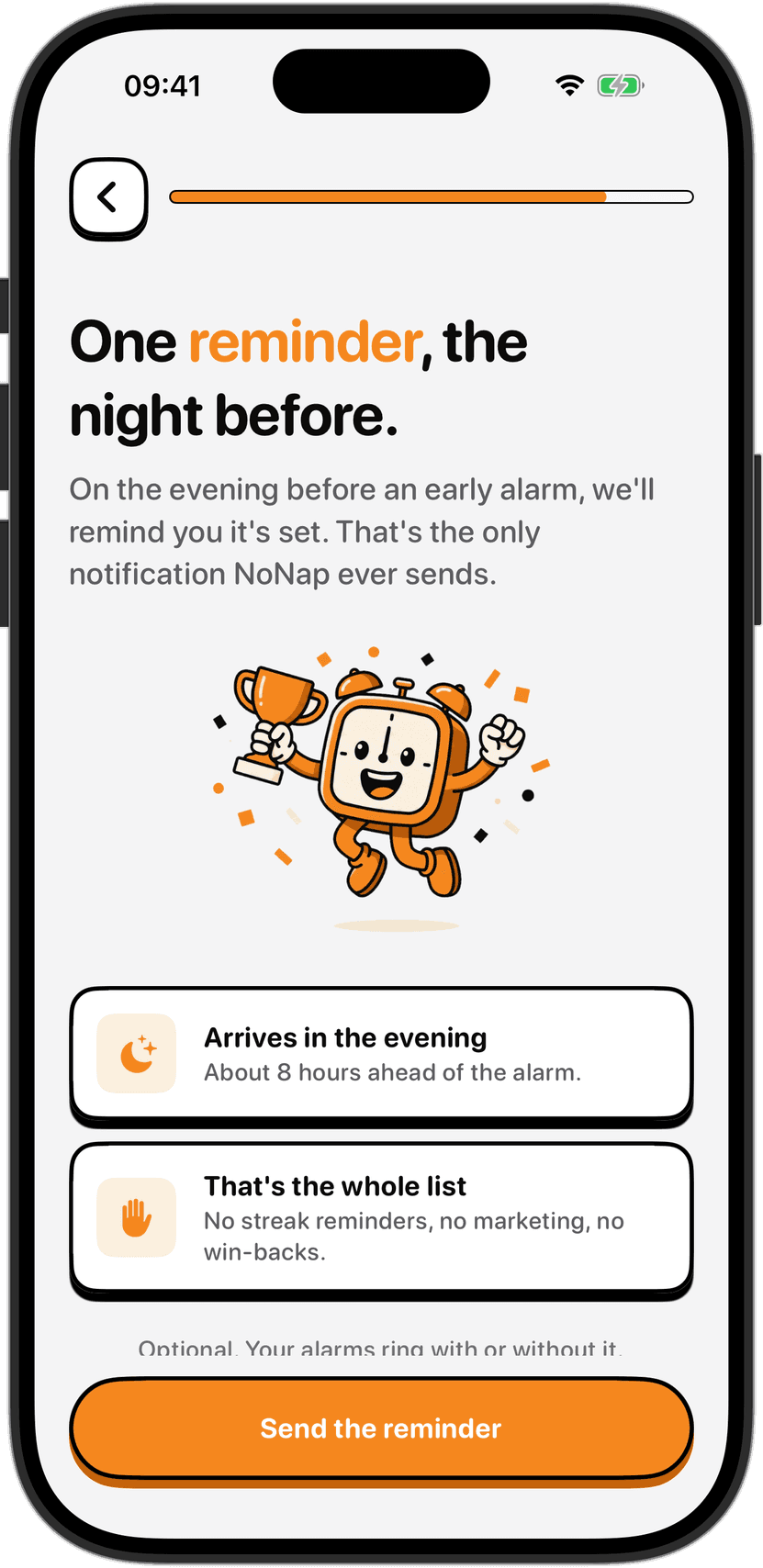
None of this works if the groggy first minutes after the alarm win and you go back to bed. NoNap, our alarm app for iPhone, is built around one alarm and no snooze button. It rings through Apple's system alarm, the same one behind the built-in Clock app, so the Ring/Silent switch and Focus modes don't touch it, and it can't be dismissed from the lock screen. Stopping it means finishing a short task: push-ups or squats counted by the camera (keep the pace easy while you're still waking up), shaking the phone, a math problem, a photo, or making the bed. A night-before reminder nudges you toward a wind-down time, so the wake-up you set is one you actually meet instead of negotiating with it at 6:45. The wake tasks page lists the full set of options.
Sources
National Institute of General Medical Sciences. Circadian Rhythms. NIH fact sheet, content reviewed September 2023, accessed August 2026. nigms.nih.gov/education/fact-sheets/Pages/circadian-rhythms
National Heart, Lung, and Blood Institute. How Sleep Works: Your Sleep/Wake Cycle. NIH, updated March 24, 2022, accessed August 2026. nhlbi.nih.gov/health/sleep/sleep-wake-cycle
Berson, D. M., Dunn, F. A., and Takao, M. (2002). Phototransduction by retinal ganglion cells that set the circadian clock. Science, 295(5557), 1070-1073.
Hattar, S., Liao, H. W., Takao, M., Berson, D. M., and Yau, K. W. (2002). Melanopsin-containing retinal ganglion cells: architecture, projections, and intrinsic photosensitivity. Science, 295(5557), 1065-1070.
Graham, D. M., and Wong, K. Y. Melanopsin-expressing, Intrinsically Photosensitive Retinal Ganglion Cells (ipRGCs). In Webvision: The Organization of the Retina and Visual System. University of Utah Health Sciences Center, NCBI Bookshelf, accessed August 2026. ncbi.nlm.nih.gov/books/NBK27326/
Blume, C., Garbazza, C., and Spitschan, M. (2019). Effects of light on human circadian rhythms, sleep and mood. Somnologie, 23(3), 147-156.
Wright, K. P. Jr., McHill, A. W., Birks, B. R., Griffin, B. R., Rusterholz, T., and Chinoy, E. D. (2013). Entrainment of the Human Circadian Clock to the Natural Light-Dark Cycle. Current Biology, 23(16), 1554-1558.
Duffy, J. F., and Czeisler, C. A. (2009). Effect of Light on Human Circadian Physiology. Sleep Medicine Clinics, 4(2), 165-177.
Sleep Foundation. Light and Sleep: Effects on Sleep Quality. Updated June 15, 2026, accessed August 2026. sleepfoundation.org/bedroom-environment/light-and-sleep
Image credits
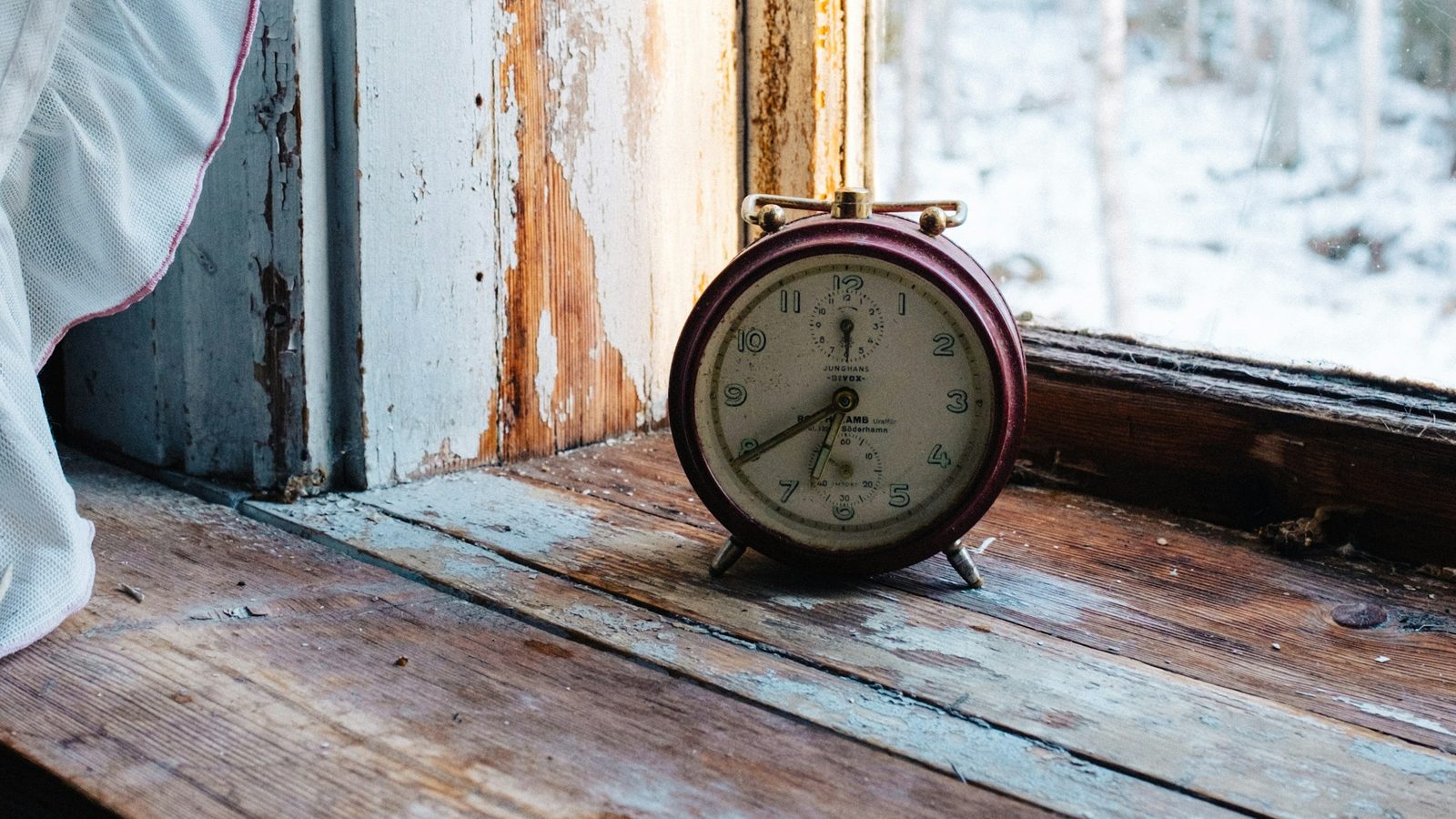
Cover photo by Fredrik Öhlander on Unsplash (unsplash.com/photos/photo-of-red-analog-alarm-clock-beside-window-6CeUzqVWnwk), used under the Unsplash License, which permits commercial use without payment.