How to wake up early every day: practical strategies for people who hate mornings
If you're wired to wake late, getting up early requires working with biology instead of against it. Here are the tactics that actually work.
Visana Studios
6 min read

The alarm goes off at 6 a.m. You know you set it. You know you have things to do. And yet there's your hand, reaching for the snooze button before your brain even wakes up. If you're not a morning person, this is not a character flaw. Your body is doing exactly what its circadian rhythm tells it to do. The good news: you can still get up early. It just requires different tactics than a natural lark would use.
You're fighting your chronotype, not laziness
Your chronotype is your biological preference for sleeping and waking at certain times. It's not something you chose and not something willpower alone can override. Chronotype has a genetic basis. Twin studies consistently show that sleep timing clusters in families, more strongly than habits alone would predict. A person wired as a night owl genuinely feels more alert, more focused, and more energized in the evening. Their body temperature peaks later. Their brain chemicals follow a later schedule.
That said, chronotype is not destiny. While the underlying preference is "very difficult to purposely change," circadian rhythm can be trained by adhering to a strict schedule. The distinction matters. You may not become someone who loves waking at 5 a.m., but you can train your body to wake up reliably early and be functional for it, even if you're not naturally wired that way.
The first 30 minutes are the hardest
Sleep inertia is that groggy fog that hits when you first wake up. Blood flow in the brain drops, particularly in the frontal areas responsible for decision-making. Your thinking is slow. Your reflexes are slow. For most people, this state lasts 15 to 30 minutes after waking, though subjective sleepiness can take two to four hours to fully clear.
If you're a night owl, sleep inertia tends to hit harder. A study of over 50,000 people found that evening chronotypes experience significantly longer inertia than morning types, and anxiety compounds the effect further. The point is not to beat yourself up for feeling groggy. You're not broken. You're experiencing a real physiological state. The strategy is to work around it, not through willpower alone.
Fix your wake time first, bedtime second
Your circadian clock is anchored primarily by when you wake up, not when you go to bed. When light hits your eyes at waking, your brain receives the signal that a new day has started. That signal is powerful. Consistency in wake time is what keeps your internal clock stable and in sync with the outside world.
The research is clear: irregular sleep-wake patterns are linked to worse mood, lower energy, and metabolic problems. But when you stick to the same wake time every single day, even on weekends, you send your body the same signal at the same point each day. Your circadian system anticipates upcoming events. It knows when light is coming. It starts the release of cortisol, your wakefulness hormone, in the hour before you typically wake.
Sleeping in on weekends, even by one or two hours, disrupts this anchor. It's equivalent to a small version of jet lag. You'd rather sleep until 8 a.m. on Saturday, and you can, but then Monday morning hits harder because your system is desynchronized. If getting up early matters to you, keep your wake time within 30 minutes of your target every day, including weekends.
Use light, temperature, and alarm placement
Your bedroom environment exerts enormous influence over how well you sleep and how alert you are when you wake. A room between 60 and 68 degrees Fahrenheit is optimal for sleep. Cooler than 65 degrees tends to be better for the majority of adults. Why? Your core body temperature needs to drop slightly to initiate sleep, and a cool room supports that. Warmer rooms increase wakefulness and fragment sleep cycles, so you wake more groggy.
As soon as you wake, open the curtains. Morning light suppresses melatonin and boosts alertness. If you wake before sunrise, a bright light therapy box can mimic that effect. This light exposure is one of the strongest signals you can send your circadian clock, signaling that the day has begun.
Placement of your alarm matters more than volume. If your phone sits on your nightstand within arm's reach, your half-asleep hand will tap it off and you'll roll back to bed without conscious thought. Move it across the room, to a dresser or the bathroom. Force yourself to stand up to turn it off. Once you're upright, the hardest part is already done. Your body temperature is rising. Blood is flowing. The inertia begins to clear. Gentle, melodic alarm sounds around 100 to 150 beats per minute work better than harsh beeps; people wake more alert with softer tones.
Move your body in the first few minutes
Physical movement is one of the fastest ways to clear sleep inertia. A few minutes of stretching, a quick walk, or some simple bodyweight movements increase heart rate and blood flow to the brain, stimulating alertness and waking your body up faster than lying in bed and fighting grogginess.
The bonus: combining movement with morning light exposure hits two goals at once. A 20 to 30 minute morning walk gets you sunlight and physical activity. If that's too much at 6 a.m., even two minutes of stretching or a walk to the kitchen counts. The goal is not intense exercise. It's breaking the state of stillness.
Make it so small you can't fail
Most people who try to shift to waking earlier do too much, too fast. They set their alarm 90 minutes earlier than their current wake time, expecting to adapt overnight. By day three they're exhausted, and by day five they've gone back to their original schedule.
Instead, shift your wake time by 15 minutes every three to five days. This gives your circadian system time to adjust without shocking it. Your body can adapt to small changes. It resists large ones.
Your first week looks easy. Your second week still feels mostly normal. By the third week, waking earlier is already becoming routine. The key is slow, consistent pressure rather than a dramatic overhaul.
Accept that you're not a lark, and you don't need to be
You may never be the person who bounds out of bed at 5 a.m. thrilled for the day. That's fine. The goal is not joy. The goal is reliable, consistent waking at a time that serves your life. A night owl who consistently wakes at 6:30 a.m., even if the first 30 minutes feel like a slog, is still winning. You get your early start. Your circadian system stays stable. Your metabolism runs better. Your mood is more stable.
Set a realistic target. Pick a wake time you can sustain, not an aspirational one. If you've never woken before 7 a.m., don't aim for 5:30. Aim for 6:45. Get that anchored. Then, if the earlier time still matters to you, shift again.
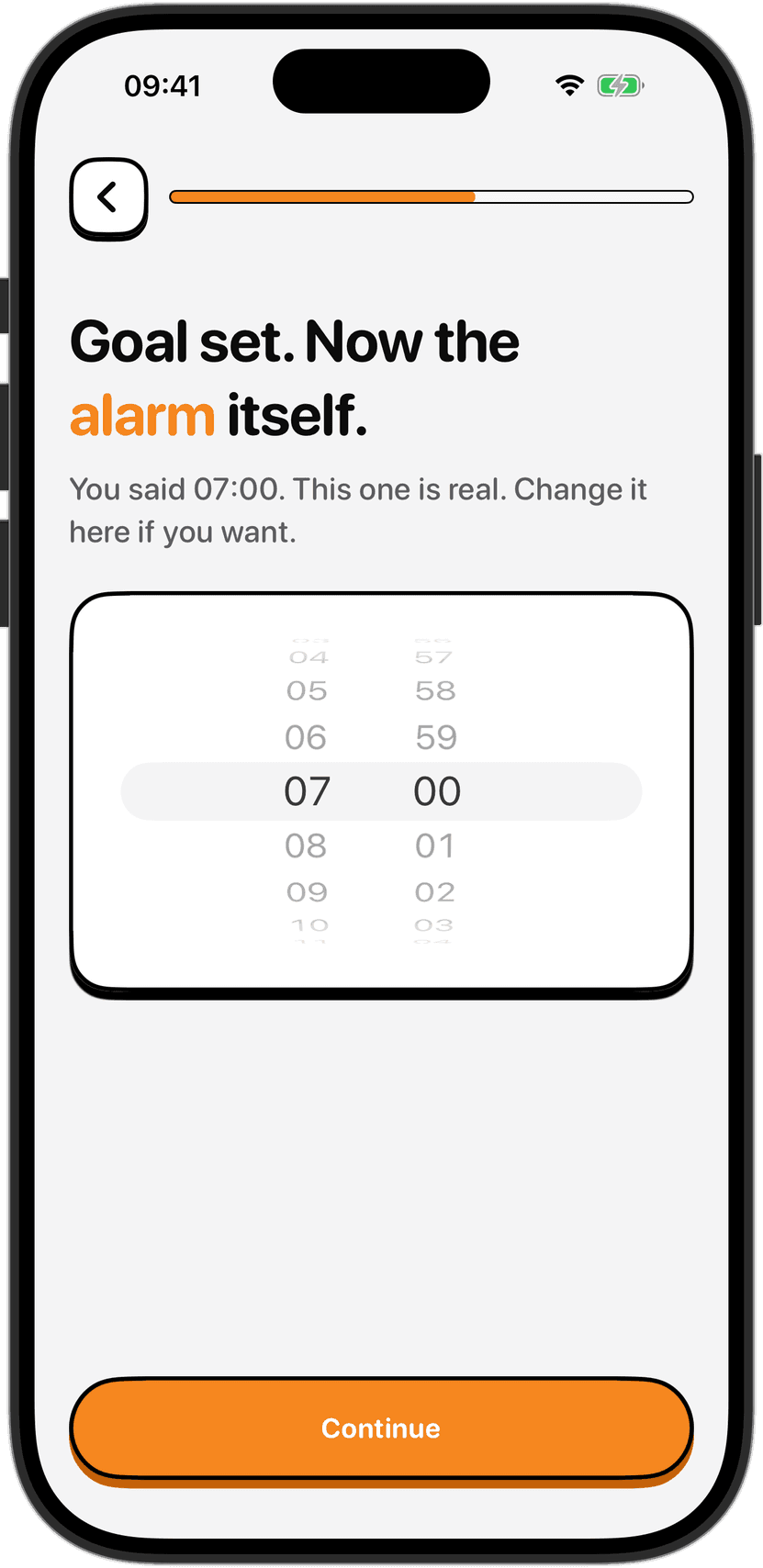
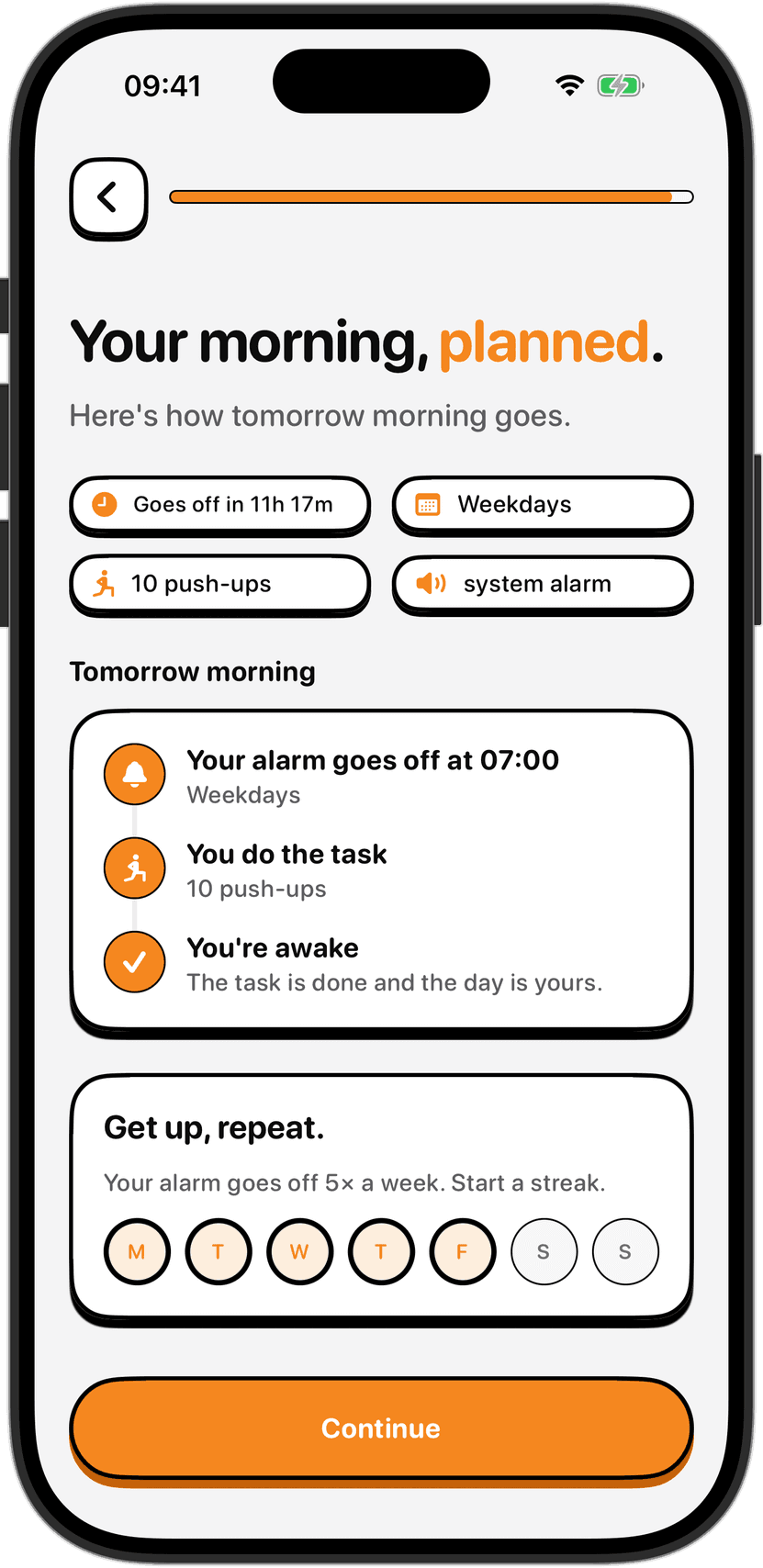
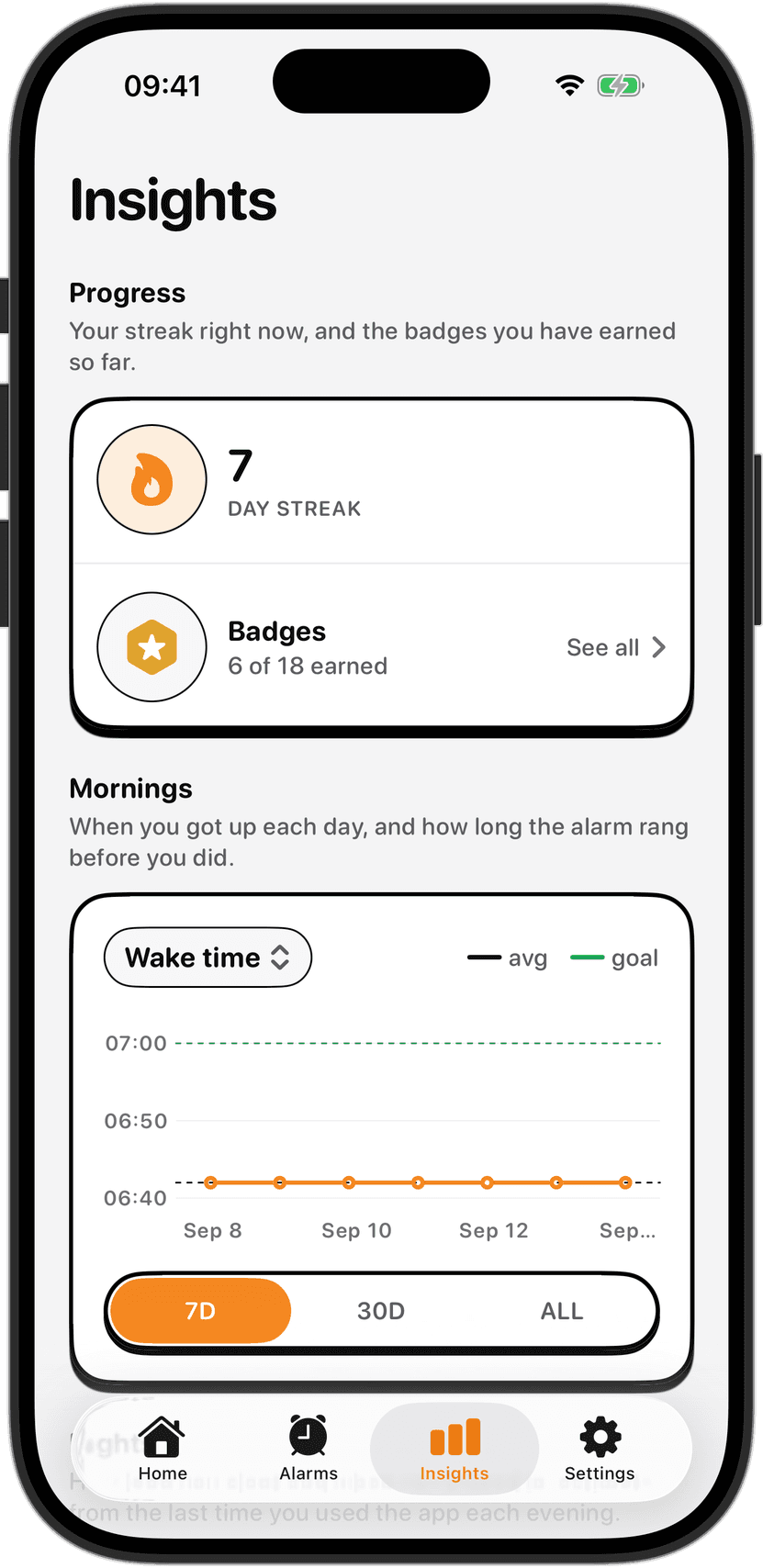
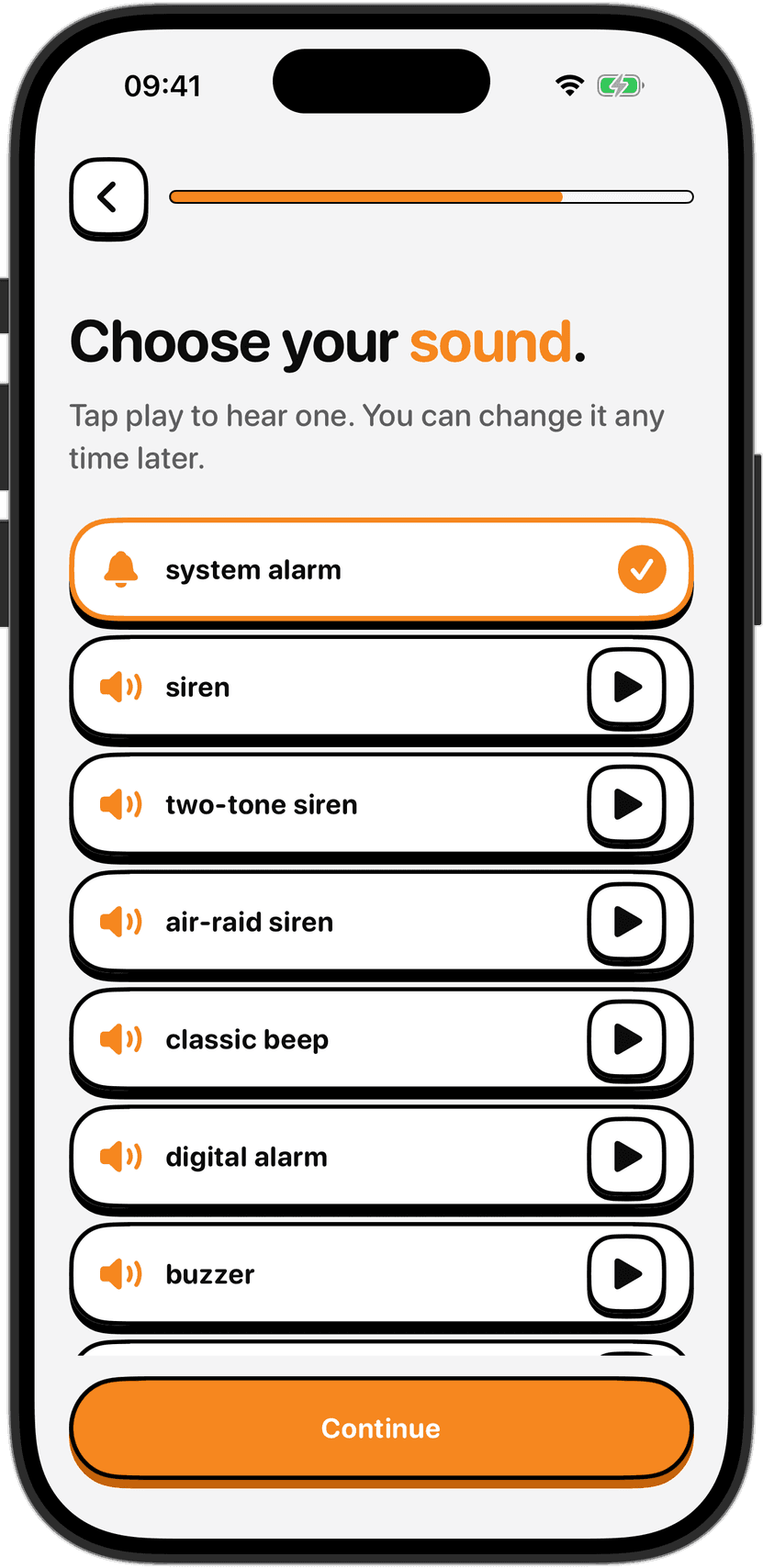
NoNap can help here. One alarm with a wake task you can't do in your sleep prevents the hands-asleep snoozing that derails your early wake time. A single alarm, placed across the room, with a physical task attached, removes negotiation from the equation.
Sources
Morning sleep inertia and its associated factors: Findings from a nationwide study, PLOS ONE, 2024.
Chronotype-specific impacts of sleep-wake schedule on behavioral, physiological, and psychological parameters, Sleep Foundation.
The 1 Small Change That Can Reset Your Sleep, TIME, 2024.
The importance of sleep regularity: a consensus statement of the National Sleep Foundation sleep timing and variability panel, Sleep Health: Journal of the National Sleep Foundation, 2023.
Benefits of Sleeping in a Cold Room: What Science Says, Sleep.me.
Why a Cooler Bedroom Temperature Helps You Sleep Better, University of Utah Health, 2026.
Working out in the morning: benefits and 14 tips to get started, Calm.