What a few minutes of exercise does to a groggy brain
How a short burst of physical activity raises heart rate and body temperature to increase alertness and cognition after waking.
Visana Studios
5 min read

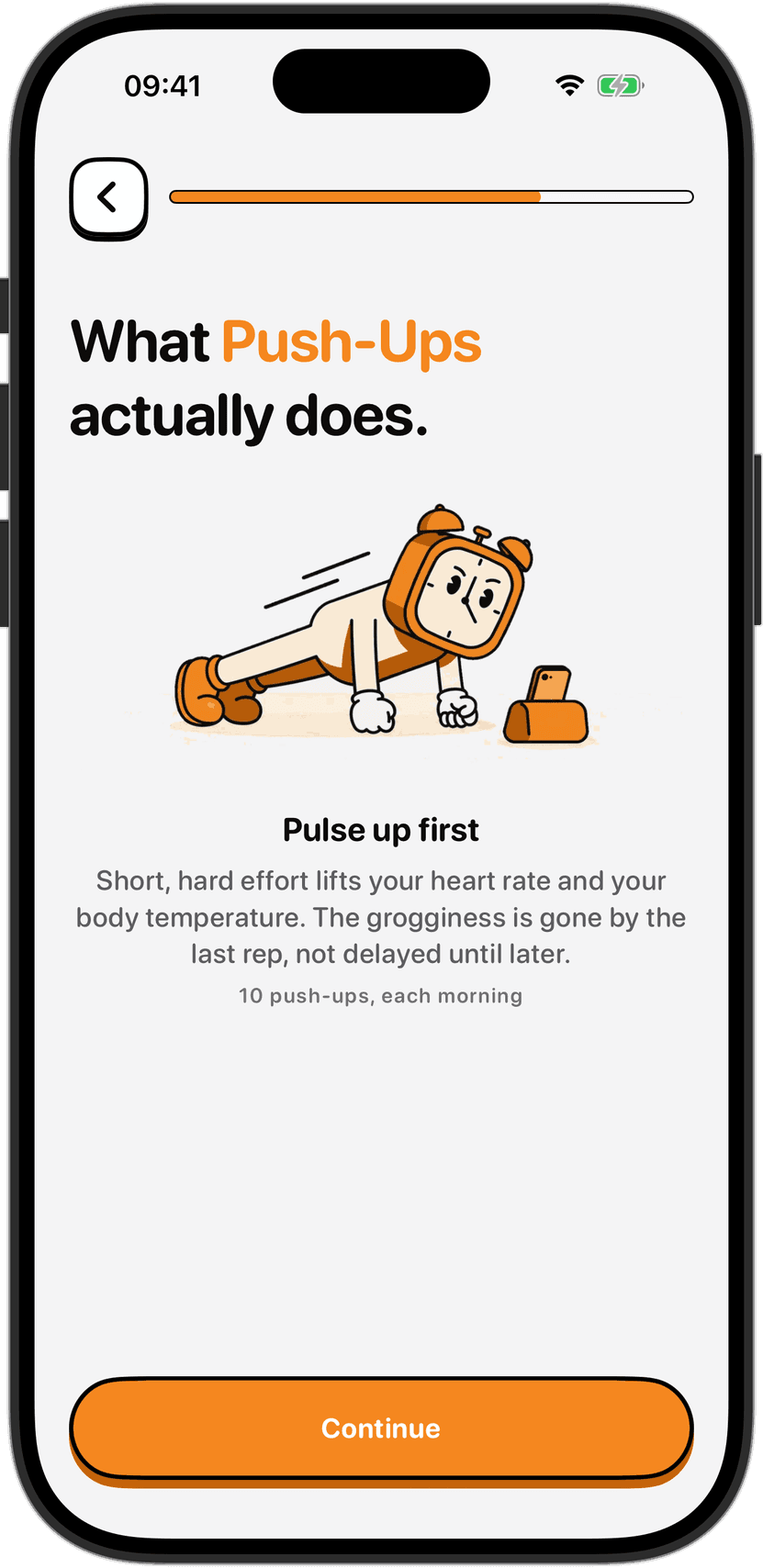
The alarm goes off at 7 a.m. and you move to switch it off, but instead of reaching for snooze you do five push-ups. By the third one, something shifts. Your heart is running, your chest is warm, and the room comes into sharper focus. That is not motivation overcoming sleep inertia. That is physiology.
Why alertness and heart rate climb together
Across a normal day, heart rate and core body temperature track closely with alertness. They dip together in the afternoon and peak together in the evening. The correlation is not coincidence. When your heart rate rises, more blood flows to the brain, and your body's activation system responds. Sleep researchers have observed for decades that these physiological markers of wakefulness appear in tandem.
This relationship holds when you measure alertness carefully. In a 2020 hypothesis paper on sleep inertia countermeasures, researchers at three Australian sleep centers including the University of South Australia noted that brief exercise increases cerebral blood flow by 6 to 13 percent, depending on intensity. That same brief exercise produces a rapid rise in core body temperature. A six-minute session of moderate cycling bumped core temperature by 0.2 degrees Celsius. At increases of just 0.15 degrees, people show measurable improvements on cognitive tests.
The mechanism is straightforward. During sleep, your core temperature drops by about one degree. When you wake, it takes time for your body to climb back to daytime levels. Exercise fast-tracks that return. It pulls your brain's arousal systems forward.
A 30-second burst on cortisol and temperature
One of the few studies to test whether brief exercise actually sharpens morning alertness came from researchers at Victoria University in Melbourne. In 2021, Kovac and colleagues had people perform just 30 seconds of intense physical activity immediately upon waking, either intense leg exercises or jogging in place. They measured two hallmarks of arousal: cortisol, the wake-promoting hormone that naturally rises after sleep, and core body temperature.
The 30-second burst accelerated both. Cortisol climbed faster. Body temperature rose sooner than in control nights when people remained sedentary. The effect was small by some standards, yet it appeared within the first few minutes of waking, which is when sleep inertia bites hardest.
The study involved 15 people woken after a laboratory nap, so it was not exactly the morning you experience in your own bed. But it points directly at the mechanisms. Light activity. Quick rises in the two physiological signals most tightly tied to alertness.
What activity breaks do for cognition throughout the day
The acute effect of brief movement is not limited to mornings. Across the workday, even short bursts of activity move the needle on cognition. Brief physical activity breaks during prolonged sitting improve performance on working memory and executive function tasks. The effect suggests the brain works more efficiently with these movement interruptions, not that it has to work harder.
Research on circadian disruption shows similar patterns: brief activity combined with light exposure supports wakefulness during off-hours work.
Exercise timing and sleep that same night
The question most people ask is whether moving hard in the morning wakes you up too much to sleep that night. The data lean the other way.
In 2017, Morita and colleagues at the University of Tsukuba tested acute morning and evening exercise in older adults with insomnia. They used a single session of moderate aerobic step exercise and measured sleep that night with polysomnography, the gold standard for sleep measurement. Morning exercise improved objective sleep quality and increased total sleep time compared with a no-exercise control night. Evening exercise produced similar or slightly better sleep gains. The improvement held even though exercise that close to waking or bedtime does raise body temperature and cortisol acutely.
The mechanism appears to involve circadian rhythm shifts. Morning light and activity reset your biological clock, which can improve sleep pressure by evening. Morning exercise also depletes energy reserves, increasing homeostatic sleep drive. Neither effect cancels out the acute arousal exercise produces.
The study focused on people with insomnia or early morning awakening, so the findings apply most directly to people already struggling with sleep quality. Whether the same boost applies to people sleeping well on their current schedule remains untested.
The speed and limits of the effect
Here is what the research does and does not show. A few minutes of exercise will raise your heart rate and core temperature fast enough that alertness climbs within seconds to a few minutes. That is measurable and real. It is not, however, a permanent fix for deep sleep inertia. One 2019 review of sleep inertia noted that the condition typically lasts 15 to 60 minutes, and some impairment persists for hours after waking. A burst of jumping jacks will not make you feel as sharp as you would after two good cups of coffee or an hour of being awake.
What it does do is fight the worst minutes. If you have three minutes between the alarm and needing to think clearly, a brief exercise session moves the needle more than standing still would.
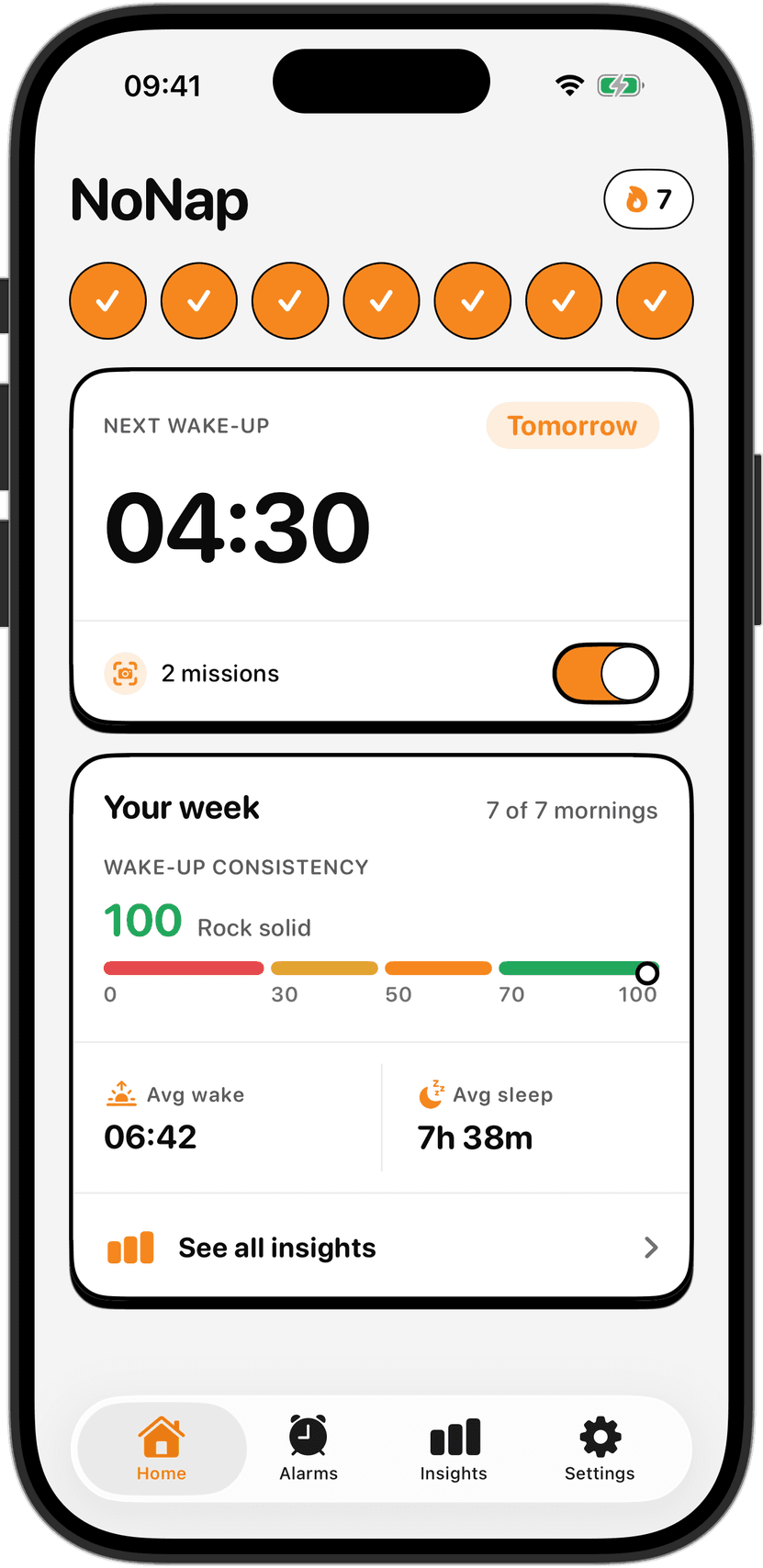
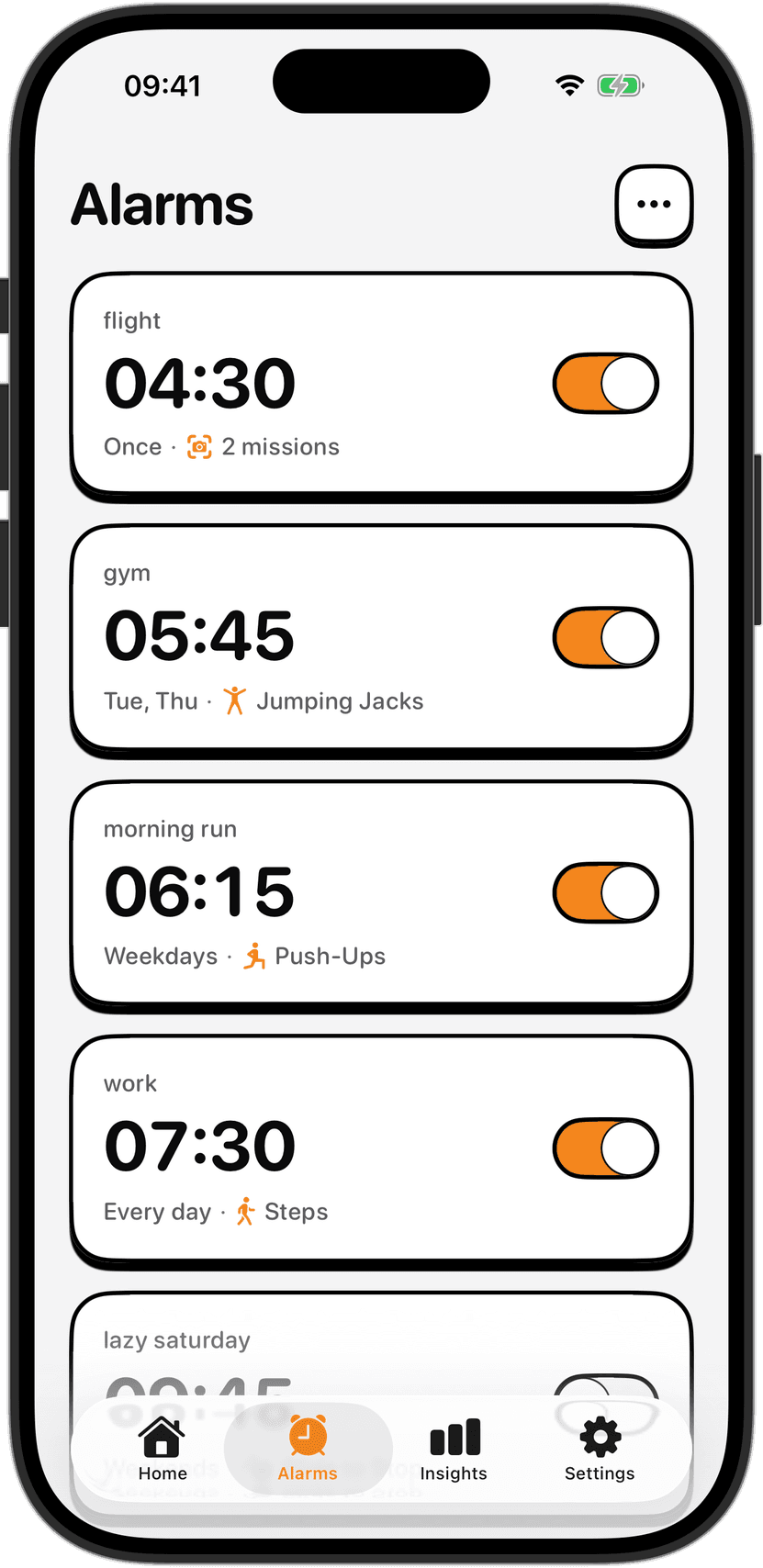
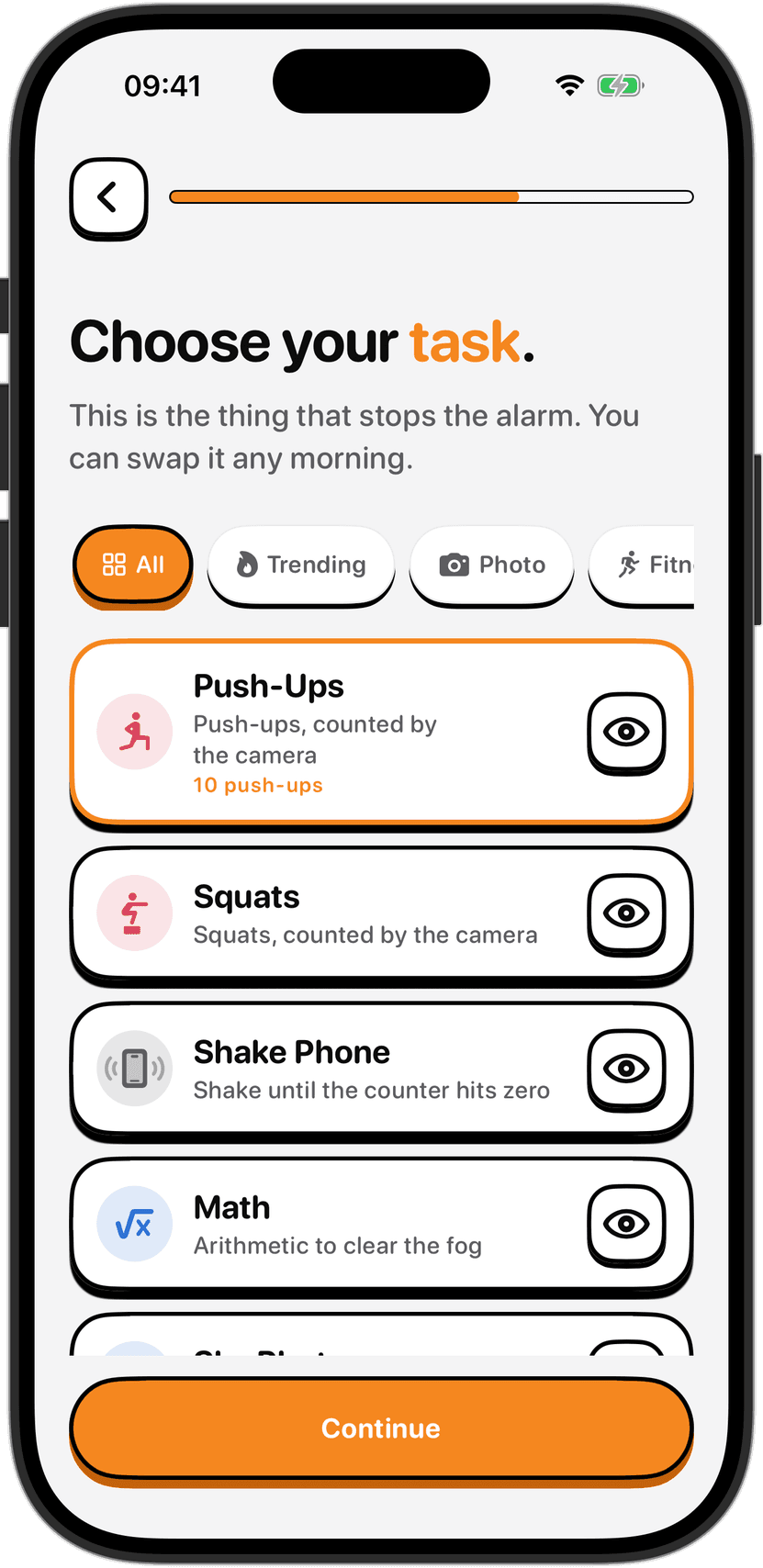
There is also a safety consideration. If you have an injury, a heart condition, a blood pressure issue, or another reason to hold off on jumping and push-ups first thing, pick a different wake task. The NoNap app has options: shake the phone, solve a math problem, take a photo, or simply get out of bed. Each forces you awake and forces you to decide to stay there. If you want to try exercise, squats and push-ups are both counted by the camera and tracked over time. Skip them if it is not safe for your body that morning, and choose math or shaking instead.
Sources
Kovac, K., Ferguson, S. A., Paterson, J. L., Aisbett, B., Hilditch, C. J., Reynolds, A. C., and Vincent, G. E. (2020). Exercising Caution Upon Waking-Can Exercise Reduce Sleep Inertia? Frontiers in Physiology, 11, 254. doi.org/10.3389/fphys.2020.00254
Kovac, K., Vincent, G. E., Paterson, J. L., Reynolds, A., Aisbett, B., Hilditch, C. J., and Ferguson, S. A. (2021). The impact of a short burst of exercise on sleep inertia. Physiology and Behavior, 242, 113617. doi.org/10.1016/j.physbeh.2021.113617
Morita, Y., Sasai-Sakuma, T., and Inoue, Y. (2017). Effects of acute morning and evening exercise on subjective and objective sleep quality in older individuals with insomnia. Sleep Medicine, 34, 200-208. doi.org/10.1016/j.sleep.2017.03.014
Hilditch, C. J., and McHill, A. W. (2019). Sleep inertia: current insights. Nature and Science of Sleep, 11, 155-165. doi.org/10.2147/nss.s188911
Image credits
Cover photo of a woman doing push-ups on a wooden floor in a bright living room is by Vitaly Gariev on Unsplash (unsplash.com/photos/a-woman-is-doing-push-ups-on-the-floor-7C_Ri-7kyXc), used under the Unsplash License, which permits commercial use without payment.