Phones in the bedroom: what the research on screens before bed shows
The light from screens suppresses melatonin, but later studies find mixed effects. What the evidence actually says about e-readers, notifications, and using your phone as an alarm.
Visana Studios
5 min read

You pick up your phone at 10:45 p.m., planning to set an alarm and then sleep. Twenty minutes later you are still scrolling, eyes bright in the dark room, and sleep feels further away than before.
The research on screens and sleep sits in an uncomfortable middle ground. There is solid evidence that light before bed affects sleep. The mechanisms are real and measurable. But the practical effect on your night is smaller or more complicated than headlines suggest, and the difference between light exposure itself and what you are doing on the device matters more than people usually realize.
Light exposure and the sleep push
Light entering the eyes sends a signal to the brain's circadian clock, the cluster of cells that keeps a rough 24-hour rhythm running. Bright light in the evening delays that clock, shifting sleep onset later. Blue wavelengths are particularly effective, because the light-sensitive proteins in the eye that detect time of day are most responsive to blue.
This mechanism is real and measurable. A 2014 study published in the Proceedings of the National Academy of Sciences measured it directly. Researchers at Harvard Medical School and elsewhere tracked people reading from an iPad before bed versus printed books under the same light conditions. The iPad group showed suppressed melatonin, stayed awake longer, and reported feeling less rested the next morning. The iPad emits blue-rich light from its screen, while printed books reflect ambient room light.
Later research told a different story. Multiple studies in the years after 2014 found smaller effects than the original work, and some found no consistent effect at all when accounting for other factors. Reviews of the research have concluded that the size of the effect varies widely depending on who is tested, when it happens, how bright the screen is, and for how long the exposure lasts. Brighter screens and longer viewing times show clearer effects, while dimmer screens at lower brightness, or brief viewing, show less impact.
What you are doing on the phone matters more than the light
The e-reader study used iPad reading as the test condition, which meant two things happening at once: light exposure and engaging cognitive content. Research examining studies on screen use and sleep has tried to separate these effects. Studies have found that the act of using social media or checking messages on a phone is more strongly linked to poor sleep than reading text on a screen. This suggests that the stimulation and mental engagement pull sleep away more than the light itself.
Notifications are another culprit. Every buzz or chime resets your mental state and, if you look at the message, sends your attention through the story someone else is telling instead of the wind-down state you were building. Research on sleep and smartphones has repeatedly found that keeping a phone nearby with notifications enabled disrupts sleep more than the light from the screen alone.
Checking your phone a few times before bed does not permanently damage sleep. The problem compounds across nights when it becomes a pattern. The phone sits on the nightstand, not silent, and you wake to check something, and the ambient light keeps you just a few percent more awake, and none of this is enough to feel terrible in the morning by itself, but over a week it adds up.
The practical trade-off of the bedside phone
For most people today, the phone serves one essential function in the bedroom: it is the alarm. The Clock app on iPhone is reliable, uses the system alarm so the ringer switch does not silence it, and a phone on the nightstand avoids the cost of a separate device.
The tension is obvious. A phone nearby and available means checking it is one reach away, and that checking degrades sleep. A phone kept in the next room means you cannot hear the alarm, or you set a louder alarm that wakes everyone else.
Set Do Not Disturb before bed so only alarms come through. Keep the phone face-down to reduce the temptation to check it. Enable Grayscale to make the screen less engaging if you do look. Put the phone somewhere out of arm's reach. These are friction, and friction works. The harder it is to check your phone in the dark, the fewer times you will do it.
The Light Sleep Focus on iPhone can help, turning the lock screen a warmer color after sunset and restricting notifications. Setting a Wind Down routine with a sleep timer on a podcast or meditation app gives the phone a job to do while you fall asleep, but it means leaving the phone on and nearby.
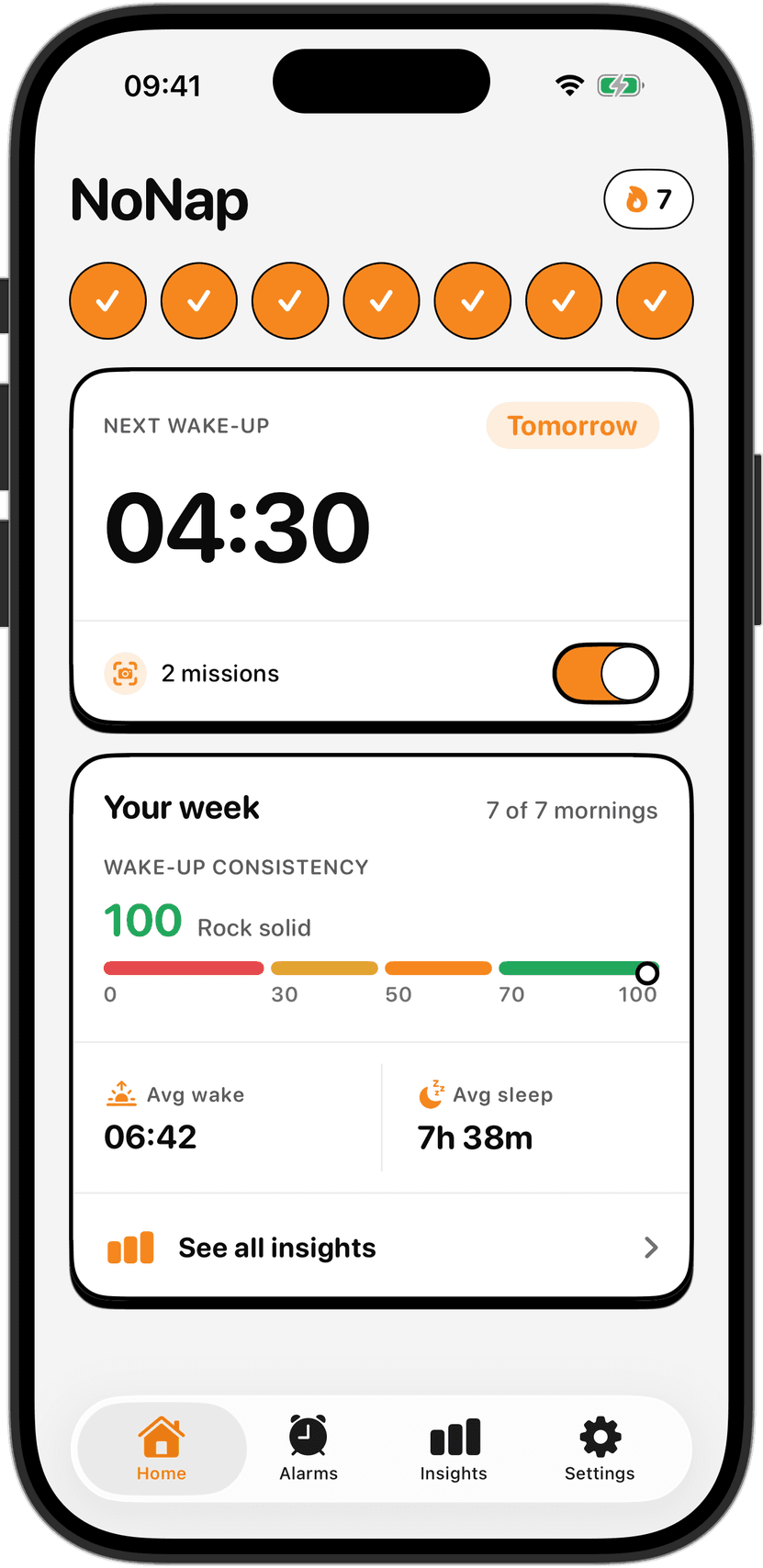
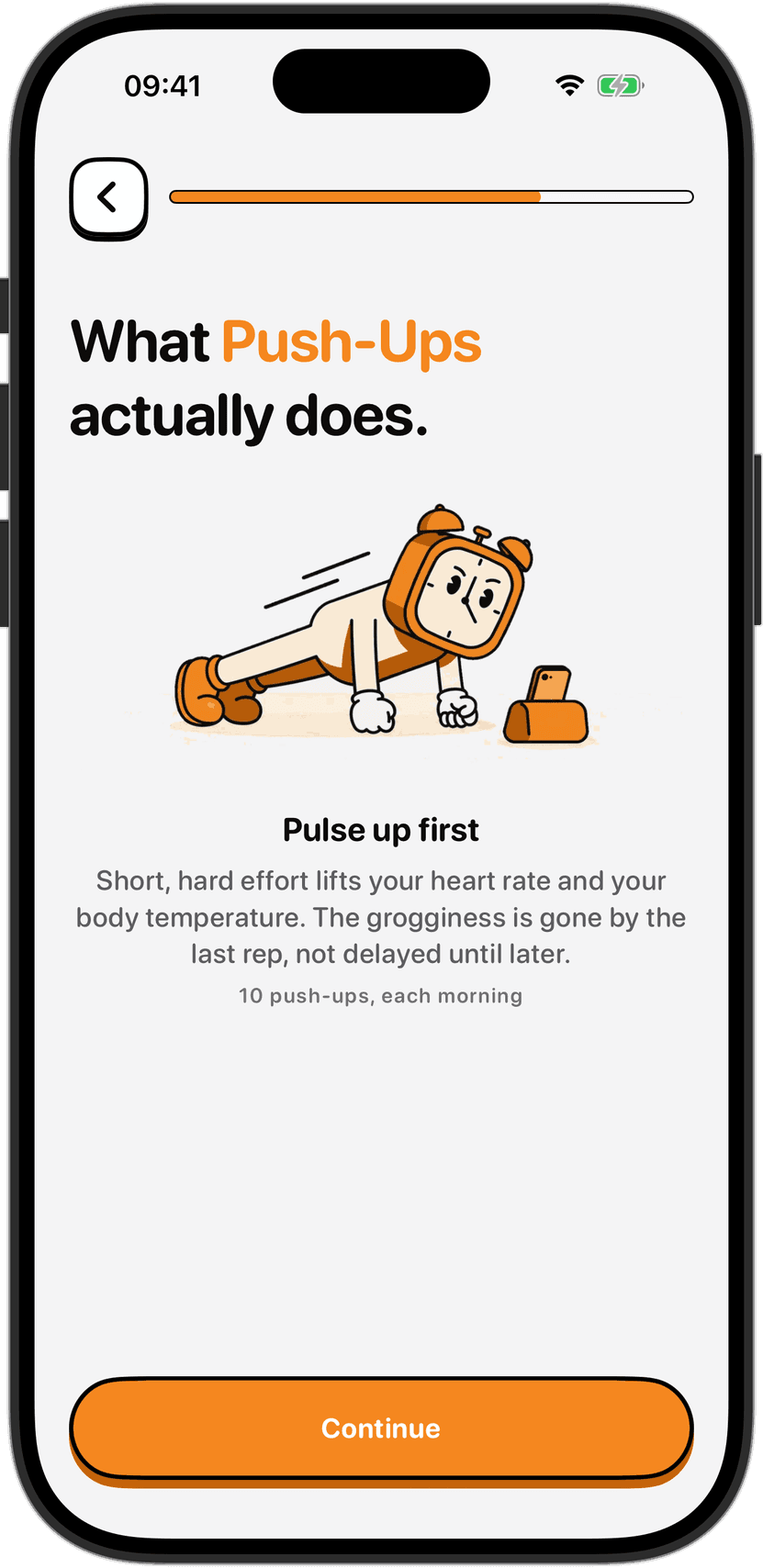
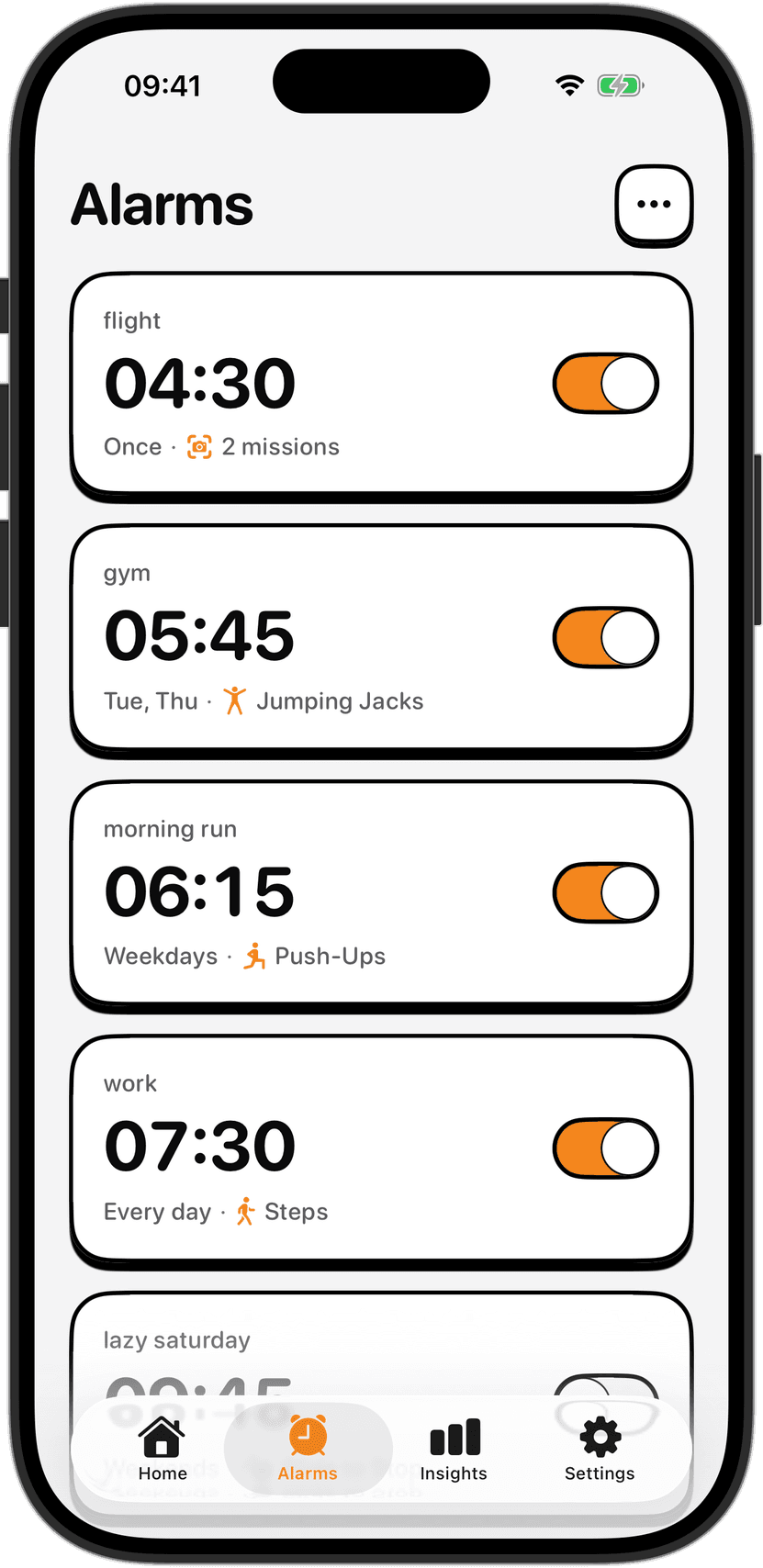
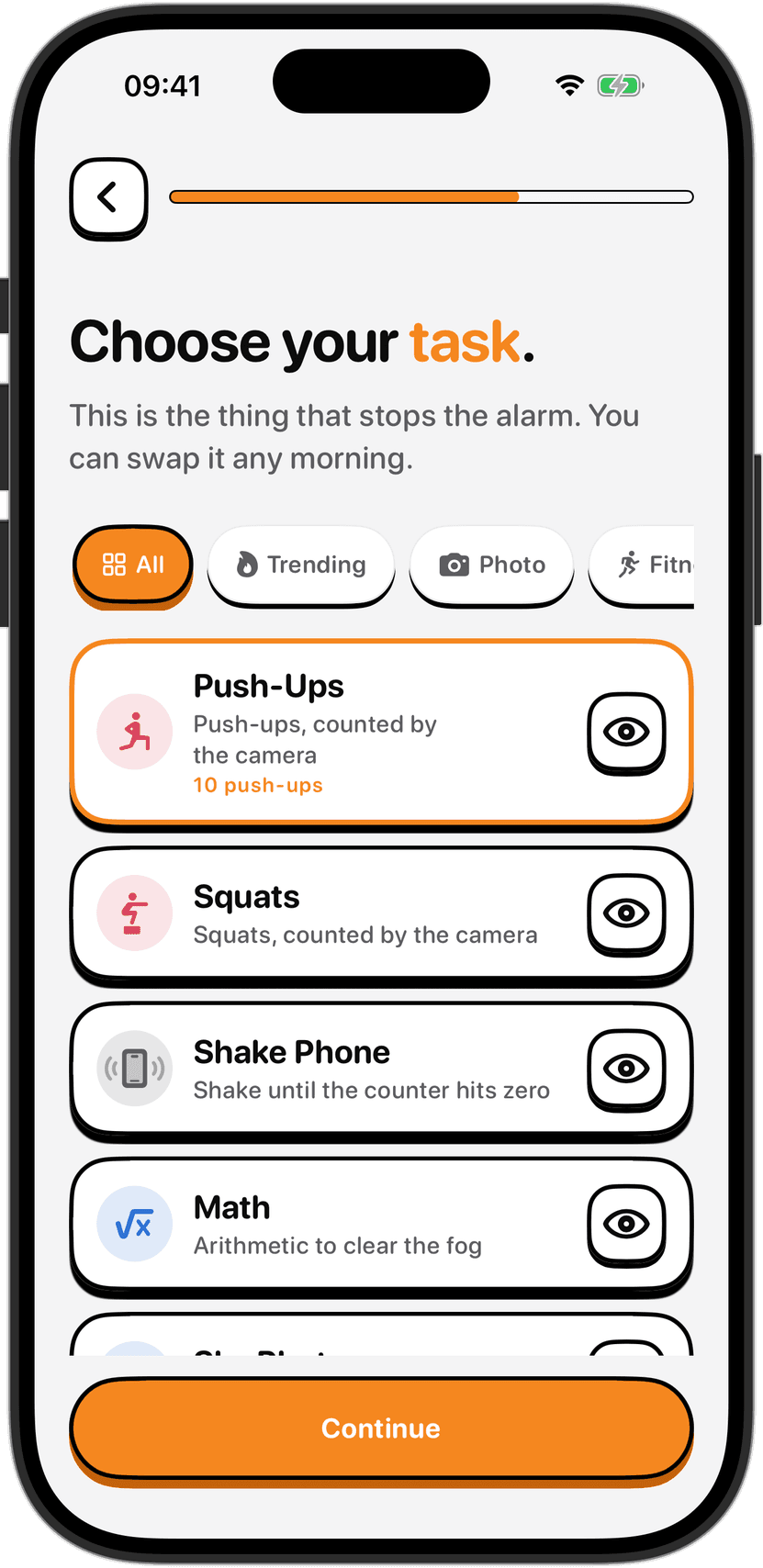
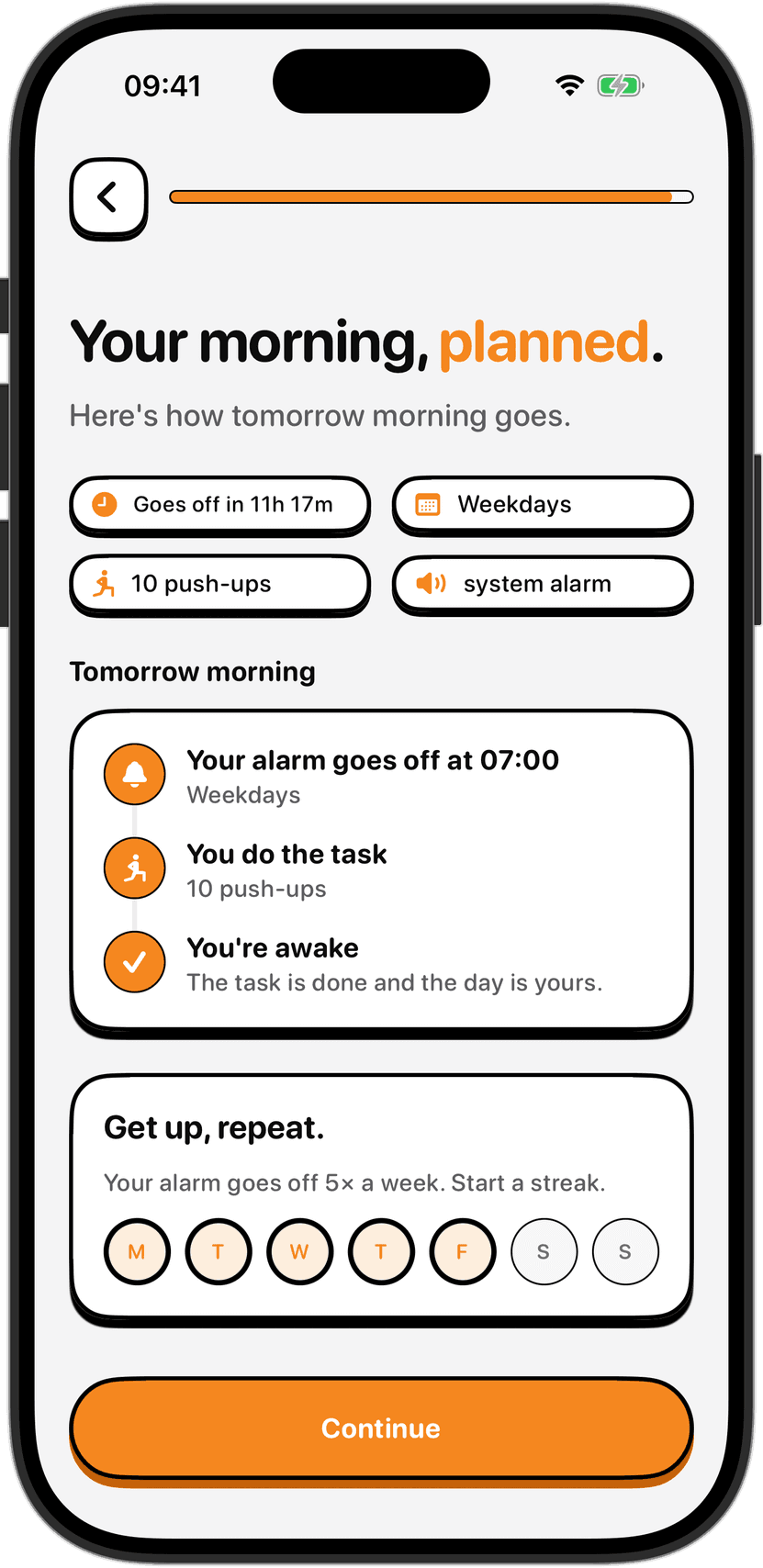
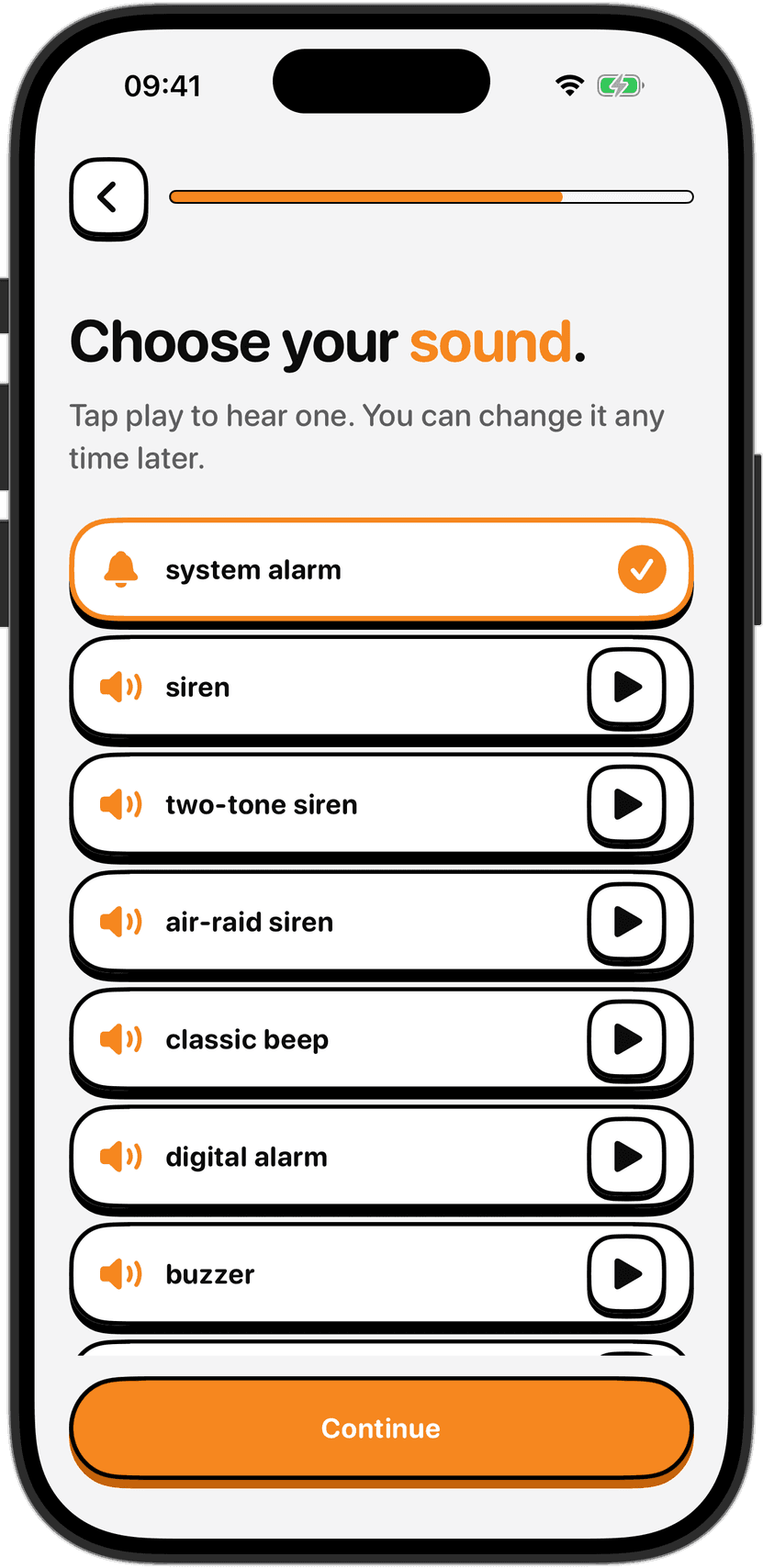
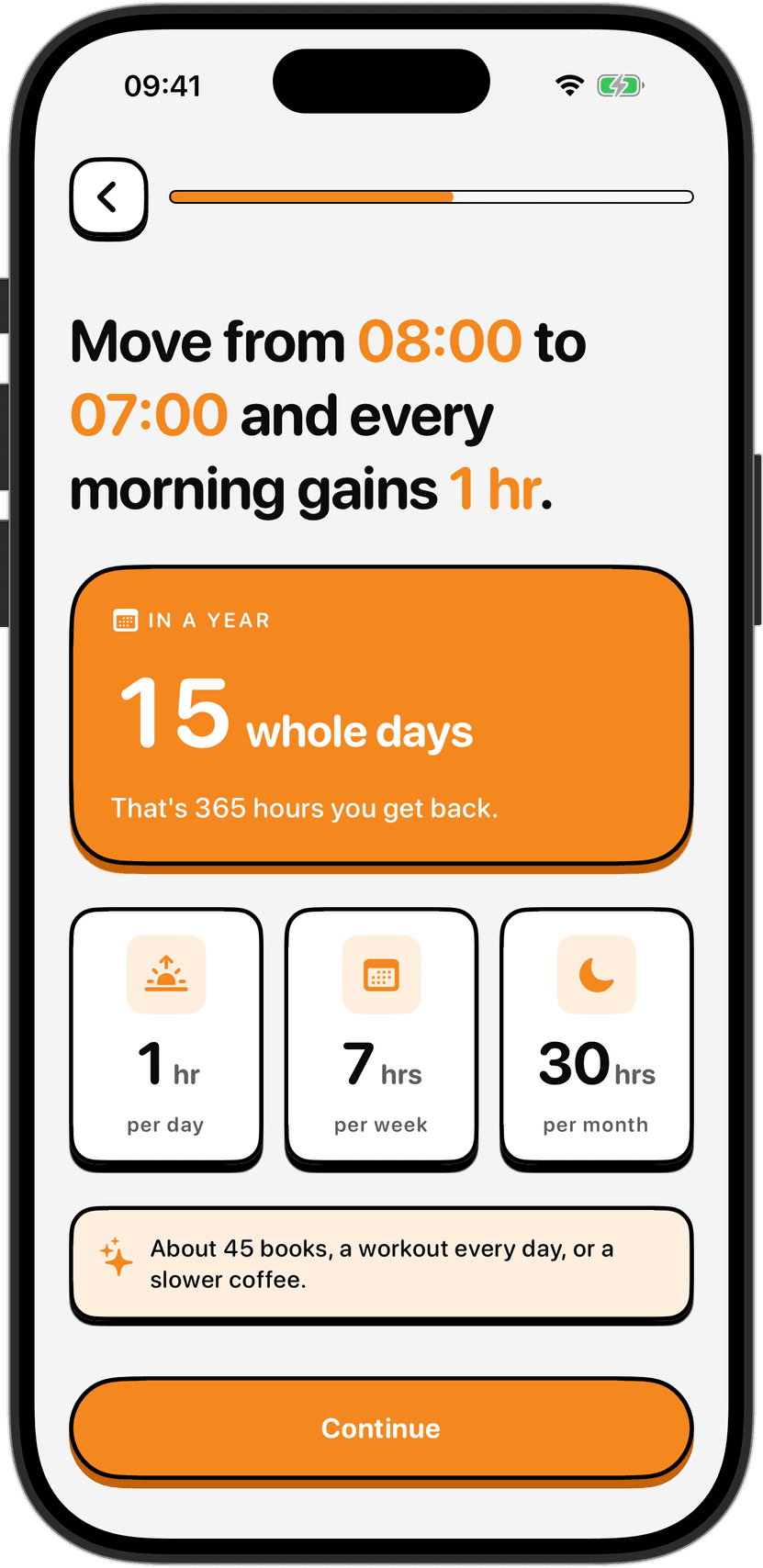
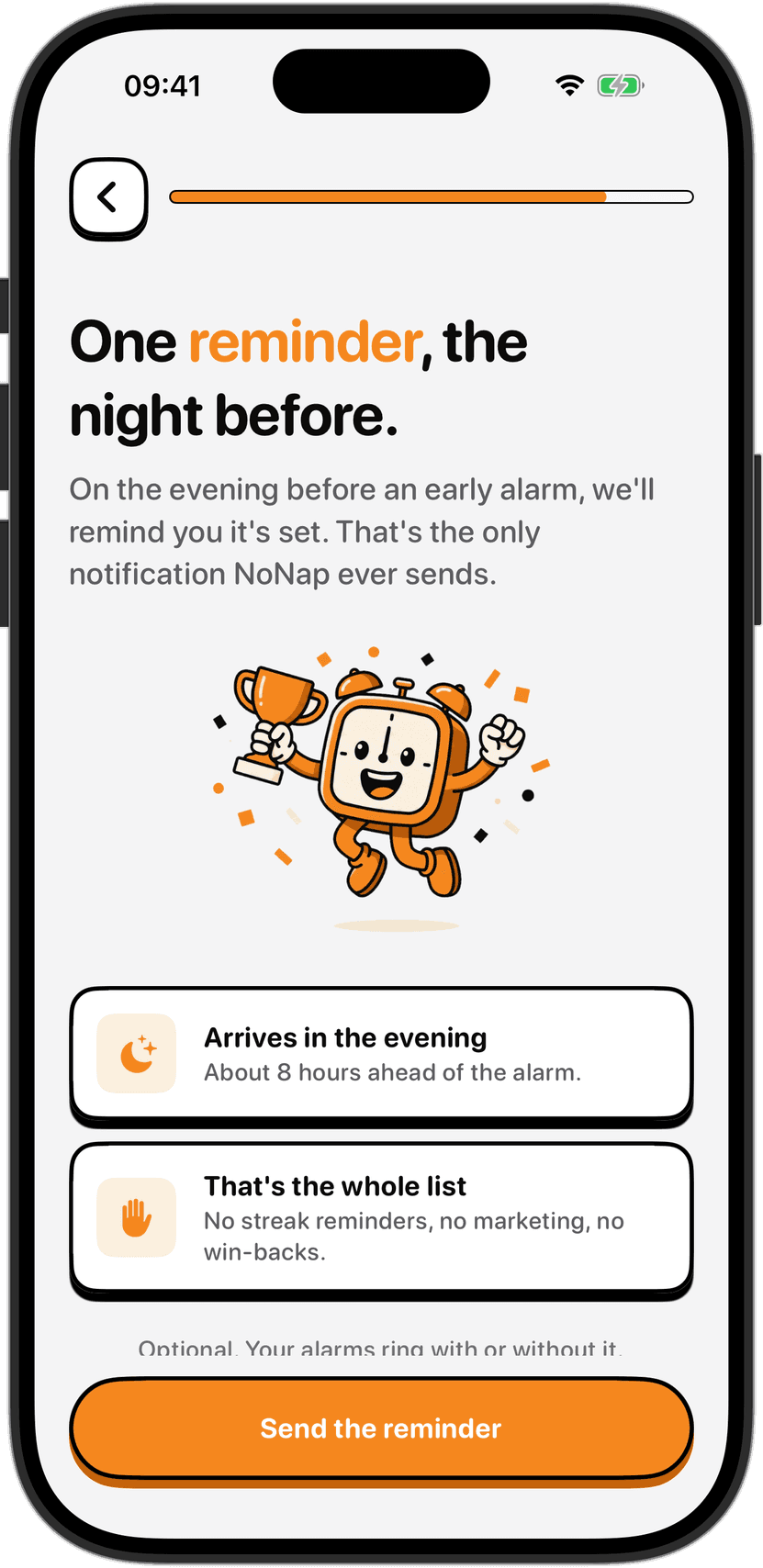
One way to sidestep the conflict is to make the alarm less dismissible. NoNap uses Apple's system alarm the same way the Clock app does, and it cannot be dismissed from the lock screen, so it forces you out of bed to stop it. A night-before reminder nudges you to wind down earlier in the evening when you are still sitting up anyway. The wake task means the phone is not a device to consult when you wake, but a problem to solve. You can also read about how sleep inertia shapes those first minutes after the alarm, and how morning light affects how alert you feel later.
Sources
Chang, A. M., Aeschbach, D., Duffy, J. F., and Czeisler, C. A. (2014). Evening use of light-emitting eReaders negatively affects sleep, circadian timing, and next-day alertness. Proceedings of the National Academy of Sciences, 112(4), 1232-1237. pnas.org/doi/10.1073/pnas.1418490112
Exelmans, L., and Van den Bulck, J. (2016). Bedtime mobile phone use and sleep in adults. Social Science & Medicine, 148, 93-101. doi.org/10.1016/j.socscimed.2015.11.037
Gooley, J. B., Chamberlain, K., Smith, K. A., et al. (2011). Exposure to room light before bedtime suppresses melatonin onset and shortens melatonin duration. Journal of Clinical Endocrinology & Metabolism, 96(3), E463-E472. doi.org/10.1210/jc.2010-2098
Hale, L., Guan, S., and Trinder, J. (2015). Screen time and sleep among school-aged children and adolescents: a systematic literature review. Sleep Medicine Reviews, 21, 50-58. doi.org/10.1016/j.smrv.2014.07.007
Reid, K. J., Santostasi, G., Baron, K. G., et al. (2016). Timing and intensity of light correlate with body weight in adults. International Journal of Obesity, 38(4), 552-557. doi.org/10.1038/ijo.2013.207
Image credits
Cover photo from Pexels (pexels.com/photo/person-lying-on-bed-under-blanket-3991424/), used under the Pexels License, which permits commercial use without payment.