Sleep inertia follows your body clock, not just your sleep
Waking while your body clock is in its night phase makes the first 20 minutes much harder. What a 2008 study found, and what it cannot yet prove.
Visana Studios
4 min read
When a morning feels awful, the usual suspect is the night before. Too little sleep, a late dinner, an alarm that caught you in deep sleep. Those things matter. A 2008 study asked a different question: does the grogginess right after waking change with the time of day, even when the sleep before it is the same?
What the study measured
The researchers, Scheer and colleagues, brought twelve adults into a sleep laboratory. Their mean age was 24, and seven of them were men. Instead of a normal night, the group followed a forced desynchrony protocol, seven cycles of 28 hours each, so that sleep and wake were spread across the whole clock. Three times in every sleep period, a standard sound woke each participant.
After each awakening, the participant did a two-minute serial addition test. The researchers tracked how much the score improved over the following 20 minutes. In this study, sleep inertia meant that gain. The poorer the early score relative to later performance, the stronger the inertia.
Core body temperature served as the marker of the body clock. Using it, the team could estimate where each person's internal clock sat at the moment they woke. The study therefore tracked the body clock, not the time on the wall.
What the numbers showed
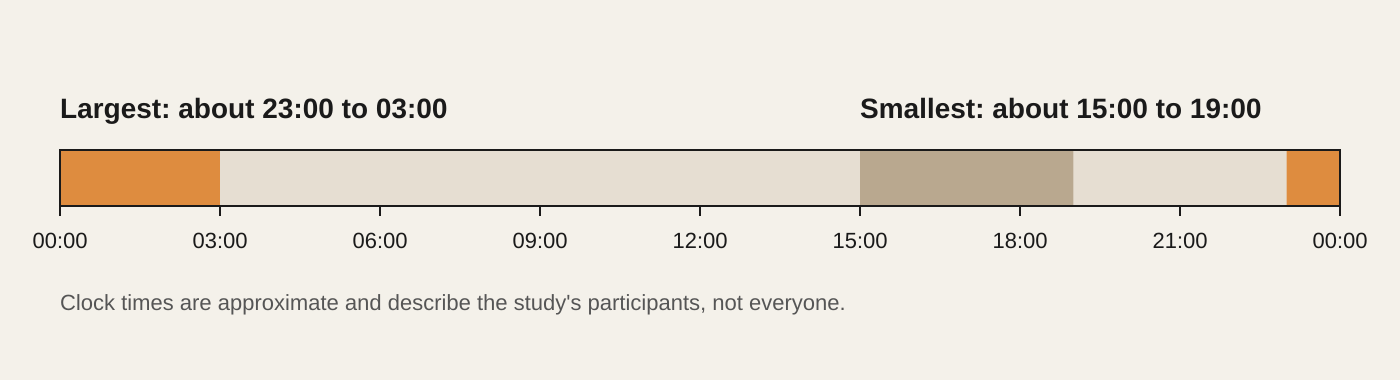
For awakenings from stage 2 sleep, which made up 62 percent of the awakenings (110 in total), the daily rhythm in sleep inertia was statistically significant (p = 0.007). Inertia was 3.6 times larger during the biological night, roughly 23:00 to 03:00 in these participants, than during the biological day, around 15:00 to 19:00. The pattern held when the researchers included awakenings from every sleep stage (p = 0.004).
The authors also checked the obvious alternatives. The rhythm was not explained by changes in sleep drive, sleep efficiency or the mix of sleep stages before waking. The people were not simply more tired at one hour than another. Their brains came back online more slowly at a particular point in the body clock.
Why the body clock sets the timing
Core temperature runs on a daily cycle, and the body clock drives it. Kräuchi's review of the thermophysiological link describes how sleep, under normal conditions, begins while core temperature is falling. At that point the body is losing the most heat. Heat leaves through blood vessels in the hands and feet, and that loss is tied to sleepiness and a quick sleep onset.
The timing point for mornings is simpler than the physiology. The body does not flip from night mode to day mode at the moment the alarm sounds. An awakening can land in the part of the clock that is still running its night program, and the study shows that this part of the clock makes the first minutes after waking worse.
What this means for your alarm
If the finding holds in everyday life, mornings should be hardest when the alarm lands in the clock's night window. Your body clock is not the same as the clock on the wall. Someone whose internal clock runs late may hit that window at a normal alarm time, while someone with an earlier clock may not. This is an inference from the study, not something it tested. The study did not measure chronotype.
The authors go a step further. They suggest the effect would matter most for people who must make decisions soon after waking, such as firefighters, pilots and on-call medical staff. They add that long-term shift work and habitual sleep loss may make it worse. If you already know your mornings are unreliable, the body clock is one more reason the first twenty minutes deserve a plan.
What the study cannot tell you
The limits are real. Twelve people is a small group, and all of them were young, so the results may not carry over to older adults. The authors said their temperature measure gave only about four hours of circadian resolution, and that there may be more precise markers of the body clock. The awakenings were scheduled sound stimuli, not the natural end of a night's sleep. The test was a single addition task in a laboratory.
The authors put it plainly: their data were collected in unique laboratory circumstances, and future studies would be needed to verify the results in real-life situations. Until those studies exist, treat the rhythm as a well-controlled finding from a small sample, not a settled rule for everyone.
What to do with it
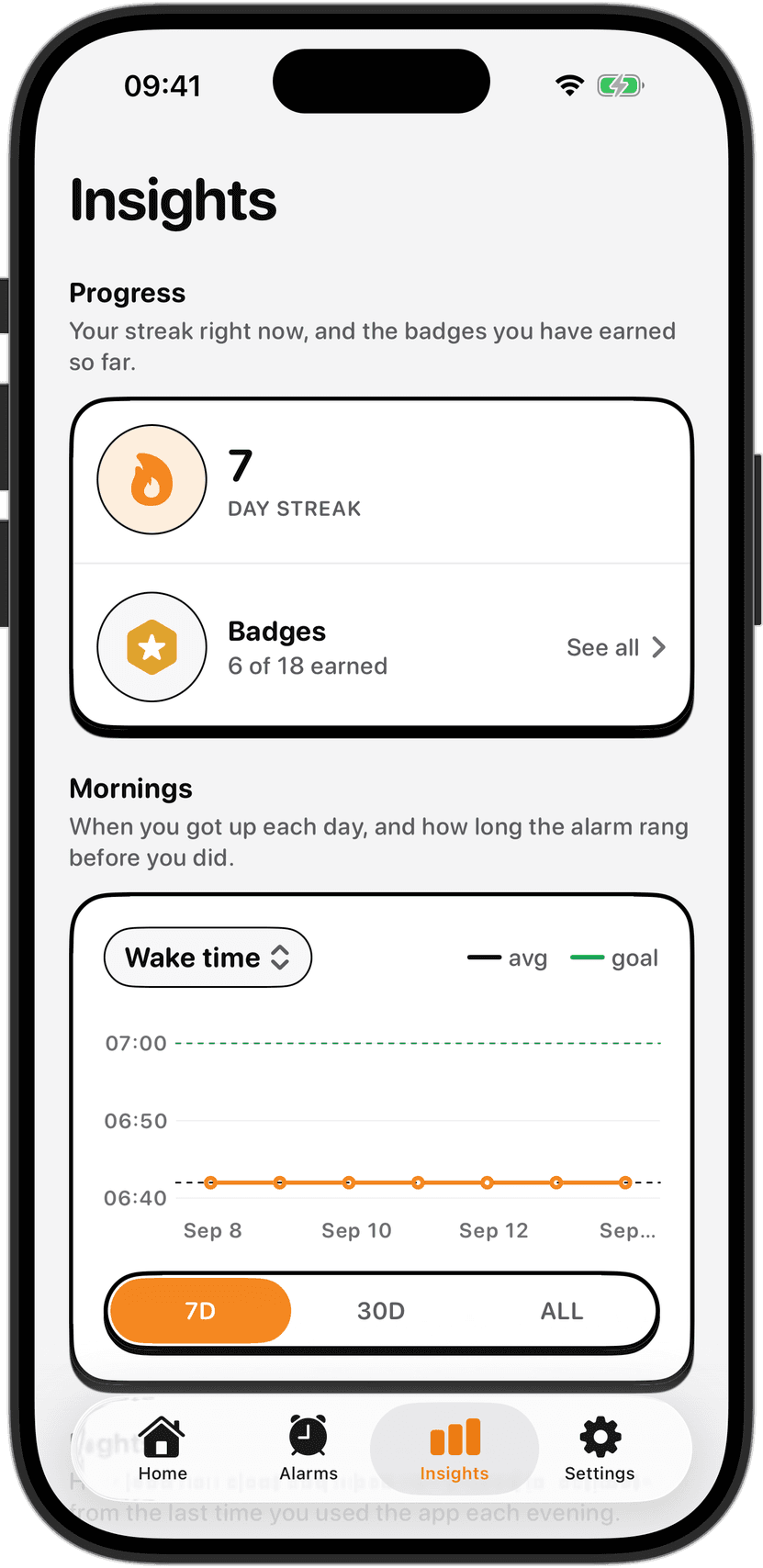
Keeping a steady wake time gives your body clock the same signal every morning. Light in the first hour after waking is the strongest signal the clock gets, so a few minutes outside or by a window helps. The sleep inertia and snooze button post covers why the first minutes go so badly, and morning light and the body clock explains the light side in more detail.
Decide the morning the night before rather than at the alarm. Pick a task you can finish safely on a bad morning, and clear the space around you before any physical movement. If anything hurts, stop.
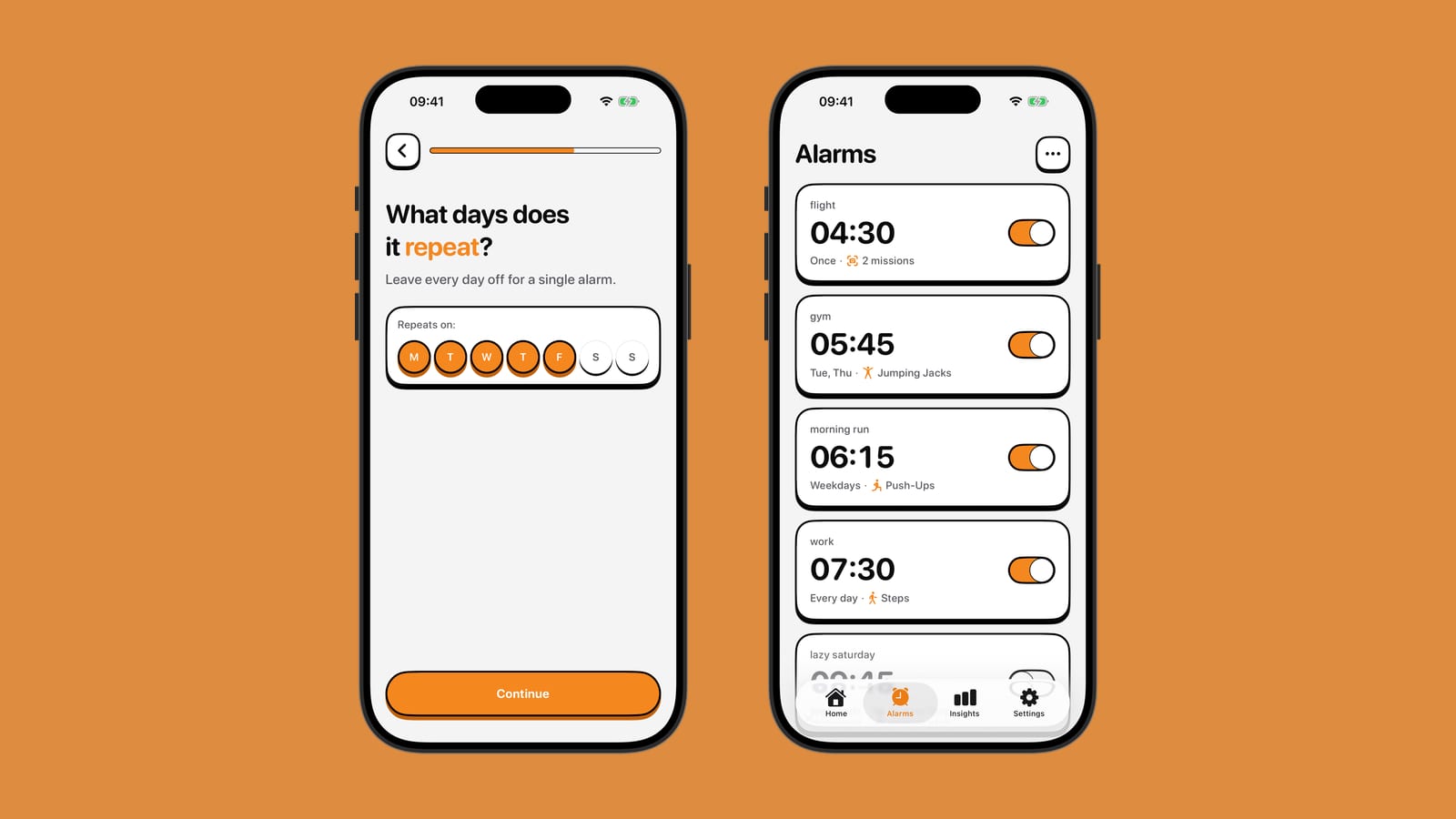
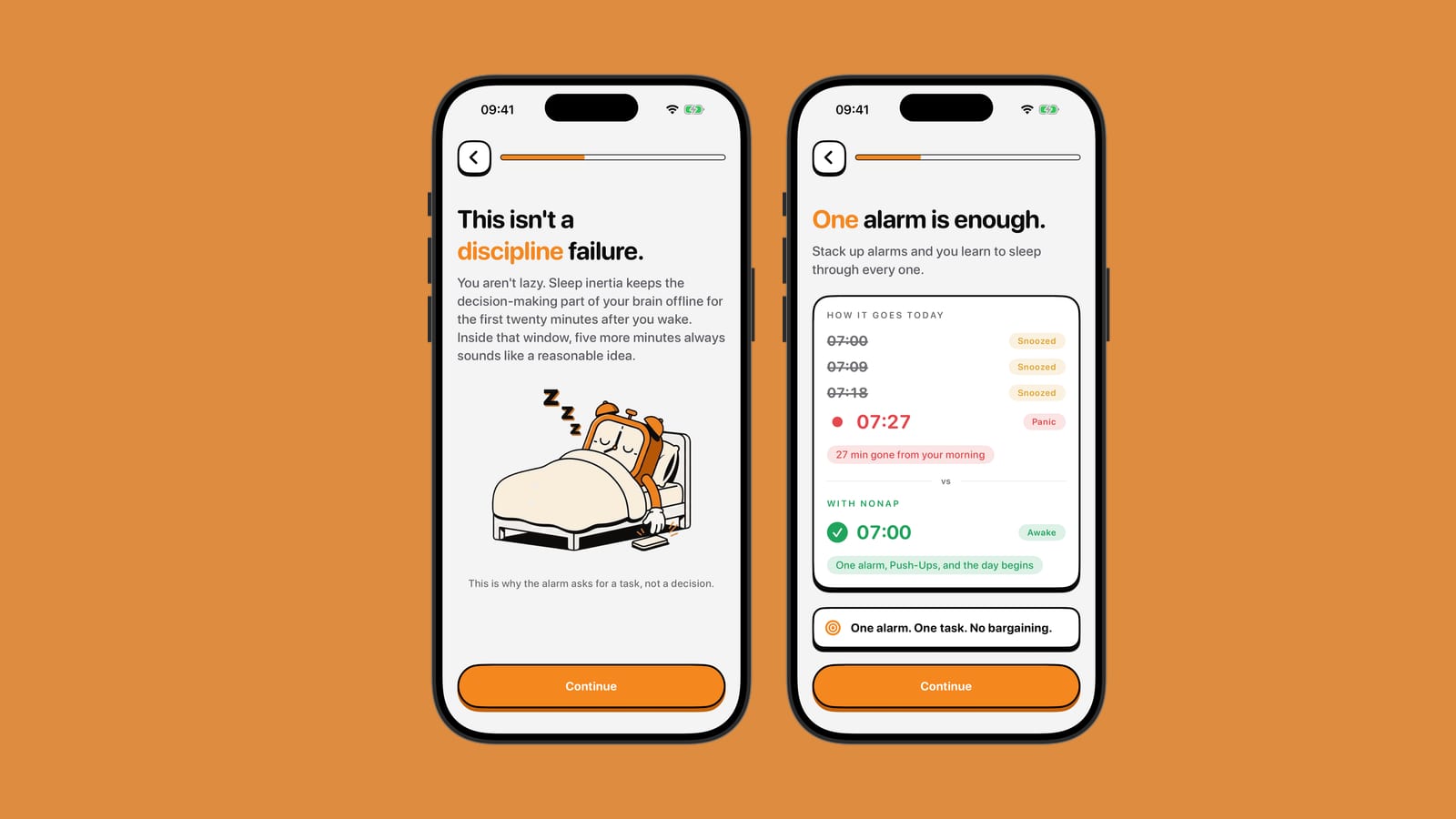
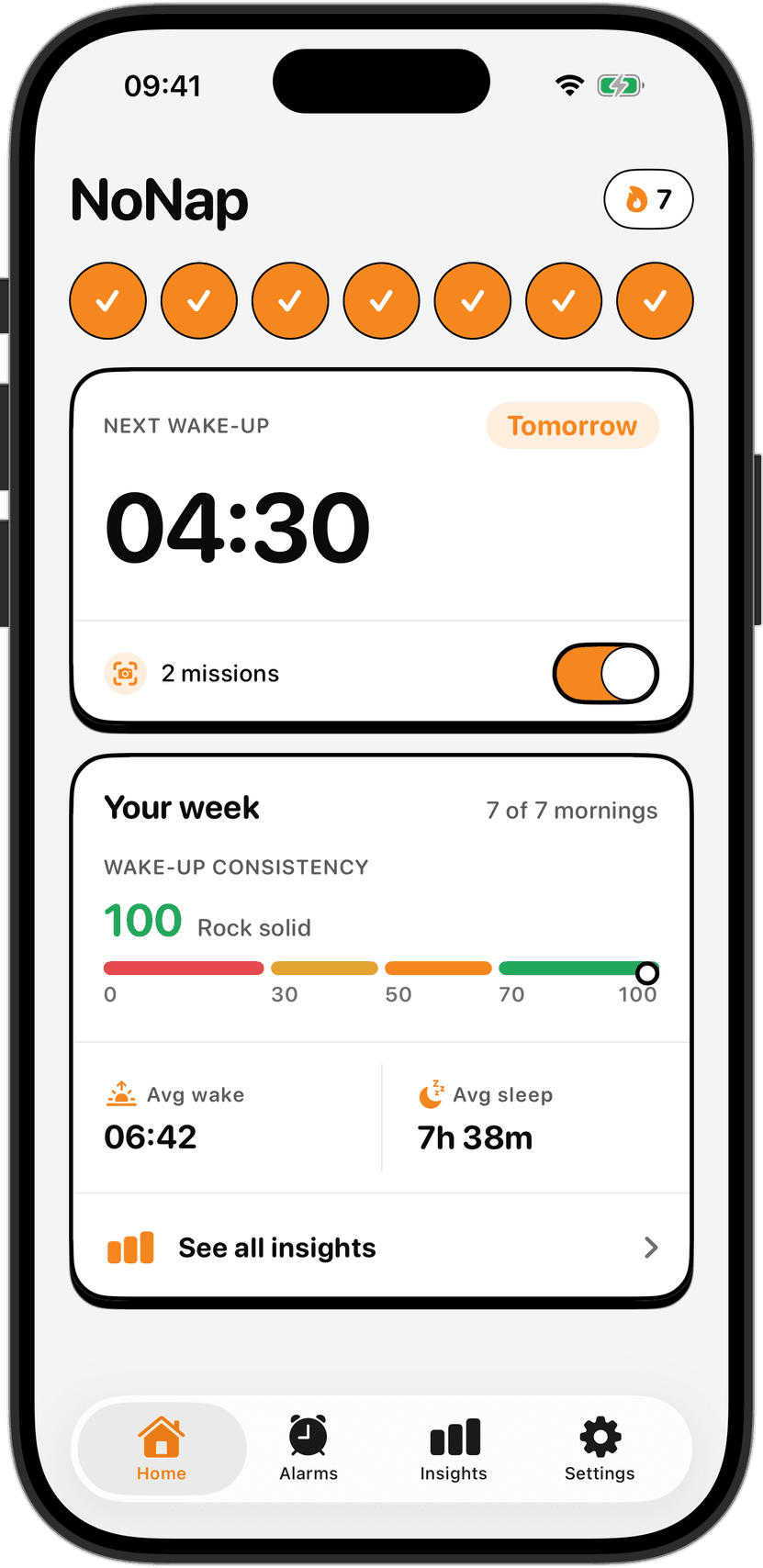
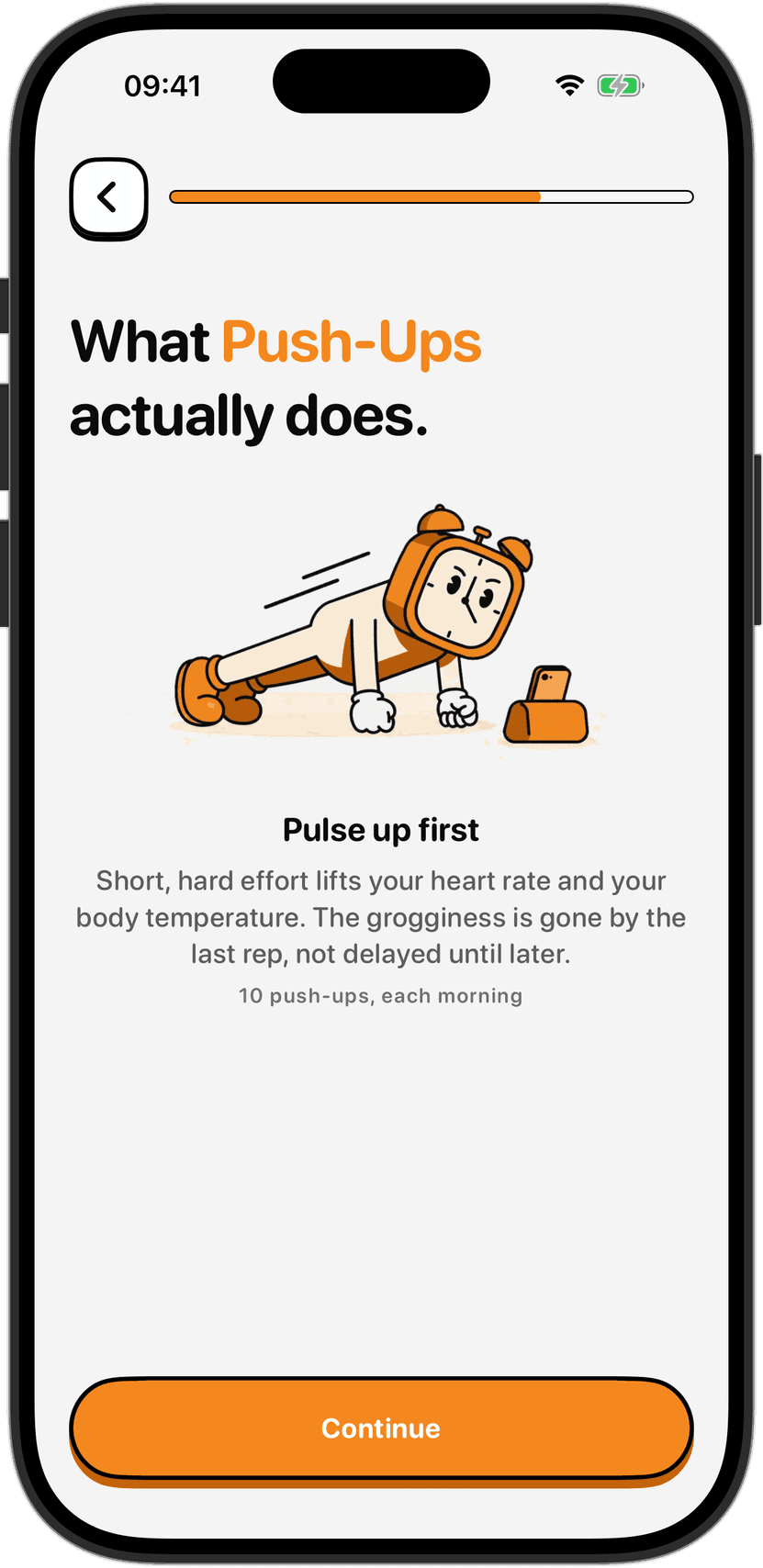
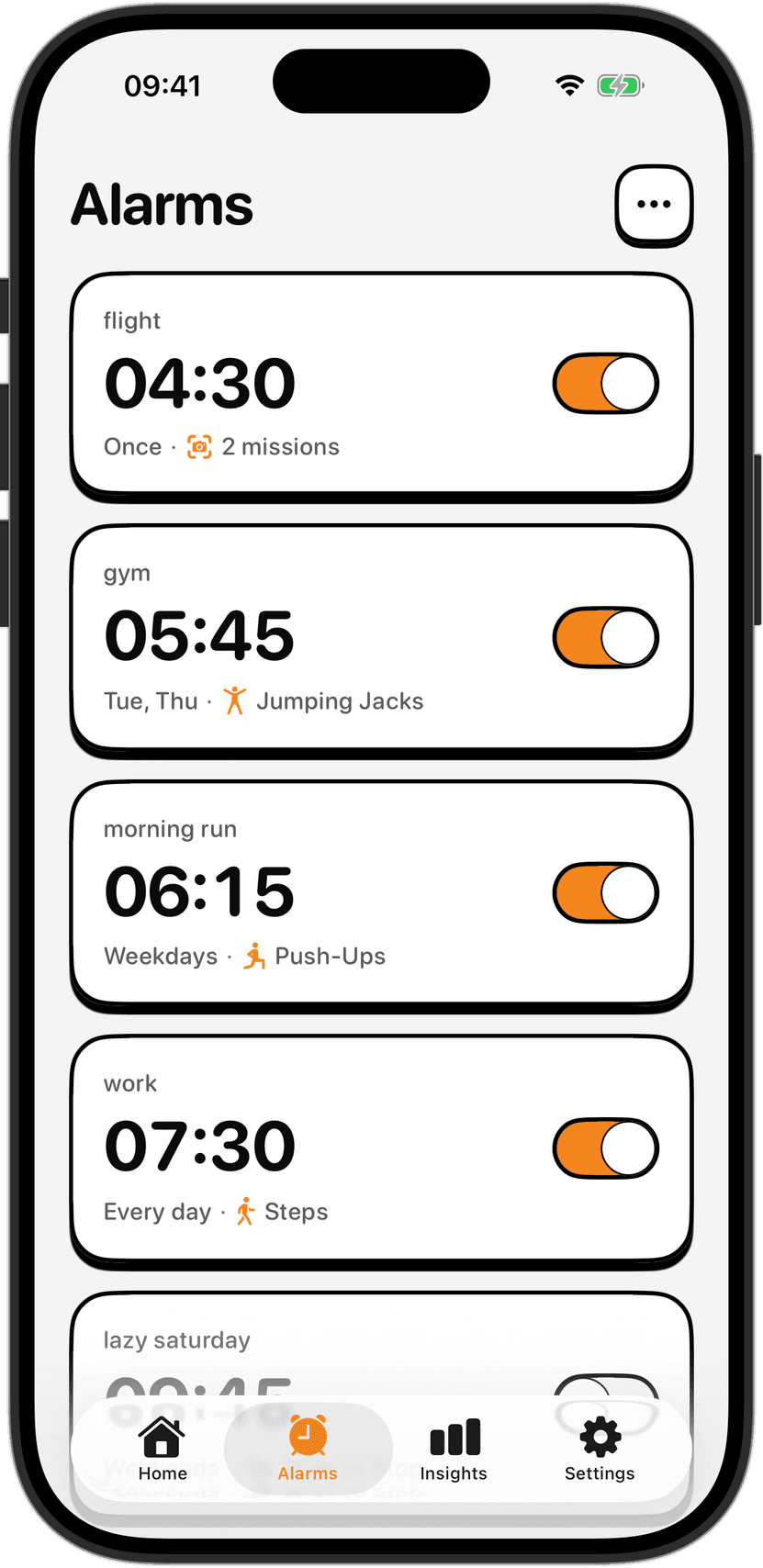
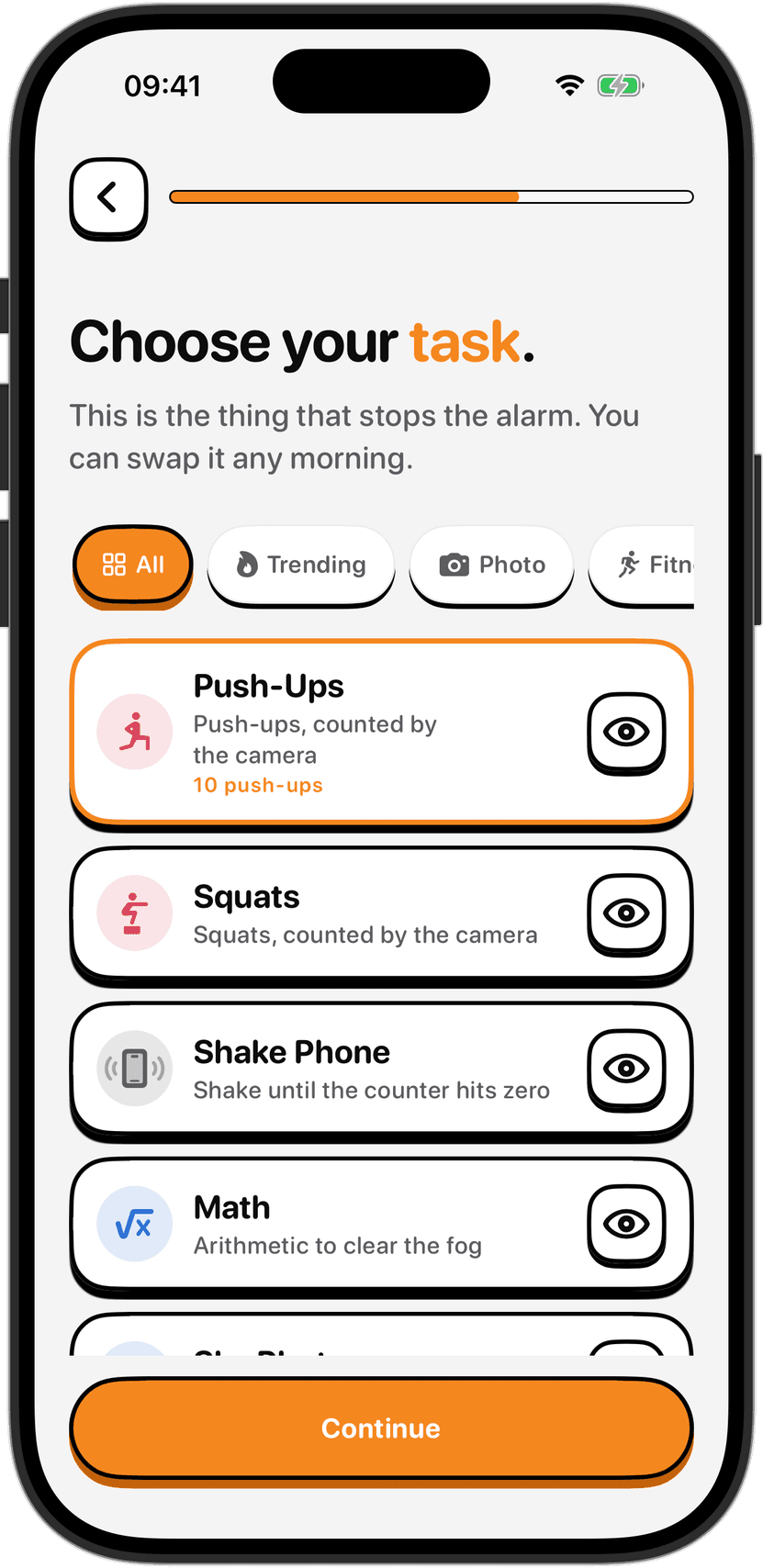
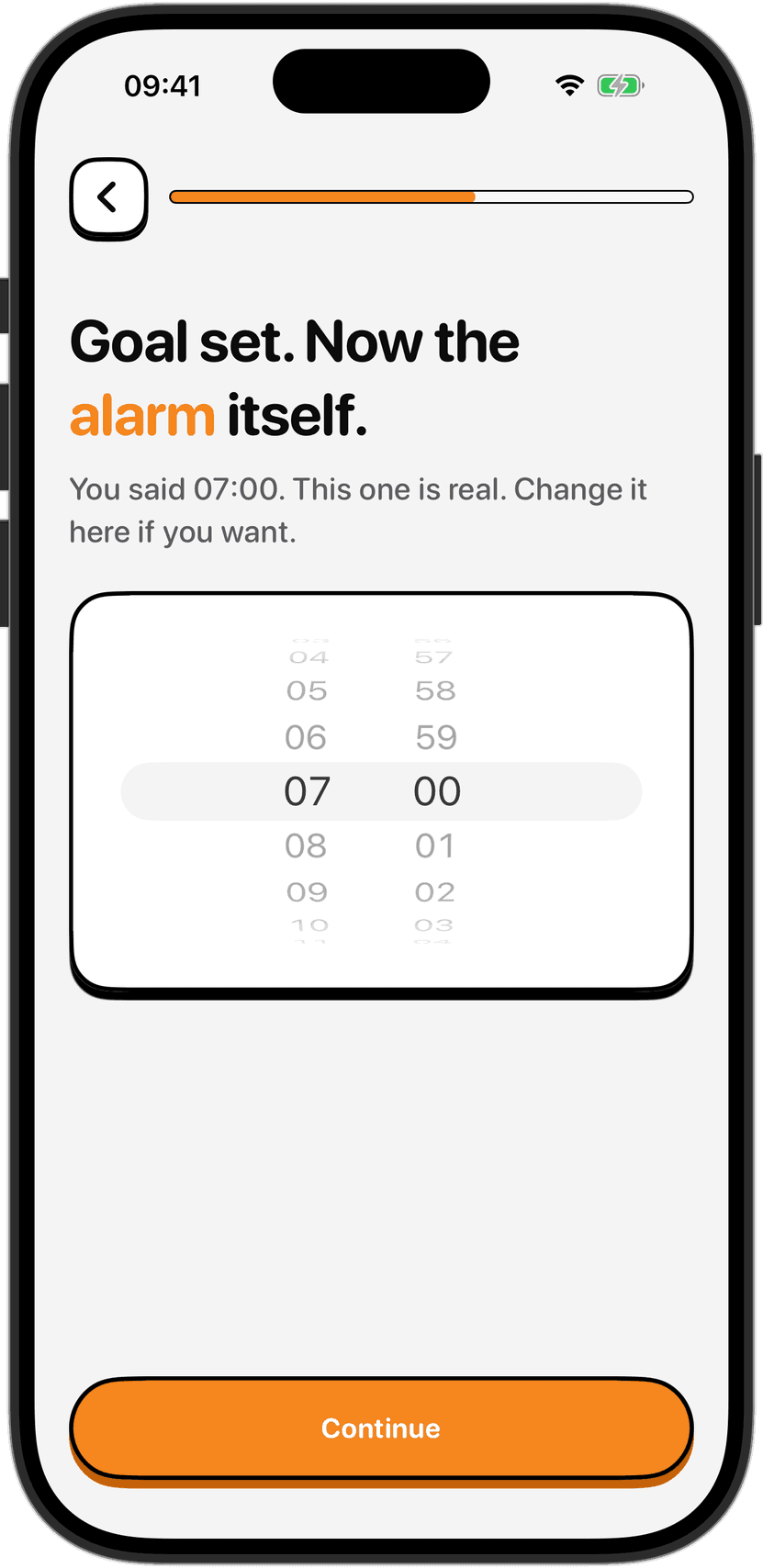
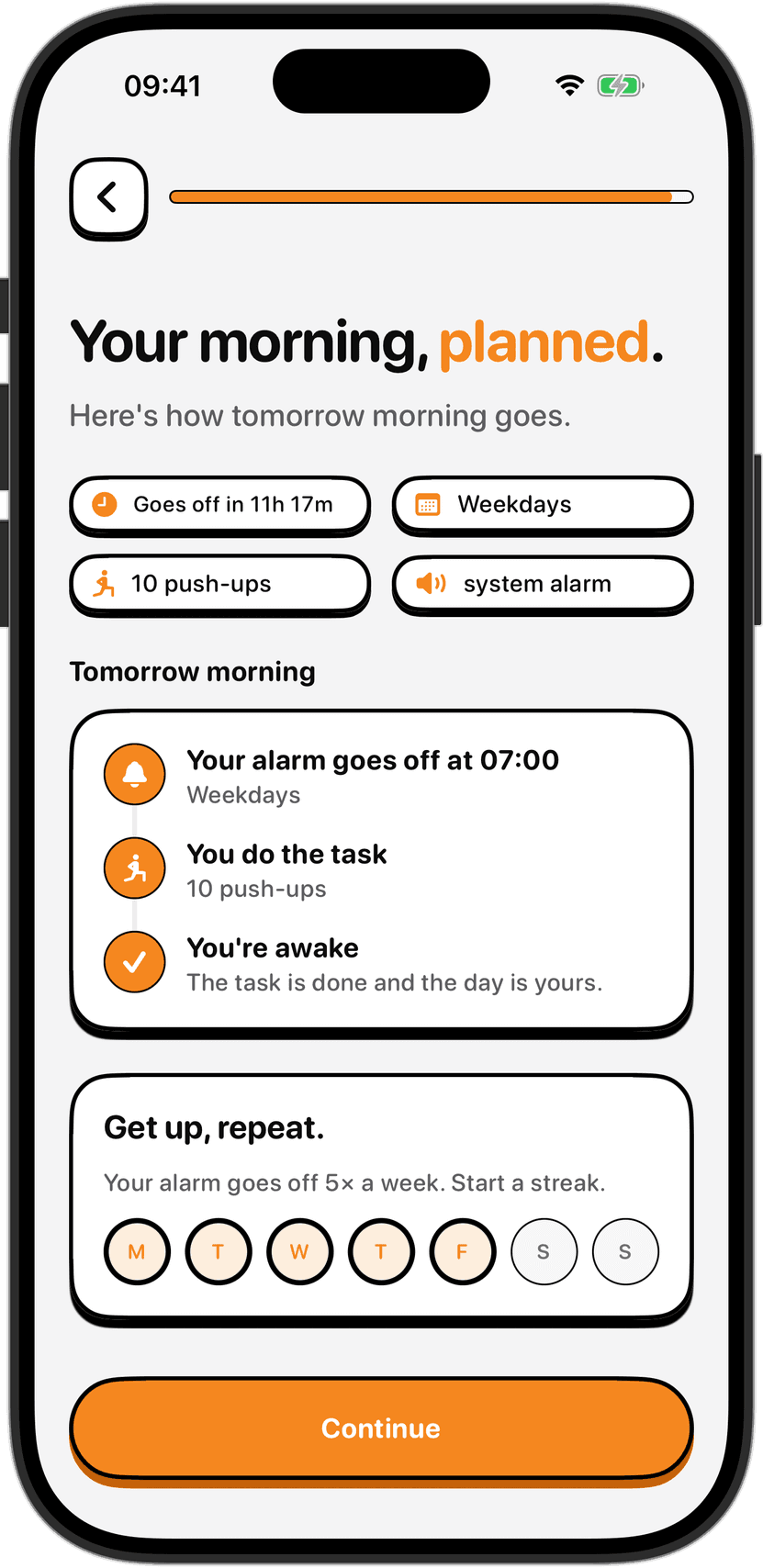
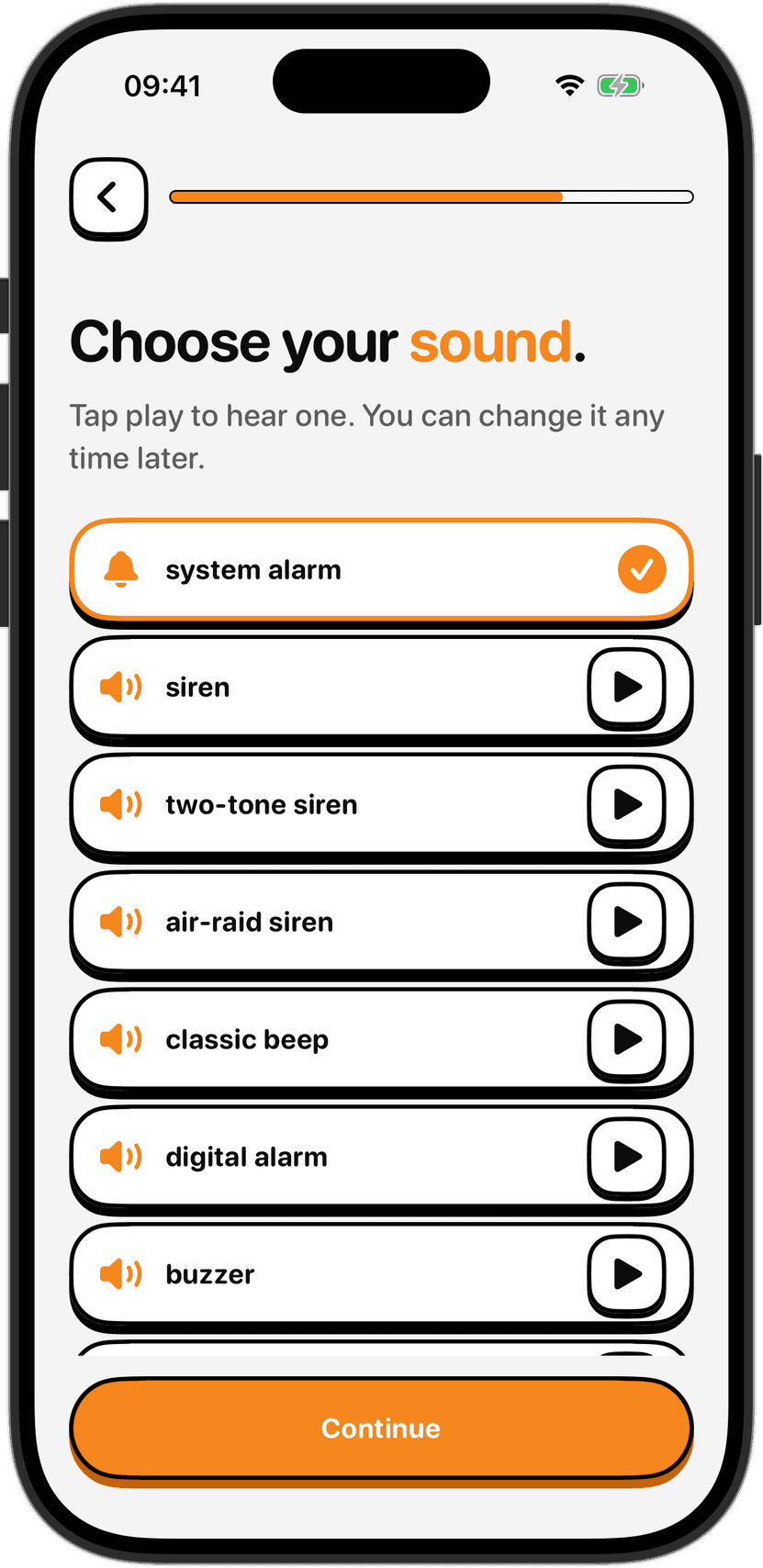
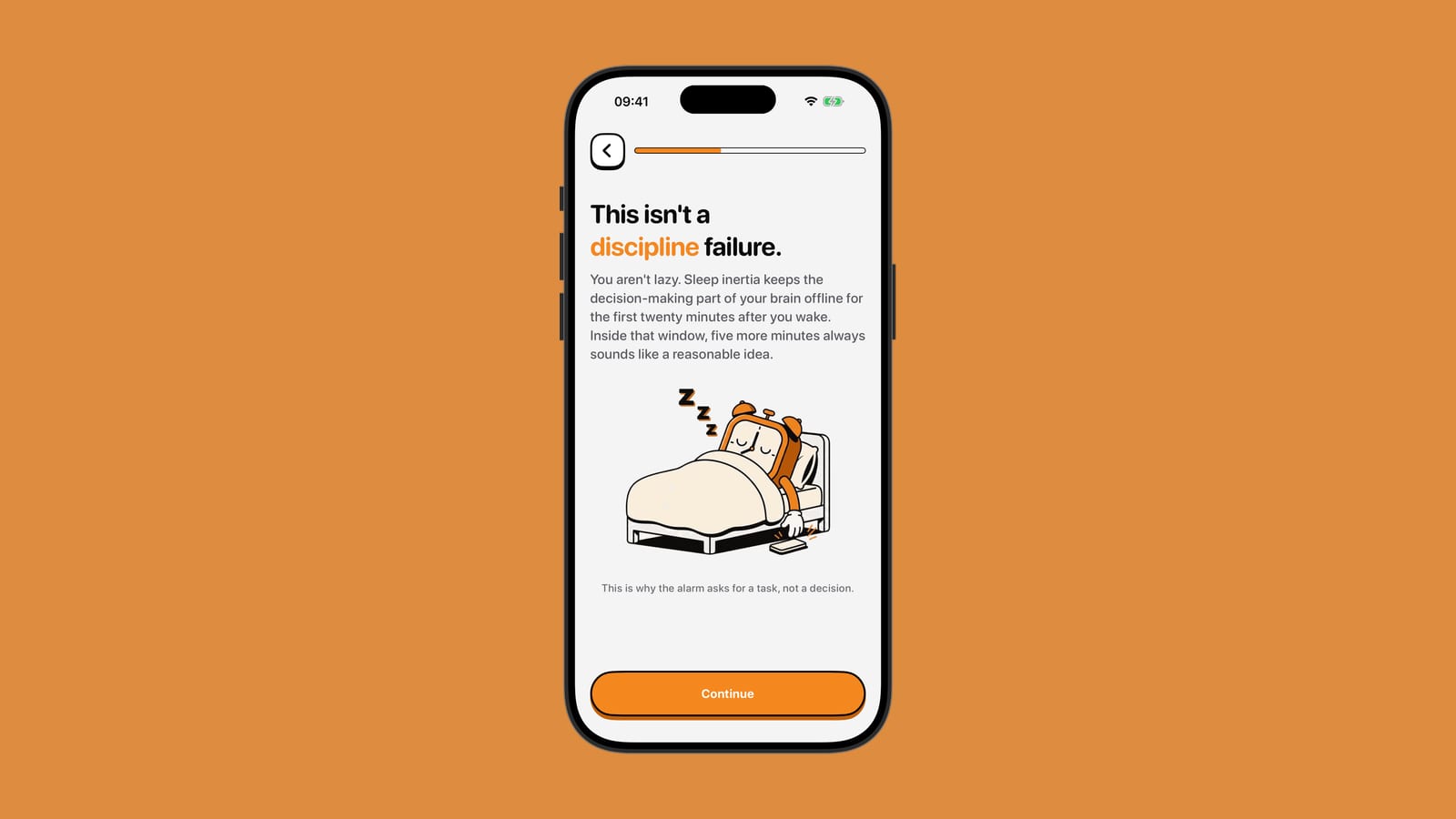
NoNap is built around the same first twenty minutes. The app's sleep inertia screen says that the decision-making part of the brain stays offline for that window, which is why the alarm asks for a task, not a decision. You choose the task in advance from the wake tasks, such as Push-Ups, Math or Photo, and the alarm does not let you bargain your way out of it.
Sources
Scheer FAJL, Shea TJ, Hilton MF, Shea SA. An endogenous circadian rhythm in sleep inertia results in greatest cognitive impairment upon awakening during the biological night. Journal of Biological Rhythms. 2008;23(4):353-361. doi:10.1177/0748730408318081. https://pubmed.ncbi.nlm.nih.gov/18663242/
Kräuchi K. The thermophysiological cascade leading to sleep initiation in relation to phase of entrainment. Sleep Medicine Reviews. 2007;11(6):439-451. doi:10.1016/j.smrv.2007.07.001. https://doi.org/10.1016/j.smrv.2007.07.001